Cheesy Beef Enchilada Tortellini hits that sweet spot between weeknight comfort and big, bold flavor. The tortellini turns tender in a red enchilada sauce that clings to every ridge, the beef gives it real staying power, and the melted Mexican cheese on top ties the whole skillet together. It eats like a cross between enchiladas and pasta, which is exactly why it disappears fast.
The trick is building the sauce in the same pan you used for the beef. That gives you a richer base without extra work, and the broth loosens the enchilada sauce just enough for the tortellini to cook without turning gummy. Rotel adds a little acidity and heat, while the cheese blend melts into the sauce instead of sitting on top like a separate layer.
Below you’ll find the one timing point that matters most, plus a few smart swaps if you want to change the heat level or make the skillet stretch a little farther.
The tortellini stayed plump and the sauce thickened right up after the cheese went on. I was worried it would be too soupy, but it coated everything beautifully and tasted like something you’d order at a casual Tex-Mex spot.
Save this cheesy beef enchilada tortellini for the nights when you want a saucy Tex-Mex skillet with almost no cleanup.
The Sauce Needs More Liquid Than You Think
Enchilada sauce on its own is too thick to cook tortellini evenly. Once the broth and Rotel go in, the skillet needs to come up to a full boil before the pasta is added, because tortellini needs active heat to cook through without sitting in a heavy, paste-like sauce. If the pan is only barely simmering, the pasta softens unevenly and the sauce never pulls itself together.
The other thing that matters here is stirring. Tortellini likes to settle and stick once it starts absorbing liquid, especially in a shallow skillet. Give it a good stir a few times during the cook time, and stop as soon as it’s tender; overcooking is what makes the filling burst and the pasta go bloated.
What Each Ingredient Is Actually Doing In This Skillet
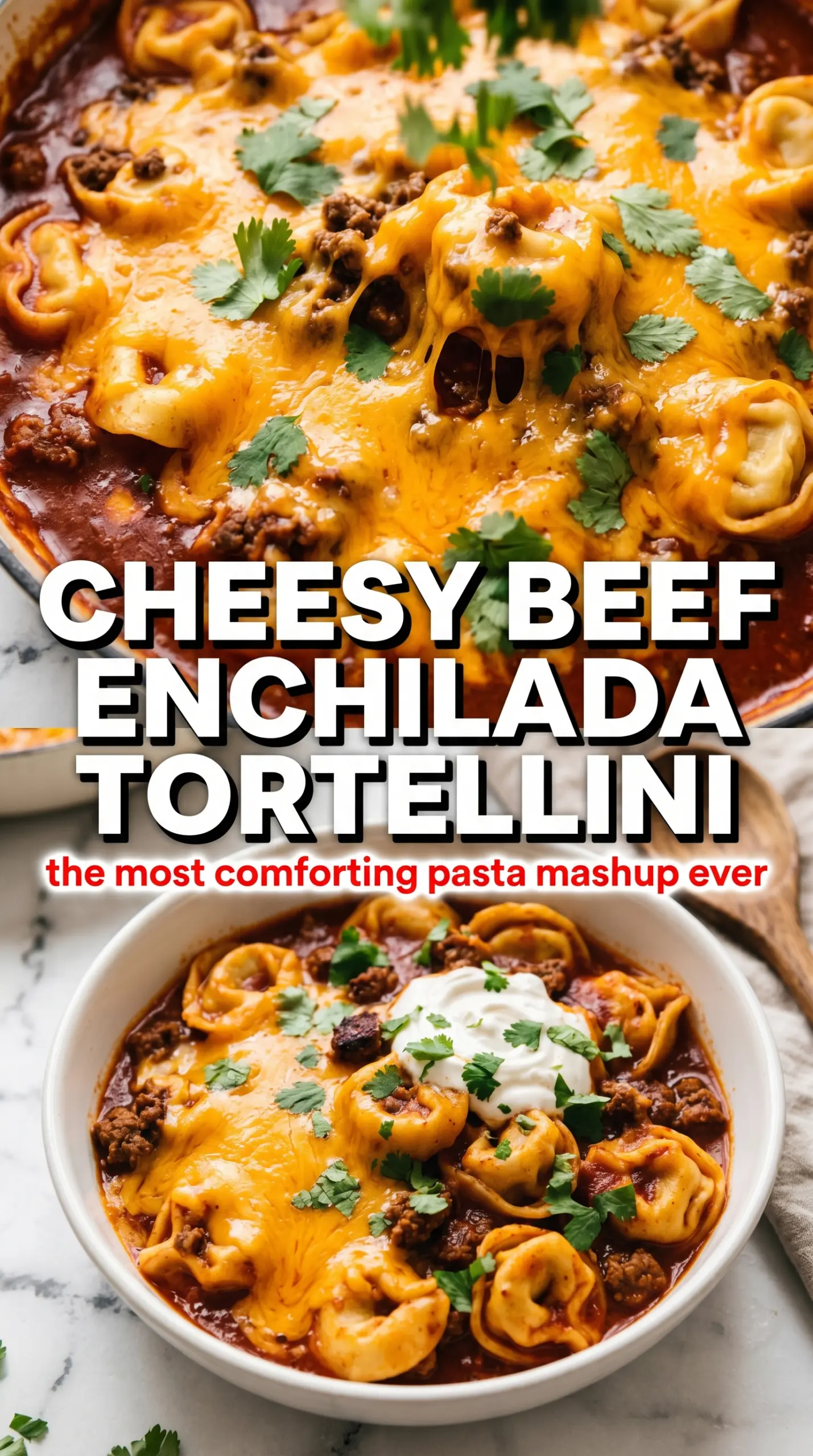
- Ground beef — This gives the dish its backbone and makes it feel like dinner, not just pasta in sauce. An 80/20 blend brings better flavor, but lean beef works fine if you drain it well after browning.
- Onion and garlic — These build the savory base before the sauce goes in. Cook the onion until it softens and loses its raw edge, then add the garlic briefly so it doesn’t turn bitter.
- Enchilada sauce — This is the main flavor driver, so use a brand you actually like straight from the can. If your sauce tastes flat, the whole skillet will taste flat, since there isn’t another strong seasoning layer to hide behind.
- Rotel — The tomatoes and green chiles cut through the richness and keep the sauce from feeling one-note. If you need a milder finish, use regular diced tomatoes and a small pinch of chopped green chiles instead.
- Refrigerated cheese tortellini — Fresh tortellini cooks fast and stays tender in the skillet, which is why this recipe works so well. Dried tortellini needs more liquid and a longer cook time, so it won’t behave the same way here.
- Mexican cheese blend — This melts into a stretchy, creamy top layer that ties the whole dish together. Pre-shredded is fine, but if you grate your own, it melts a little smoother.
Getting The Tortellini Tender Without Turning The Sauce Muddy
Brown The Beef Until It Has Edges
Cook the beef with the onion in a large deep skillet until the meat loses its pink color and you start seeing browned bits stuck to the pan. Those browned bits deepen the sauce later, so don’t rush this part or keep stirring constantly. Drain excess fat if the pan looks greasy, but leave enough behind to carry the spices.
Wake Up The Spices In The Hot Pan
Add the garlic, cumin, chili powder, salt, and pepper after the beef is cooked. Stir for about 30 seconds, just until the garlic smells fragrant and the spices stop smelling dusty. If the pan is scorching hot, pull it off the burner for a moment so the garlic doesn’t burn before the liquid goes in.
Build The Sauce Before The Pasta
Pour in the enchilada sauce, beef broth, and Rotel, then bring everything to a boil. This is the point where the skillet should look loose and saucy, not thick and clumpy. Once it boils, add the tortellini and cook according to the package timing, stirring occasionally so the pasta doesn’t stick to the bottom.
Finish With The Cheese And Let It Melt In Place
Scatter the Mexican cheese blend over the top, cover the skillet, and let it sit just long enough for the cheese to melt and the sauce to thicken slightly. If you leave it covered too long, the tortellini keeps cooking and the sauce can tighten up too much. Garnish with cilantro and jalapeños right before serving so the top stays bright and fresh.
How To Adapt This Skillet When You Need A Different Finish
Make It Spicier Without Changing The Texture
Use hot enchilada sauce, add extra jalapeños, or stir a spoonful of chopped chipotle in adobo into the sauce. The flavor gets smokier and hotter without changing the way the tortellini cooks, which keeps the skillet balanced.
Make It Gluten-Free
Use a gluten-free tortellini and check that both the enchilada sauce and broth are certified gluten-free. The sauce itself stays the same, but gluten-free pasta can soften faster, so start checking it a minute or two early.
Stretch It For A Bigger Crowd
Add a drained can of black beans or a cup of frozen corn with the sauce. That gives the skillet more body and a little extra texture without making it feel watered down, and it turns the meal into something that feeds a few more people.
Use Ground Turkey Instead Of Beef
Ground turkey works, but it needs a little more help from the spices and broth because it doesn’t bring the same richness as beef. Use a good drizzle of oil for browning and keep the cumin and chili powder generous so the dish still tastes bold.
Storage And Reheating
- Refrigerator: Store leftovers in an airtight container for up to 4 days. The tortellini will keep soaking up sauce, so expect the skillet to thicken as it sits.
- Freezer: It freezes, but the tortellini softens after thawing, so I only freeze it if I have to. Cool it completely, portion it into containers, and freeze for up to 2 months.
- Reheating: Reheat gently on the stove or in the microwave with a splash of broth or water. The common mistake is blasting it on high heat, which tightens the sauce and makes the pasta go tough around the edges before the center is hot.
Questions I Get Asked About This Recipe
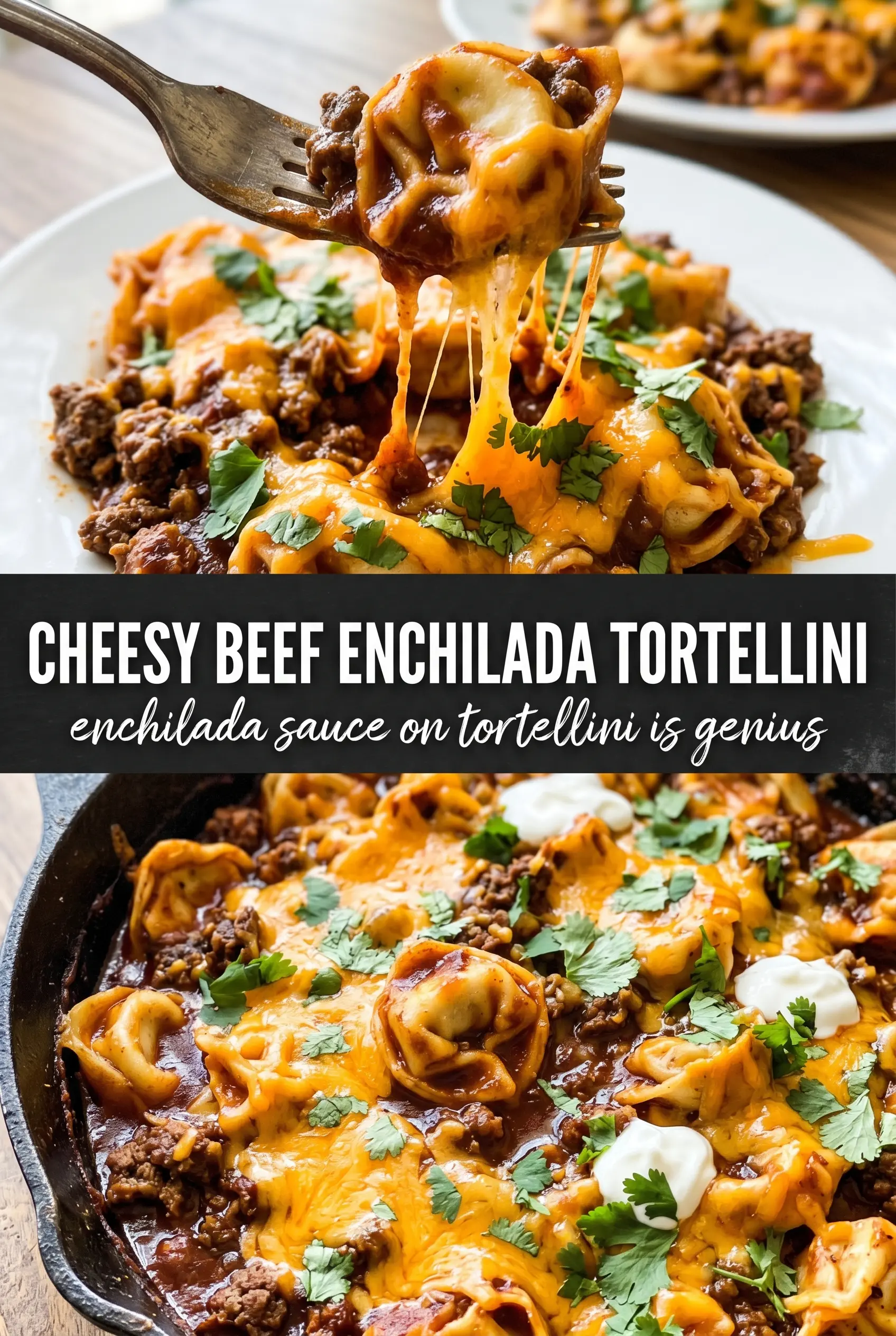
Cheesy Beef Enchilada Tortellini
Ingredients
Equipment
Method
- Heat a large deep skillet over medium-high heat and brown the ground beef with the diced onion. Cook until the beef is browned, then drain excess fat.
- Add the minced garlic, cumin, chili powder, and salt and pepper to the skillet. Cook for 30 seconds to 1 minute until fragrant.
- Pour in the red enchilada sauce, beef broth, and Rotel tomatoes. Bring to a boil, stirring to combine.
- Add the refrigerated cheese tortellini to the boiling sauce and cook according to package directions, about 5–7 minutes, stirring occasionally. Keep the sauce at a steady simmer until tender.
- Sprinkle the shredded Mexican cheese blend over the top. Cover the skillet and heat for 2 minutes until melted and bubbling.
- Garnish with cilantro and jalapeños. Serve directly from the skillet while hot.