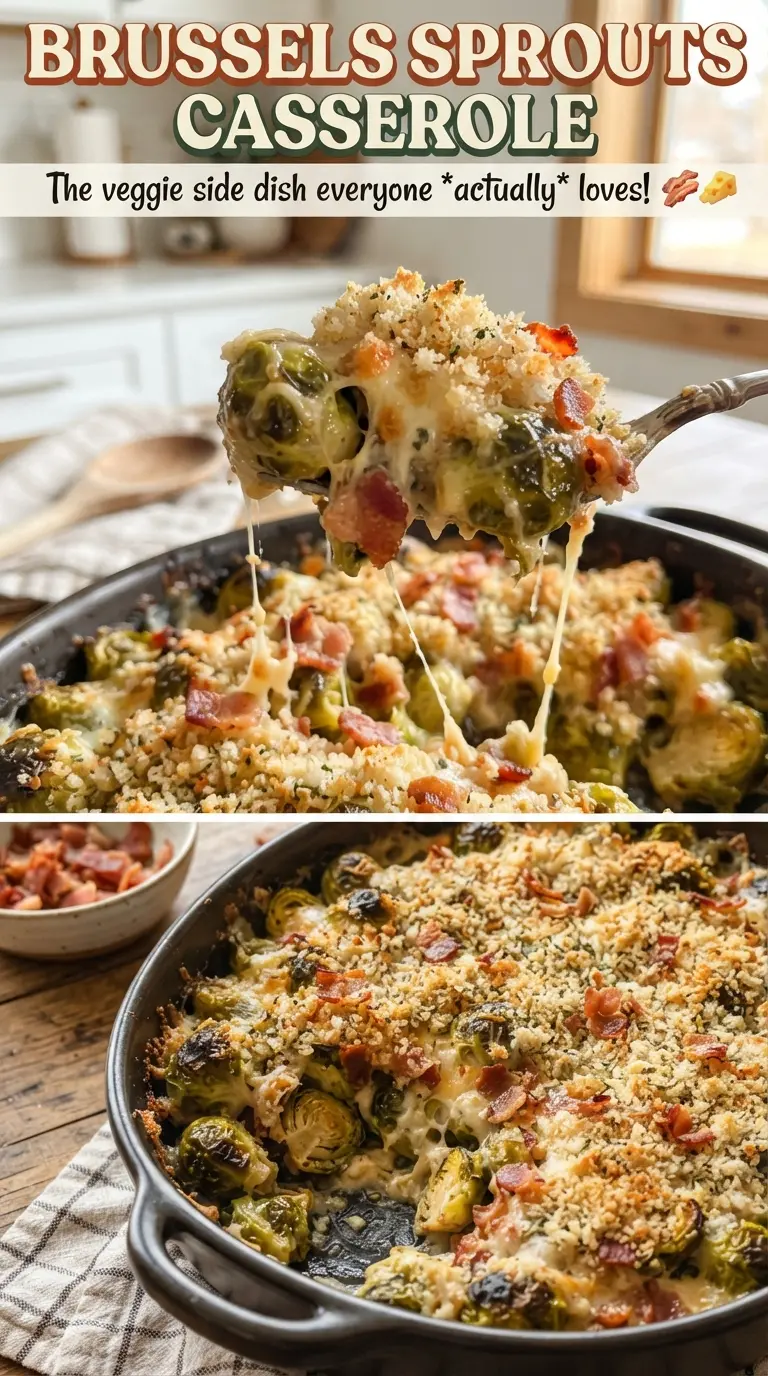
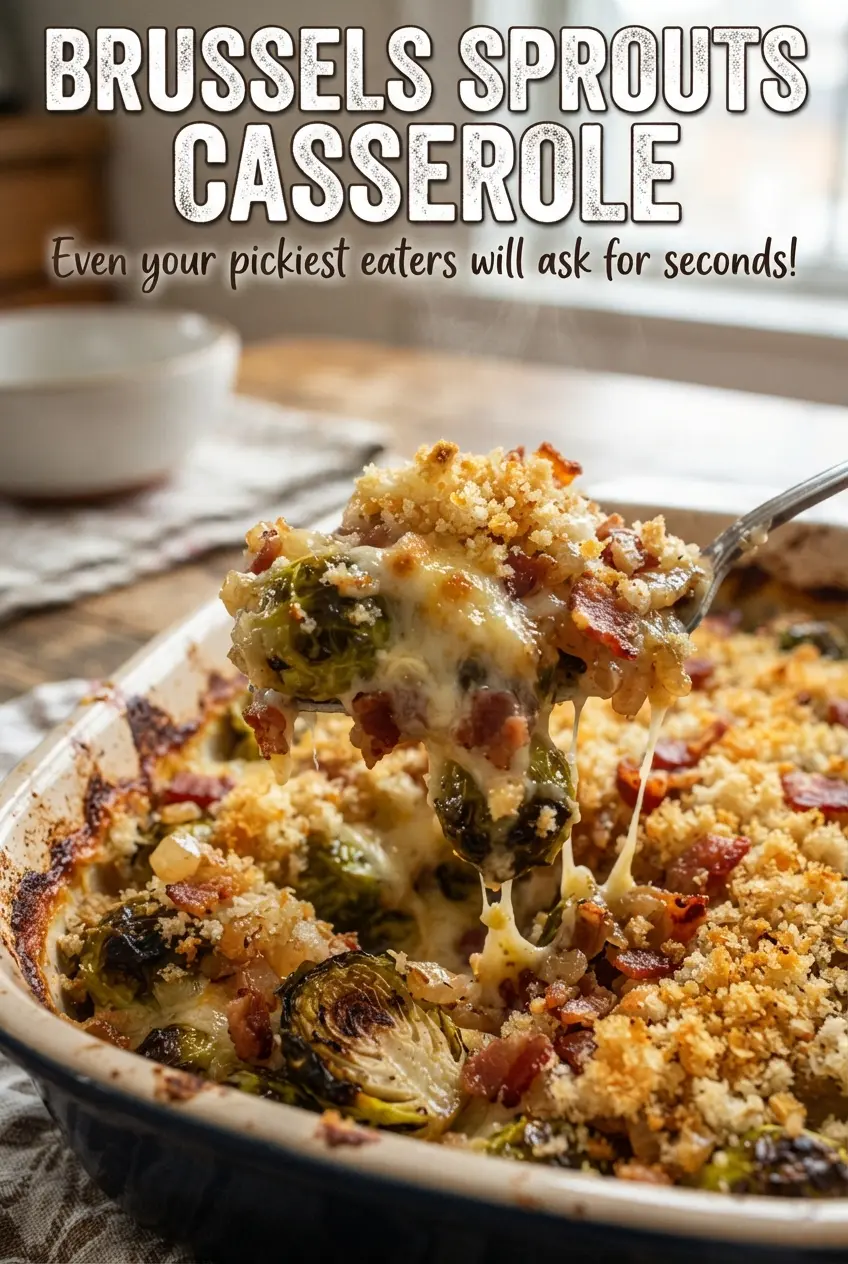
Brussels sprouts casserole lands in that sweet spot between weeknight side dish and holiday-worthy comfort food. The sprouts turn tender without going mushy, the sauce stays creamy instead of greasy, and the top bakes into a salty, crunchy lid that cracks when you spoon into it. Bacon and Gruyère do a lot of the heavy lifting here, but the real payoff is the way the vegetables hold their shape under all that richness.
The trick is giving the Brussels sprouts a head start in boiling water before they go into the oven. That short blanch keeps the centers from staying tough while the casserole finishes baking, and it also helps the final texture stay balanced instead of stringy. The sauce is a simple stovetop béchamel, but it needs a minute to thicken before the cheese goes in. If you rush that part, the casserole can turn loose and soupy.
Below, I’ll walk through the part that matters most: keeping the sauce smooth, getting the topping golden, and making the dish easy to adapt if you want a lighter version or need to skip the bacon.
The Brussels sprouts were tender all the way through, and the Gruyère sauce stayed creamy after baking instead of splitting. That bacon-panko topping was the part everybody went back for.
Creamy Brussels sprouts casserole with bacon and Gruyère is the side dish worth saving for the next roast chicken or holiday dinner.
The Part That Keeps This Casserole Creamy Instead of Watery
Brussels sprouts hold a lot of moisture, and that’s where most casseroles go sideways. If they go into the oven raw, they steam in the sauce and leave you with a loose, watery pan instead of a rich one. Blanching them for just a few minutes before baking changes that. The sprouts finish tender in the oven, but they don’t dump all their water into the sauce at the same time.
The other safeguard is building the cheese sauce until it lightly coats the spoon before the Brussels sprouts go in. Thin sauce turns even thinner once the vegetables and bacon release their heat and juices. A thicker base gives you that spoonable, glossy finish that still feels creamy after baking.
- Blanching the Brussels sprouts — This softens the centers just enough so the casserole bakes evenly. Skip it and the outer leaves brown before the middle turns tender.
- Cooking the sauce first — The milk and cream need time to thicken with the flour. If you add cheese to a thin base, the finished casserole can separate or feel runny.
- Using some bacon drippings — A little of that fat adds depth and carries the garlic flavor. Too much makes the sauce greasy, so keep it to the measured spoonful.
What Each Ingredient Is Doing in the Dish
- Brussels sprouts — They’re the backbone of the casserole, so trim them well and halve anything large enough to stay tough in the middle. Fresh sprouts hold their texture better than frozen here.
- Bacon — Bacon brings salt, smoke, and a little rendered fat for the sauce. Turkey bacon won’t give the same depth, but you can use it if you add a small splash of olive oil with the butter.
- Gruyère — This melts smoothly and has enough nutty flavor to stand up to the sprouts. If you swap in Swiss, the sauce will be milder and a little less complex.
- Parmesan — Parmesan sharpens the sauce and helps the topping brown. Finely grated Parmesan blends in more evenly than coarse shreds.
- Panko breadcrumbs — Panko stays lighter and crispier than regular breadcrumbs, which matters on top of a creamy casserole. If you use standard breadcrumbs, expect a denser crust.
- Milk and cream — The combination gives you body without making the sauce overly heavy. Whole milk is worth using; lower-fat milk can make the sauce taste flat and thin.
Building the Casserole So the Topping Stays Crisp
Cooking the Bacon and Starting the Base
Cook the bacon until it’s crisp and the fat has rendered, then pull out just 1 tablespoon of drippings for the sauce. That little bit of bacon fat carries flavor without overwhelming the dairy. When you melt it with the butter, add the garlic and flour and cook for a full minute so the sauce doesn’t taste raw or chalky. If the flour mixture turns dark, the heat is too high and the sauce will pick up a bitter edge.
Whisking the Sauce Until It Thickens
Pour in the milk and cream slowly while whisking, and keep the pan over medium-low heat. The sauce should go from thin and splashy to smooth and lightly thickened, enough to coat a spoon without running off immediately. If it starts to look grainy, the cheese went in too soon or the heat was too high. Pull the pan off the burner before adding the Gruyère and Parmesan, then stir until everything melts cleanly.
Folding and Baking Without Breaking the Texture
Stir the Brussels sprouts and half the bacon into the sauce gently so you don’t crush the sprouts. Spread everything into the baking dish, then finish with the remaining cheese, bacon, and panko. Bake until the top is deep golden and the edges are bubbling hard, because that bubbling tells you the sauce is hot all the way through. If the topping browns too fast, lay a loose piece of foil over the dish for the last few minutes.
How to Adapt It When You Need a Different Version
Dairy-Free Version
Use unsweetened oat milk and a dairy-free cream that can handle heat, then swap in a plant-based melting cheese with some parmesan-style seasoning if you like. The casserole won’t have the same nutty Gruyère finish, but you’ll still get a creamy, spoonable bake if you keep the sauce on the thicker side.
Gluten-Free Swaps
Replace the all-purpose flour with a gluten-free 1:1 blend and use certified gluten-free panko or crushed gluten-free crackers on top. The texture stays close to the original, though the sauce may thicken a touch faster, so watch it closely once the milk goes in.
No-Bacon Version
Skip the bacon and use butter for the full fat portion, then add a pinch of smoked paprika to replace some of the savory depth. You lose the salty crunch, so add a little extra Parmesan on top to keep the finished dish bold enough.
Storage and Reheating
- Refrigerator: Store covered for up to 4 days. The topping softens a bit, but the flavor holds up well.
- Freezer: Freeze baked or unbaked in a tightly wrapped dish for up to 2 months. The sauce can separate slightly after thawing, so the texture is best when reheated gently.
- Reheating: Reheat in a 350F oven, covered at first and uncovered at the end to re-crisp the top. Microwaving works in a pinch, but it softens the breadcrumb topping and can make the cheese sauce loosen up.
Answers to the Questions Worth Asking
Brussels Sprouts Casserole
Ingredients
Equipment
Method
- Preheat the oven to 400F. Bring a pot of boiling salted water to a rolling boil, blanch the halved Brussels sprouts for 4 minutes, then drain.
- Cook the chopped bacon until crisp in a Dutch oven. Remove the bacon and reserve 1 tablespoon of drippings.
- Melt the butter with the reserved bacon drippings in the Dutch oven. Add the minced garlic and all-purpose flour and cook for 1 minute.
- Whisk in the whole milk and heavy cream. Simmer until thickened, about 5 to 8 minutes, then whisk smooth.
- Stir in 1 cup of the shredded Gruyère, the grated Parmesan, salt, and black pepper until fully melted and smooth.
- Fold in the blanched Brussels sprouts and half the bacon, then pour into a baking dish. Top with the remaining Gruyère, remaining bacon, and the panko breadcrumbs.
- Bake for 20 to 25 minutes at 400F, until bubbly and golden. Rest for 5 minutes before serving for cleaner slices.