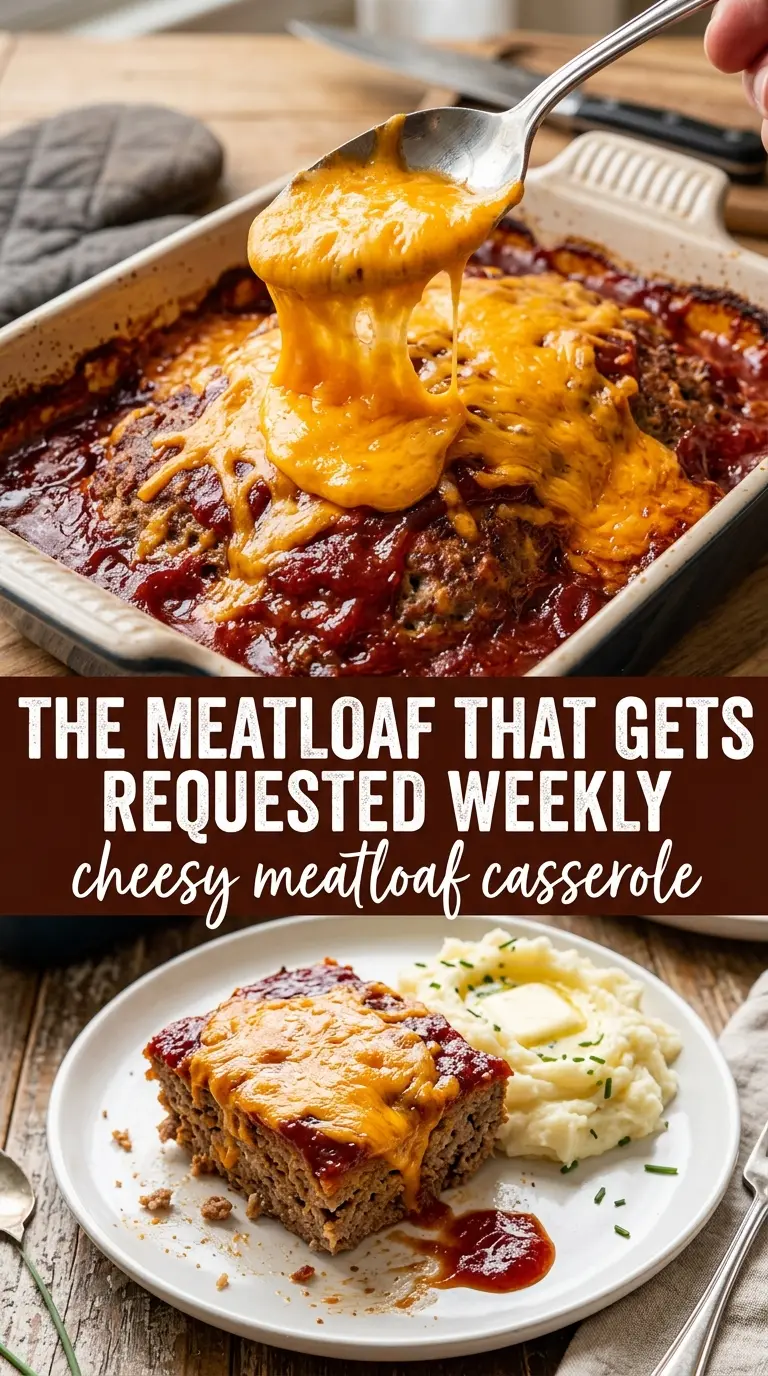
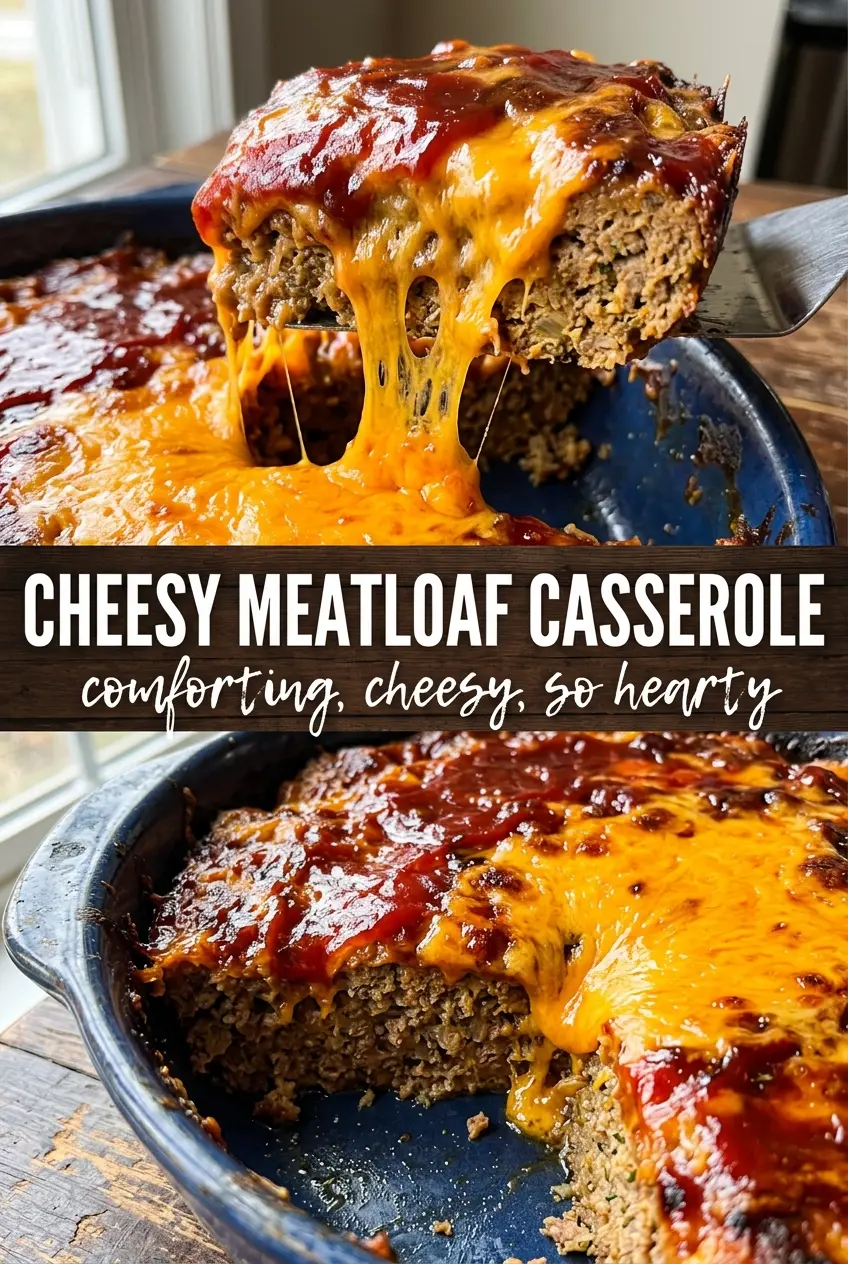
Cheesy Meatloaf Casserole bakes up with tender slices, a sticky ketchup-brown sugar glaze, and pockets of melted cheddar all through the middle. It has the comfort of a classic meatloaf, but the casserole dish gives it more edge-to-edge browning and keeps the cheese from disappearing into the meat.
The trick is keeping the mixture loose enough to stay juicy, but not so wet that it turns dense in the oven. Breadcrumbs and milk do the quiet work here, while the Worcestershire and onion bring the savory depth that keeps each bite from tasting flat. Folding part of the cheese into the meat instead of piling it all on top gives you those rich, gooey sections without sacrificing structure.
Below, I’ll walk through the part that matters most: how to mix this without compacting it, how to get the glaze to caramelize instead of burn, and the small rest time that keeps the slices from falling apart when you serve them.
The cheddar stayed melty inside instead of disappearing, and the glaze got that sticky, caramelized top I was hoping for. I let it rest the full 10 minutes and the slices held together perfectly.
Like this cheesy meatloaf casserole? Save it to Pinterest for a sticky-glazed dinner with melty cheddar in every slice.
The Glaze Needs a Head Start, Not a Last-Minute Rescue
Meatloaf casserole can go wrong in a familiar way: the top browns before the center has enough time to set, or the glaze gets slapped on too late and never turns sticky. This version handles both by splitting the glaze in two. The first layer bakes into the surface and starts that caramelized crust, while the second layer plus the remaining cheddar finish the top with a glossy, melty cap.
That middle bake matters. If you pile all the glaze and cheese on at the beginning, the sugar in the ketchup can darken too fast, and the cheese can turn oily before the loaf is cooked through. Giving the casserole 50 minutes before the final topping keeps the structure intact and gives the last 15 minutes just enough time to melt, brown, and settle.
- Ground beef — An 80/20 blend gives you enough fat for a juicy slice without leaving the dish greasy. Leaner beef works, but the casserole will eat a little drier.
- Breadcrumbs and milk — This is the binder system. The breadcrumbs soak up the milk and hold onto moisture, which is what keeps the meatloaf tender instead of tight.
- Sharp cheddar — Use a cheese with real bite. Milder cheddar melts fine, but sharp cheddar stands up to the beef and the sweet glaze. Shred it yourself if you can; bagged shreds don’t melt quite as smoothly.
- Worcestershire sauce — Don’t skip it. It adds the savory backbone that makes the beef taste deeper and less one-note, especially with the ketchup glaze on top.
What Each Ingredient Is Actually Doing in This Recipe
- Primary ingredient (the star) — Quality matters most. Choose the best you can find.
- Cooking medium (oil, butter, or broth) — This carries flavors and prevents dryness.
- Seasonings (salt, pepper, spices, herbs) — Layer flavors so nothing overpowers. Build depth gradually.
- Aromatics (garlic, onion, herbs) — Cook with fat to bloom flavors. Become the foundation.
- Supporting ingredients — Complement the main ingredient without overpowering it.
- Sauce or liquid (if applicable) — Brings flavors together. Balance richness with acid.
- Acid (lemon, vinegar, wine, or other) — Brightens and prevents flat-tasting results.
- Final finish (garnish, glaze, or sauce) — Prevents one-dimensional taste and adds visual appeal.
How to Keep the Loaf Tender While the Cheese Melts
Mix the Beef Just Until It Comes Together
Combine the meat with the breadcrumbs, eggs, milk, onion, garlic, Worcestershire, garlic powder, salt, and pepper in a large bowl, and stop the second everything looks evenly distributed. Overmixing compresses the meat and gives you a dense, rubbery slice. The mixture should feel soft and a little loose, not packed like a meatball mix.
Fold in the Cheese Without Smearing It
Add 1 1/2 cups of the cheddar and use your hands to fold it through gently. You want visible streaks and pockets, not a fully uniform mixture. Those pockets are what turn into the rich, molten spots that make this casserole worth repeating.
Shape It in the Pan, Not on the Counter
Press the mixture into the greased 9×13 dish and form it into a loaf shape right there. This keeps the casserole rustic and helps the edges brown instead of steaming in a tight loaf pan. If the top looks too smooth, lightly rough it up with your fingers so the glaze has a textured surface to cling to.
Bake, Glaze Again, Then Finish Hot
Spread half the glaze over the top and bake until the surface looks set and the edges are pulling away slightly from the dish. At that point, add the rest of the glaze and the remaining cheddar. Return it to the oven until the cheese is melted and the center reaches 160°F, then rest it for 10 minutes so the juices settle and the slices hold together.
How to Adapt This for Smaller Tables, Less Dairy, or a Different Cheese
Make It Gluten-Free
Swap the breadcrumbs for your favorite gluten-free breadcrumbs in the same amount. The casserole still needs that absorbent binder, so don’t leave them out entirely. If your gluten-free crumbs are very coarse, add an extra tablespoon or two of milk so the mixture stays soft.
Use Ground Turkey Instead of Beef
Ground turkey works, but it needs the moisture and seasoning more than beef does. Use 93% lean turkey, don’t overbake it, and expect a slightly lighter texture and flavor. A drizzle of extra Worcestershire in the mix helps it taste more complete.
Swap the Cheddar
Colby jack, Monterey Jack, or a cheddar-jack blend all melt nicely if that’s what you have. The result is a little milder and less sharp, so the glaze takes up more of the flavor conversation. Avoid very soft cheeses here; they can disappear into the meat instead of giving you those molten pockets.
Make a Half Batch
Halve every ingredient and bake it in an 8×8 or small baking dish. Keep the temperature the same, but start checking early because a smaller casserole cooks faster at the edges. The loaf should still rest before slicing, even when it looks tempting to cut right away.
Storage and Reheating
- Refrigerator: Store leftovers in an airtight container for 3 to 4 days. The texture firms up a little, but the slices hold nicely.
- Freezer: This freezes well. Wrap individual slices tightly and freeze for up to 2 months, then thaw in the fridge before reheating.
- Reheating: Warm slices covered in a 325°F oven until hot through, or use the microwave in short bursts. The big mistake is blasting it uncovered, which dries out the beef and toughens the cheese.
Answers to the Questions Worth Asking
Cheesy Meatloaf Casserole
Ingredients
Equipment
Method
- Preheat the oven to 350°F and grease a 9x13 baking dish.
- Dice the onion finely and mince the garlic so they mix evenly into the meatloaf.
- In a large bowl, mix ground beef with breadcrumbs, eggs, whole milk, onion, garlic, Worcestershire sauce, garlic powder, salt, and black pepper.
- Fold in 1.5 cups shredded sharp cheddar cheese, then press the mixture into the greased baking dish and shape it into a loaf.
- Mix the glaze ingredients (ketchup, brown sugar, and Worcestershire sauce) and spread half over the top of the loaf.
- Bake for 50 minutes at 350°F, until the glaze is set and the loaf looks browned around the edges.
- Spread the remaining glaze over the top and scatter the remaining cheddar over the loaf.
- Bake for 15 more minutes at 350°F, until the internal temperature reaches 160°F and the cheese on top is melted and bubbling with visible cheddar at the edges.
- Rest the meatloaf casserole for 10 minutes so the juices settle and slices hold their shape.
- Slice and serve, spooning any extra sticky glaze from the dish over the top (visual cue: caramelized, glossy surface).