Cheesy Ranch Rotini Bake with Beef comes out with the kind of bubbling, golden top that makes people hover around the oven asking when dinner will be ready. The rotini catches the creamy ranch sauce in every twist, the beef gives it enough heft to stand as a full meal, and the little pops of Rotel keep it from tasting flat or heavy. It’s the sort of casserole that lands in the regular rotation fast because it eats like comfort food but doesn’t need much babysitting.
The trick here is balancing richness with enough acidity and seasoning to keep the sauce lively. Ranch mix brings the herbs and salt, cream of chicken soup gives body, and sour cream smooths everything out without turning the bake greasy. Draining the beef matters, and so does cooking the pasta just to al dente so it doesn’t collapse under the sauce in the oven.
Below you’ll find the details that matter most: how to keep the sauce creamy instead of thick and pasty, which cheese melts best for that browned top, and a few practical swaps if you need to work with what’s already in your kitchen.
The sauce stayed creamy all the way through baking, and the Rotel gave it just enough tang to keep the cheese from feeling too heavy. My kids went back for seconds before I even sat down.
Save this Cheesy Ranch Rotini Bake for nights when you want creamy pasta, beef, and a golden cheese crust in one pan.
The Creamy Sauce Won’t Hold Together If You Rush the Mix
This kind of pasta bake falls apart when the sauce is too thick before it goes into the oven. The pasta keeps absorbing liquid as it bakes, so the mixture needs to look looser than you want it to look on the plate. If it seems barely saucy in the bowl, it will usually bake up dry.
Another common problem is greasy separation from the beef. Draining the fat after browning keeps the casserole creamy instead of slick, and whisking the soup, sour cream, and milk until smooth before adding the Rotel prevents little white streaks and clumps. The goal is a pourable sauce that coats the pasta without sitting heavy on the bottom of the dish.
What Each Ingredient Is Actually Doing in This Bake
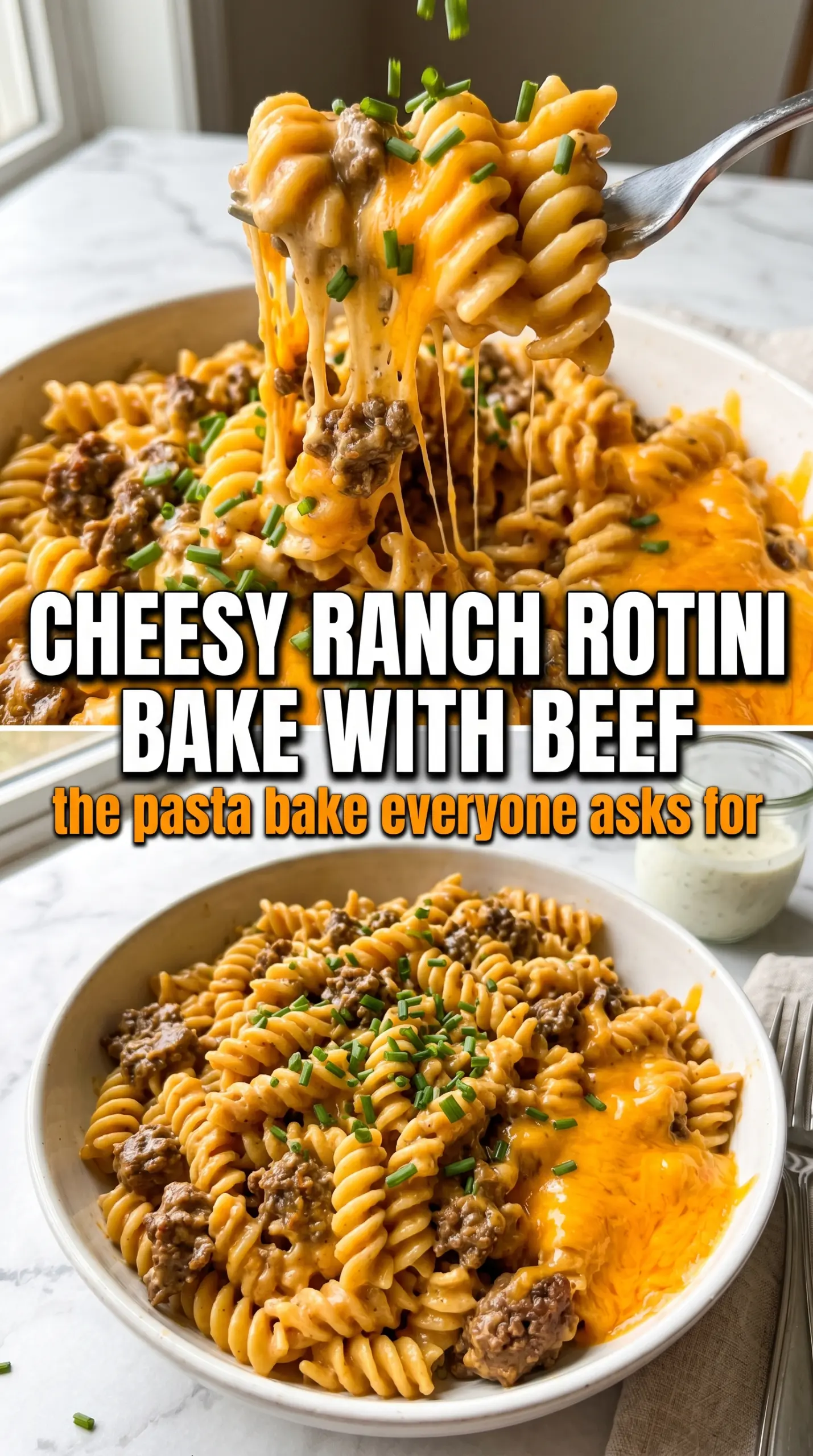
- Ground beef — This gives the bake its savory backbone. An 85/15 or 90/10 blend works well; if you use something much leaner, the casserole can taste a little dry unless you keep the sauce generous.
- Ranch seasoning mix — This is the signature flavor, and it needs the moisture from the sour cream and soup to bloom properly. Homemade ranch seasoning can work, but the packet has the most consistent salt balance for this kind of casserole.
- Cream of chicken soup — This is the ingredient that gives the sauce body and helps it set in the oven. A cream of mushroom or cream of celery swap will work if that’s what you have, but the flavor shifts a little earthier.
- Sour cream — It softens the ranch seasoning and keeps the sauce tangy instead of flat. Full-fat sour cream gives the smoothest texture, but light sour cream will still work if you stir everything well.
- Rotel tomatoes — These bring acidity and a little heat, which keeps the dish from tasting like straight cream and cheese. If you need it milder, use diced tomatoes and a small pinch of chili flakes instead.
- Rotini pasta — The spirals hold onto the sauce better than straight noodles. Cook it just until barely al dente because it will keep softening in the oven.
- Cheddar and mozzarella — Cheddar gives sharp flavor and color, while mozzarella melts into those stretchy top layers. If you only use cheddar, the top will taste stronger and bake a little firmer; if you only use mozzarella, the finish will be milder and less richly colored.
Getting the Pasta and Sauce Into the Pan at the Right Time
Brown the Beef Until the Pan Is Dry, Not Soupy
Cook the beef with the onion until the meat is no longer pink and the onion has turned translucent and soft. If there’s a lot of grease in the pan, drain it off before you add the garlic and ranch seasoning. That small step keeps the finished casserole from pooling oil around the edges.
Whisk the Cream Base Until It Looks Completely Smooth
Stir the cream of chicken soup, sour cream, and milk together before adding the Rotel. The mixture should look silky and loose, not lumpy. If you add the tomatoes into a cold, thick base without whisking first, you’ll end up chasing clumps later and the sauce won’t coat the pasta evenly.
Fold Everything Together Before the Cheese Goes On Top
Combine the cooked rotini, beef, and sauce in a large bowl so every piece gets coated. The pasta should look heavily dressed, because some of that sauce is going to tighten as it bakes. Spread it into the baking dish in an even layer, then cover the top with cheddar and mozzarella right to the edges so you get that browned crust all across the pan.
Bake Until the Edges Bubble and the Top Turns Spotted Gold
Uncovered baking is what gives you the crust. Pull the casserole when the cheese is melted, the edges are actively bubbling, and the top has a few deeper golden spots. If it comes out too early, the middle stays loose; if you bake it until the cheese looks dark all over, the dairy can start tasting heavy instead of creamy.
How to Adapt This for a Bigger Crowd, Less Dairy, or a Different Pantry
Make It Ahead for Busy Nights
Assemble the casserole up to the point of adding the cheese, cover it, and refrigerate it for up to 24 hours. Add the cheese right before baking, then give it a few extra minutes in the oven since it’s starting cold. The pasta may soak up a little more sauce overnight, so a splash of milk stirred in before baking helps keep it creamy.
Use Ground Turkey Instead of Beef
Ground turkey works well, but it needs the onion and ranch seasoning to carry more of the flavor. Add a tablespoon of butter or a drizzle of oil while browning so the casserole doesn’t taste lean and dry. The texture stays the same, just a little lighter in taste.
Make It Gluten-Free
Use a gluten-free rotini and swap in a gluten-free cream soup. The rest of the ingredients already fit naturally, and the cheese topping still gives you the same browned finish. Cook the pasta a little less than usual because gluten-free noodles can go soft faster in the oven.
Storage and Reheating
- Refrigerator: Store leftovers in an airtight container for up to 4 days. The sauce thickens as it chills, but it stays creamy once reheated.
- Freezer: This freezes well after baking. Cool completely, portion into freezer-safe containers, and freeze for up to 2 months.
- Reheating: Reheat covered in the oven at 350°F with a splash of milk stirred in, or warm individual portions in the microwave at medium power. High heat dries out the pasta and makes the cheese separate, so go slower than you think you need to.
Answers to the Questions Worth Asking
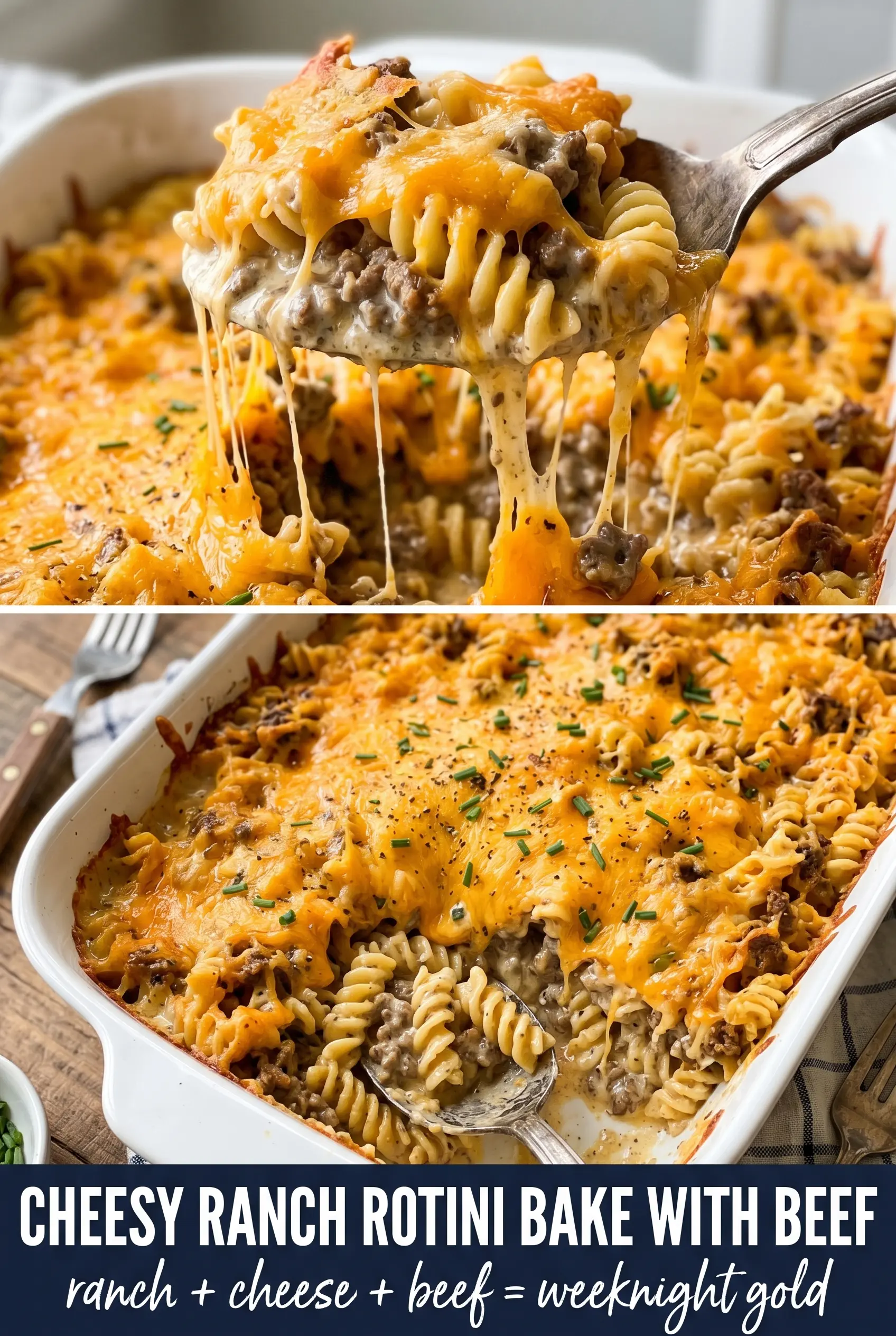
Cheesy Ranch Rotini Bake with Beef
Ingredients
Equipment
Method
- Preheat the oven to 375°F and grease a 9x13 baking dish so the pasta releases easily after baking.
- Brown the ground beef with the diced onion; drain excess fat so the casserole isn’t greasy.
- Add the minced garlic and ranch seasoning and cook for 1 minute to bloom the seasoning.
- Whisk the cream of chicken soup, sour cream, and milk until smooth, then stir in the Rotel tomatoes for an even sauce.
- Combine the cooked and drained rotini, beef mixture, and soup mixture in a large bowl and toss well until everything is coated.
- Transfer the mixture to the greased baking dish and spread into an even layer.
- Top with shredded cheddar and mozzarella so it bakes into a golden crust.
- Bake uncovered for 25–30 minutes at 375°F until the cheese is golden and bubbly around the edges.
- Garnish with fresh chives right before serving for a fresh, colorful finish.