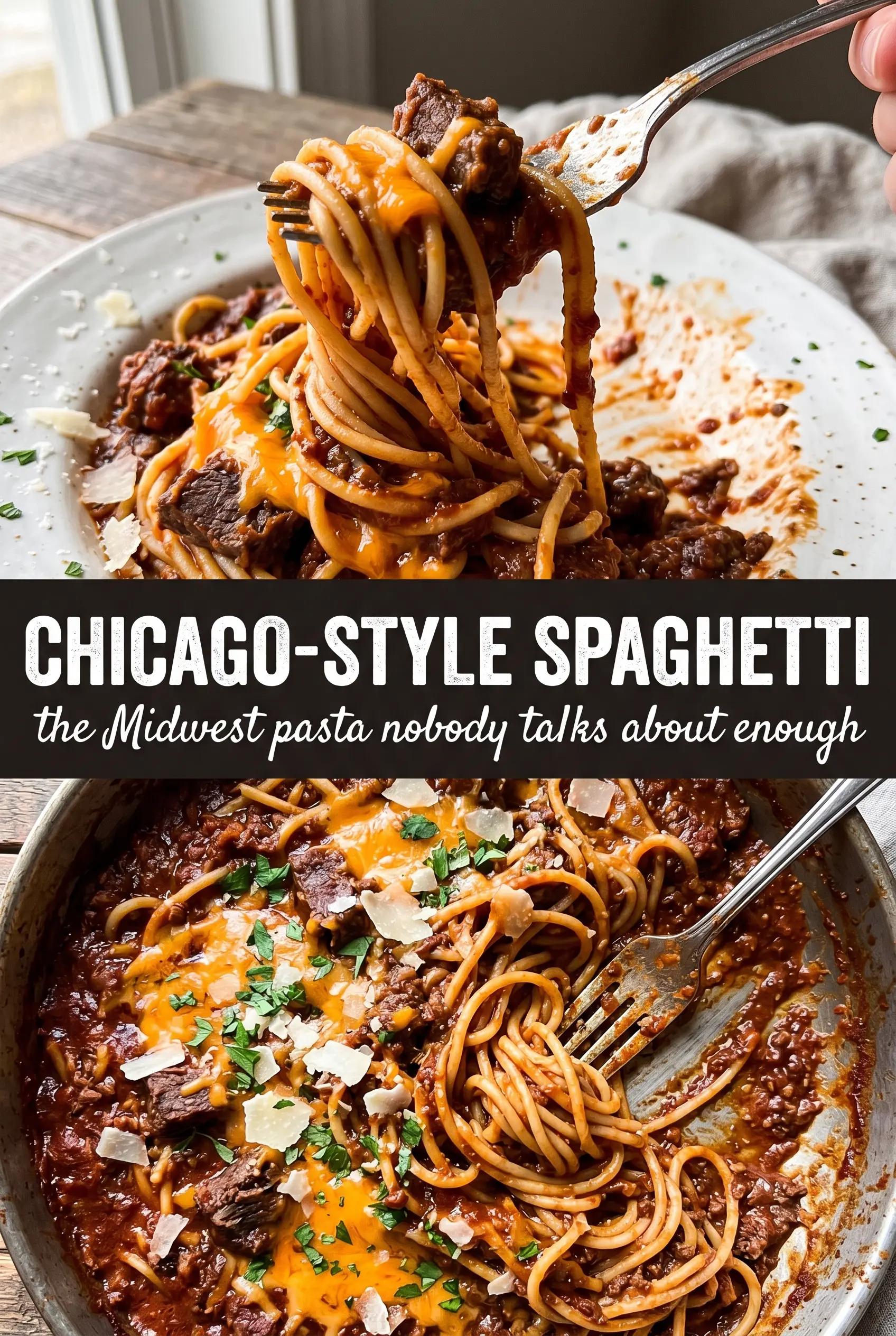
Chicago-style spaghetti lands on the table with a spiced meat sauce that tastes deeper than the short ingredient list suggests. The cinnamon and allspice don’t make it sweet; they give the beef a warm, almost savory roundness that clings to every strand of pasta. Once the cheddar starts melting into the hot sauce and the onion stays crisp on top, the whole bowl gets that classic mix of rich, tangy, crunchy, and creamy that keeps people going back for another forkful.
What makes this version work is the layering. The onion cooks with the beef first, so it softens and disappears into the sauce instead of floating around raw. Then the tomatoes simmer long enough for the spices to bloom and the Worcestershire to round out the acidity. That last 20 minutes matters more than any single ingredient; it’s where the sauce goes from basic meat sauce to the kind that tastes like it’s been part of a family dinner rotation for years.
Below, I’ve included the small details that make a big difference, from how to keep the spices from tasting flat to the toppings that give this dish its signature Chicago-style finish.
The sauce got so rich after the full simmer, and the cinnamon gave it that familiar old-school flavor without tasting sweet. I served it with cheddar and kidney beans on top, and my kids kept asking for the crunchy oyster crackers.
Pin this Chicago-Style Spaghetti for the nights when you want a spiced beef sauce, melty cheddar, and the classic kidney bean topping all in one bowl.
The Spice Blend Needs Time, Not More Heat
With a dish like this, the mistake is usually trying to force the flavor out of the spices with higher heat. Cinnamon, cumin, and allspice don’t need aggressive browning; they need a steady simmer in the tomato base so their edge softens and the sauce tastes integrated instead of dusty. If the sauce tastes flat after 10 minutes, the answer isn’t more spice dumped in at once. It’s giving it the full simmer so the beef, tomatoes, and aromatics can settle into each other.
The other thing to watch is the texture. Chicago-style spaghetti should be saucy enough to coat the pasta, but thick enough that it doesn’t puddle in the bowl. If it looks thin near the end, let it bubble uncovered for the last few minutes. That’s the point where the sauce tightens up and the flavors stop tasting separate.
What the Toppings Are Doing Here
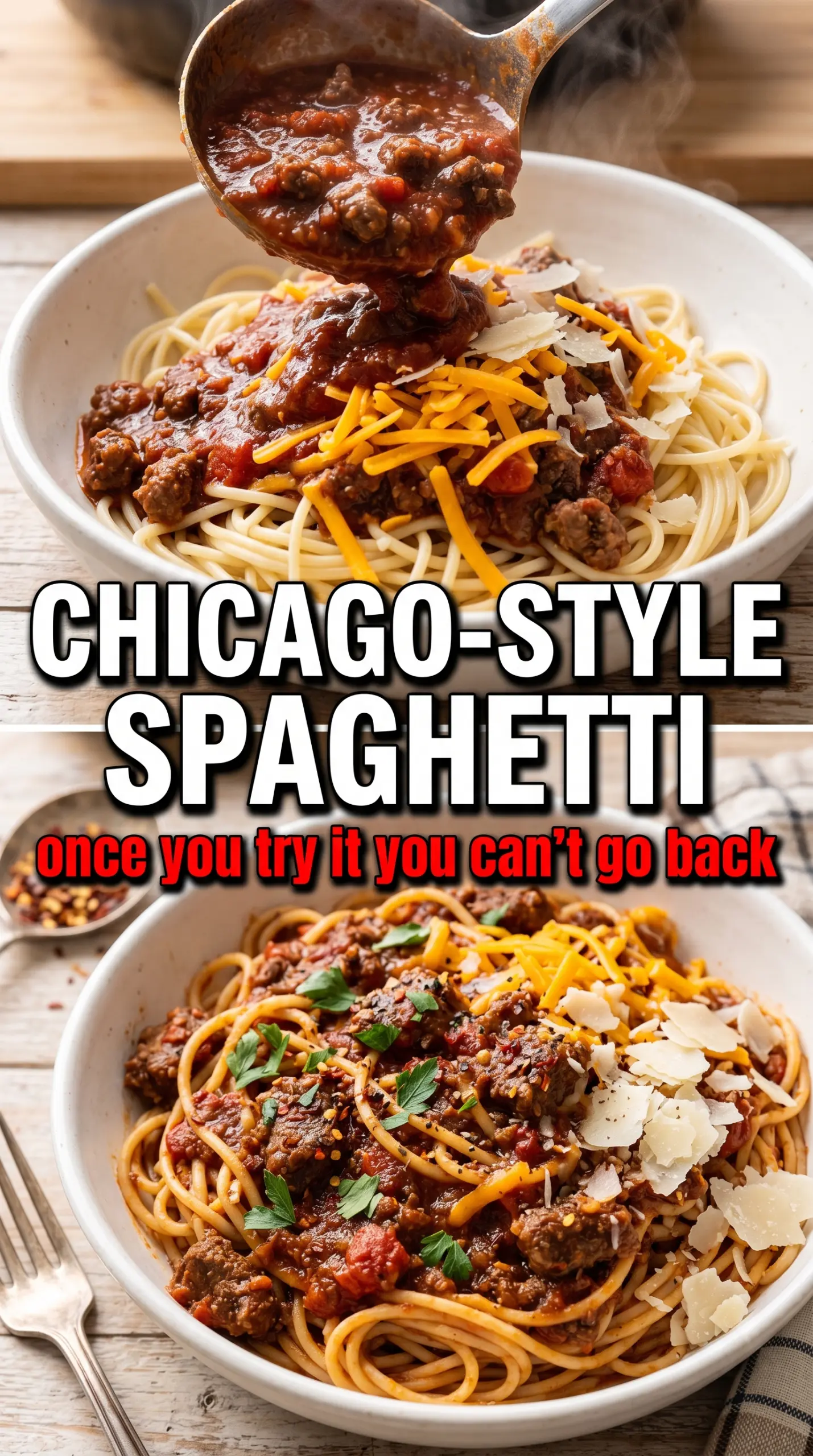
- Ground beef — This is the backbone of the sauce, so use beef with enough fat to taste rich. If yours is lean, keep a close eye on the pan and don’t overcook it; a little moisture in the sauce is better than dry crumbles.
- Onion and garlic — Cooking them with the beef builds the base instead of adding sharp raw bite later. The onion should disappear into the sauce, while the garlic only needs a minute so it stays fragrant instead of bitter.
- Cinnamon, cumin, allspice, and cayenne — This is where the dish gets its signature warmth. The cinnamon and allspice should read as background depth, not dessert; if you want more heat, add a pinch more cayenne, not more cinnamon.
- Worcestershire sauce — This is the quiet ingredient that makes the tomato sauce taste rounder and less one-note. There isn’t a perfect substitute here, but a small splash of soy sauce can cover some of the same savory ground in a pinch.
- Cheddar, onion, kidney beans, and oyster crackers — These toppings are part of the dish, not garnish. The cheddar melts into the hot sauce, the onion adds crunch, the beans bring that classic Chicago-style look and texture, and the crackers give you the salty crunch that makes each bite feel complete.
Building the Sauce Before the Pasta Goes In
Brown the Beef Until It Actually Has Color
Start with a hot pot and give the beef room to brown instead of steam. If the pan looks crowded, it’s better to let the meat cook a little longer than to rush it and end up with gray, wet crumbles. The onion goes in early here, which helps it soften and pick up the browned bits from the bottom of the pot. Drain off excess fat once the beef is cooked through, but leave a little behind for flavor.
Let the Tomatoes and Spices Simmer Together
Once the garlic goes in for its short cook, add the tomato sauce, diced tomatoes, spices, and Worcestershire. Bring it to a gentle bubble, then lower the heat and let it simmer uncovered. You’re looking for the sauce to thicken slightly and smell warm and savory, not sharp or raw. If it starts sticking, the heat is too high; a lazy simmer is enough here.
Use the Pasta as the Base, Not the Main Event
Cook the spaghetti until it’s just tender and drain it well before serving. Deep bowls work best because they hold the sauce without spilling it everywhere, and they also keep the cheddar from sliding straight off the top. Spoon the meat sauce over the pasta instead of mixing it all together if you want the toppings to stay distinct. That’s how you keep the onion crisp and the beans from disappearing into the sauce.
Make It Spicier Without Losing Balance
Add more cayenne in small pinches while the sauce simmers, not at the table. That keeps the heat inside the sauce instead of sitting on the surface, and it lets you stop before the spice outruns the tomato and beef.
Swap the Beef for Turkey
Ground turkey works if you want a lighter version, but it needs the extra help of a little more salt and a touch of oil in the pan. The sauce will taste a bit cleaner and less rich, so don’t skip the cheddar on top.
Make It Gluten-Free
Use your favorite gluten-free spaghetti and check that the Worcestershire sauce is gluten-free. The sauce itself is naturally friendly to this swap, and the biggest difference will be the pasta texture, so cook it just to tender and serve it right away.
Storage and Reheating
- Refrigerator: Store the sauce and pasta separately for up to 4 days. The sauce gets even better after a day, but the spaghetti softens if it sits in the sauce too long.
- Freezer: The meat sauce freezes well for up to 3 months. Freeze it without the pasta or toppings, then thaw overnight in the fridge before reheating.
- Reheating: Warm the sauce gently on the stovetop with a splash of water if needed. Reheat the pasta separately or use freshly cooked spaghetti; microwaving everything together can make the noodles turn mushy.
Questions I Get Asked About This Recipe
Chicago-Style Spaghetti
Ingredients
Equipment
Method
- Brown the ground beef with the finely diced onion in a large pot over medium-high heat, then drain excess fat.
- Add the minced garlic and cook for 1 minute, stirring until fragrant.
- Stir in the tomato sauce, diced tomatoes, cumin, cinnamon, allspice, cayenne, Worcestershire sauce, salt, and pepper.
- Simmer on medium-low for 20 minutes until the sauce is rich and aromatic.
- Serve the meat sauce over the cooked spaghetti in deep bowls.
- Top with shredded cheddar, diced white onion, and kidney beans.
- Serve with oyster crackers on the side.