Glossy pepper steak with onions hits the pan fast, but the flavor tastes like it took a lot longer. The beef stays savory and tender, the peppers keep a little bite, and the sauce clings to every slice instead of pooling at the bottom of the pan. Served over rice, it has that takeout-style comfort people go looking for, but without the heavy, overly sweet finish that ruins a lot of versions.
The trick here is using cornstarch twice: once in the beef marinade and again in the sauce. That first coating protects the meat and helps it brown without drying out, while the second thickens the sauce just enough to turn glossy and coat the vegetables. Cooking everything in one hot wok also matters, because the onions and peppers need a quick char, not a steam bath.
Below, I’ve included the small details that make this one work consistently, from the beef option that keeps things juicy to the point where the sauce should look thick enough to stick to a spoon. There’s also a few smart variations if you need to work with what’s already in your kitchen.
The sauce turned out thick and glossy, and the peppers still had a little bite. I used ground beef like suggested, and it tasted just like the pepper steak from our favorite takeout spot.
Save this Chinese Pepper Steak with Onions for the nights when you want glossy beef, crisp-tender peppers, and fast takeout-style flavor in one pan.
The Secret to Keeping the Beef Tender Instead of Tough
The biggest mistake with pepper steak is crowding the pan or letting the beef sit too long before it hits high heat. Whether you use ground beef or thinly sliced flank steak, that quick marinade does two jobs: it seasons the meat and gives it a light starch coating that helps it sear instead of dry out. If the pan isn’t hot enough, the beef will gray before it browns, and that’s where the flavor gets flat.
For sliced flank steak, cut against the grain and keep the pieces thin. For ground beef, break it up just enough to brown in craggy bits, then pull it out before the vegetables go in. The wok should stay hot the whole time, because the vegetables need to pick up a little color at the edges while staying crisp in the center.
- Ground beef — This gives you a faster, more forgiving version of pepper steak. Use an 80/20 blend if you can; leaner beef works, but you’ll lose some of the richness that helps the sauce taste full.
- Flank steak — Best if you want the classic sliced-beef texture. Thin slices against the grain matter here, or the meat will turn chewy no matter how short the cook time is.
- Cornstarch — This is doing more than thickening. It helps the marinade cling to the beef and gives the final sauce that restaurant-style gloss.
What Each Ingredient Is Actually Doing in the Pan
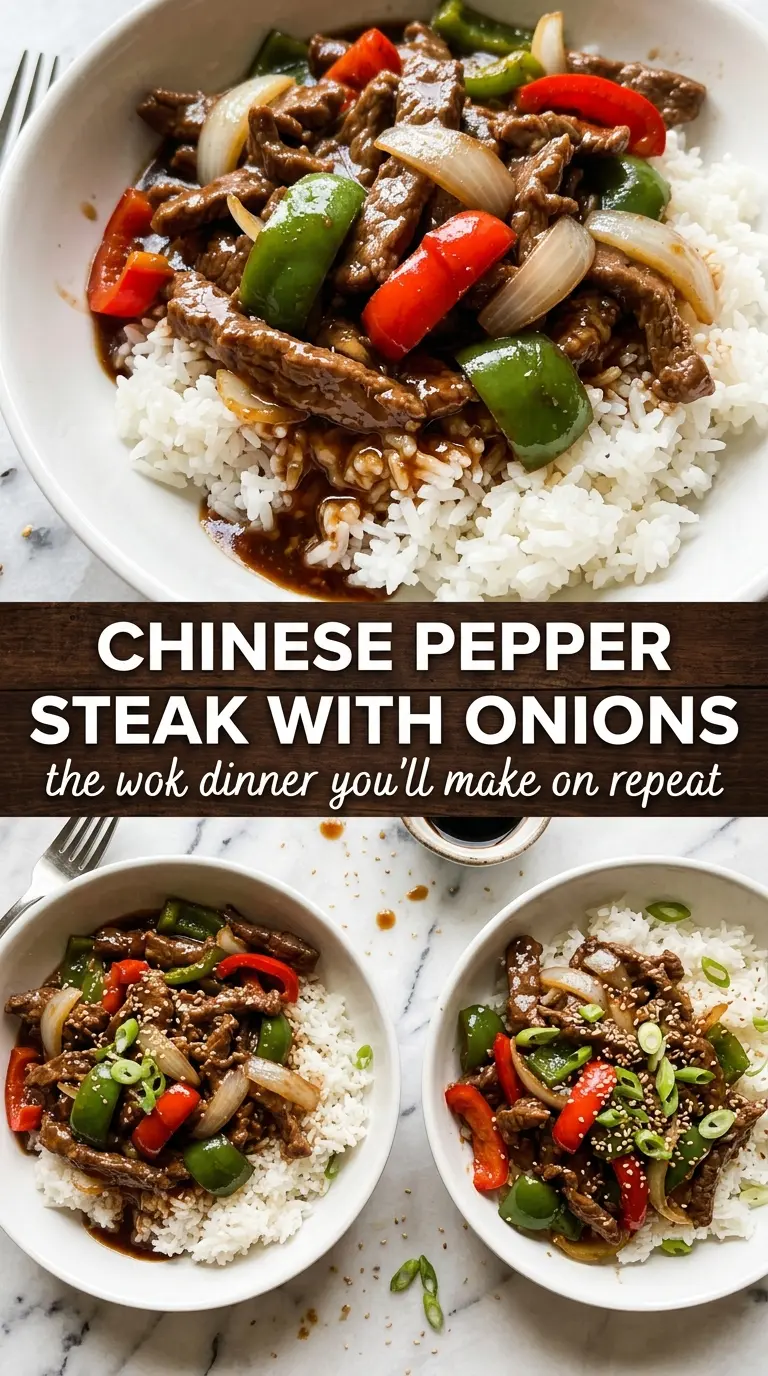
- Bell peppers — Red and green peppers give you sweetness and a sharper, grassy note in the same bite. Slice them thick enough to hold their shape, or they’ll collapse before the sauce finishes.
- Onion — This brings sweetness and body to the stir-fry. A large onion should soften at the edges but still keep some structure, since mushy onions make the dish feel heavy.
- Soy sauce, oyster sauce, and hoisin — These build the deep, savory base that makes this taste like takeout. Oyster sauce gives the sauce its roundness, while hoisin adds a little sweetness and color; together they do the heavy lifting.
- Fresh garlic and ginger — These go in late because they burn fast. Thirty seconds in the hot pan is enough to wake them up without making them bitter.
- Beef broth — This loosens the sauce just enough to coat everything evenly. Water will work in a pinch, but the broth gives the sauce more depth and keeps it from tasting thin.
Building the Stir-Fry So the Sauce Goes Glossy, Not Gloopy
Marinating the Beef First
Mix the beef with the soy sauce, cornstarch, and sesame oil, then let it sit for 20 minutes. That short rest is enough for the seasoning to soak in and for the starch to hydrate, which helps the beef sear instead of sticking. If you skip the marinating time, the meat will still cook, but the final dish loses a lot of its texture.
Cooking the Beef in a Hot Pan
Heat the oil until it shimmers, then add the beef and leave it alone long enough to brown before stirring. You want color, not gray steam, so work in batches if your pan looks crowded. Once the beef is cooked through, remove it; if it stays in the pan while the vegetables cook, it will tighten up and lose that tender bite.
Charing the Peppers and Onions
Add the peppers and onion to the same wok and stir-fry just until the edges start to blister. The vegetables should still have some snap in the middle, because they’ll cook a little more once the sauce goes in. If they start releasing a lot of liquid, your heat is too low and the stir-fry will taste more stewed than seared.
Finishing the Sauce
Stir in the garlic and ginger for about 30 seconds, then return the beef and pour in the sauce. Toss everything over high heat until the sauce turns shiny and lightly thickened, about 2 minutes. If the sauce looks thin, give it another 30 seconds; if it looks pasty, the pan was too cool or the cornstarch settled, so whisk the sauce again before adding it next time.
How to Adapt This Pepper Steak Without Losing the Takeout Feel
Use flank steak for a more classic texture
Swap the ground beef for thinly sliced flank steak if you want longer, more traditional strips of meat. Slice it across the grain and don’t cook it past the point where it loses its pink color, since it finishes in the sauce and overcooking makes it chewy.
Make it gluten-free with a couple of swaps
Use tamari instead of soy sauce and check that your oyster sauce and hoisin are labeled gluten-free. The flavor stays close to the original, but you need those labeled swaps or the sauce can pick up hidden wheat.
Lower the sweetness without flattening the sauce
Cut the brown sugar to 2 teaspoons if you like a less sweet stir-fry. The hoisin still brings some sweetness, so the sauce keeps its balance; it just leans more savory and less glossy-sweet.
Add heat without muddying the sauce
Stir in crushed red pepper or a spoonful of chili garlic sauce with the finished sauce mixture. Add it before the sauce hits the pan so the heat blends in evenly instead of sitting in sharp little pockets.
Storage and Reheating
- Refrigerator: Store leftovers for up to 4 days. The peppers soften a bit as they sit, but the flavor stays strong.
- Freezer: It freezes well for up to 2 months, though the peppers will be softer after thawing. Freeze in airtight containers with the rice kept separate if possible.
- Reheating: Reheat gently in a skillet over medium-low heat with a splash of water or broth. Microwaving at full power can make the beef tough and the sauce oily, so go slow if you want the best texture.
Questions I Get Asked About This Recipe
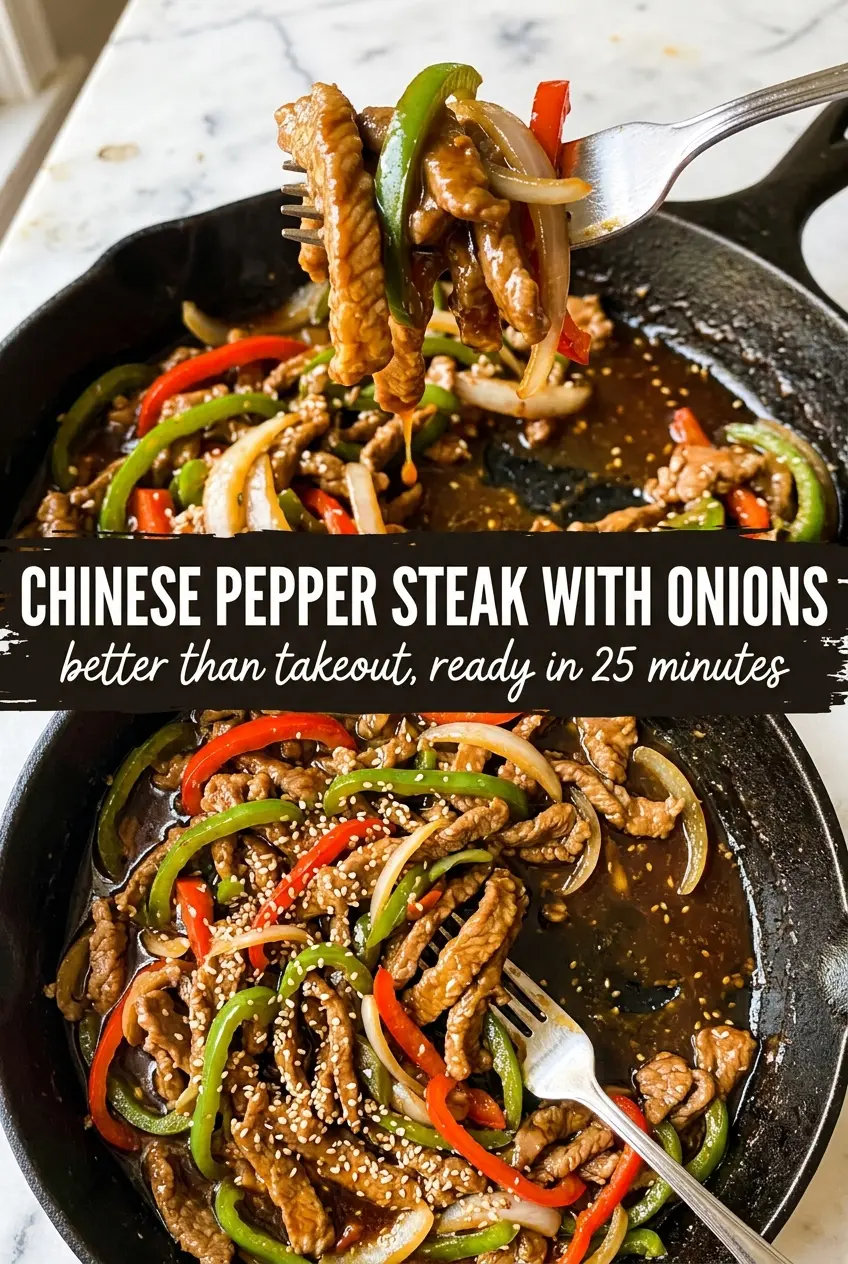
Chinese Pepper Steak with Onions
Ingredients
Equipment
Method
- In a bowl, mix the soy sauce, cornstarch, and sesame oil with the ground beef until evenly coated, then let it sit 20 minutes.
- In a separate bowl, whisk together the sauce soy sauce, oyster sauce, hoisin, brown sugar, beef broth, and cornstarch, then set aside.
- Heat the oil in a wok or large Dutch oven over high heat, then cook the beef, breaking it apart, until browned, about 0–5 minutes, and remove to a plate.
- Stir-fry the bell peppers and onion in the same wok or Dutch oven 3–4 minutes until slightly charred, keeping the heat high and tossing constantly.
- Add the garlic and ginger and cook 30 seconds until fragrant, stirring quickly so they don’t brown too much.
- Return the browned beef to the wok and toss for 10–20 seconds to rewarm.
- Pour the sauce over everything and cook 2 minutes, tossing until thickened and glossy, with a dark fragrant sheen.
- Serve the pepper steak over steamed rice.