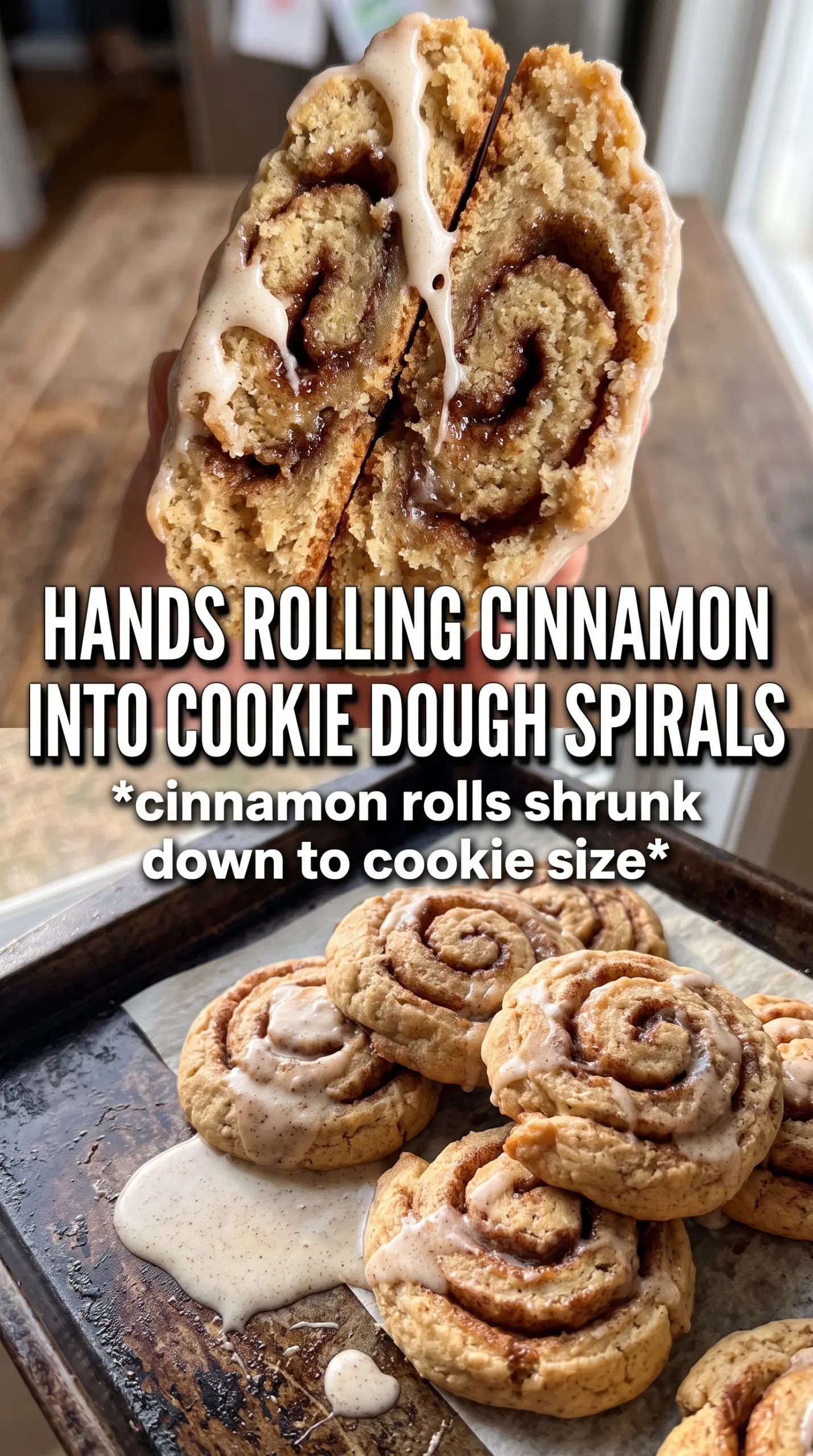
Cinnamon Roll Cookies bake up with the same warm swirl and soft center people love in a classic cinnamon roll, but in a form you can mix, chill, slice, and serve without yeast or proofing. The edges turn lightly golden, the middles stay tender, and every bite brings that brown sugar-cinnamon ribbon through the dough. A spoonful of cream cheese glaze over the top finishes them with the right amount of tang.
What makes these work is the slice-and-bake method. The dough chills into neat logs, which keeps the spirals defined and prevents the filling from melting out in the oven. Soft butter in the filling helps it spread in a thin, even layer, while the short bake time keeps the cookies from drying out before the centers set.
Below you’ll find the small details that matter most: how to roll the dough without cracking it, why chilling the logs pays off, and what to do if you want the glaze thicker or thinner.
The swirl stayed neat after chilling, and the cream cheese glaze melted into the warm cookies just enough without making them soggy. My kids kept grabbing the ones with the most cinnamon in the center.
Cinnamon Roll Cookies with that clean brown sugar swirl and cream cheese drizzle are the kind of treat worth pinning for bake days and dessert trays.
The Chilling Step That Keeps the Swirl from Smearing
These cookies rely on a tight log and a cold rest. If the dough is sliced while warm, the cinnamon filling squishes out and the rounds lose that clean pinwheel look. Chilling firms the butter in both the dough and the filling, which gives you sharp spirals and helps the cookies hold their shape in the oven.
The other thing that matters is how tightly you roll from the long side. Loose rolling leaves air pockets, and those gaps show up after baking as uneven spirals or little tunnels in the center. A snug roll gives each cookie a full swirl from edge to edge, which is what makes them look like mini cinnamon rolls instead of just cinnamon cookies.
- Softened butter — This needs to be pliable enough to cream with the sugar and spread in the filling without tearing the dough. Melted butter makes the dough greasy and the filling runny.
- Brown sugar — Packed brown sugar is what gives the center that sticky, cinnamon-roll-style bite. Light or dark brown sugar both work; dark brown sugar gives a deeper molasses note.
- Cinnamon — The amount here is generous on purpose. It needs to stand up to the cookie dough, so don’t reduce it unless you want a gentler swirl.
- Powdered sugar in the glaze — It dissolves into the cream cheese and milk without graininess, which keeps the topping smooth enough to drizzle.
What Each Ingredient Is Actually Doing in This Recipe
- Primary ingredient (the star) — Quality matters most. Choose the best you can find.
- Cooking medium (oil, butter, or broth) — This carries flavors and prevents dryness.
- Seasonings (salt, pepper, spices, herbs) — Layer flavors so nothing overpowers. Build depth gradually.
- Aromatics (garlic, onion, herbs) — Cook with fat to bloom flavors. Become the foundation.
- Supporting ingredients — Complement the main ingredient without overpowering it.
- Sauce or liquid (if applicable) — Brings flavors together. Balance richness with acid.
- Acid (lemon, vinegar, wine, or other) — Brightens and prevents flat-tasting results.
- Final finish (garnish, glaze, or sauce) — Prevents one-dimensional taste and adds visual appeal.
Rolling, Chilling, and Slicing the Logs Cleanly
Mix the dough just until it comes together
Cream the butter and sugar until the mixture looks pale and fluffy, then add the egg and vanilla. When the flour goes in, stop mixing as soon as the dough no longer looks dry. If you beat it too long at this stage, the cookies can turn tough and the dough gets harder to roll without cracking.
Spread the filling in an even layer
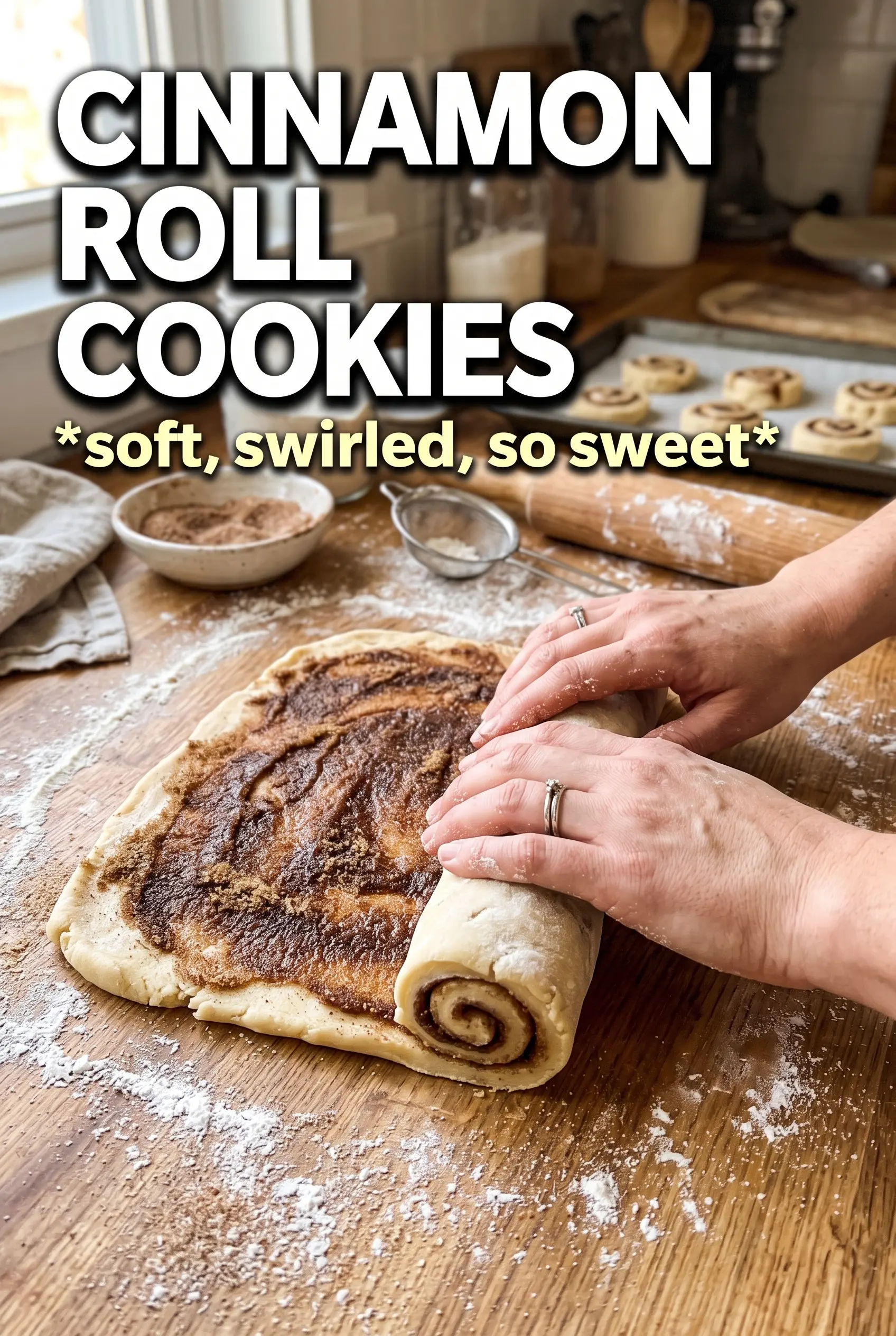
Roll each half of the dough into a rough 10×8 rectangle between parchment sheets. The size does not need to be perfect, but the thickness should be even so the cookies bake at the same rate. Spread the softened butter first, then the brown sugar and cinnamon, all the way to the edges except for a tiny bare strip on the far edge to help seal the roll.
Form a tight spiral and chill it hard
Roll from the long side and keep the dough snug as you go, using the parchment to lift and guide it. If the dough starts to crack, let it sit for a minute or two before continuing; cold dough needs a moment to relax. Wrap the log and chill for a full hour so the spiral firms up enough to slice without squashing the filling.
Bake just until the edges set
Slice the chilled logs into 1/2-inch rounds and place them on a lined baking sheet with a little space between each one. Bake at 350°F until the edges turn lightly golden and the centers still look soft. Pull them before they look dry all over, because they keep setting on the pan and that’s what keeps them tender instead of crumbly.
Glaze while the cookies are warm
Stir the cream cheese glaze until smooth, then drizzle it over the cookies while they’re still warm. Warm cookies help the glaze settle into the swirls without disappearing completely. If you want a thicker finish, use less milk; if you want a looser drizzle, add it a teaspoon at a time.
Make Them a Little More Gooey
Bake on the lower end of the time range and pull them when the centers still look slightly soft. That gives you a more cinnamon-roll-like middle, but the cookies need a few extra minutes on the pan before moving them so they don’t collapse.
Dairy-Free Version
Use a plant-based butter that behaves like real butter for both the dough and filling, and swap in a dairy-free cream cheese for the glaze. The swirl and texture still work, but the glaze will taste a little less tangy and a bit sweeter.
Extra-Strong Cinnamon Swirl
Add another teaspoon of cinnamon to the filling and use dark brown sugar for a deeper, more molasses-heavy center. The cookies will taste closer to a bakery-style cinnamon roll, though the swirl will be slightly darker and less delicate looking.
Storage and Reheating
- Refrigerator: Store in an airtight container for up to 5 days. The glaze will firm up, and the cookies stay soft if they’re sealed well.
- Freezer: Freeze the baked cookies without glaze for up to 2 months. Thaw at room temperature, then glaze after they’re no longer cold so the topping stays smooth.
- Reheating: Warm unglazed cookies for 10 to 15 seconds in the microwave or a few minutes in a low oven. Don’t overheat glazed cookies or the cream cheese topping can melt and slide off.
Questions I Get Asked About This Recipe
Cinnamon Roll Cookies
Ingredients
Equipment
Method
- Beat the softened unsalted butter and granulated sugar until fluffy, 2–3 minutes, scraping the bowl as needed. Visual cue: the mixture should look lighter in color and thicker.
- Beat in the egg and vanilla extract until fully combined. Visual cue: the batter becomes smooth and glossy.
- Fold in the all-purpose flour, baking powder, and salt just until no dry streaks remain. Visual cue: the dough pulls together and looks evenly textured.
- Divide the dough into two equal halves. Visual cue: each half should be ready to roll into a rectangle.
- Roll each half into a 10x8 rectangle on parchment. Visual cue: aim for even thickness so the swirl stays consistent.
- Spread each rectangle with softened unsalted butter. Visual cue: cover the surface in a thin, even layer.
- Sprinkle the brown sugar and cinnamon over the buttered dough. Visual cue: you should see a uniform cinnamon-brown sugar layer.
- Roll tightly from the long side to form a log. Visual cue: keep the roll snug so the cross-section shows a tight spiral.
- Wrap each log in parchment and refrigerate for 1 hour. Visual cue: the dough should feel firm and sliceable.
- Preheat the oven to 350°F. Visual cue: the oven reaches temperature before baking the sliced cookies.
- Slice the chilled logs into 1/2-inch rounds. Visual cue: each round reveals the cinnamon-brown sugar swirl.
- Bake for 10–12 minutes until the edges are just golden. Visual cue: the centers look set but still soft.
- Mix the cream cheese glaze ingredients and drizzle over warm cookies. Visual cue: the glaze ribbons slightly as it settles onto the tops.