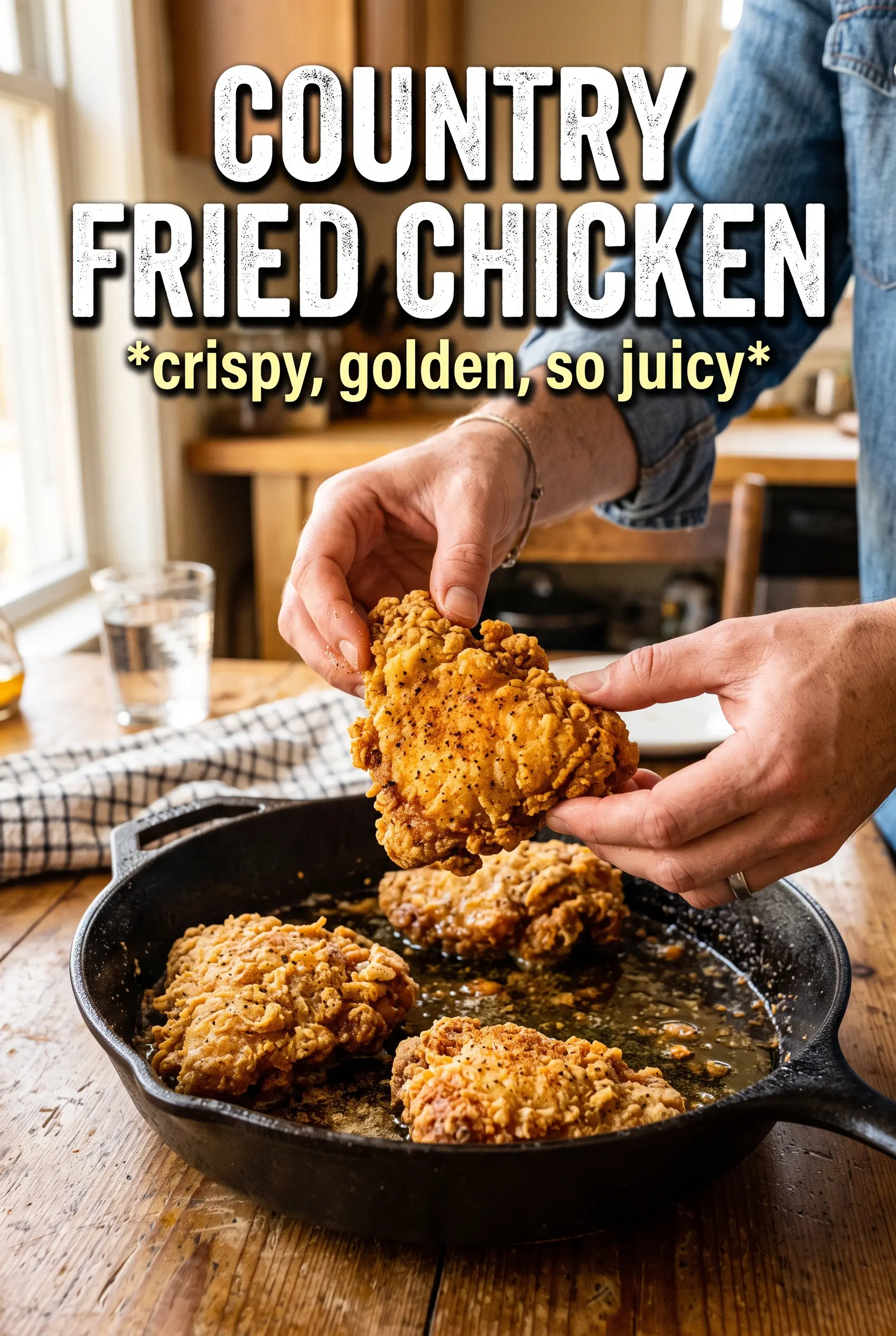
Country fried chicken lands with the kind of crust that crackles when you cut into it, then gives way to juicy meat and a blanket of peppery gravy that soaks into every ridge. The coating stays light enough to shatter, not turn heavy and doughy, which is the whole point of doing this dish the right way.
The buttermilk marinade does more than add flavor. It seasons the chicken all the way through and helps the flour cling in those craggy bits that fry up extra crisp. Cornstarch is the other quiet trick here. It keeps the dredge from eating up too much moisture, so the crust fries up blistered and golden instead of thick and pasty.
Below you’ll find the method that keeps the breading on the chicken, the temperature that gives you a deep golden crust without burning the coating, and the gravy timing that makes this dish come together while the chicken is still hot.
The crust stayed crisp even after I poured on the gravy, and the chicken cooked through perfectly in the skillet without drying out. My husband said the peppery gravy tasted just like the kind he grew up eating.
Save this country fried chicken for the night you want shatter-crisp chicken with real pepper gravy and no soggy breading.
The Crust Stays Crisp When You Let the Chicken Rest Before Frying
The part most people rush is the part that decides whether the coating stays put. After dredging, let the chicken sit for a few minutes so the flour hydrates and turns a little tacky. That short rest helps the crust cling through the fry instead of sliding off in the oil.
The other mistake is crowding the skillet. Too many pieces drop the oil temperature, and once that happens the breading drinks grease instead of setting into a crisp shell. Keep the oil around 325°F and work in batches. The chicken should sound lively when it hits the pan, not silent and sluggish.
What the Cornstarch, Buttermilk, and Spices Are Doing Here

- Bone-in chicken pieces — Bone-in pieces stay juicier during the fry and give you more flavor than boneless cuts. If you swap in boneless chicken, cut the cook time down and watch the thermometer closely or the meat will dry out before the crust is ready.
- Buttermilk — This is what tenderizes and seasons the chicken while it marinates. The hot sauce doesn’t make it spicy; it just adds a little backbone. If you don’t have buttermilk, use milk with a splash of vinegar or lemon juice, but the coating won’t cling quite as well.
- Cornstarch — This keeps the dredge lighter and crisper. Flour alone works, but it tends to fry up a little denser. Cornstarch also helps the crust hold some of that rough, craggy texture that makes country fried chicken feel special.
- Smoked paprika, garlic powder, onion powder, and cayenne — These season the coating so the chicken tastes like something before the gravy hits it. The cayenne doesn’t need to read as hot; it just keeps the crust from tasting flat. If you want less heat, cut it back to 1/2 teaspoon and keep the other spices the same.
Frying, Gravy, and Getting Both on the Plate While They’re at Their Best
Marinate Until the Chicken Feels Seasoned
Mix the buttermilk, hot sauce, salt, and pepper, then coat the chicken fully and let it sit for at least 1 hour. Overnight works too, and the flavor gets deeper, but don’t go so long that the surface starts to break down and turn mushy. The chicken should look lightly opaque and feel a little firmer when it comes out of the marinade.
Dredge for the Craggy Bits
Whisk the flour, cornstarch, and spices in a shallow bowl, then press the chicken into the mix so the coating really sticks. Pick it up and press again in the rough spots. Those uneven bits fry into the crispy ridges everyone wants. Let the dredged chicken rest for a few minutes before frying so the coating hydrates and doesn’t fall away in the skillet.
Fry at a Steady 325°F
Heat the oil in a cast-iron skillet until it reaches 325°F, then lay in the chicken without crowding. Fry until the underside is deep golden before turning; if you flip too early, the crust can tear. Cook bone-in pieces about 12 to 15 minutes per side, but trust the thermometer more than the clock and pull the chicken when the thickest part hits 165°F.
Build the Gravy in the Same Pan
Pour off the oil, leaving just a little behind, then melt the butter and whisk in the flour. Cook that paste for a minute or two until it smells nutty, then slowly whisk in the milk and broth. If you add the liquid too fast, the gravy can turn lumpy; steady whisking keeps it smooth. Season generously with salt and a lot of black pepper, because this gravy should taste bold enough to stand up to the fried chicken.
Buttermilk Ranch-Style Version
Add a teaspoon of dried dill and a pinch of onion powder to the dredge, then serve with a little less gravy. The chicken gets a tangier, herbier edge, which works well if you want the coating to carry more of the flavor on its own.
Gluten-Free Country Fried Chicken
Swap the all-purpose flour for a 1:1 gluten-free blend that includes xanthan gum, then use a gluten-free flour blend in the gravy too. The crust will still fry up crisp, though it may brown a little faster, so keep the heat steady and watch the color closely.
Lighter Gravy on the Side
Use half the butter and thin the gravy with a little extra broth if you want something less rich. You still get the peppery, savory finish, but it won’t settle as heavily over the crust.
Storage and Reheating
- Refrigerator: Store chicken and gravy separately for up to 3 days. The crust softens a bit in the fridge, but it still reheats well.
- Freezer: Freeze the fried chicken without gravy for up to 2 months. The gravy can be frozen too, though it may need a good whisk after thawing to smooth it back out.
- Reheating: Warm the chicken on a wire rack in a 375°F oven until hot and crisp again. Skip the microwave if you want the crust to stay intact. Reheat the gravy gently on the stove with a splash of milk or broth, whisking until smooth.
Answers to the Questions Worth Asking
Country Fried Chicken
Ingredients
Equipment
Method
- Whisk buttermilk, hot sauce, salt, and black pepper in a bowl, then add bone-in chicken pieces to coat. Cover and refrigerate for 1 hour, or up to overnight, for the flavors to soak in.
- Whisk all-purpose flour, cornstarch, garlic powder, onion powder, smoked paprika, cayenne, salt, and black pepper in a shallow bowl. Mix until the spices are evenly distributed and the powder looks uniform.
- Remove chicken from the buttermilk marinade, letting excess drip off, then dredge each piece in the flour mixture. Press the coating onto the chicken so it adheres thickly before frying.
- Heat vegetable oil to 325°F in a large cast-iron skillet. Fry chicken for 12-15 minutes per side until deeply golden and cooked through, reaching 165°F internal temperature.
- Melt butter in the skillet (or a separate pan) over medium heat, then whisk in flour and cook for 1-2 minutes. Stir continuously to cook off the raw flour taste.
- Gradually whisk in whole milk and chicken broth, then continue cooking until the gravy thickens to a pourable consistency. Season with plenty of salt and black pepper to taste.
- Serve the fried chicken smothered in country gravy, and finish with cracked black pepper if desired. Plate immediately for the crispiest texture.