Cowboy soup lands somewhere between a weeknight dinner and a pantry rescue, but it eats like a full meal in one bowl. The broth turns smoky and savory, the potatoes soften just enough to thicken the pot, and the beef keeps every spoonful substantial. It’s the kind of soup that feels even better on the second day, when the flavors have had time to settle in and the broth takes on a deeper, richer edge.
The trick is building flavor in layers instead of dumping everything in and hoping for the best. Browning the beef with the onion gives you a solid base, and draining off excess fat keeps the broth from turning greasy. The ranch seasoning adds salt, herbs, and a little tang, while the Rotel and diced tomatoes bring enough acid to keep the soup from tasting flat. Potatoes go in early so they can soften and help the soup feel thick and hearty without any extra flour or cream.
Below, I’ll walk through the small choices that make this soup taste like more than a simple mix of canned goods. There’s also a note on how to keep the potatoes from going mushy and a few ways to adjust the heat if you want it milder or with more kick.
The potatoes held their shape, the broth thickened up nicely, and the ranch seasoning gave it that extra something without tasting like salad dressing. My husband went back for seconds before I even sat down.
Save this cowboy soup for the nights when you want a smoky, filling one-pot dinner with beef, potatoes, beans, and corn.
The Part That Keeps Cowboy Soup Thick Instead of Thin
Most cowboy soup recipes go wrong when the broth gets treated like the main event. It isn’t. The potatoes, beans, and a little bit of starch from the vegetables are what turn the pot into something spoonable and hearty. If you start with too much liquid or rush the simmer, you’ll end up with beef and vegetables floating in flavored stock instead of an actual bowl of soup that eats like dinner.
The other place people lose texture is in the browning. If the beef is gray instead of deeply browned, the soup tastes flatter from the start. You want to cook off the moisture, let some edges take on color, then drain the excess fat before the broth goes in. That keeps the finished soup rich without feeling heavy.
What Each Ingredient Is Actually Doing In This Bowl
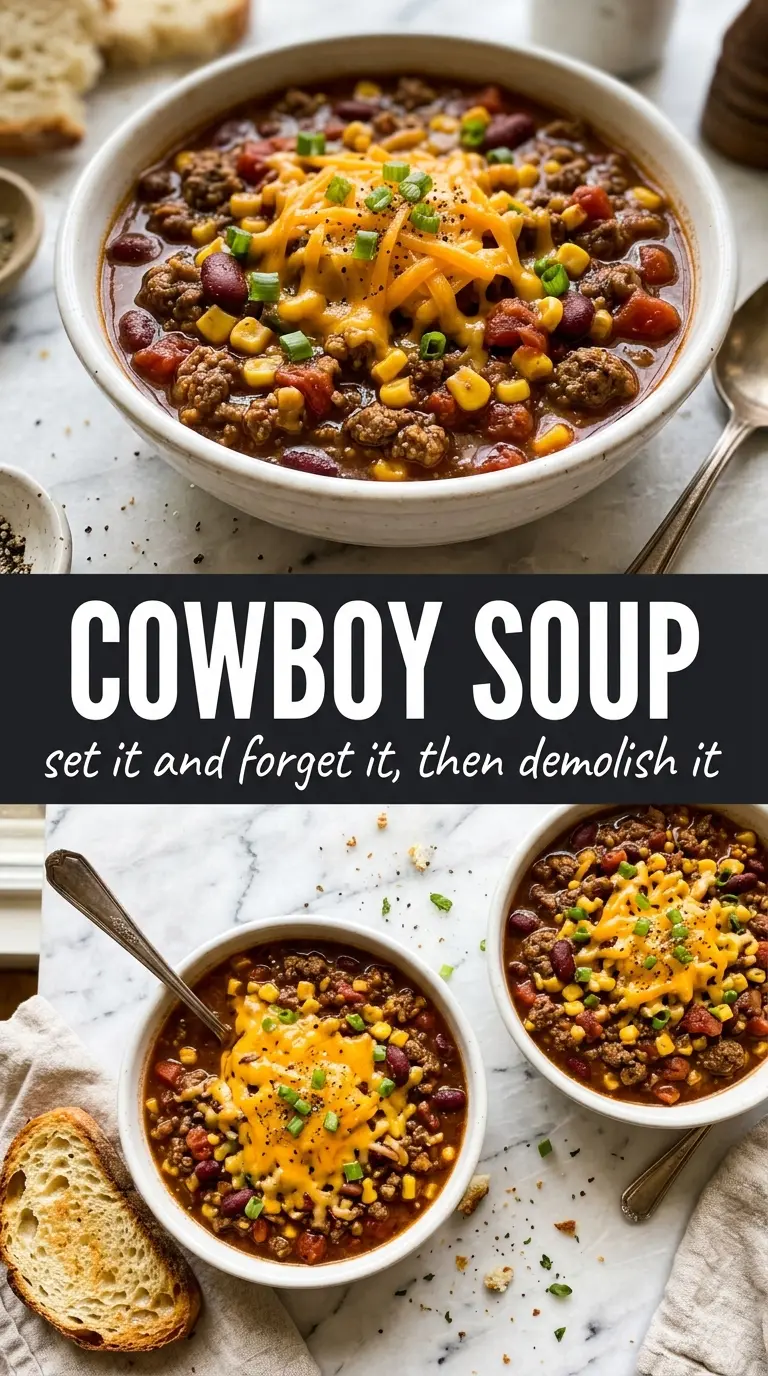
- Ground beef — This gives the soup its backbone. An 85/15 or 90/10 blend works well; anything fattier should be drained well, or the broth can turn slick.
- Potatoes — They do more than add bulk. As they simmer, they release just enough starch to thicken the broth naturally, which is why this soup feels hearty without needing a roux.
- Rotel and diced tomatoes — Use both if you want that smoky, slightly zesty tomato base. If you only have plain diced tomatoes, add a little extra chili powder or a small pinch of cayenne to bring the soup back to life.
- Ranch seasoning — This is the shortcut that makes the broth taste complete. It adds salt, garlic, onion, and herbs all at once, which is why it’s worth using the packet here instead of trying to rebuild the flavor from scratch.
- Beef broth — A decent broth matters because it’s the liquid everything simmers in. Store-bought is fine, but if yours tastes flat, add a little more salt at the end instead of assuming the ranch packet will cover it.
- Corn and pinto beans — These bring sweetness and body. Drain both so the broth stays clean-tasting and doesn’t pick up extra can liquid.
Building the Pot So the Potatoes Stay Tender
Brown the Beef and Onion First
Cook the ground beef and diced onion together over medium-high heat until the meat loses its pink color and you see a few browned spots forming on the bottom of the pot. Those browned bits matter because they carry flavor into the broth later. If a lot of grease pools in the pan, drain it off before adding the garlic and liquid so the soup doesn’t taste oily.
Wake Up the Garlic Briefly
Add the minced garlic after the beef is browned and cook it for about 30 seconds, just until it smells fragrant. Garlic burns fast once the pot is hot, and burnt garlic will make the whole soup taste bitter. At this stage you want aroma, not color.
Simmer Until the Potatoes Give Easily
Once the tomatoes, beans, corn, broth, seasonings, and potatoes are in the pot, bring everything to a boil and then reduce the heat so it keeps a steady simmer. A hard boil can break the potatoes apart before they’re tender. After about 20 to 25 minutes, the potatoes should be soft all the way through but still holding their shape when you stir.
Finish With the Toppings Last
Taste the soup before serving and adjust salt and pepper only after it has simmered. The broth concentrates as it cooks, so seasoning too early can push it over the edge. Finish each bowl with shredded cheddar and green onions while the soup is piping hot so the cheese melts slightly instead of clumping on top.
Make It Spicier Without Changing the Base
Add an extra half teaspoon of chili powder or a pinch of cayenne when you stir in the broth. If you want more heat without changing the flavor balance, use hot Rotel instead of mild. That keeps the soup smoky and layered instead of just turning it aggressively hot.
Make It Gluten-Free
This soup is naturally close already, but check the ranch seasoning and broth labels to be certain they’re gluten-free. The texture doesn’t need flour or a thickener, so once those two ingredients are verified, the recipe stays the same.
Use Ground Turkey Instead of Beef
Ground turkey works, but it needs a little help to taste as full as beef. Add a drizzle of oil when you brown it and don’t skip the cumin, since that seasoning gives the soup more depth. The finished pot will be lighter, with a cleaner broth and less richness.
Make It Creamier Without Heavy Cream
Mash a few of the cooked potato pieces against the side of the pot before serving. That gives the broth a thicker, slightly creamier body without adding dairy or changing the flavor. It’s the easiest way to make the soup feel a little more luxurious.
Storage and Reheating
- Refrigerator: Store for up to 4 days. The potatoes will soften a bit more as it sits, and the broth may thicken slightly.
- Freezer: It freezes well for up to 3 months. Cool it completely, then portion it into airtight containers. The potatoes can get softer after thawing, but the soup still reheats nicely.
- Reheating: Warm it gently on the stove over medium-low heat, stirring often. Add a splash of broth or water if it has thickened too much. Don’t boil it hard, or the potatoes can break down and turn mealy.
Questions I Get Asked About This Recipe
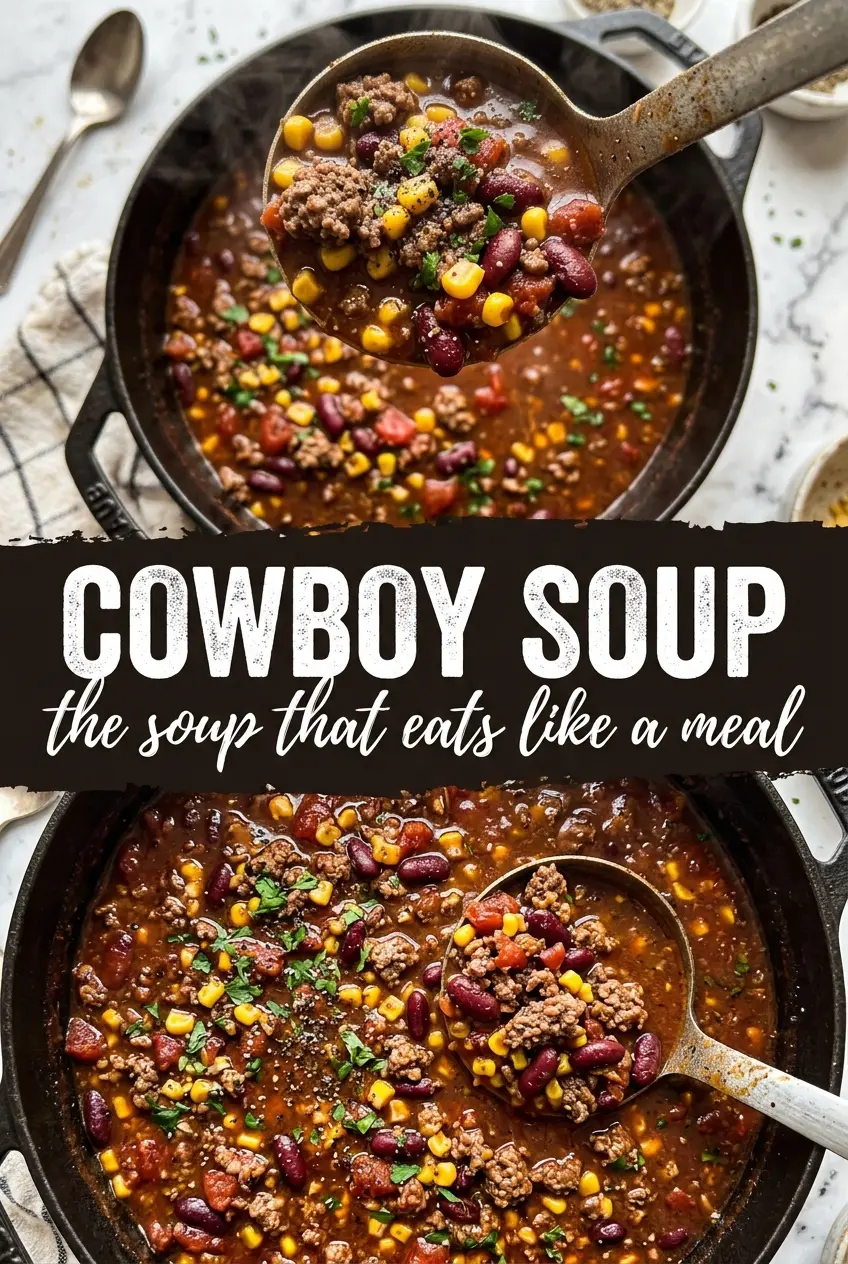
Cowboy Soup
Ingredients
Equipment
Method
- Heat a large pot over medium-high heat and brown the ground beef with the diced onion until the beef is no longer pink. Drain excess fat, then add the minced garlic and cook for 30 seconds.
- Stir in the diced tomatoes, pinto beans, corn, Rotel tomatoes, beef broth, ranch seasoning, cumin, and chili powder, then add salt and black pepper to taste. Bring the mixture to a boil and add the diced potatoes.
- Reduce heat to medium and simmer for 20–25 minutes, stirring occasionally, until the potatoes are tender and the broth tastes well-seasoned. Adjust seasoning as needed.
- Ladle the cowboy soup into bowls and top each serving with shredded cheddar and green onions. Serve hot.