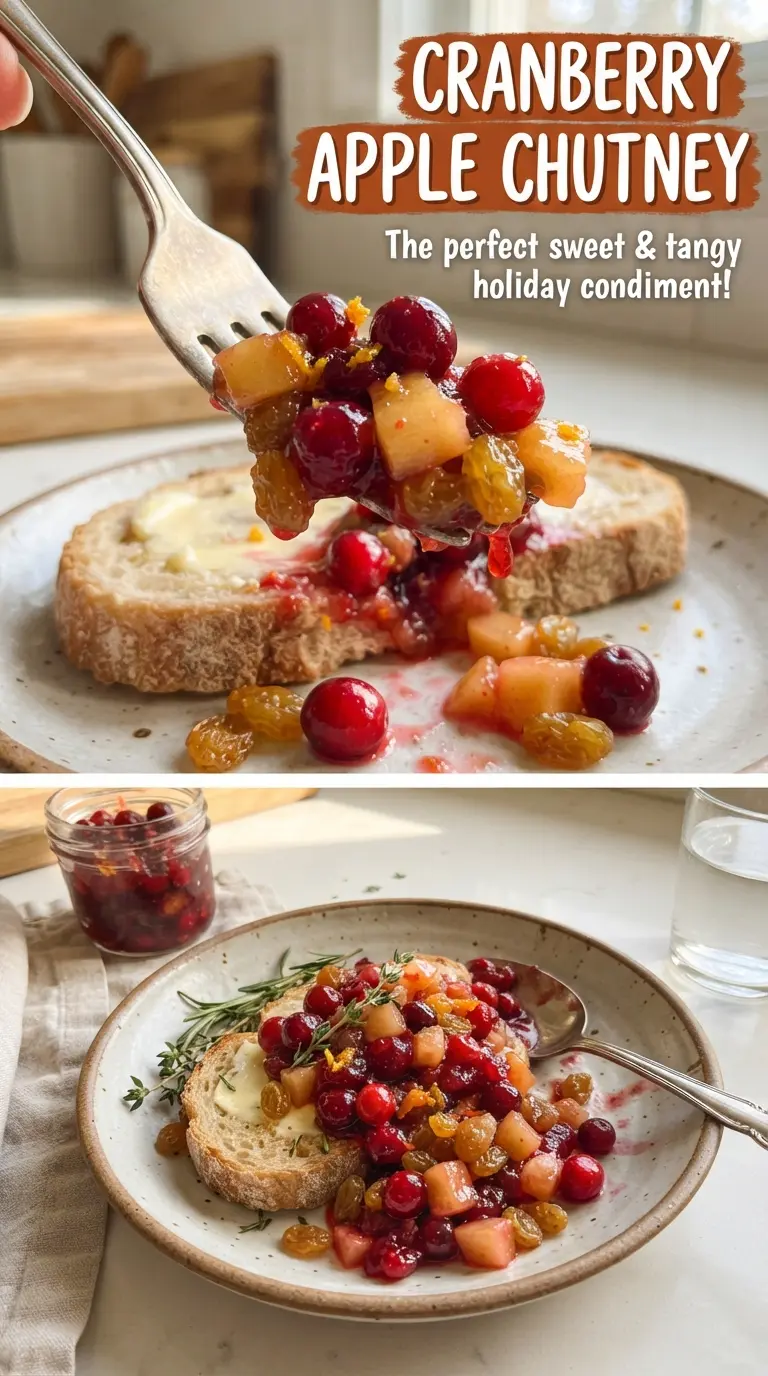
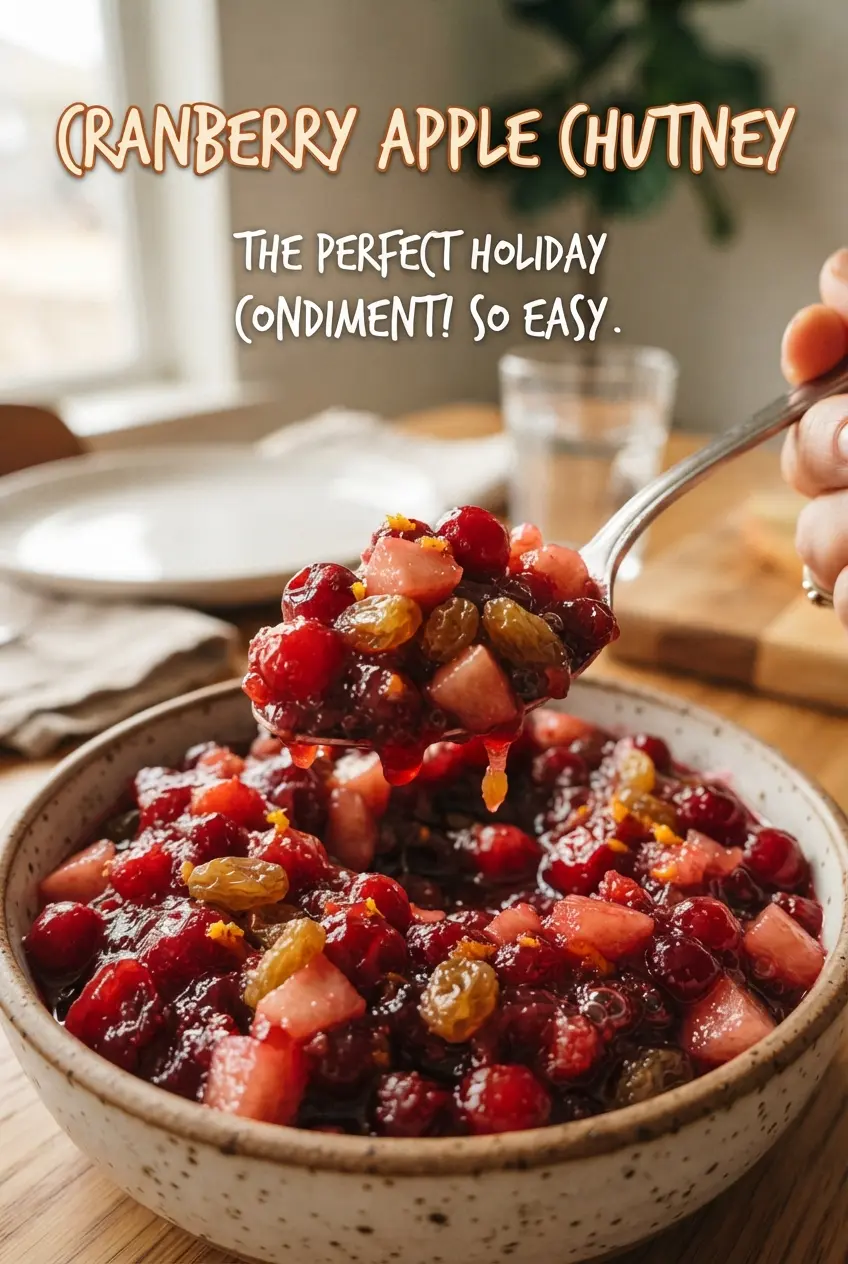
Thick, glossy cranberry apple chutney brings sharp fruit, warm spice, and just enough sweetness to sit right next to rich holiday food or a plain cheese board. The cranberries break down into a jammy base while the apples hold enough shape to give every spoonful a little bite. It’s the kind of condiment that makes leftovers feel planned and a simple sandwich taste like you put thought into lunch.
The balance matters here. Brown sugar softens the cranberries without turning the chutney flat, apple cider vinegar keeps it bright, and a small amount of ginger, cloves, and red pepper flakes gives it backbone instead of dessert-level sweetness. I tested this with both tart and sweeter apples, and the best result came from apples that stayed slightly intact after simmering instead of disappearing into the pot. That texture is what makes it useful beside turkey, pork, or sharp cheese.
Below, I’ve included the one simmering cue that tells you when the chutney is actually done, plus a few smart swaps if you need to adjust the spice, sweetness, or make-ahead timing.
The chutney thickened up beautifully as it cooled, and the apples still had a little texture instead of turning mushy. I served it with pork chops and kept sneaking spoonfuls from the jar all week.
Save this cranberry apple chutney for turkey sandwiches, cheese boards, and every meal that needs a sweet-tart spoonful with real texture.
The Part That Keeps Cranberry Chutney From Turning Watery
The biggest mistake with chutney is stopping while it still looks loose in the pan. Cranberries keep releasing juice as they cook, then the mixture thickens again as it cools. If you pull it too early, you end up with a syrupy condiment instead of something you can spoon cleanly onto turkey or cheese.
The other key is the order. Starting with the sugar, vinegar, and water builds a hot, balanced base before the fruit goes in, so the cranberries can burst without scorching the pan. Once the apples go in, you want a gentle simmer, not a hard boil, or the fruit breaks down too fast and the chutney loses its chunky texture.
- Cranberries — Fresh cranberries give the chutney its tart edge and natural pectin. Frozen cranberries work too; add them straight from the freezer and expect a minute or two of extra simmering.
- Apples — Use a firm apple that holds shape, like Honeycrisp, Pink Lady, or Granny Smith. Softer apples turn mushy and disappear into the sauce.
- Apple cider vinegar — This keeps the chutney bright and food-safe for storage. White vinegar tastes harsher here and doesn’t add the same fruit-friendly roundness.
- Golden raisins — They melt into little chewy pockets and deepen the sweetness without making the chutney taste candylike. Regular raisins work, but the flavor lands a little darker.
What Each Ingredient Is Actually Doing in the Pot
- Brown sugar — This gives the chutney its deep, molasses-backed sweetness and helps the final texture turn glossy. Light brown sugar is fine; dark brown sugar will taste a little more caramel-like.
- Fresh ginger — Ginger wakes up the whole pot and keeps the chutney from tasting heavy. Ground ginger can stand in, but use less because it reads sharper and less fresh.
- Cinnamon and cloves — These are background spices, not the main event. If you overdo either one, the chutney starts to taste like pie filling instead of a savory-sweet condiment.
- Red pepper flakes — This doesn’t make the chutney spicy in a loud way; it just adds a little heat at the back of the bite. Leave them out if you want a softer result, but don’t replace them with hot sauce, which thins the mixture.
Cooking the Fruit Down to a Spoonable, Jammy Finish
Building the Base
Bring the brown sugar, vinegar, and water to a boil first so the sugar fully dissolves before the fruit goes in. That keeps the chutney smooth instead of grainy. When the onion, ginger, cinnamon, cloves, red pepper flakes, and salt go in, the mixture should smell sharp, warm, and a little sweet within a minute or two.
Letting the Cranberries Pop
Stir in the cranberries, apples, and raisins, then lower the heat to a steady simmer. You’ll hear the cranberries start to pop, and the liquid will go from thin and bright to darker and more syrupy. Stir often so the sugar doesn’t stick on the bottom, especially as the chutney starts to thicken near the end.
Knowing When It’s Done
After 20 to 25 minutes, the chutney should look thick and glossy with visible fruit pieces suspended in it. Run a spoon through the center of the pan; the track should hold for a second before slowly filling back in. If it still pours like sauce, keep cooking because it will tighten further as it cools, and you want to stop before it turns stiff.
How to Tweak This Chutney Without Losing the Balance
Make it dairy-free and gluten-free by default
This chutney already fits both diets without any changes, which is part of why it’s such a useful side. Serve it with roasted meat, crackers, or cheese boards as-is, and it still brings the same sweet-tart bite and chunky texture.
Swap the apples based on how much texture you want
Granny Smith gives the sharpest, firmest result. Honeycrisp or Pink Lady make the chutney a little softer and sweeter, while very soft apples will break down fast and give you a smoother sauce instead of a chunky relish.
Dial the spice up or down
For a milder chutney, skip the red pepper flakes and use a light hand with cloves. For more warmth, add a pinch more ginger or a few extra flakes, but don’t chase heat too far or it will cover the cranberry flavor instead of supporting it.
Storage and Reheating
- Refrigerator: Store in an airtight jar or container for up to 2 weeks. The chutney thickens as it chills, so don’t judge the final texture while it’s still warm.
- Freezer: It freezes well for up to 3 months. Cool it completely first, then pack into freezer-safe containers with a little headspace.
- Reheating: Warm gently in a small saucepan over low heat or use it straight from the fridge. If it seems too thick, stir in a teaspoon of water at a time; high heat can make the sugars taste harsh.
Questions I Get Asked About This Chutney
Cranberry Apple Chutney
Ingredients
Equipment
Method
- Combine brown sugar, apple cider vinegar, and water in a saucepan over high heat and bring to a boil. You should see steady bubbling across the surface before moving on.
- Add red onion, fresh ginger, ground cinnamon, ground cloves, red pepper flakes, and salt. Stir until the spices are evenly dispersed.
- Simmer the mixture for 5 minutes. Keep it at a gentle simmer with small bubbles, and stir a few times so the onion softens.
- Stir in fresh cranberries, apples, and golden raisins. The pot will look thickening as the fruit begins to release juices.
- Simmer for 20-25 minutes, stirring often, until the mixture turns thick and jammy. Look for a spoon that leaves slow trails and a glossy, sticky texture.
- Cool completely before transferring to jars. The chutney should thicken further as it cools, looking spoonable and cohesive.
- Refrigerate until ready to serve. Serve chilled with turkey, pork, or on a cheese board.