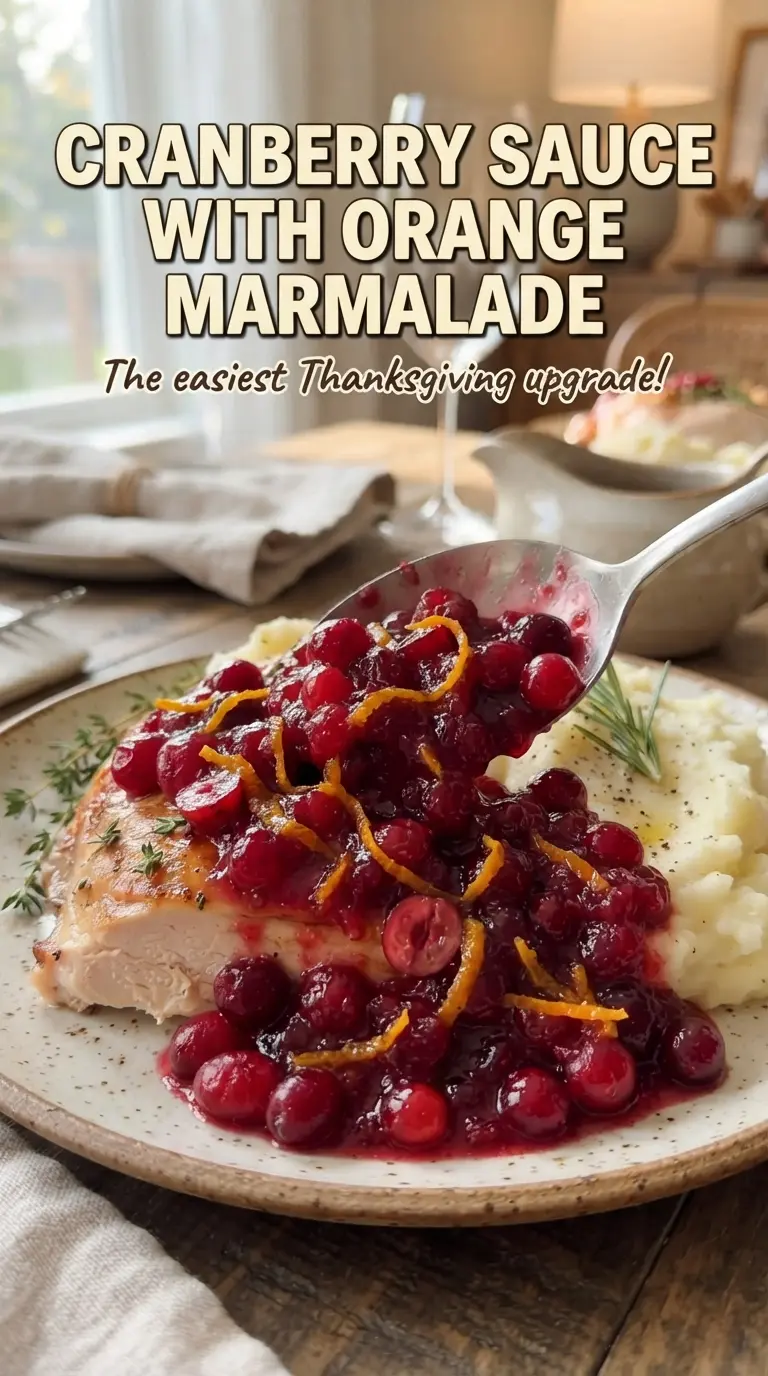
Glossy cranberry sauce with orange marmalade has a brighter, deeper flavor than the plain version most people know. The cranberries still bring that sharp, clean tartness, but the marmalade adds orange peel, a little bitterness, and enough body to make the sauce taste layered instead of flat. It sets up beautifully as it cools, too, which means you get a spoonable sauce that looks as good on the table as it tastes.
This version works because the cranberries are cooked just long enough to burst and thicken the pot on their own, then the marmalade goes in near the end so the citrus stays vivid. Lemon juice keeps the sweetness in check, and a small pinch of salt keeps the fruit from tasting one-note. That little balance is what makes people go back for a second spoonful instead of treating cranberry sauce like an afterthought.
Below, you’ll find the small timing details that keep the sauce glossy instead of mushy, plus a few smart swaps if you’re working with what you already have on hand.
The marmalade gave the sauce this shiny finish and the orange peel made it taste fresh instead of just sweet. It thickened up perfectly once chilled.
Orange marmalade cranberry sauce is the easy upgrade that gives holiday dinners a brighter, glossier finish.
The Part Where Cranberries Burst and the Sauce Starts to Thicken
The biggest mistake with cranberry sauce is pulling it off the heat too early or cooking it down until the berries collapse into a dull paste. You want the cranberries to burst and release their pectin, which is what gives the sauce that natural, glossy body. If the pot still looks loose at the end of the simmer, don’t keep boiling hard; a gentle simmer is enough, and the sauce will tighten as it cools.
The marmalade changes the texture as much as the flavor. Stir it in after the cranberries have broken down so the peel stays distinct and the citrus note stays bright instead of cooked-flat. That last 2 to 3 minutes is where the sauce goes from tart fruit compote to something that coats a spoon cleanly.
What the Orange Marmalade Is Really Doing Here
- Fresh cranberries — These bring the tart backbone and the natural thickening. Frozen cranberries work too; use them straight from the freezer and expect the simmer to take a minute or two longer.
- Orange marmalade — This is the shortcut to a more complex sauce. It adds orange peel, sweetness, and a little bitterness, which keeps the finished dish from tasting sugary.
- Sugar — Cranberries need enough sweetness to balance their sharpness, and the sugar also helps the sauce turn glossy. Cut it too far and the sauce tastes harsh, even if the marmalade is sweet.
- Lemon juice — A small splash keeps the flavor lively and stops the sauce from leaning heavy. If your marmalade is very sweet, the lemon juice matters even more.
- Salt — Just a pinch is enough to pull the fruit flavor forward. Without it, the sauce can taste flat instead of bright.
Cooking the Cranberries So the Sauce Stays Glossy, Not Jammy
Start with the syrup
Bring the sugar and water to a full boil before the cranberries go in. That first minute matters because it dissolves the sugar cleanly, so the berries cook in a balanced syrup instead of a grainy one. If the sugar is still sitting in the pot when the cranberries go in, the texture can turn uneven and the sauce won’t look as smooth.
Cook until the berries split open
Add the cranberries and keep the heat at a steady simmer for about 10 minutes. You’ll hear quiet popping as the skins burst, and that’s your cue that the pectin is doing its job. Stir occasionally, but don’t crush every berry; leaving some whole gives the sauce a better texture and a fresher look.
Finish with marmalade and acid
Stir in the marmalade, lemon juice, and salt once the berries have burst. The sauce should look glossy and slightly loose at this stage because it thickens as it cools. Let it bubble for 2 to 3 more minutes, just until the marmalade disappears into the fruit and the whole pot looks shiny rather than watery.
Cool before judging the texture
Take the pan off the heat and let the sauce cool completely before you decide if it’s done. Hot cranberry sauce always looks thinner than it will once chilled, and overcooking at this point is how you end up with a stiff, sticky paste. A covered bowl in the fridge gives you the best set and the brightest flavor.
How to Change This Without Losing the Orange-Cranberry Balance
Use frozen cranberries when fresh aren’t available
Frozen cranberries work almost the same way as fresh ones. Add them straight from the freezer and give the sauce a few extra minutes on the stove; thawing first just adds liquid and doesn’t help the texture.
Make it less sweet without flattening the flavor
Cut the sugar back by about 2 tablespoons and keep the lemon juice in place. The sauce will taste a little sharper and more fruit-forward, but don’t reduce the marmalade too much or you lose the orange peel character that makes this version stand out.
Make it vegan or naturally gluten-free
This recipe is already both vegan and gluten-free as written, which is one reason it lands on so many holiday tables. Just check the marmalade label if you’re serving someone with a strict gluten-free need, since a few specialty brands use additives you may want to avoid.
Swap in honey marmalade for a deeper sweetness
If your marmalade is the sweeter, softer kind, the sauce will taste rounder and less bitter. That works well with roast turkey or pork, but you’ll want the lemon juice to stay in the mix so the final sauce doesn’t go syrupy.
Storage and Reheating
- Refrigerator: Store in a covered container for up to 1 week. It will thicken as it chills, which is exactly what you want.
- Freezer: Freezes well for up to 2 months. Pack it in a freezer-safe container with a little headspace, then thaw overnight in the fridge.
- Reheating: Cranberry sauce is usually best served cold or at room temperature, but you can warm it gently over low heat if needed. Don’t boil it again or the texture can get loose and the fresh orange note fades fast.
Answers to the Questions Worth Asking

Cranberry Sauce with Orange Marmalade
Ingredients
Equipment
Method
- Bring sugar and water to a boil in a saucepan over medium-high heat until it reaches a steady boil, about 2 to 3 minutes, with small bubbles across the surface.
- Add fresh cranberries and reduce to a simmer; simmer for 10 minutes until the berries burst and you see thickening red fruit pieces throughout.
- Stir in orange marmalade, lemon juice, and salt, then cook at a gentle simmer for 2 to 3 minutes until glossy, with the sauce looking smoother and lightly thickened.
- Cool the cranberry sauce to room temperature, then chill before serving so it thickens further and holds its shape when spooned.