Silky butternut squash sauce clings to every ridge of the gnocchi, and the whole skillet gets finished with savory sausage, nutty parmesan, and crisp sage that shatters when you bite into it. It’s the kind of meal that feels rich and comforting without needing a long simmer or a pile of ingredients.
The trick is building the sauce in the same pan you used for the sausage and sage. That means the browned bits stay in play, and the butter picks up just enough of that savory flavor before the squash puree and cream go in. A little nutmeg rounds out the squash, while red pepper flakes keep the sauce from leaning flat or overly sweet.
Below, I’ll walk through the one part that matters most: keeping the sauce smooth and glossy instead of gluey. There’s also a note on what to do if your squash puree is thicker than expected, because that’s usually the difference between a sauce that coats and one that clumps.
The sauce turned out velvety and coated the gnocchi perfectly, and the crispy sage on top made it taste like something from a restaurant. I’ve made it twice now and the sausage keeps it from feeling too sweet.
Creamy butternut squash gnocchi with sausage and sage is a great one to pin for a fast skillet dinner with a glossy sauce and crispy sage on top.
The Reason the Sauce Stays Creamy Instead of Turning Heavy
Butternut squash puree can go from silky to stodgy fast if it gets too thick before the cream and cheese loosen it up. The goal here is a sauce that looks a little loose in the skillet, because the gnocchi will drink some of it in the last minute or two. If it already looks thick before the gnocchi goes in, splash in a little pasta water or warm water and keep stirring until it coats the back of a spoon without mounding up.
The other thing that keeps this dish on track is heat control. Parmesan needs gentle heat to melt smoothly; if the pan is boiling hard when it goes in, the sauce can turn grainy. Pull the pan back to a low simmer before adding the cheese, and you’ll get a glossy sauce instead of a broken one.
What Each Ingredient Is Actually Doing in the Skillet
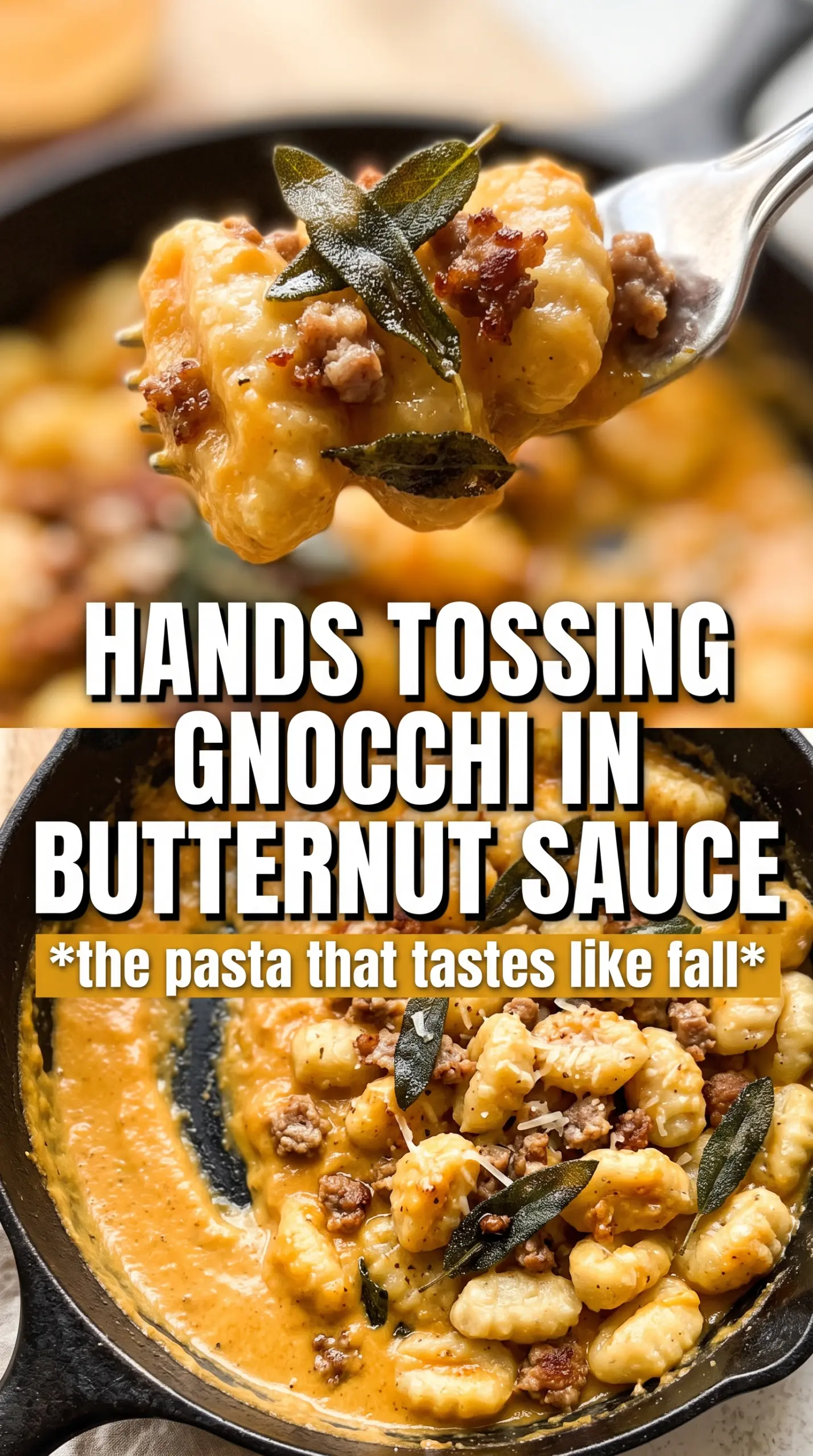
- Butternut squash puree — This is the body of the sauce, and roasted puree gives a deeper, sweeter flavor than canned squash soup or raw squash blended with liquid. If you’re using store-bought puree, check that it’s plain squash, not pre-seasoned filling.
- Italian sausage — This brings the savory backbone that keeps the dish from tasting one-note. Hot or sweet both work; hot sausage gives a little more edge, while sweet sausage lets the squash and sage stay front and center.
- Heavy cream — Cream smooths out the puree and gives the sauce enough richness to cling to the gnocchi. Half-and-half will work in a pinch, but the sauce will be a little thinner and less luxurious.
- Fresh sage — Frying the leaves in butter turns them crisp and fragrant, and that texture contrast matters. Dried sage won’t give you the same finish here, so keep it fresh if you can.
- Parmesan — Grated parmesan melts into the sauce and adds salt, nuttiness, and a little backbone. Use a fine grate so it melts fast; pre-shredded cheese can leave the sauce a little gritty.
- Nutmeg and red pepper flakes — Nutmeg makes squash taste fuller and warmer, while red pepper flakes keep the sauce from reading too sweet. Don’t overdo either one; they should support the sauce, not announce themselves.
Building the Skillet in the Right Order
Brown the sausage first
Start with the sausage in a large skillet and break it into small crumbles as it cooks. You want deep browning on the edges, not pale steamed meat, because those browned bits are what give the sauce its savory base. If the pan looks crowded or the sausage starts to simmer in its own fat, give it a little more time before stirring again.
Fry the sage in the butter
Move the sausage out and use the same skillet for the butter and sage. The leaves should sizzle immediately and turn darker green in seconds, then crisp as soon as they hit the paper towel. If they brown too fast, the butter is too hot; pull the pan off the heat for a moment and finish with residual heat so they don’t go bitter.
Cook the squash sauce until it turns glossy
Add the garlic just long enough to smell fragrant, then stir in the squash puree and cream. The sauce should look smooth, thick, and slightly loose at first, then turn silkier as it simmers. Once the parmesan goes in, keep the heat low and stir until the sauce looks unified; if it starts to look grainy, the pan is too hot.
Finish with the gnocchi and sausage
Cook the gnocchi according to the package, then add it straight to the skillet while it’s still hot and tender. Toss everything gently so the sauce settles into the folds without tearing the gnocchi apart. Return the sausage, taste for salt and pepper, and finish with the crispy sage and extra parmesan while the sauce is still glossy.
Use maple-roasted squash for a deeper sweet note
If your puree comes from maple-roasted squash, the sauce tastes rounder and a little richer. Cut back the parmesan a touch and keep the red pepper flakes in place so the sweetness doesn’t take over.
Make it dairy-free without losing the body of the sauce
Use full-fat coconut milk or an unsweetened oat cream instead of heavy cream, and swap in a dairy-free parmesan-style topping. The sauce will be a little less sharp and a little softer, but it will still cling nicely if you keep the heat low.
Use gluten-free gnocchi for an easy gluten-free dinner
Choose a gluten-free potato gnocchi and cook it according to the package, since times can vary more than with standard gnocchi. The sauce itself is naturally gluten-free as written, so this swap changes almost nothing about the flavor.
Storage and Reheating
- Refrigerator: Store leftovers in an airtight container for up to 3 days. The sauce will thicken as it chills.
- Freezer: It freezes, but the cream sauce can separate a bit after thawing. Freeze in portions if you want to save it, then stir well while reheating.
- Reheating: Warm it gently in a skillet over low heat with a splash of water or cream. High heat is the mistake here — it can break the sauce and make the gnocchi mushy before the center is warm.
Questions I Get Asked About This Recipe
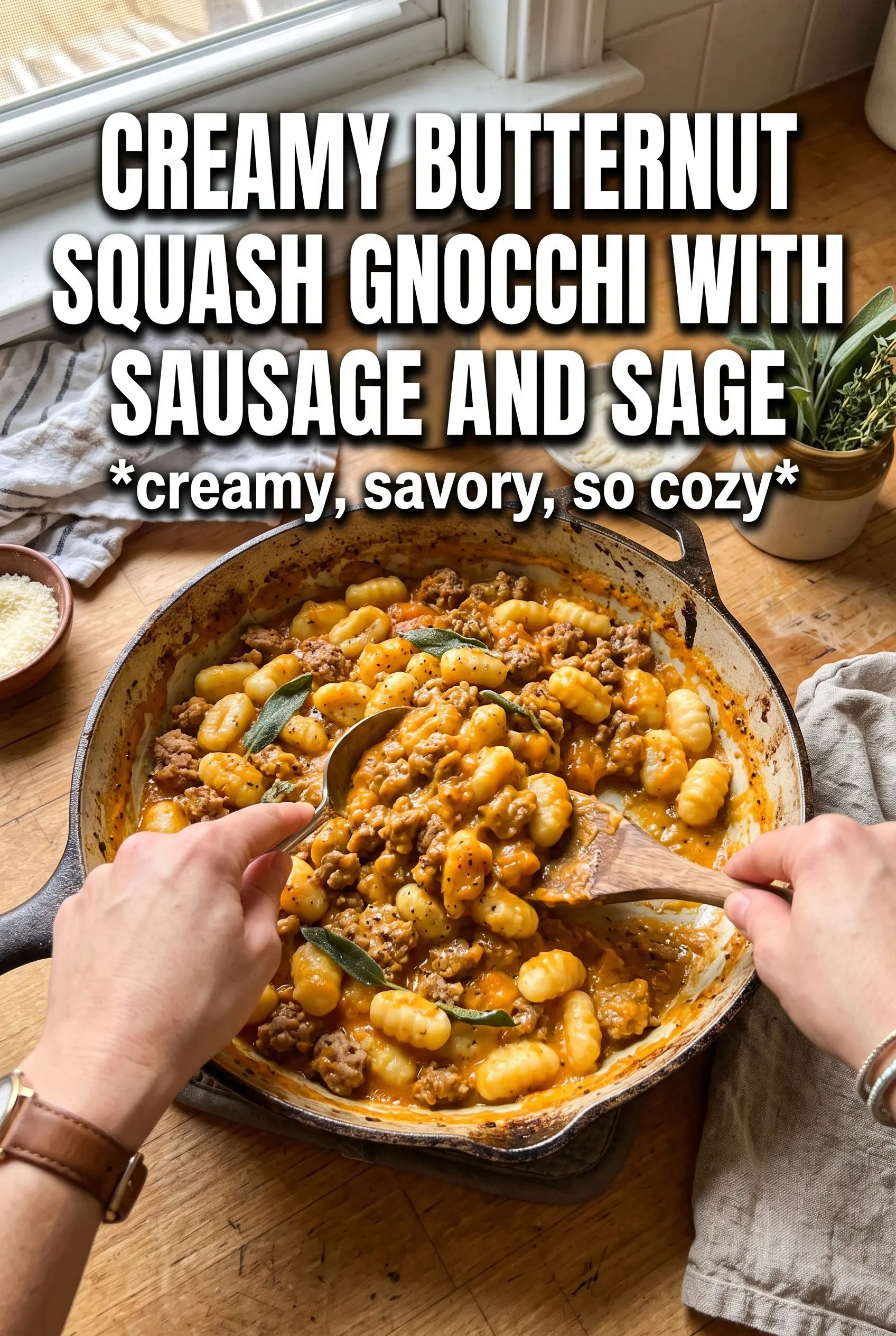
Creamy Butternut Squash Gnocchi With Sausage And Sage
Ingredients
Equipment
Method
- Heat a large skillet over medium-high heat and brown the Italian sausage until cooked through, then drain excess fat and set the sausage aside.
- Melt the butter in the same skillet and fry the sage leaves until crisp, then remove them to a plate.
- In the same butter, sauté the minced garlic for 1 minute, stirring until fragrant.
- Add the butternut squash puree and heavy cream, then stir until evenly combined.
- Stir in the grated parmesan, nutmeg, and red pepper flakes, and simmer for 5 minutes until the sauce turns smooth.
- Cook the potato gnocchi according to package instructions until tender, then add the cooked gnocchi directly to the sauce.
- Return the sausage to the skillet and toss everything together until the gnocchi is coated.
- Season with salt and pepper to taste, then top with the crispy sage leaves and extra parmesan before serving.