Creamy butternut squash pasta gets its best texture when the sauce clings to the noodles instead of pooling in the bowl, and this version does exactly that. The squash brings body and a gentle sweetness, the sausage adds depth and salt, and the spinach folds in at the end for a finish that feels balanced instead of heavy.
What makes this one work is the way the sauce is built. The onion and garlic go into the same skillet as the sausage, so the pan keeps all those browned bits that give the sauce more flavor. A little pasta water loosens the puree just enough to coat the rigatoni, and the parmesan melts in smoothly when the heat stays moderate.
Below, I’ll show you how to keep the sauce silky, how to avoid a grainy finish, and which swaps still give you a pasta that tastes like it took more effort than it did.
The sauce turned out silky and coated the rigatoni perfectly, and the spinach wilted in just at the end without getting mushy. My husband went back for seconds before I even sat down.
Creamy butternut squash pasta with sausage and spinach is the kind of dinner that comes together fast but still tastes layered and rich.
The Secret to Keeping This Sauce Creamy Instead of Heavy
Butternut squash puree can go two ways: glossy and spoon-coating, or thick and pasty. The difference is the pasta water and the heat level. Pasta water brings starch, which helps the sauce emulsify and cling to the noodles. If you skip it, the puree sits on the pasta like mashed vegetables instead of turning into an actual sauce.
The other place people go wrong is adding cheese to a sauce that’s too hot. Parmesan melts best when the pan is at a gentle simmer or even off the heat for a minute. If the sauce looks grainy, the heat was too high when the cheese went in. Pull it back, stir in a splash of pasta water, and it usually smooths out again.
What Each Ingredient Is Doing in the Pan
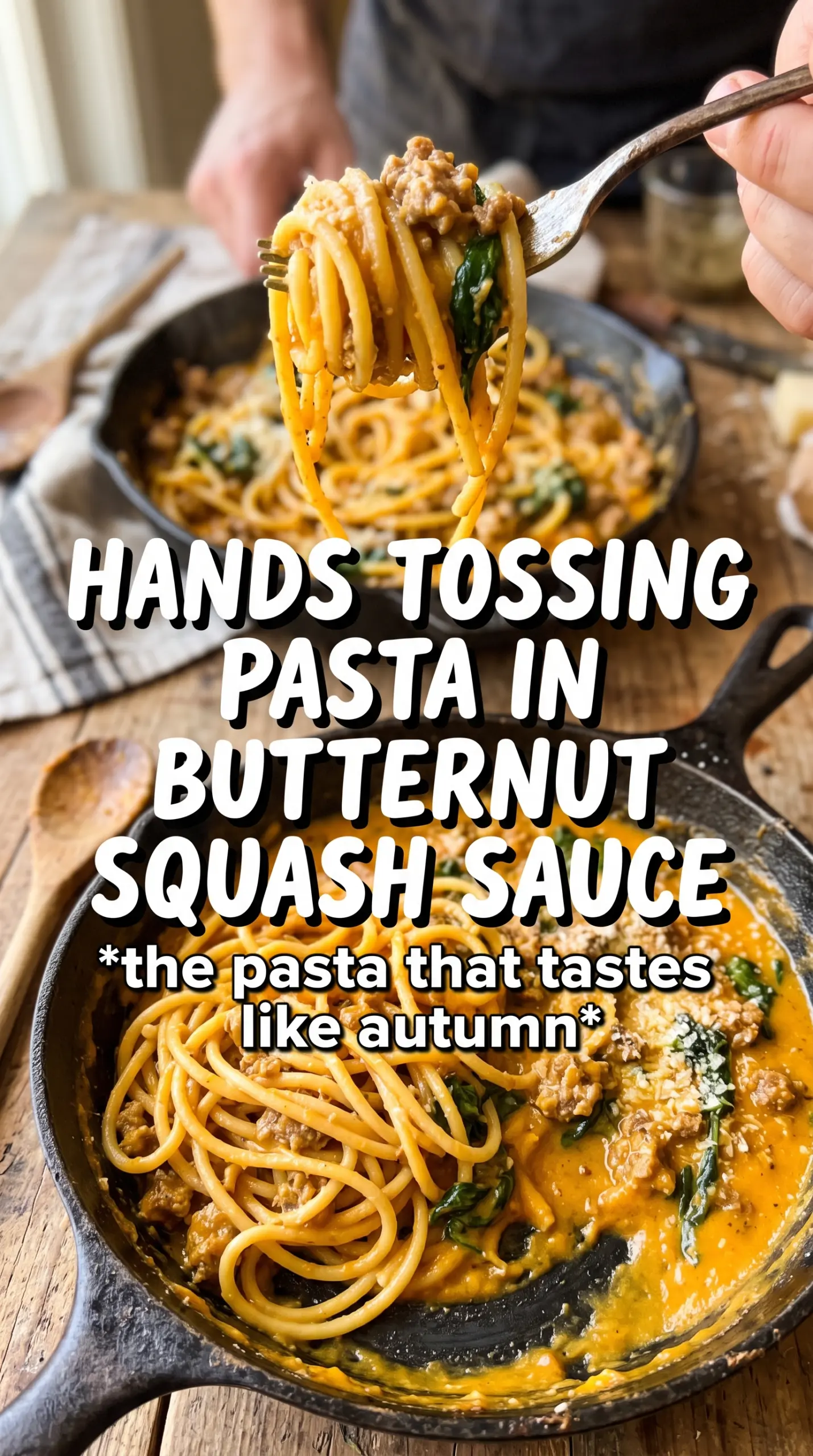
- Butternut squash puree — This is the base of the sauce, so use a puree that tastes clean and sweet, not watery. Homemade or canned both work, but if yours is very loose, simmer it a minute longer before adding the cream so the sauce doesn’t thin out.
- Italian sausage — This is the ingredient that gives the dish its backbone. Mild sausage keeps the flavor round and savory; hot sausage adds more bite. If you need a lighter version, turkey Italian sausage works, but it won’t leave quite as much rich drippings in the pan.
- Heavy cream — Cream smooths the squash and gives the sauce that silky finish. Half-and-half can work in a pinch, but the sauce will be thinner and a little less stable when the parmesan goes in.
- Rigatoni or penne — Short pasta with ridges traps the sauce best. Rigatoni gives you more chew and pockets for the sausage, while penne is a solid backup if that’s what’s in the pantry.
- Parmesan — Freshly grated parmesan melts into the sauce much better than the pre-grated kind. Pre-grated cheese often contains anti-caking agents, which can make the sauce feel a little sandy.
- Spinach — Add it at the very end so it stays bright and tender. If you want to swap in kale, chop it finely and give it a few extra minutes in the sauce before serving.
Building the Sauce in the Right Order
Brown the Sausage First
Start with a hot skillet and let the sausage take on real color before you move it out of the pan. You want browned crumbles, not pale steamed meat, because those caramelized bits become part of the sauce later. Drain off excess fat if the pan looks greasy, but leave the browned residue behind.
Cook the Onion in the Same Pan
The onion goes into the same skillet after the sausage, and that’s where the flavor starts to stack up. Cook it until it turns soft and translucent with a little edge of gold, then add the garlic and Italian seasoning just long enough to smell fragrant. If the garlic browns, it turns bitter fast, so keep it moving.
Finish With Squash, Cream, and Cheese
Stir in the squash puree and cream and let the sauce simmer gently for a few minutes until it loosens and starts to look cohesive. Add the nutmeg and red pepper flakes, then parmesan, and stir until the sauce turns smooth and glossy. If it tightens up too much, use a splash of reserved pasta water instead of more cream; that keeps the texture balanced without making it heavy.
Fold Everything Together at the End
Add the drained pasta, then the spinach, and toss until the greens just wilt and the sauce clings to every ridge. Put the sausage back in last so it stays meaty instead of drying out. Taste before serving and adjust with salt and pepper, because sausage brands vary a lot in how salty they are.
How to Adapt This Pasta Without Losing the Good Part
Make It Dairy-Free
Use full-fat coconut milk or an unsweetened dairy-free cream in place of heavy cream, and skip the parmesan or use a dairy-free parmesan-style substitute. The sauce won’t taste exactly the same, but it will still be creamy and rich if you keep the heat low and add the pasta water gradually.
Use Turkey Sausage for a Lighter Bowl
Turkey Italian sausage works well here, but it gives you less fat in the pan and a slightly leaner finish. If the skillet looks dry after browning, add a tablespoon of olive oil before the onion goes in so the base doesn’t catch.
Gluten-Free Pasta Swap
Use a sturdy gluten-free short pasta and cook it just until barely al dente, because it will soften a little more once it hits the sauce. Save the pasta water as usual; that starch is even more useful with gluten-free pasta since it helps the sauce bind.
Swap the Spinach for Kale
Kale adds a sturdier bite and holds up better if the pasta sits for a few minutes before serving. Strip the stems and slice it thin so it softens evenly in the warm sauce instead of staying chewy.
Storage and Reheating
- Refrigerator: Store in an airtight container for up to 4 days. The sauce thickens as it chills, so expect it to look a little tighter the next day.
- Freezer: It freezes, but the cream sauce can separate slightly after thawing. Freeze in portions for up to 2 months and reheat gently with a splash of water or broth to bring it back together.
- Reheating: Warm it on the stovetop over low heat with a tablespoon or two of water, milk, or broth. Don’t blast it in a hot skillet or the sauce can break before the pasta heats through.
Answers to the Questions Worth Asking
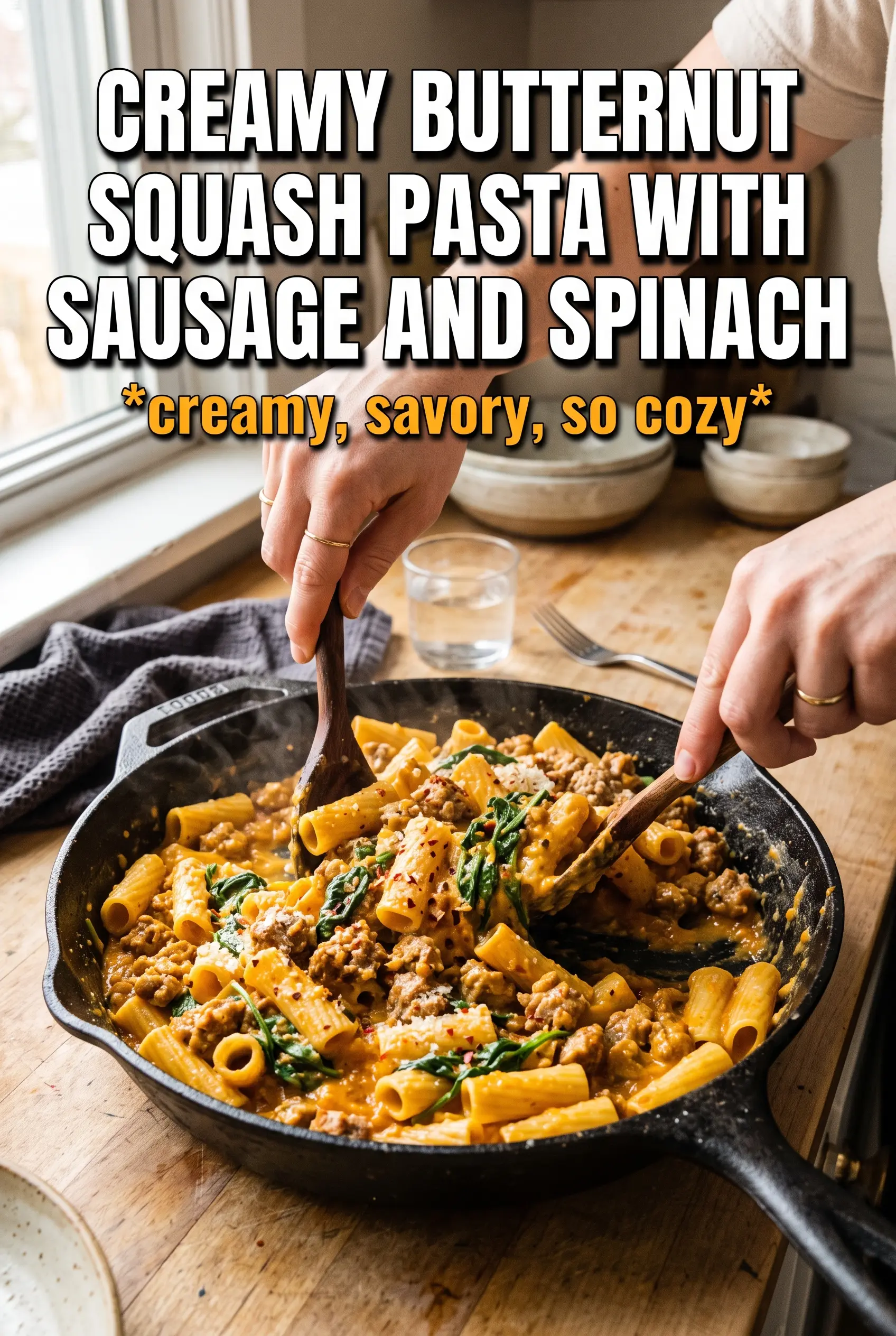
Creamy Butternut Squash Pasta With Sausage And Spinach
Ingredients
Equipment
Method
- Bring a large pot of salted water to a boil and cook rigatoni or penne until al dente, stirring occasionally. Reserve 1/2 cup pasta cooking water before draining.
- In a large skillet over medium-high heat, brown Italian sausage until cooked through. Drain excess fat and set the sausage aside.
- Sauté diced onion in the same skillet for 4 minutes, stirring until softened. Add minced garlic and Italian seasoning and cook for 2 minutes, stirring until fragrant.
- Stir in butternut squash puree and heavy cream, then add nutmeg and red pepper flakes. Simmer for 5 minutes, keeping the sauce at a gentle bubble.
- Add grated parmesan and stir until fully melted and smooth. If the sauce is too thick, loosen it with a splash of the reserved pasta cooking water.
- Add the cooked pasta to the sauce and toss to coat, then pour in the reserved pasta cooking water. Add baby spinach and toss until wilted, about 1 minute.
- Return the cooked sausage to the pan and season with salt and pepper to taste. Toss one more time and serve hot.