Creamy Cajun sausage pasta lands in that sweet spot between bold and comforting: smoky sausage, sweet peppers, and a sauce that clings to every ridge of the penne instead of pooling in the bottom of the bowl. The Cajun seasoning wakes up the cream, the parmesan gives it body, and the whole dish finishes with enough heat to keep each bite interesting without drowning out the sausage.
What makes this version work is the order. The sausage browns first, so the skillet picks up those browned bits that season the sauce later. Then the onions and peppers soften just enough to bring sweetness, while the garlic and Cajun seasoning get a short cook so they taste round instead of sharp. The pasta water matters here too; it loosens the sauce just enough to help it emulsify and coat the penne cleanly.
Below, you’ll find the one timing detail that keeps the sauce from turning thin, plus a few smart swaps if you want to adjust the heat, make it lighter, or work with what’s already in your pantry.
The sauce coated the penne perfectly and didn’t get greasy, even after sitting for a few minutes. I added a splash more pasta water at the end and it turned silky instead of heavy.
Save this creamy Cajun sausage pasta for the nights when you want a saucy penne that tastes like it simmered longer than it did.
The Reason the Sauce Stays Creamy Instead of Turning Heavy
The difference between a good Cajun pasta and one that feels clumpy is heat management. Once the cream goes in, the pan should stay at a gentle simmer, not a hard boil. High heat can separate the dairy and make the sauce taste flat at the same time.
The other trap is adding cheese too early. Parmesan thickens best when the sauce has already had time to reduce a little. If you dump it in before the broth and cream have taken on some body, it can turn grainy or stringy instead of smooth.
- Browned sausage gives the sauce its savory backbone. Those browned bits in the pan are part of the flavor, so don’t scrub them out.
- Cajun seasoning blooms in the fat and onion mixture, which keeps it from tasting dusty or harsh.
- Pasta water is the finish that makes the sauce cling. The starch helps it emulsify and keeps it from tightening up as it sits.
What Each Ingredient Is Actually Doing in the Skillet
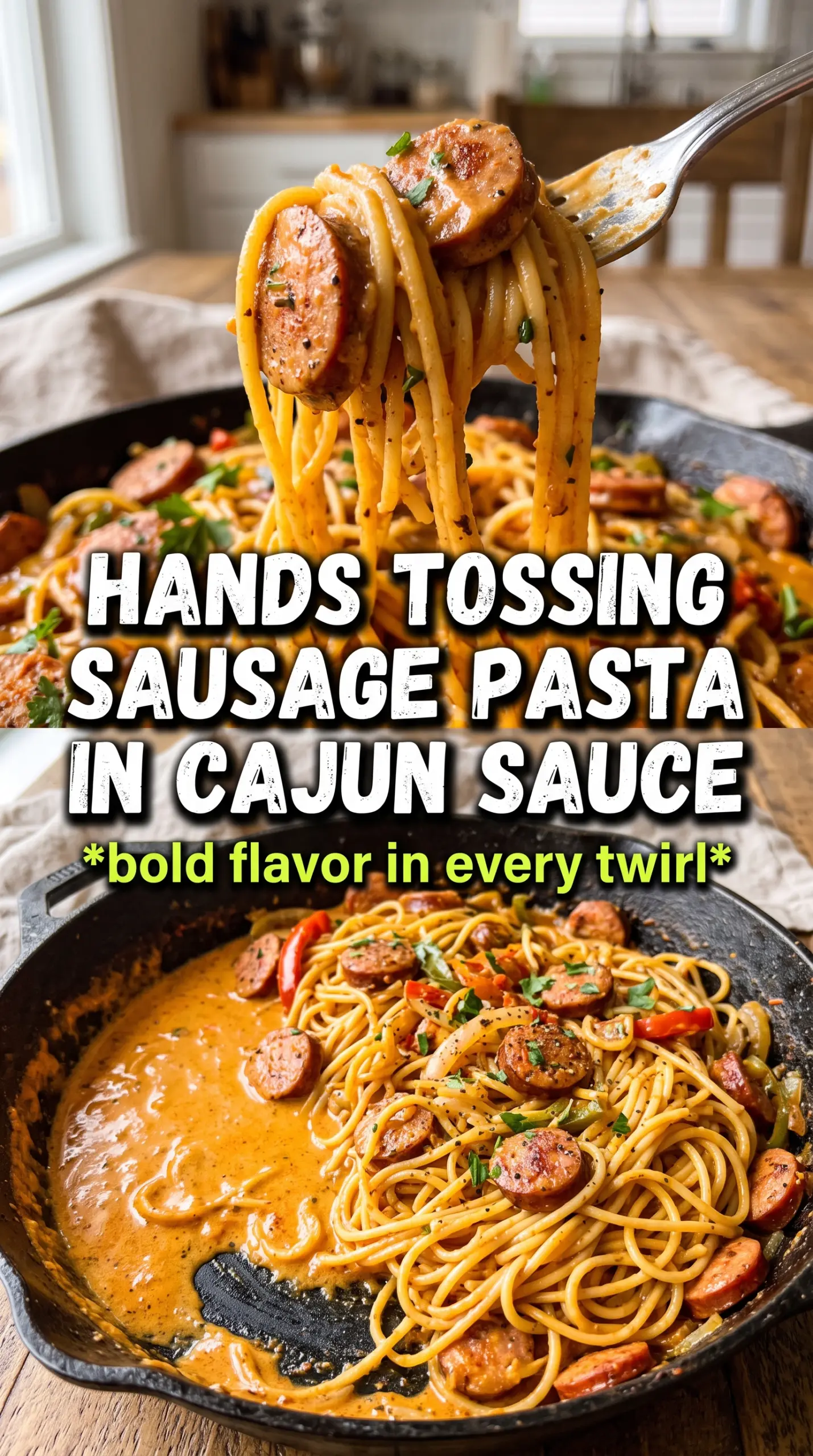
- Andouille or smoked sausage brings the smoky, seasoned flavor that carries the whole dish. Andouille gives more heat; smoked sausage gives a softer, more familiar finish. Either works, but you want a fully cooked sausage that can brown well in the skillet.
- Penne holds the sauce in its ridges and hollow center. Short pasta works best here because the sauce is thick and the sausage pieces need room to mix through evenly.
- Bell peppers, onion, and garlic build sweetness and depth. Dice the peppers and onion evenly so they soften at the same pace; if the pieces are too large, they stay crunchy while the sauce finishes.
- Heavy cream gives the sauce its body and that velvety finish. Half-and-half can work in a pinch, but the sauce will be thinner and a little less stable.
- Parmesan sharpens the sauce and helps it thicken. Use finely grated parmesan, not big shreds, so it melts smoothly into the cream.
- Cajun seasoning is where the heat and seasoning live, so taste the brand you’re using. Some blends are saltier than others, which is why it’s smart to wait until the end to add final salt.
Building the Pasta So the Sauce Actually Clings
Brown the sausage first
Heat the butter in a large skillet and cook the sausage until the edges are deeply browned. You want color, not just a warm-through. That browning is what gives the sauce its backbone, and if you rush this part, the whole dish tastes flatter. Remove the sausage once it’s done so it doesn’t overcook while the vegetables soften.
Cook the vegetables until the onions turn soft
Add the onion and bell peppers to the same skillet and cook until the onion looks glossy and the peppers have softened around the edges. Scrape up the browned bits as they release; that’s flavor moving into the vegetables. Add the garlic and Cajun seasoning near the end so the garlic doesn’t burn and the seasoning has a chance to bloom without tasting raw.
Simmer the cream and broth before the pasta goes in
Pour in the broth and cream and let the mixture bubble gently for about five minutes. You’re looking for a sauce that lightly coats a spoon, not a thick gravy. If it boils hard, it can separate before the pasta even has a chance to finish. Keep the heat low enough that the surface just trembles.
Finish with pasta water and parmesan
Add the drained pasta and a splash of the reserved pasta water, then stir in the parmesan. The starch in the water helps the sauce tighten around the noodles instead of sliding off them. If the pan looks dry, add a little more water a tablespoon at a time. Return the sausage at the end, then toss just until everything is coated and glossy.
How to Adapt This When You Need a Different Kind of Dinner
Make It Lighter Without Losing the Creamy Finish
Use half-and-half instead of heavy cream and add the parmesan slowly so the sauce still has body. It won’t be quite as rich, but the pasta will still taste silky if you keep the heat low and use enough pasta water to help it emulsify.
Gluten-Free Cajun Sausage Pasta
Swap in your favorite gluten-free penne and cook it just to al dente so it can finish in the sauce without falling apart. Keep a close eye on the pasta water amount, since gluten-free pasta can throw off more starch and thicken the sauce faster.
Vegetable-Heavy Version
Add sliced mushrooms or zucchini with the peppers if you want more vegetables in the pan. Mushrooms bring a deeper savory note, while zucchini softens faster and makes the dish a little looser, so cook it only until just tender.
Storage and Reheating
- Refrigerator: Store in an airtight container for up to 4 days. The sauce will thicken as it chills.
- Freezer: It can be frozen, but the cream sauce may separate a little when thawed. If you freeze it, do it in portions and expect a slightly less silky texture after reheating.
- Reheating: Warm it gently on the stove over low heat with a splash of broth or water. High heat is the fastest way to break the sauce, especially once the pasta has already absorbed some of the liquid.
Answers to the Questions Worth Asking
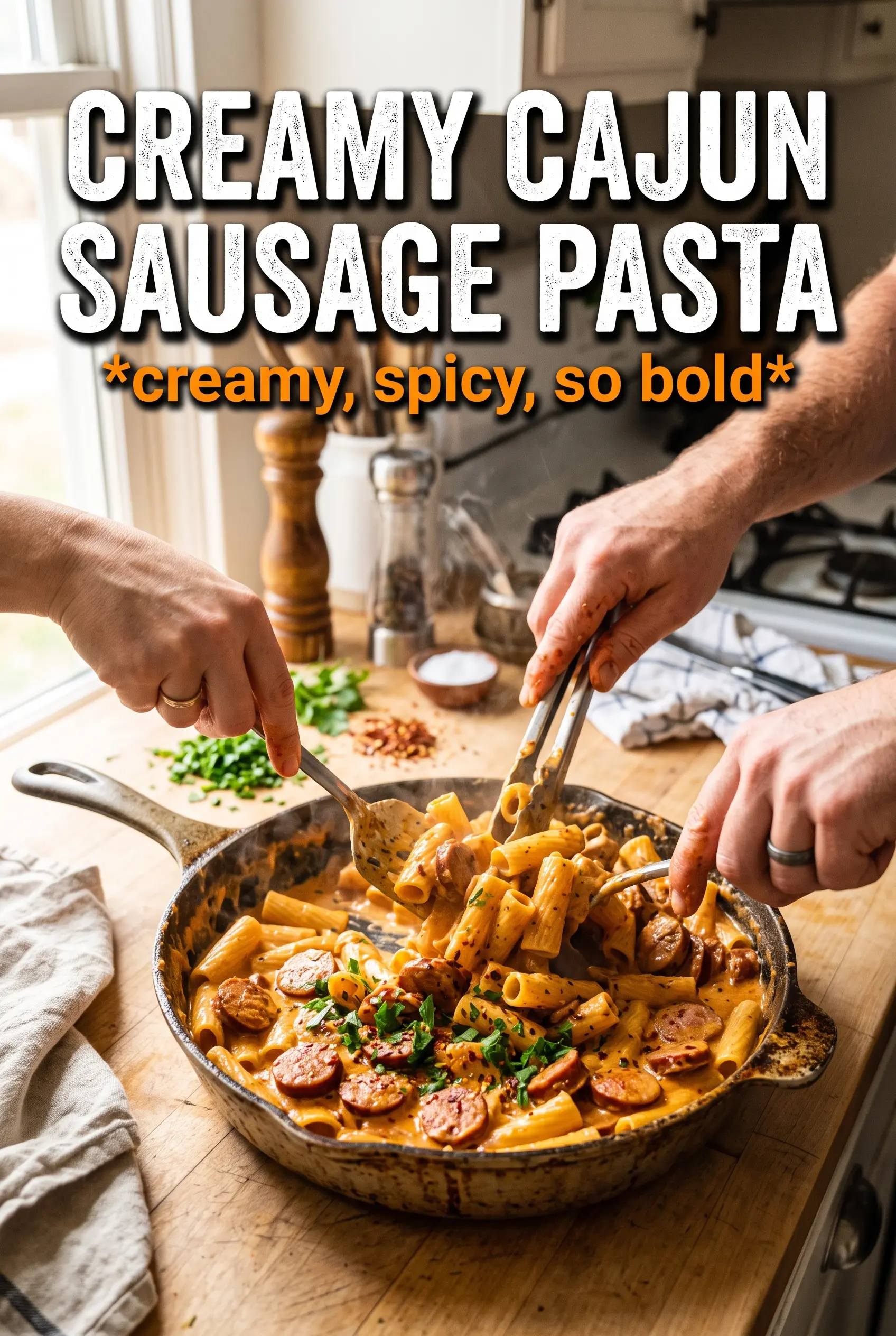
Creamy Cajun Sausage Pasta
Ingredients
Equipment
Method
- Bring a large pot of salted water to a boil, then cook the penne until al dente according to package directions. Reserve 1/2 cup pasta cooking water and drain the pasta.
- Heat a large skillet over medium-high heat, melt the butter, and brown the sliced sausage until browned. Remove the sausage and set it aside.
- In the same skillet, sauté the diced onion and bell peppers for 4-5 minutes, stirring until softened. Add the minced garlic and Cajun seasoning, then cook for 2 minutes.
- Add the chicken broth and heavy cream to the skillet, then simmer for 5 minutes until slightly thickened. Stir occasionally to keep the sauce smooth.
- Toss the cooked penne with the reserved pasta water in the skillet, stirring until the sauce clings to the pasta. Stir in the grated parmesan until melted and glossy.
- Return the browned sausage to the skillet, toss to coat, and season with salt to taste. Adjust with a splash more reserved pasta water only if the sauce seems too thick.
- Top the pasta with green onions and parsley right before serving. Serve hot while the sauce is creamy.