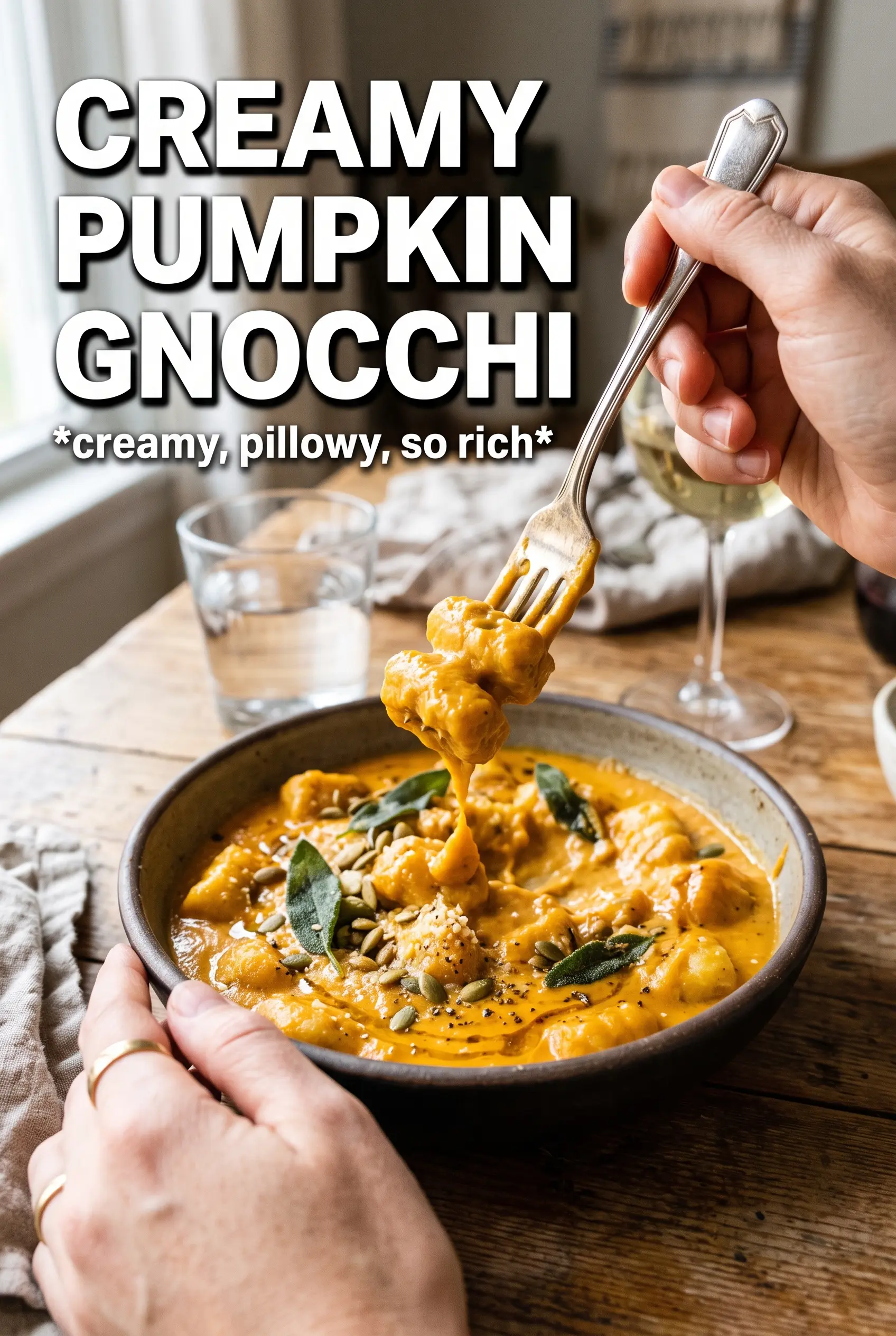
Golden gnocchi coated in a smooth pumpkin cream sauce has that rare combination of cozy and elegant without asking much from you at the stove. The sauce clings to every ridge, the parmesan sharpens the pumpkin instead of burying it, and the crispy sage on top gives each bite a little crackle that keeps the whole bowl from feeling heavy.
What makes this version work is the order. The sage goes first in butter, so the fat picks up that earthy flavor before anything else hits the pan. Then the garlic softens just enough to lose its raw edge, and the pumpkin simmers with cream before the parmesan goes in, which keeps the sauce silky instead of grainy. A splash of pasta water at the end loosens everything just enough to help the gnocchi gloss over instead of clumping together.
Below, I’ll walk you through the small details that make this dish taste restaurant-level: how to keep the sauce smooth, what to do if it gets too thick, and which swaps still hold up if you need to work with what’s in the pantry.
The sauce turned out velvety and coated the gnocchi perfectly, and the crispy sage on top made it taste way fancier than the 20 minutes it took.
Love the creamy pumpkin sauce and crispy sage? Save this Creamy Pumpkin Gnocchi for the night you want dinner on the table fast.
The Step That Keeps Pumpkin Sauce Silky Instead of Grainy
Pumpkin and parmesan can turn muddy or slightly grainy if the pan is too hot when the cheese goes in. The sauce wants steady, low heat and a little patience. Once the pumpkin, cream, and spices simmer together, pull the pan back just enough that the parmesan melts in smoothly instead of tightening up.
The other place people run into trouble is with thickness. Pumpkin puree gets dense fast, and gnocchi itself absorbs sauce as it sits. That splash of pasta water or broth isn’t there to thin the dish out; it helps the sauce stay glossy and move around the gnocchi instead of sticking to the bottom of the pan.
- Pumpkin puree — Use plain puree, not pumpkin pie filling. Pie filling brings sugar and spice that fight the savory garlic, sage, and parmesan.
- Heavy cream — This is what gives the sauce body without curdling. Half-and-half works in a pinch, but the sauce will be looser and less luxurious.
- Parmesan — Grate it finely so it melts fast and evenly. Pre-shredded cheese can stay a little gritty because of the anti-caking agents.
- Sage leaves — Fresh sage is worth it here. Frying it in the butter first infuses the whole dish, and the crispy leaves on top add the contrast the sauce needs.
What Each Ingredient Is Actually Doing in This Recipe

- Primary ingredient (the star) — Quality matters most. Choose the best you can find.
- Cooking medium (oil, butter, or broth) — This carries flavors and prevents dryness.
- Seasonings (salt, pepper, spices, herbs) — Layer flavors so nothing overpowers. Build depth gradually.
- Aromatics (garlic, onion, herbs) — Cook with fat to bloom flavors. Become the foundation.
- Supporting ingredients — Complement the main ingredient without overpowering it.
- Sauce or liquid (if applicable) — Brings flavors together. Balance richness with acid.
- Acid (lemon, vinegar, wine, or other) — Brightens and prevents flat-tasting results.
- Final finish (garnish, glaze, or sauce) — Prevents one-dimensional taste and adds visual appeal.
How to Pull the Sauce and Gnocchi Together Without Overcooking Either
Crisping the Sage in Butter
Melt the butter over medium heat and drop in the sage leaves. They should sizzle right away and darken slightly around the edges within a minute or two. Pull them out as soon as they look crisp; if they stay in the pan too long, they go bitter fast. Keep that butter in the pan, though — it carries the base flavor of the whole dish.
Building the Pumpkin Base
Add the garlic to the sage butter and cook it just until fragrant, about a minute. Stir in the pumpkin puree, cream, nutmeg, and white pepper, then let the mixture simmer gently for about five minutes. You want it thick enough to coat a spoon, but not so thick that it looks pasty. If it starts bubbling hard, lower the heat; aggressive heat is what makes creamy sauces tighten and separate.
Finishing with Cheese and Gnocchi
Stir in the parmesan off a little heat if needed, then add the cooked gnocchi straight to the sauce. A splash of pasta water helps the sauce cling, especially if the gnocchi went from pot to pan without much moisture on them. Toss just until coated and heated through. If you cook the gnocchi in the sauce too long, they’ll soften and break apart instead of staying pillowy.
Dairy-Free Version with Coconut Cream
Use full-fat coconut cream in place of heavy cream and skip the parmesan, then add a little extra salt and a spoonful of nutritional yeast if you want more savory depth. The sauce will be slightly sweeter and less sharp, but it still turns silky and coats the gnocchi well.
Gluten-Free Gnocchi Swap
Use certified gluten-free gnocchi and keep the rest of the recipe the same. The sauce doesn’t need changing, but gluten-free gnocchi can get soft faster, so move it into the pan as soon as it floats and looks tender.
Add Sausage for a Heartier Dinner
Brown mild Italian sausage before you start the sauce, then build everything else in the same pan. The sausage adds salt and richness, and the rendered fat gives the pumpkin a deeper, more savory edge.
Storage and Reheating
- Refrigerator: Store leftovers for up to 3 days. The sauce will thicken as it chills and the gnocchi will soften a bit.
- Freezer: I don’t recommend freezing the finished dish. Cream sauces and gnocchi both lose texture after thawing.
- Reheating: Warm it slowly in a skillet over low heat with a splash of cream, broth, or water. High heat makes the sauce break and turns the gnocchi mushy before the center is hot.
Questions I Get Asked About This Recipe
Creamy Pumpkin Gnocchi
Ingredients
Equipment
Method
- Heat 2 tablespoons unsalted butter in a cast iron skillet over medium heat. Fry 10 fresh sage leaves for about 1–2 minutes until crisp and golden, then remove and set aside.
- In the same butter, sauté 3 cloves garlic, minced for 1 minute until fragrant. Add 1 cup pumpkin puree, 1 cup heavy cream, 1/4 teaspoon nutmeg, and 1/4 teaspoon white pepper, then bring to a simmer.
- Simmer the sauce for 5 minutes, stirring occasionally, until slightly thickened. Stir in 1/2 cup parmesan, grated until melted and smooth.
- Cook 1 pound potato gnocchi according to package instructions until tender and lightly browned. Transfer the gnocchi directly to the sauce with a splash of pasta water or broth.
- Toss to coat and season with salt to taste. Finish by topping with the crispy sage leaves and extra parmesan.