Pasta coated in a creamy, slightly spicy Rotel cheese sauce has a way of disappearing fast, and this version earns its spot because the sauce clings to every curve of the noodles instead of pooling at the bottom of the pot. The ground beef gives it enough backbone to count as dinner on its own, and the Rotel brings just enough heat to keep each bite interesting without overpowering the cheese.
The key is building the sauce right in the same pot you brown the beef in. That keeps every bit of flavor in the dish, and it also lets the pasta cook directly in the broth and milk so it picks up seasoning as it softens. Cream cheese gives the sauce body, while the shredded Mexican blend finishes it with that smooth, melty stretch you want in a proper skillet pasta.
Below, you’ll find the small details that keep the sauce creamy instead of grainy, plus the best way to swap ingredients without losing that glossy, cheesy finish.
The sauce came out creamy and thick, and the Rotel gave it just enough kick without being too spicy. I loved that the pasta cooked right in the pot and soaked up all that flavor.
Like this creamy Rotel pasta with ground beef? Save it to Pinterest for an easy one-pot dinner with a cheesy, slightly spicy sauce.
The Trick to Keeping the Cheese Sauce Smooth Instead of Grainy
Once the pasta is tender, the heat needs to come down before the cream cheese goes in. If the pot is still boiling hard, the dairy can tighten up and turn the sauce a little greasy or grainy instead of silky. Low heat gives the cream cheese time to melt evenly into the starchy broth, which is what turns the liquid into a real sauce.
The pasta also matters here. Rotini or penne hold onto the cheesy coating better than long noodles, and that makes the whole dish feel richer without adding more cheese. If the pot looks loose right after the shredded cheese goes in, let it sit for a minute off the heat. The sauce thickens as it rests.
What Each Ingredient Is Doing in This Pot
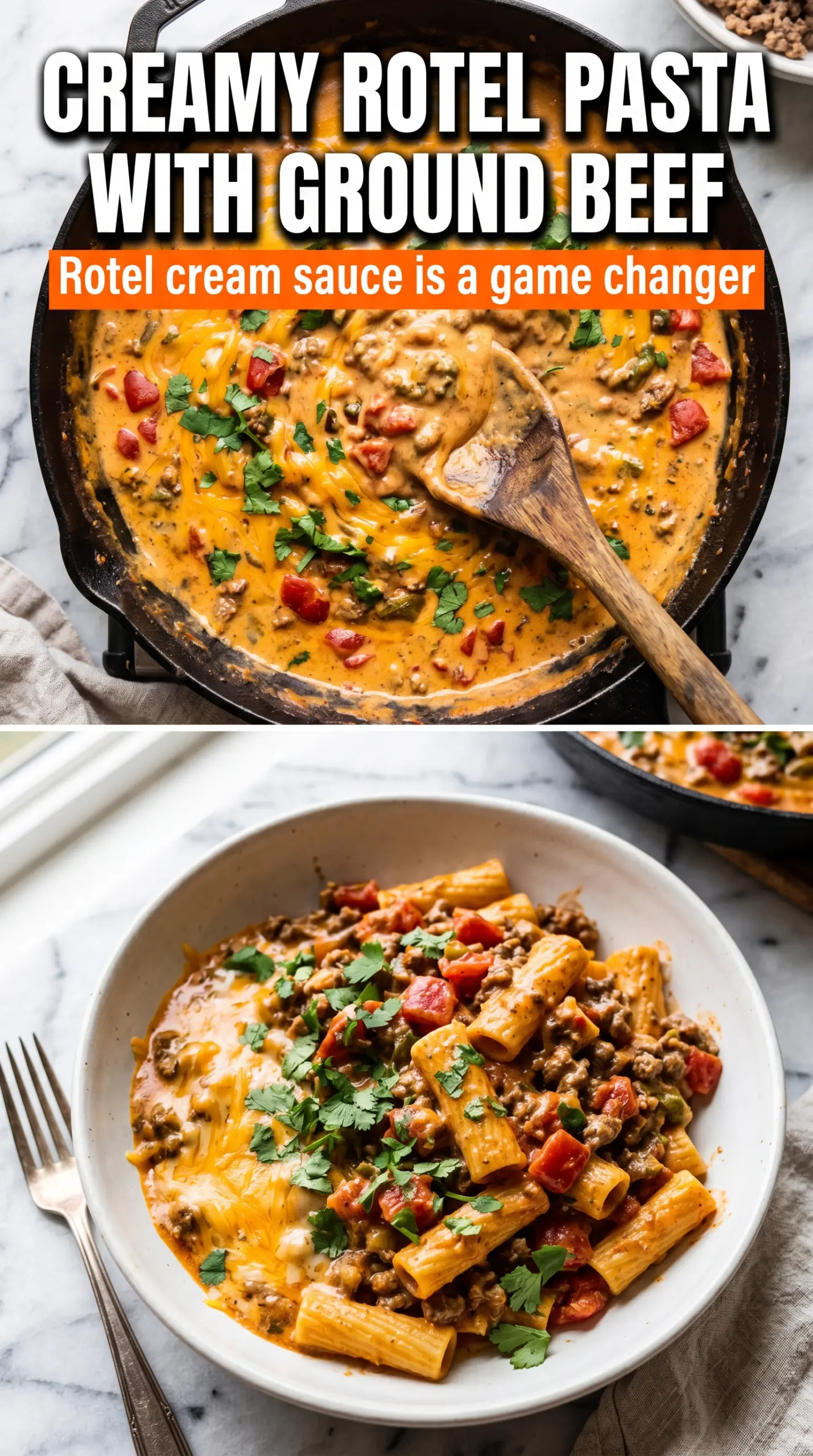
- Ground beef — This gives the pasta its savory base and keeps the dish hearty enough for dinner. An 80/20 or 85/15 blend works well; if it’s leaner, you may want a little extra oil in the pot so the onion doesn’t stick.
- Rotel diced tomatoes with green chiles — This is the ingredient that makes the sauce taste like Rotel pasta instead of just cheesy pasta. The tomatoes add acidity so the sauce doesn’t taste flat, and the green chiles bring a mild bite that cuts through the richness.
- Beef broth — It seasons the pasta from the inside out while it cooks. Water will work in a pinch, but the dish tastes noticeably thinner and less savory.
- Whole milk and cream cheese — These are what make the sauce creamy without needing a separate roux. Whole milk gives the sauce body, and cream cheese melts into a smooth base that helps bind the broth and cheese together.
- Mexican cheese blend — This adds melt and stretch. Pre-shredded works fine here, though freshly shredded cheese melts a little smoother because it doesn’t have the anti-caking coating.
- Rotini or penne — Short pasta is the right shape for this sauce because it grabs onto the cheese and beef instead of slipping through it. Don’t use a thin pasta here unless you want a softer, looser result.
How the Pasta Cooks and the Sauce Comes Together in One Pot
Brown the Beef and Onion First
Cook the ground beef and diced onion over medium-high heat until the beef is no longer pink and the onion has softened and turned translucent. You want some browned bits on the bottom of the pot, not a pale mixture, because that browning gives the finished sauce depth. Drain off excess fat if the pot looks greasy, then stir in the garlic for about 30 seconds, just until fragrant. If the garlic goes in too early, it can burn before the beef is ready.
Let the Pasta Simmer in the Broth
Add the pasta, Rotel, broth, milk, cumin, chili powder, salt, and pepper, then bring the pot up to a boil before reducing to a steady medium simmer. Stir a few times while it cooks so the pasta doesn’t stick to the bottom, especially near the end when the liquid gets thicker. The pot should look saucy while the pasta finishes; if it looks dry before the noodles are tender, add a splash of broth or milk. Don’t wait for every drop of liquid to disappear on the stove, because the sauce thickens more as it sits.
Melt in the Cheese Off the Hard Heat
When the pasta is tender and most of the liquid is absorbed, turn the heat down low before adding the cream cheese. Stir until the cubes disappear into the sauce, then add the shredded cheese blend and keep stirring until everything looks glossy and smooth. If the sauce starts to look tight, a small splash of milk loosens it right back up. Serve immediately, because this dish thickens as it cools and tastes best when the sauce is still loose enough to coat the pasta cleanly.
How to Adapt This for a Bigger Crowd or a Lighter Plate
Swap in ground turkey for a lighter version
Ground turkey works well if you want a leaner pan, but it needs a little help because it doesn’t bring as much fat or flavor as beef. Add a tablespoon of oil when you brown it and season it well at the start so the sauce doesn’t taste flat. The final dish will be a touch lighter and less rich, but it still keeps the same creamy texture.
Use gluten-free pasta without changing the flavor
A sturdy gluten-free short pasta can work here, but it usually needs a closer eye because it can go from firm to soft fast. Start checking a few minutes early and stir more often near the end so it doesn’t stick together. The sauce stays the same, though you may want an extra splash of broth since some gluten-free shapes absorb liquid differently.
Make it spicier with jalapeño or hot Rotel
If you want more heat, use hot Rotel or add a diced jalapeño with the onion. That gives the dish a sharper, brighter bite without changing the creamy texture. The cheese will soften the heat, but the flavor still comes through on the finish.
Storage and Reheating
- Refrigerator: Store leftovers in an airtight container for up to 4 days. The sauce will thicken as it chills, and the pasta will keep soaking up liquid.
- Freezer: It freezes, but the texture gets a little softer after thawing because of the dairy and pasta. Freeze in portions for up to 2 months and expect the sauce to be less silky than when fresh.
- Reheating: Warm it gently on the stove or in the microwave with a splash of milk or broth. High heat can make the cheese separate, so reheat in short bursts and stir between each one until the sauce loosens again.
Answers to the Questions Worth Asking
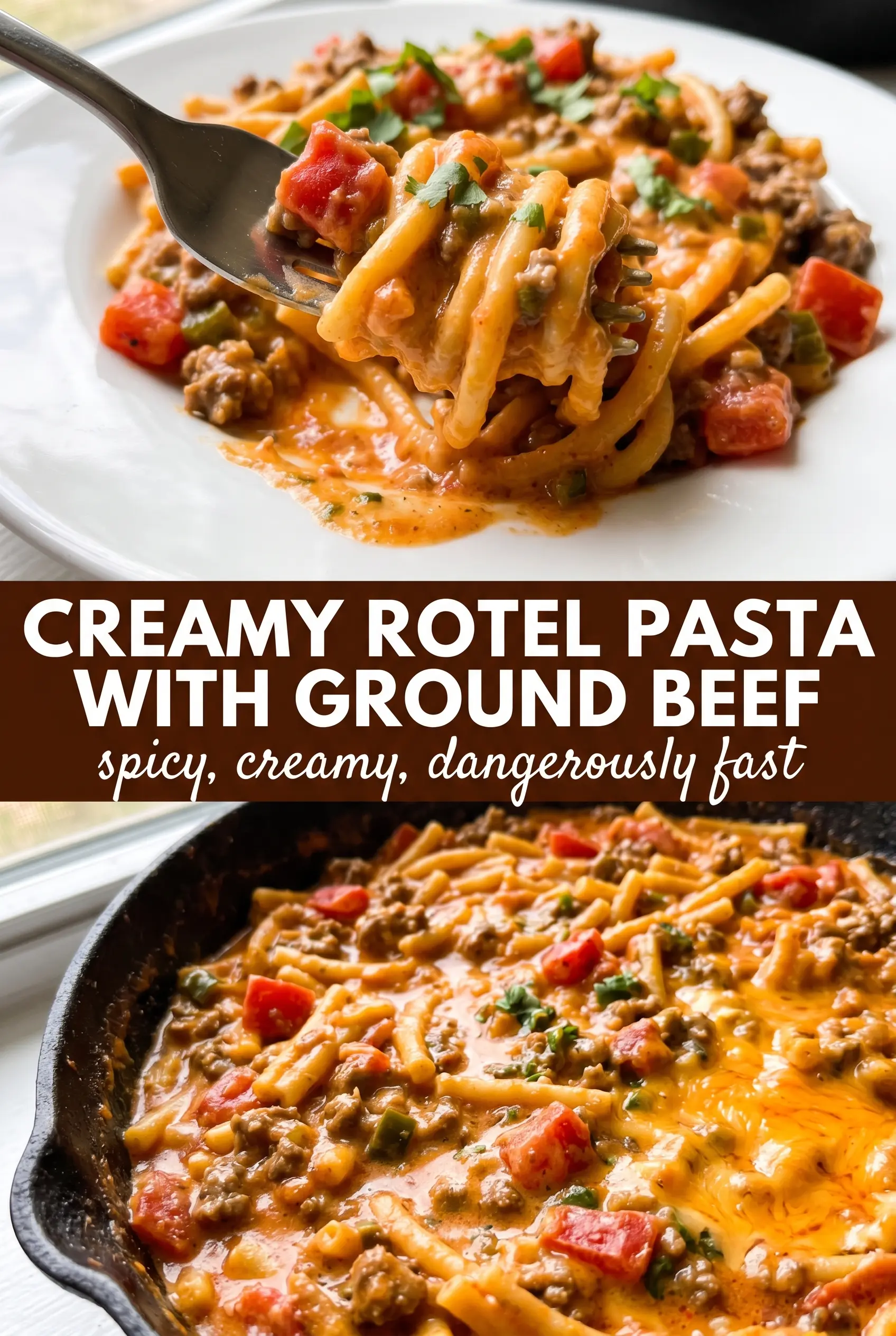
Creamy Rotel Pasta with Ground Beef
Ingredients
Equipment
Method
- Heat a large pot over medium-high heat and brown the ground beef with the diced onion, stirring until the beef is well browned (no longer pink). Drain excess fat, then add the minced garlic and cook for 30 seconds until fragrant.
- Stir in the uncooked rotini or penne, Rotel diced tomatoes with green chiles, beef broth, whole milk, cumin, chili powder, and salt and pepper, then bring to a boil. You should see steady bubbling across the surface before proceeding.
- Reduce heat to medium, cover, and cook for 12–14 minutes, stirring occasionally, until the pasta is tender and most of the liquid is absorbed. Look for pasta that gives when pressed and a thicker, glossy sauce around the noodles.
- Reduce heat to low and stir in the cubed cream cheese until fully melted and smooth. The sauce should turn evenly creamy with an orange-pink sheen.
- Stir in the shredded Mexican cheese blend until melted and creamy throughout. The mixture should look thick and cohesive with no dry cheese pockets.
- Garnish with green onions and serve immediately while hot and glossy.