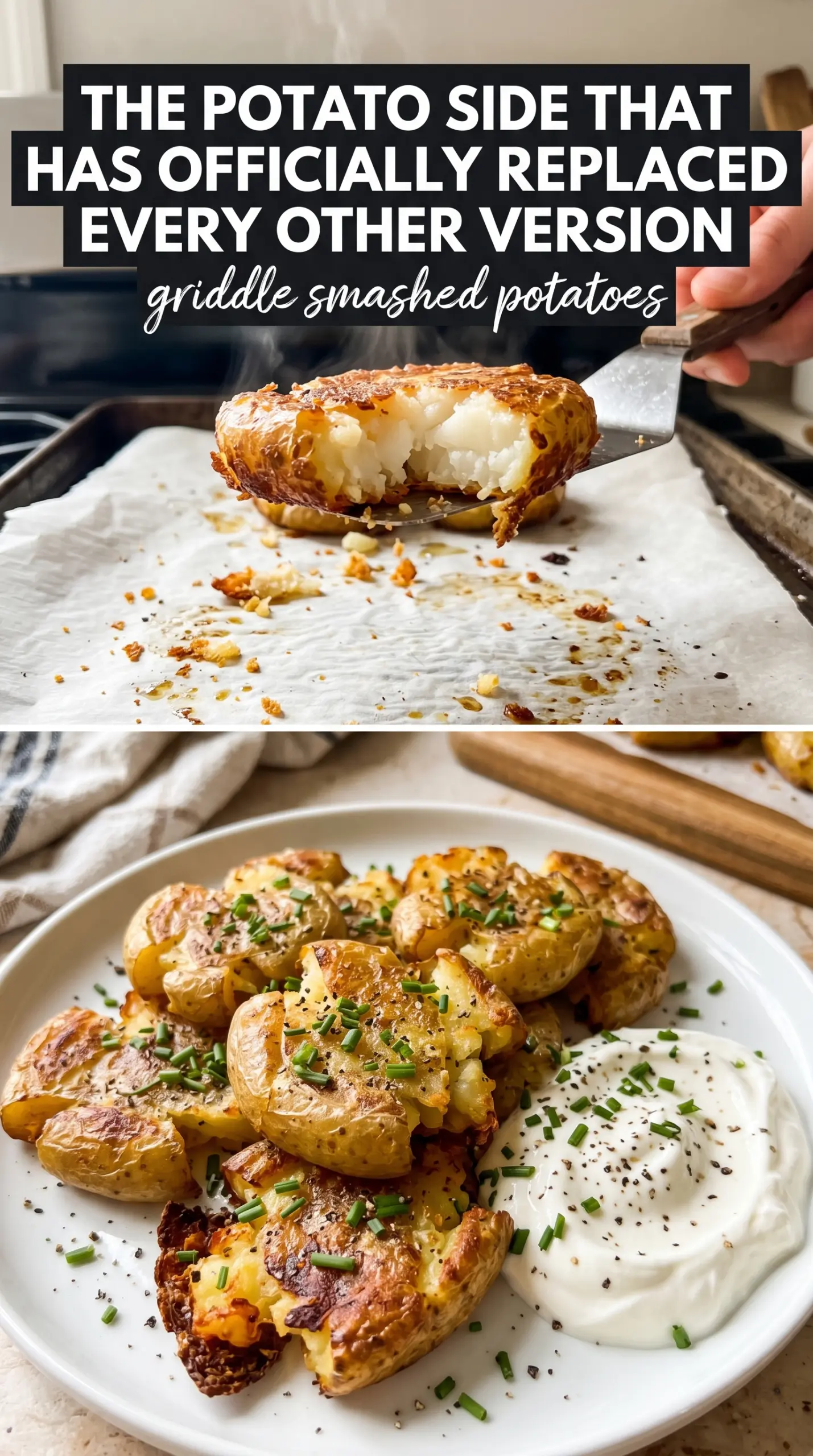
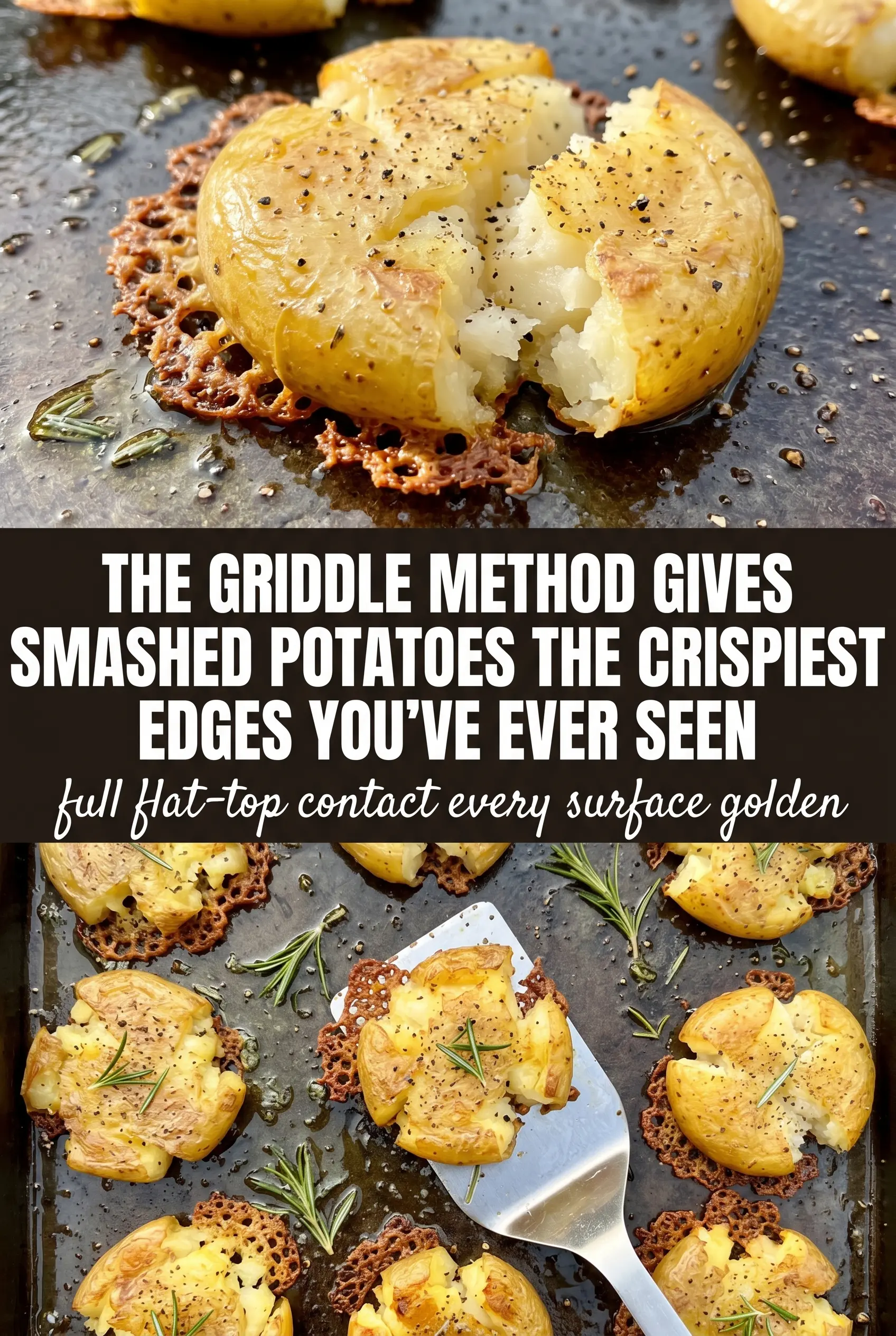
Griddle smashed potatoes earn their place fast: crisp, deeply browned edges, a tender middle, and enough surface area to hold all the good stuff without falling apart. The griddle does what a skillet can’t quite manage at scale. It gives you room to smash every potato flat, then leave them alone long enough to build that crackly crust before you flip.
The trick is in the potato texture before it ever hits the griddle. Boil them until a knife slides in with almost no resistance, then let them drain and steam off for a minute so the surface isn’t waterlogged. The oil and butter combination matters here too. Oil keeps the heat high enough for browning, while butter adds the flavor that makes every crispy edge taste richer. Garlic goes around the potatoes, not buried under them, so it gets toasted instead of burned.
Below, I’ve included the part that usually gets skipped: how to get the potatoes flat enough to crisp without turning them into crumbs, plus a few useful variations if you want to change the toppings or keep them dairy-free.
The Reason These Potatoes Crisp Instead of Steam
The biggest mistake with smashed potatoes on a griddle is crowding them before the surface has a chance to dry out and brown. If the potatoes are still wet from boiling, they’ll stick and slump instead of forming that thin, crunchy crust everyone wants. Let them drain well, then give them a minute or two of air before they hit the heat.
Smashing them flat matters more than people think. A potato that stays thick in the middle won’t give you enough edge for crisping, and it’ll feel more like a roasted potato than a smashed one. Press firmly until the potato is about half an inch thick. If it cracks a little around the edges, that’s fine. Those broken spots are where the best crunch happens.
- Baby potatoes Small potatoes hold their shape after boiling and smash into neat rounds with plenty of crispy surface. Larger potatoes can work, but they need to be cut into chunks first and won’t give you the same texture.
- Olive oil and butter The oil handles the high heat, while the butter adds the rich flavor that makes these taste like more than just potatoes on a griddle. If you swap in all butter, it can brown too fast.
- Cheddar cheese Sharp cheddar melts into the cracks and gives the finished potatoes that loaded, salty finish. Pre-shredded cheese works, but freshly shredded melts more evenly.
- Bacon, sour cream, and chives These are the finishing layer, not the base. Add them after the potatoes crisp so the bacon stays crunchy and the sour cream keeps its cool contrast.
What Each Ingredient Is Actually Doing in Griddle Smashed Potatoes
- High heat (essential for browning) High heat creates crust and caramelization. Medium heat just cooks without developing flavor.
- Oil or fat (for browning and flavor) The fat helps transfer heat and create crust. It also carries seasonings.
- Salt and seasoning (bold, applied before) Season confidently. The high heat cooking mellows flavors slightly.
- No moving it around (let it sit) The food needs time to develop crust. Constant flipping and moving prevents browning.
- Timing (watch carefully) High heat cooks fast. Check doneness frequently to avoid overcooking.
- Optional: finishing sauce or glaze Apply in the last minute for flavor without burning. Heavy sauces applied early can char.
- Resting time (5-10 minutes before serving) Resting allows juices to reabsorb. Cutting right away lets them run out.
- Optional: smoke or char flavor (if available) Wood smoke or char adds depth. Build the fire strategically for the flavor you want.
Getting the Smash and Sear Right on the Griddle
Boil Until Tender, Not Falling Apart
Start by boiling the potatoes until a knife slips in easily, but the skins still hold together. If they cook past that point, they’ll tear when you move them and turn mushy when you smash them. Drain them well and let the steam escape for a couple of minutes. A dry surface is what lets the griddle do its job.
Build Heat Before You Smash
Heat the griddle to medium-high before the potatoes go down, then add the oil and butter so the fat shimmers and spreads. Put the potatoes on the hot surface first, then smash them with a heavy spatula or press. If you smash them before the griddle is hot enough, they’ll absorb fat instead of searing. Work quickly, but don’t rush the browning.
Let the Crust Form Before Flipping
Once the potatoes are flattened, leave them alone until the undersides turn deep golden and release cleanly. If they stick when you try to lift them, give them another minute. Garlic should be added around the potatoes, not directly under them, because minced garlic burns fast on a hot griddle. Flip carefully, then cook until the second side matches the first in color and crunch.
Finish While the Potatoes Are Hot
The cheese melts best as soon as the potatoes come off the griddle. Scatter the cheddar first so it softens into the hot ridges, then add bacon, sour cream, and chives. If you wait too long, the potatoes lose the heat that melts the cheese and everything just sits on top. Serve them right away while the edges are still crisp.
Three Ways to Change the Toppings Without Losing the Crunch
Dairy-Free Loaded Potatoes
Skip the butter and use all olive oil, then finish with a dairy-free sour cream or a spoonful of cashew cream. You’ll lose some of the buttery richness, but the potatoes still crisp well because the griddle work is doing most of the heavy lifting.
Vegetarian Loaded Potatoes
Leave off the bacon and add extra chives or chopped green onions for freshness. A little smoked paprika scattered over the hot potatoes helps replace some of the savory depth bacon usually brings.
Spicy Griddle Smashed Potatoes
Add a pinch of cayenne or crushed red pepper to the oil before the potatoes go down. The heat clings to the crispy edges, which gives you more payoff than sprinkling spice on top at the end.
Make It a Meal Prep Side
Cook the potatoes through and crisp them, then stop before adding the toppings. Reheat them on a skillet or griddle so the edges wake back up, then finish with cheese and bacon right before serving.
Storage and Reheating
- Refrigerator: Store leftovers in an airtight container for up to 3 days. The potatoes will soften a bit, but they still reheat well if you bring back the surface heat.
- Freezer: These freeze better without the sour cream and chives. Freeze the crisped potatoes in a single layer, then transfer to a bag or container for up to 1 month.
- Reheating: Reheat on a hot skillet, griddle, or in a 425°F oven until the edges crisp again. The common mistake is using the microwave, which turns the crust soft and steamy.
Questions I Get Asked About This Recipe
Griddle Smashed Potatoes
Ingredients
Equipment
Method
- Boil baby potatoes in a pot of water until tender, about 15-20 minutes, then drain and cool slightly.
- Minced garlic is ready for griddle cooking while the potatoes cool.
- Heat a griddle to medium-high, then add olive oil and butter.
- Place the drained baby potatoes on the griddle and smash completely flat with a heavy spatula.
- Add minced garlic around the potatoes and cook for 6-7 minutes until crispy golden crust forms.
- Flip the potato rounds and cook another 5-6 minutes until both sides are crispy.
- Top the hot smashed potatoes with shredded cheddar cheese, bacon, sour cream, and chives before serving.
- Season the loaded potatoes with salt and pepper to taste just before serving.