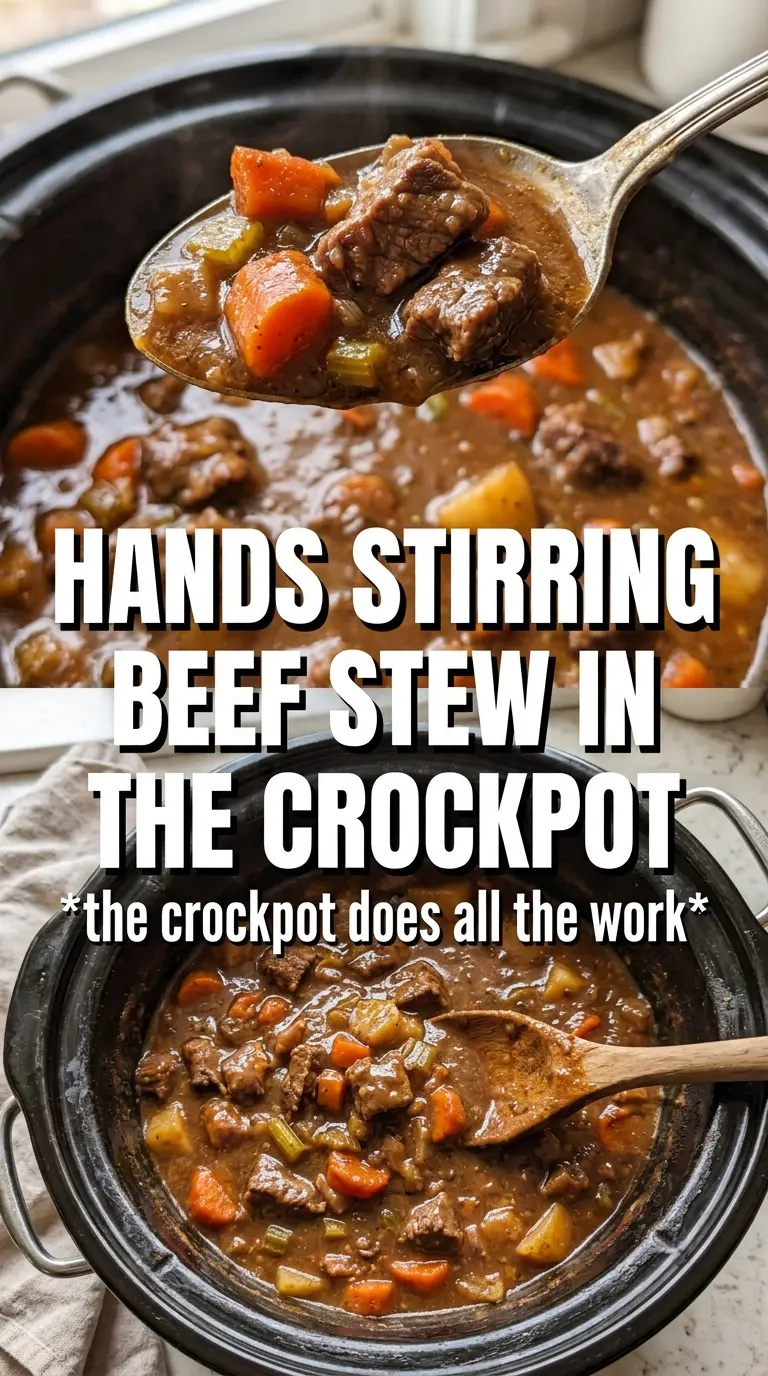
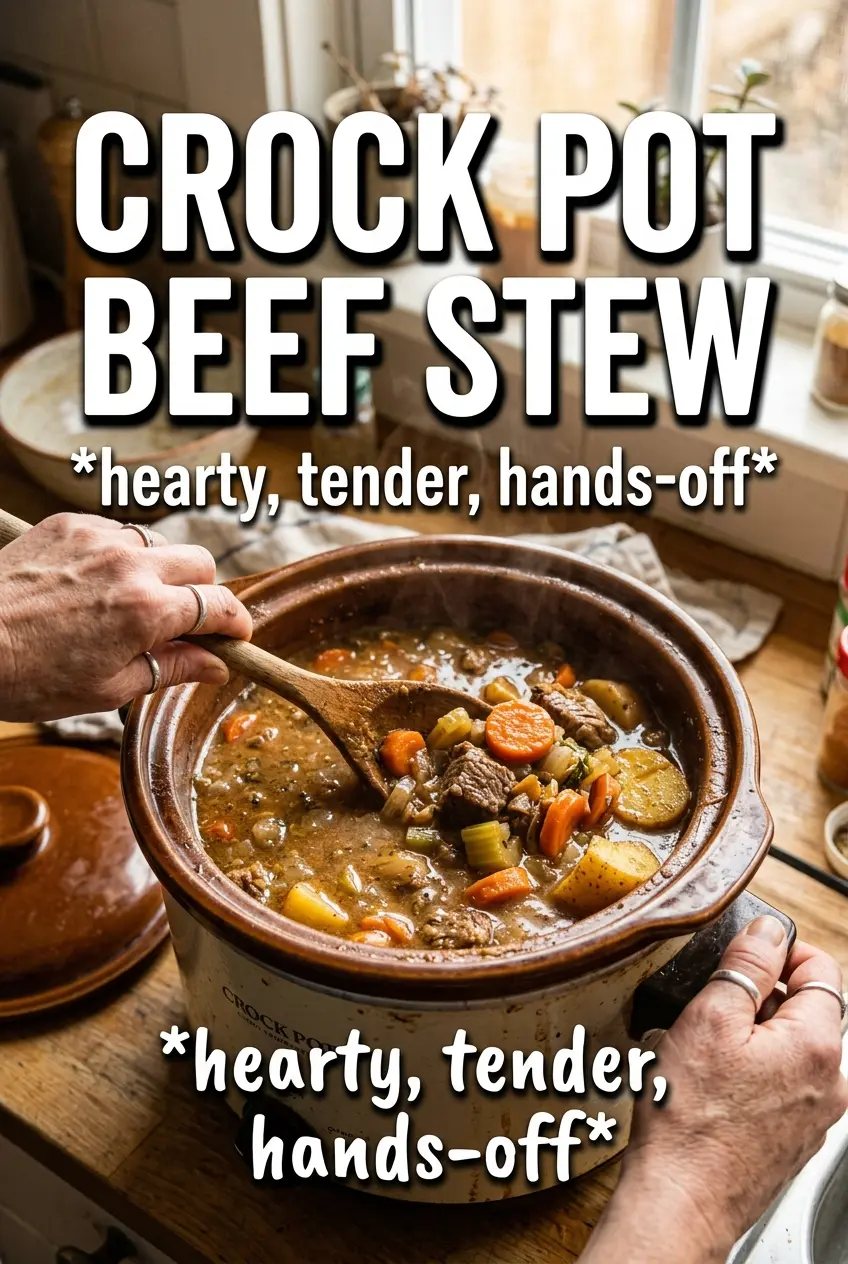
Deep, rich crock pot beef stew is the kind of meal that smells like dinner has been handled hours before anyone sits down. The broth turns mahogany and glossy, the beef goes spoon-tender, and the potatoes soak up every bit of that savory gravy. It lands in the bowl hearty enough to stand on its own, but still balanced enough that the carrots and celery taste like more than just filler.
What makes this version work is the order. The vegetables go in first so they can sit in the liquid and soften without breaking apart, while the beef stays on top long enough to brown in the stew’s own way as it cooks low and slow. Red wine adds depth, but extra broth works fine if you want to skip it; the tomato paste and Worcestershire are what give the pot that slow-cooked backbone even before the cornstarch goes in at the end.
Below, I’ve included the timing cue that matters most, the swap I use when I don’t want to open a bottle of wine, and the one reheating mistake that turns good stew into mush.
The broth thickened up beautifully and the beef was shredding with a spoon after 8 hours on low. I loved that the potatoes held their shape instead of turning chalky.
Save this Crock Pot Beef Stew for the nights when you want tender beef, thick gravy, and one pot doing almost all the work.
The Reason the Beef Goes on Top Instead of Buried
If you’ve made slow cooker stew before and ended up with soft vegetables and dry beef, the problem is usually placement. Putting the potatoes, carrots, celery, and onion under the meat gives the beef a shallow perch above the liquid, so it braises gently instead of boiling. That matters in a crock pot, where too much direct liquid can wash out the flavor and leave the texture flat.
The other thing that keeps this stew from tasting muddy is restraint. The tomatoes and tomato paste bring body, but they don’t turn it into a tomato stew. Worcestershire and wine round out the broth without taking over, and the long cook time mellows the garlic and herbs until they taste integrated instead of sharp.
- Beef chuck — This is the cut that breaks down into tender, pull-apart pieces without turning stringy. Leaner stew meat can work, but it won’t get the same soft texture after 8 hours.
- Baby potatoes — Their waxy texture helps them hold shape. Russets tend to fall apart and cloud the broth.
- Red wine — This adds a deeper, slightly richer base. If you skip it, use more broth and add an extra splash of Worcestershire for some of the lost complexity.
- Cornstarch slurry — Thickens the stew at the end without making it pasty. If you add it too early, the stew can tighten up before the beef is finished tenderizing.
What Each Ingredient Is Actually Doing in This Recipe
- Primary ingredient (the star) — Quality matters most. Choose the best you can find.
- Cooking medium (oil, butter, or broth) — This carries flavors and prevents dryness.
- Seasonings (salt, pepper, spices, herbs) — Layer flavors so nothing overpowers. Build depth gradually.
- Aromatics (garlic, onion, herbs) — Cook with fat to bloom flavors. Become the foundation.
- Supporting ingredients — Complement the main ingredient without overpowering it.
- Sauce or liquid (if applicable) — Brings flavors together. Balance richness with acid.
- Acid (lemon, vinegar, wine, or other) — Brightens and prevents flat-tasting results.
- Final finish (garnish, glaze, or sauce) — Prevents one-dimensional taste and adds visual appeal.
What Actually Happens During the Slow Cook
Building the Vegetable Base
The vegetables go into the bottom of the crock pot first because they can handle the longest cook without collapsing completely. Dice the onion and slice the celery thick enough that they still have shape at the end, and cut the carrots in chunky rounds so they don’t disappear into the broth. If the pieces are too small, they’ll melt away before the stew is done.
Seasoning the Beef Before It Enters the Pot
Salt and pepper on the beef before it goes in make a bigger difference than people expect. The seasoning starts pulling flavor into the meat during the long cook, and the beef seasons the broth as it releases its juices. If the stew tastes flat at the end, it usually means the meat never got enough seasoning at the beginning.
Letting Low Heat Do the Work
Cook on low if you can. That longer, gentler heat is what turns chuck into tender beef without drying out the edges or overcooking the potatoes. High heat works in a pinch, but the texture is less forgiving, and the vegetables are more likely to go soft before the beef is ready.
Thickening Without Clouding the Broth
Stir the cornstarch and water together until smooth, then add it only after the beef is already tender. The stew needs to come back up on high for 20 to 30 minutes so the slurry can fully thicken the broth. If the liquid still looks loose when you first stir it in, that’s normal; cornstarch doesn’t thicken instantly, and stirring it into a simmering stew gives it the glossy finish you want.
How to Change This Stew Without Losing the Heart of It
Skip the Wine, Keep the Depth
Use an extra cup of beef broth instead of wine, then add an extra teaspoon of Worcestershire sauce. You’ll lose a little of the wine’s acidity, but the stew still tastes full and savory because the tomato paste and Worcestershire carry the base flavor.
Make It Gluten-Free
Use a gluten-free Worcestershire sauce and verify that your broth is gluten-free. The cornstarch thickener already fits this style naturally, so you don’t need to change the texture at all.
Add More Vegetables
Parsnips, mushrooms, or turnips fit in well, but add mushrooms in the last 2 to 3 hours so they don’t disappear into the broth. The stew gets earthier and a little more rustic, which is nice if you want a bigger pot without changing the flavor base.
Storage and Reheating
- Refrigerator: Keep covered for up to 4 days. The broth thickens as it chills, and the potatoes soften a little more each day.
- Freezer: It freezes well for up to 3 months, but the potatoes can get a little softer after thawing. For the best texture, cool completely and freeze in airtight containers with some headspace.
- Reheating: Reheat gently on the stove over medium-low or in the microwave in short bursts. Don’t boil it hard or the beef can dry out and the potatoes can turn mealy.
Questions I Get Asked About This Recipe
Crock Pot Beef Stew
Ingredients
Equipment
Method
- Season the beef chuck generously with salt and pepper, coating all sides so it develops deep flavor as it cooks. Visual cue: beef pieces look evenly speckled with seasoning.
- Add the potatoes, carrots, celery, and onion to the bottom of the Crockpot, then nestle the seasoned beef on top. Visual cue: vegetables form a base layer under the meat.
- Add garlic, beef broth, red wine (or extra broth), diced tomatoes, tomato paste, Worcestershire sauce, dried thyme, dried rosemary, and bay leaves. Visual cue: the liquid rises around the beef and vegetables.
- Cook on Low at 8-10 hours, or High at 4-5 hours, until the beef is fall-apart tender. Visual cue: beef shreds easily when pressed with a spoon.
- Remove the bay leaves and stir in the cornstarch slurry. Visual cue: the broth begins to look slightly more opaque.
- Cook on High for 20-30 minutes until the broth thickens. Visual cue: broth coats a spoon and clings instead of running clear.
- Season with salt and pepper to taste. Visual cue: final flavor is balanced and the stew tastes fully seasoned before serving.