Slow-cooked beef short ribs earn their place on the table because they turn from tough and brawny into the kind of meat that falls apart at the touch of a fork. The broth cooks down into a deep, glossy sauce that clings to mashed potatoes, and the carrots, celery, and onion melt into the background in the best way. It feels like a long braise, but the Crockpot does the heavy lifting while the kitchen fills with that rich, savory smell that tells you dinner is going to be worth the wait.
The trick here is building flavor before the slow cooking starts. A hard sear gives the ribs the deep brown crust that the slow cooker can’t create on its own, and that color turns into real flavor in the finished sauce. Tomato paste, red wine, and Worcestershire give the braising liquid enough backbone to stand up to the beef, while thyme, rosemary, and bay keep it from tasting flat. If you’ve ever had short ribs come out pale or greasy, the problem is usually skipped browning or a sauce that never gets reduced at the end.
Below you’ll find the small details that matter: how to keep the sauce rich instead of thin, why the cornstarch goes in at the end, and what to do if you want to make this ahead without losing that silky finish.
The ribs were fall-apart tender and the sauce thickened up beautifully after the cornstarch slurry. I served them over mashed potatoes and my husband asked if we could have it again next Sunday.
Save these Crockpot beef short ribs for the night you want fork-tender beef, a dark wine gravy, and mashed potatoes ready to soak it all up.
The Sear Is What Keeps These Ribs Tasting Braised, Not Boiled
The slow cooker makes the meat tender, but it doesn’t build the flavor on the surface of the ribs. That part happens in the skillet, and it’s the step that keeps this dish from tasting like beef simmered in plain broth. You want a deep brown crust on every side before the ribs go into the Crockpot. If the pan is crowded or the heat is too low, the meat will steam and stay gray, and that flavor never comes back later.
The other thing that matters is how the liquid is layered. Tomato paste needs a little heat from the skillet or it can taste raw, and the wine should go in with enough broth to lift the browned bits without drowning them. Those browned bits are the base of the sauce. Leave them behind and you lose the best part.
What Each Ingredient Is Doing in the Braising Liquid
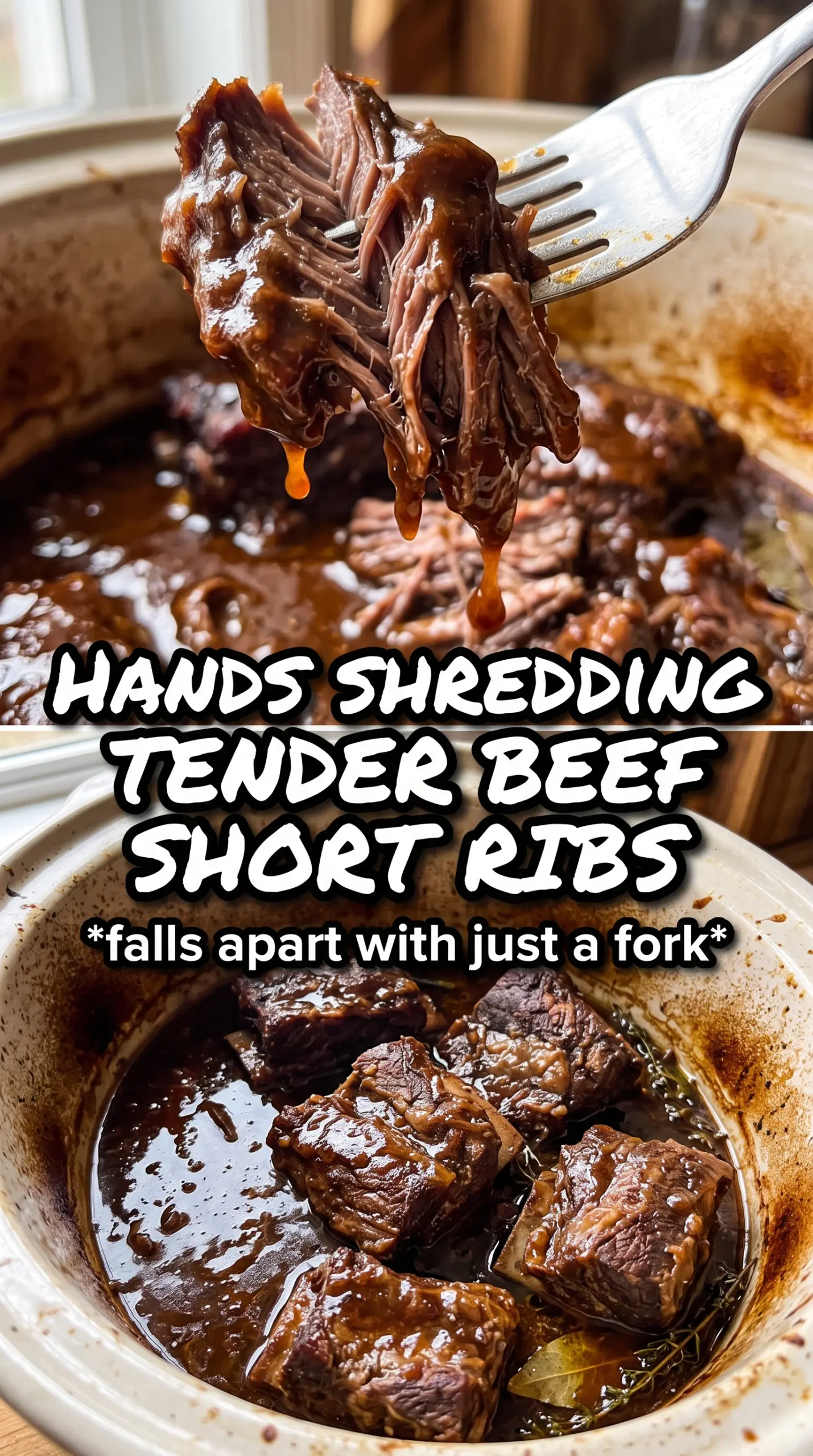
- Bone-in beef short ribs — The bone helps hold the meat together during the long cook and adds richness to the sauce. Boneless short ribs will work in a pinch, but they can cook a little faster and won’t give you quite the same depth.
- Red wine — This is what gives the sauce its dark, round flavor. Use a wine you’d drink, not a cooking wine that tastes salty and sharp.
- Tomato paste — It adds body and a little acidity, which keeps the sauce from tasting heavy. Let it cook briefly in the liquid so it loses that raw canned taste.
- Worcestershire sauce — This is the quiet ingredient that makes the braising liquid taste finished. You don’t need much, but skipping it leaves the sauce flatter.
- Cornstarch — Stirred in at the end, it turns the cooking liquid into a sauce that actually coats the meat and potatoes. If you add it too early, it can thin out or break down over the long cook.
Build the Sauce in Layers, Then Let the Crockpot Finish the Job
Getting the Ribs Brown Without Crowding the Pan
Season the short ribs generously with salt and pepper, then sear them in hot olive oil until every side has a deep brown crust. Do this in batches if needed. If the pan is overcrowded, the ribs will release moisture and steam instead of browning, and the sauce will miss that roasted flavor. You’re looking for dark color, not just a quick tan.
Setting Up the Slow Cook
Put the onion, garlic, carrots, and celery in the bottom of the Crockpot, then set the seared ribs on top. The vegetables act like a rack and keep the meat from sitting directly in the liquid. Whisk the broth, red wine, tomato paste, and Worcestershire together before pouring, because tomato paste likes to hide in clumps if it goes in straight from the spoon.
Cooking Until the Meat Gives Way
Add the thyme, rosemary, and bay leaves, then cook on Low for 7 to 8 hours. Don’t chase the clock more than the texture. The ribs are done when the meat pulls back from the bone and a fork twists through without resistance. If they still feel tight, give them more time. Short ribs need that extra stretch to turn silky.
Finishing the Sauce So It Sticks
Remove the ribs and bay leaves, then skim off as much fat as you can from the surface of the liquid. Stir in the cornstarch slurry and cook on High for about 15 minutes until the sauce turns glossy and lightly thickened. If the sauce still seems loose, let it sit uncovered for a few minutes after thickening; it sets up as it cools slightly. Spoon it over mashed potatoes while it’s hot and silky.
How to Adjust These Crockpot Beef Short Ribs Without Losing the Good Part
Make It Dairy-Free
The ribs themselves are naturally dairy-free. Serve them over mashed potatoes made with olive oil or a dairy-free butter substitute, and keep the sauce as written. The richness here comes from the beef, wine, and reduced braising liquid, so you won’t lose flavor by skipping dairy.
Skip the Wine and Use More Broth
If you don’t cook with wine, replace it with an equal amount of beef broth plus 1 tablespoon of red wine vinegar or balsamic vinegar. You still need that little bit of acidity to keep the sauce from tasting heavy, but the result will be a little softer and less complex than the wine version.
Make It Gluten-Free
This recipe is already close to gluten-free, but check your Worcestershire sauce and beef broth to be sure they don’t contain wheat-based additives. Cornstarch is the right thickener here because it keeps the sauce smooth and stable without flour.
Storage and Reheating
- Refrigerator: Store leftovers in an airtight container for up to 4 days. The sauce thickens as it chills, which actually helps the flavor.
- Freezer: Freeze the ribs and sauce for up to 3 months. Cool completely first, then pack them in freezer-safe containers with a little extra sauce so the meat doesn’t dry out.
- Reheating: Reheat gently on the stove over low heat or in a covered baking dish at 325°F until hot. High heat can tighten the meat and make the sauce split, so warm it slowly and add a splash of broth if it looks too thick.
Questions I Get Asked About This Recipe
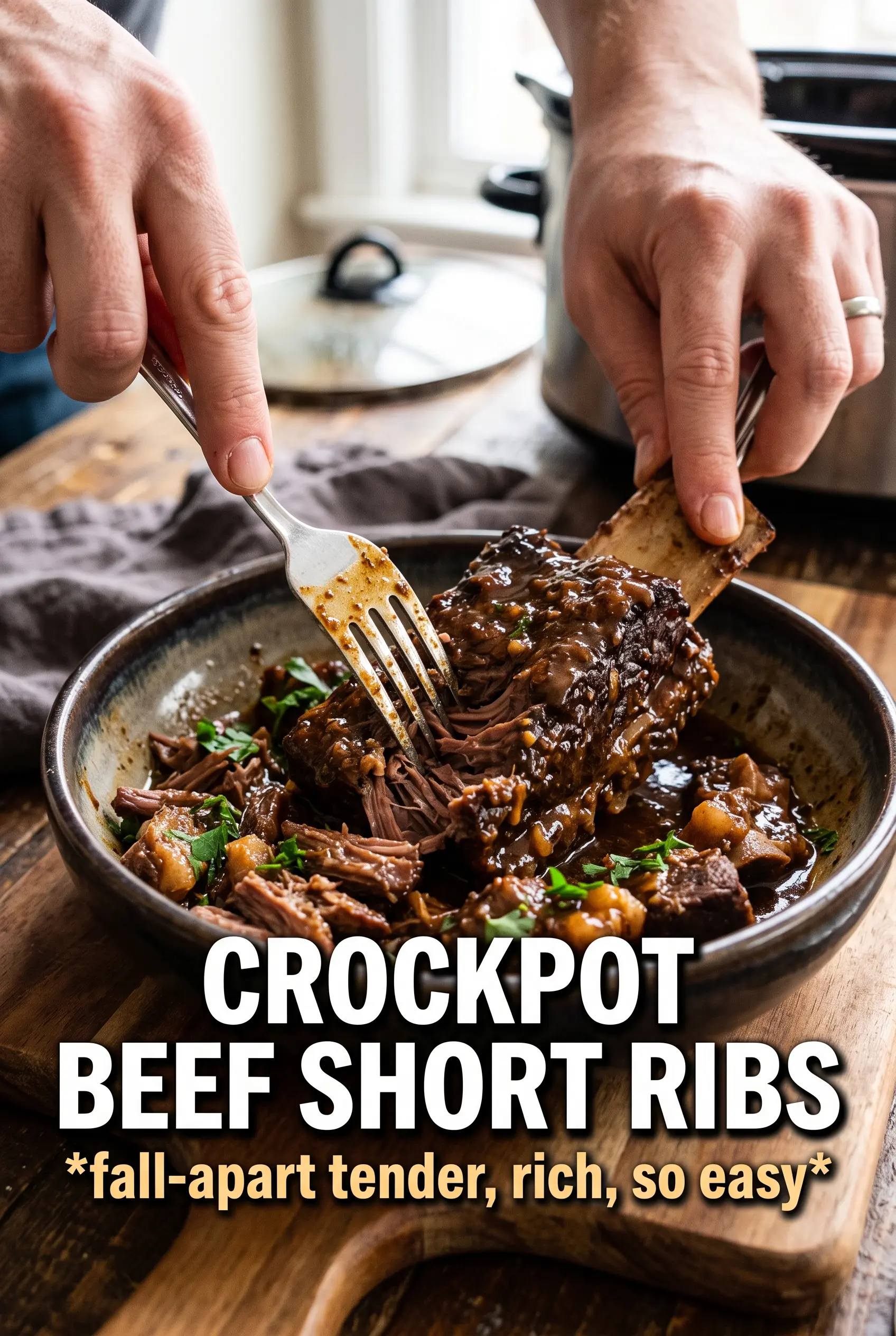
Crockpot Beef Short Ribs
Ingredients
Equipment
Method
- Season the short ribs generously with salt and pepper.
- Heat olive oil in a hot skillet and sear the short ribs on all sides until deeply browned, using a visual cue of dark caramelized crust.
- Place the onion, garlic, carrots, and celery in the crockpot, then nestle the seared ribs on top.
- Whisk beef broth, red wine, tomato paste, and Worcestershire sauce, then pour the mixture over the ribs.
- Add dried thyme, dried rosemary, and bay leaves, then cook on Low for 7-8 hours until the meat is falling off the bone, with a visual cue of tender shredding when nudged.
- Remove the ribs and bay leaves, then skim fat from the braising liquid until the surface looks cleaner.
- Thicken the sauce by stirring cornstarch slurry in and cooking on High for 15 minutes until glossy and lightly thickened.
- Serve the ribs over mashed potatoes and spoon the rich braising sauce on top.