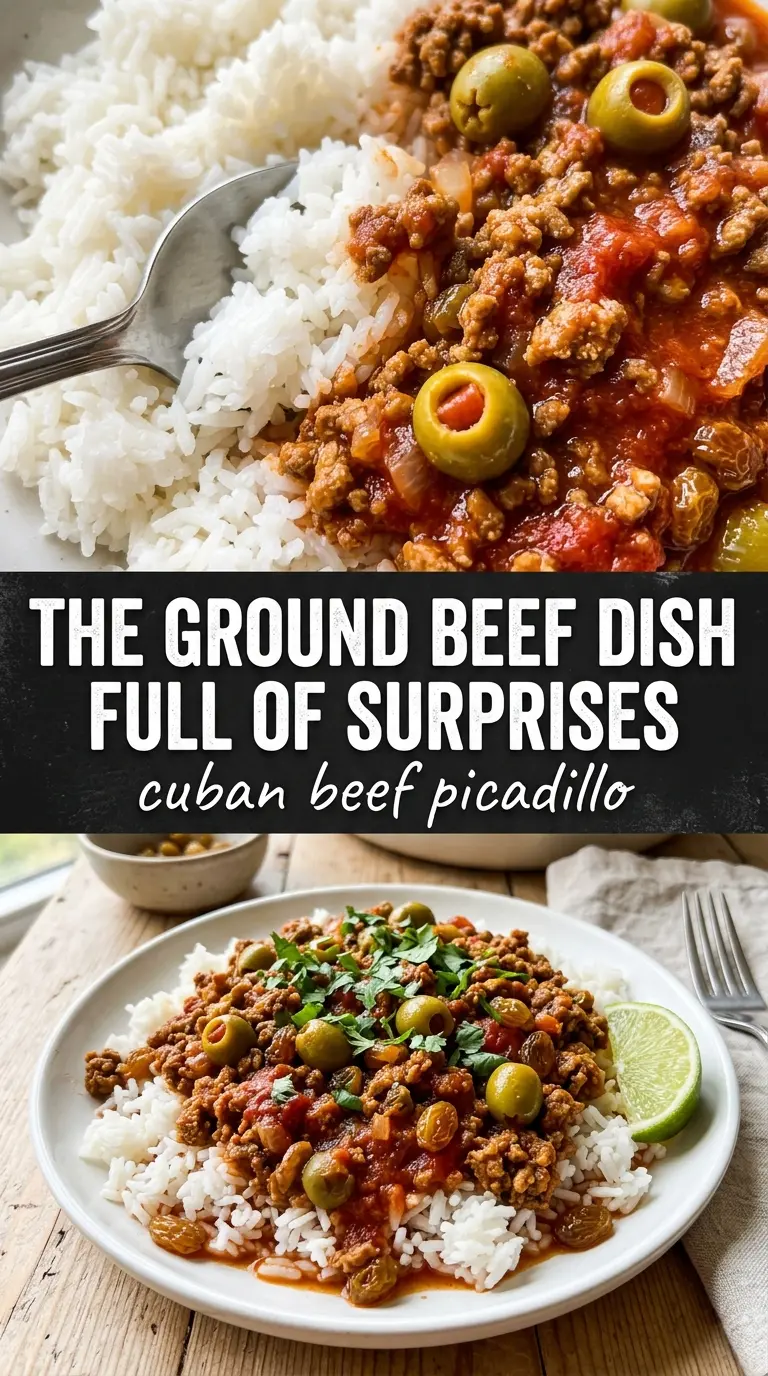
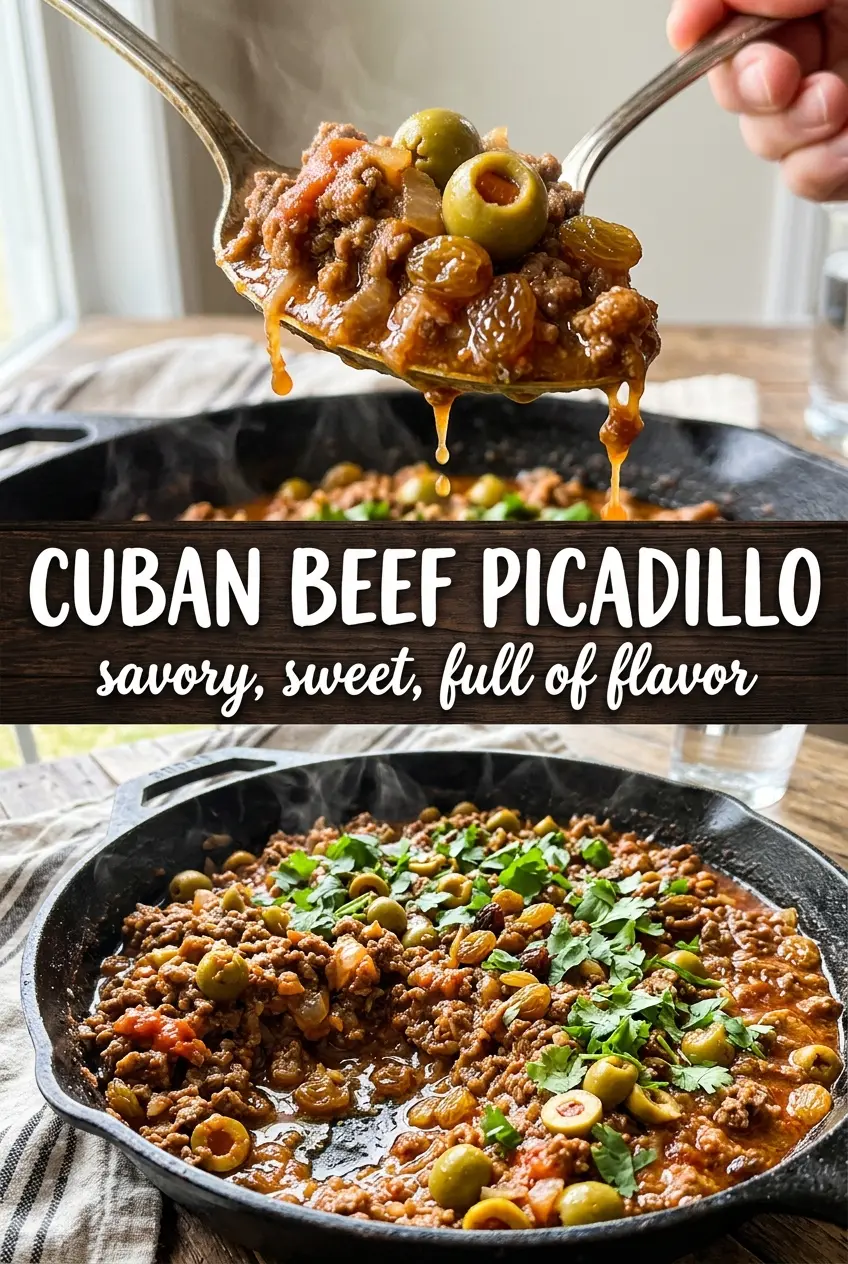
Cuban beef picadillo is the kind of skillet dinner that wins you over with contrast: savory ground beef, a tomato-rich sauce, briny olives and capers, and just enough raisins to keep each bite from tasting flat. It’s not a heavy stew, and it’s not a loose meat sauce either. When it’s done right, the sauce clings to the beef and the whole pan tastes balanced, bright, and deeply seasoned.
What makes this version work is the order. The onion and bell pepper soften first, which gives the beef a sweeter base to cook into, and the spices bloom in the oil before the tomatoes go in. That short step wakes up the cumin and oregano, so they taste round instead of dusty. The raisins don’t make the dish sweet; they melt into the sauce just enough to soften the acidity of the tomatoes and the sharpness of the olives.
Below you’ll find the little details that matter most here, including how to keep the picadillo from turning watery and what to do if you want a stronger briny edge. It’s a simple dish, but the balance is what makes people go back for another spoonful.
The sauce thickened up perfectly and the raisins mellowed out the tomatoes without making it sweet. I served it over white rice and my husband went back for seconds before I even sat down.
Pin this Cuban beef picadillo for a sweet-savory skillet dinner with olives, capers, and a tomato sauce that clings to every bite.
The Part That Keeps Picadillo from Tasting Flat
The biggest mistake with picadillo is treating it like plain seasoned ground beef with tomatoes added at the end. That gives you a sauce that tastes thin and one-note. The onions and peppers need a few minutes to soften first, and the spices need heat and oil to open up before the tomatoes go in. That’s what gives the finished dish depth instead of just a red color.
Raisins and olives are not decorations here. They’re part of the balance. The raisins soften into the sauce and round off the sharp edges, while the olives and capers bring the salty, briny contrast that makes each bite taste finished. If your picadillo ever tastes dull, it usually means one of those pieces is missing or the sauce didn’t reduce long enough to bring everything together.
- Ground beef — An 80/20 blend gives you enough fat for flavor without turning the sauce greasy. Leaner beef works, but it can taste dry unless you reduce the sauce a little less aggressively.
- Green olives and capers — Use a jarred brine-packed version here. Their salty bite is what makes picadillo taste like picadillo. If you’re using especially salty capers, rinse them briefly so they don’t overpower the pan.
- Raisins — Small raisins disappear into the sauce better than big ones. If you want them softer and less noticeable, soak them in warm water for 5 minutes before adding them.
- Tomato sauce and diced tomatoes — The mix gives you both body and texture. Tomato sauce builds the base, while diced tomatoes keep the dish from becoming too smooth or pasty.
What Each Ingredient Is Actually Doing in This Recipe
- Primary ingredient (the star) — Quality matters most. Choose the best you can find.
- Cooking medium (oil, butter, or broth) — This carries flavors and prevents dryness.
- Seasonings (salt, pepper, spices, herbs) — Layer flavors so nothing overpowers. Build depth gradually.
- Aromatics (garlic, onion, herbs) — Cook with fat to bloom flavors. Become the foundation.
- Supporting ingredients — Complement the main ingredient without overpowering it.
- Sauce or liquid (if applicable) — Brings flavors together. Balance richness with acid.
- Acid (lemon, vinegar, wine, or other) — Brightens and prevents flat-tasting results.
- Final finish (garnish, glaze, or sauce) — Prevents one-dimensional taste and adds visual appeal.
How to Build the Sauce So It Stays Rich, Not Watery
Softening the Vegetables First
Start with the onion and bell pepper in hot olive oil and let them cook until they’ve lost their raw crunch and picked up a little color at the edges. That first step is where a lot of the flavor lives, because the vegetables release sweetness into the oil before anything else hits the pan. If you rush this part, the finished picadillo tastes sharper and the vegetables stay stubbornly firm.
Blooming the Spices in the Pan
Add the garlic, cumin, oregano, and smoked paprika next and stir for about a minute, just until the kitchen smells fragrant. The spices should hit the oil and wake up immediately, but they should not brown hard or stick. If the garlic starts to darken fast, the heat is too high and you’re close to bitterness, so pull the pan back before adding the beef.
Brown the Beef, Then Let the Sauce Reduce
Add the ground beef and break it up as it cooks until it’s no longer pink and you’ve got some browned bits in the pan. Drain excess fat if needed, then stir in the tomatoes, sauce, olives, raisins, and capers. Let the mixture simmer uncovered over medium-low heat until the sauce looks thicker and the liquid has reduced enough to coat the meat instead of pooling around it. If it still looks soupy at 15 minutes, keep going; picadillo usually needs the full simmer to taste like a finished dish.
Finishing with the Right Balance
Taste at the end, not before. The olives and capers bring plenty of salt, so the seasoning often needs less adjustment than you’d expect. If the sauce tastes flat, add a little more salt and let it sit off the heat for a few minutes; picadillo settles as it rests, and the flavors come together fast once the pan is off the burner.
How to Adapt This for the Pantry You Have
Make it leaner without losing the sauce
You can use lean ground beef, but don’t skip the simmer time. Lean meat gives you less built-in richness, so the sauce needs to reduce until it clings to the beef. If it looks dry before that happens, add a splash of water instead of extra tomato sauce, which can make it taste heavy.
Swap in ground turkey for a lighter version
Ground turkey works well if you want a lighter picadillo, but it needs a little help. Add an extra teaspoon of olive oil with the spices, and don’t overcook it or the texture turns chalky. The olives, capers, and raisins matter even more with turkey because they carry the flavor that beef naturally provides.
Make it gluten-free without changing the dish
This recipe is naturally gluten-free as long as your tomato sauce and capers are certified gluten-free. Serve it with rice, roasted potatoes, or plantains instead of bread. The texture stays exactly the same, which is part of why picadillo is such a practical weeknight meal.
Use fewer raisins for a more savory pan
If you want the briny side to lead, cut the raisins back to 2 tablespoons. You’ll still get that subtle sweet balance, but the olives and capers will stand out more. This is the version I’d make when serving it with very plain white rice.
Storage and Reheating
- Refrigerator: Store in an airtight container for up to 4 days. The flavor gets even better after a day, and the sauce thickens as it chills.
- Freezer: Picadillo freezes well for up to 3 months. Cool it completely, portion it into freezer containers, and leave a little space at the top because the sauce expands slightly.
- Reheating: Warm it gently on the stove over medium-low heat with a splash of water if needed. The common mistake is blasting it in a hot pan until the beef dries out and the sauce starts to stick.
Questions I Get Asked About This Recipe
Cuban Beef Picadillo
Ingredients
Equipment
Method
- Heat olive oil in a large skillet over medium-high heat, then add onion and green bell pepper. Cook for 4–5 minutes, stirring occasionally, until softened and glossy.
- Add garlic, cumin, oregano, and smoked paprika to the skillet and stir to coat. Cook for 1 minute, until fragrant and aromatic.
- Add ground beef to the skillet and cook, breaking it apart, until browned. Drain excess fat so the sauce stays rich rather than greasy.
- Stir in diced tomatoes, tomato sauce, green olives, raisins, and capers along with salt and pepper. Mix until the ingredients are evenly distributed.
- Simmer the picadillo on medium-low for 15–18 minutes, stirring occasionally, until the sauce thickens. Watch for a spoonable consistency that clings to the beef.
- Adjust seasoning to taste, then garnish with fresh cilantro. Serve warm over white rice.