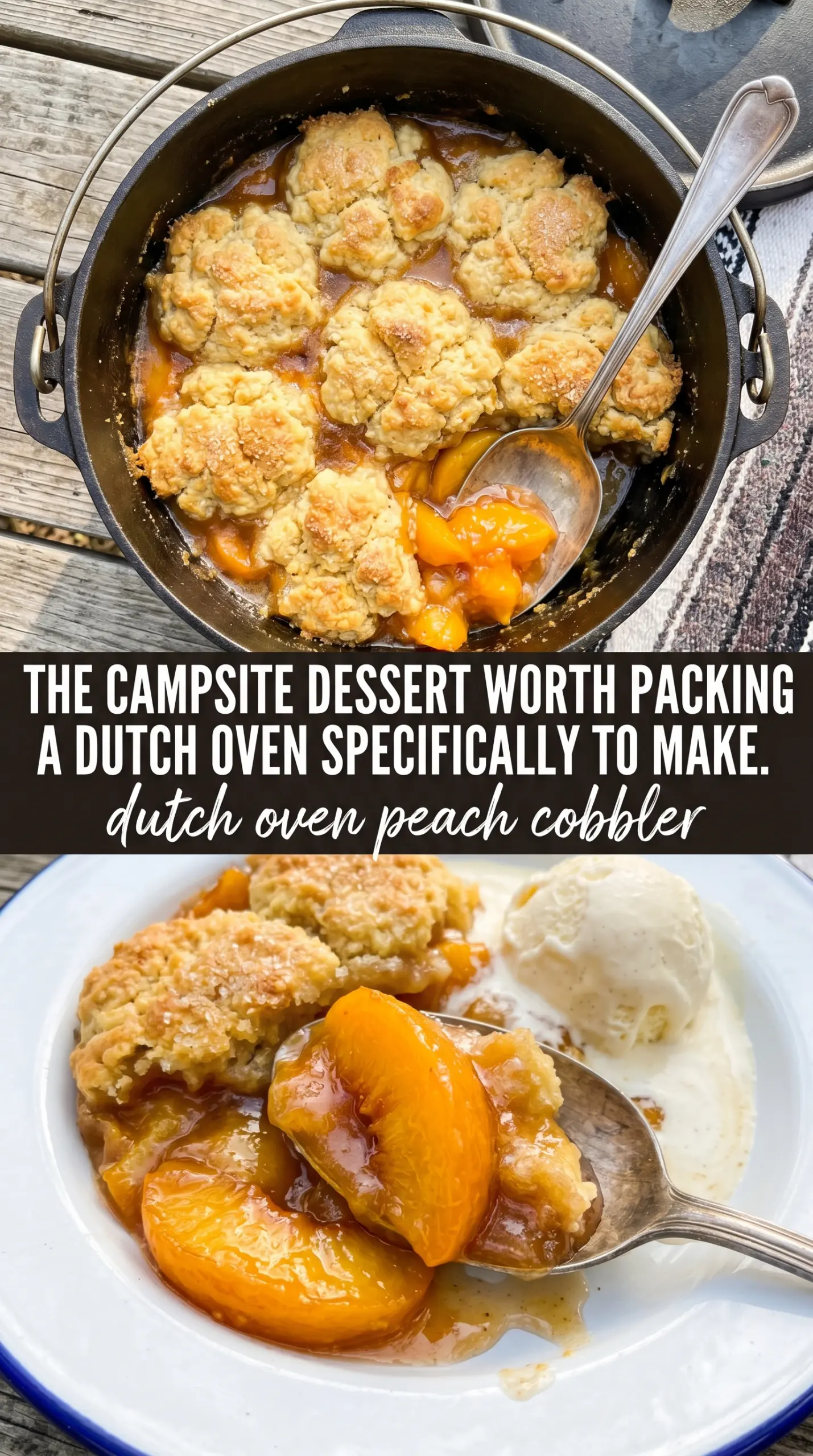
Golden biscuit topping, bubbling peach filling, and that spoonable edge where syrup meets browned crust — Dutch oven peach cobbler earns its place fast. The top bakes up crisp and buttery while the peaches underneath turn jammy and fragrant, so every serving gets a mix of textures instead of one soft, one-note bite. It tastes like campfire dessert should: simple, warm, and impossible to leave alone.
What makes this version work is the layering. The peaches go in first so they can start releasing juice, the dry cake mix stays on top so it can hydrate slowly, and the melted butter is drizzled evenly to create those golden pockets of crust. If the butter only hits one spot, you get patches of dry mix; if it’s spread across the surface, the whole topping bakes into a craggy, crisp lid.
Below, I’ve included the small details that keep the topping from staying powdery, plus a few easy swaps if you want to use fresh peaches or bake it in the oven instead of over coals.
The topping turned golden all the way across and the peaches bubbled up around the edges just like you said. I served it after 10 minutes of cooling and it scooped perfectly with vanilla ice cream.
Save this Dutch Oven Peach Cobbler for the next campfire dessert night when you want bubbling peaches and a buttery golden topping.
The Trick to Keeping the Topping Crisp Instead of Doughy
Dutch oven cobbler fails for one main reason: the top looks done before the center has actually baked through. The fix is heat from both directions. Coals under the oven start the filling bubbling, and coals on the lid finish the cake-mix topping so it browns instead of staying pale and pasty.
The other thing that matters is leaving the peaches alone once the dry mix goes on. Stirring blends the layers and gives you a gummy filling instead of a crisp top over soft fruit. The dry mix needs to sit there and absorb melted butter and steam in place. That’s what creates the crumbly, biscuit-like surface people expect from cobbler.
- Coals on the lid — This is what gives you a browned top instead of a warm pudding. If the top is still pale after 40 minutes, the lid isn’t hot enough.
- Drained peaches — Too much liquid makes the filling thin. You want enough syrup to bubble, not so much that the cobbler turns soupy.
- Do not stir — The layers need to stay distinct. Stirring pulls the cake mix into the fruit and kills the crust.
What the Cake Mix and Butter Are Doing in the Pan
- Yellow cake mix — This acts as the shortcut topping. It bakes into a soft, biscuit-like crust with a little sweetness already built in. White cake mix works too, but yellow gives a richer, more buttery taste.
- Melted butter — Butter is what turns the dry mix into a real topping. Drizzle it evenly, not in one big pour, so more of the surface gets coated and bakes up crisp.
- Peaches in syrup — Canned peaches keep this recipe consistent and easy at camp. If you use fresh peaches, add a few tablespoons of water or juice so the filling has enough moisture to bubble.
- Cinnamon and nutmeg — These give the peaches that familiar cobbler aroma. They don’t need to be heavy-handed; the fruit should still taste like peach first.
Building the Dutch Oven Cobber Layer by Layer
Starting with the Fruit
Spread the peaches in an even layer across the bottom of the Dutch oven. That even layer matters because it helps the fruit heat at the same pace, which keeps some spots from scorching while others stay cool. Sprinkle the sugar and spices over the top and let them sit where they land. Once the peaches start warming, the sugar melts into the juices and becomes the syrupy base of the cobbler.
Covering with the Dry Mix
Pour the dry cake mix over the peaches in an even layer and leave it alone. The surface will look dusty at first, and that’s correct. The mix hydrates from the steam below and the butter above, which is why stirring ruins the texture. If you see dry pockets near the edges, tilt the pot gently instead of mixing.
Drizzling the Butter
Drizzle the melted butter slowly over the top, aiming to cover as much of the dry mix as possible. A spoon or small cup helps you control where it lands. The more evenly the butter spreads, the more evenly the top browns. If large patches stay dry, they’ll bake up floury instead of crisp, so take your time with this part.
Watching for the Finish
Cook until the top is deeply golden and the peach filling is bubbling around the edges. That bubbling matters more than the clock. It tells you the fruit has heated through and the sugar has thickened into a proper cobbler filling. Let it rest for 10 minutes before serving so the juices settle and the spoonfuls hold together instead of running across the plate.
How to Adapt Dutch Oven Peach Cobbler Without Losing the Texture
Fresh Peach Version
Use about 8 cups sliced fresh peaches with 1/4 cup water or peach juice so the filling has enough moisture to bubble. Fresh fruit gives you a brighter, less syrupy cobbler, but it also needs a little extra help to get that jammy base. If the peaches are tart, add a few tablespoons more sugar.
Gluten-Free Swap
Use a gluten-free yellow cake mix with the same method. The topping still browns well, but some gluten-free mixes absorb butter faster, so drizzle carefully and check the top a few minutes early for dry spots.
Oven-Baked Version
Bake covered loosely at 350°F until the top is golden and the filling is bubbling, about 40 to 45 minutes. The oven gives you more even heat than coals, so it’s a good choice when you want the same texture without managing a fire.
Dairy-Free Finish
Use a plant-based butter that melts cleanly and keep the drizzle even across the top. The cobbler will still brown, but it won’t taste quite as rich, so serving it with dairy-free vanilla ice cream helps bring back that creamy contrast.
Storage and Reheating
- Refrigerator: Store leftovers covered for up to 4 days. The topping softens as it sits, but the flavor stays good.
- Freezer: It freezes better than most fruit desserts. Cool completely, wrap well, and freeze for up to 2 months. The topping will be softer after thawing, but it still works.
- Reheating: Reheat in a 325°F oven until warmed through. The microwave makes the topping mushy, so use it only for a single quick serving if texture doesn’t matter.
Answers to the Questions Worth Asking

Dutch Oven Peach Cobbler
Ingredients
Equipment
Method
- Spread the drained sliced peaches in the bottom of a Dutch oven in an even layer so they cook through. Aim for full coverage to create the bubbling filling.
- Sprinkle the peaches with sugar, cinnamon, and nutmeg, distributing the spices across the surface. The mixture should look evenly speckled.
- Pour the dry yellow cake mix evenly over the peaches without stirring. Keep the topping intact in a dry layer.
- Drizzle the melted butter over the cake mix, covering as much as possible. You want visible buttery patches on top.
- Cover the Dutch oven and place it on campfire coals with additional coals on top of the lid. This top-and-bottom heat helps the topping bake evenly.
- Cook for 40-45 minutes until the topping is golden and the peaches are bubbling. Look for a crisp, golden surface and active bubbling around the edges.
- Let the cobbler cool for 10 minutes so the filling thickens slightly. The surface should settle from bubbling to gentle warmth.
- Serve with vanilla ice cream right after cooling for the best contrast. Scoop portion sizes with a serving spoon.