French onion gnocchi lands in that sweet spot between cozy and a little bit fancy: soft potato dumplings tucked into a deep onion broth, then finished with a blanket of bubbling Gruyere. The onions carry the whole dish. When they’re cooked slowly enough to turn jammy and brown, the sauce gets that unmistakable French onion soup character without needing a separate soup course.
What makes this version work is patience at the start and restraint at the end. The onions need time in butter over medium-low heat until they collapse and darken; rushing them leaves you with sharp onions instead of the sweet, savory base this dish depends on. The gnocchi cooks right in the sauce, which lets it pick up flavor while helping the broth thicken naturally from the starch.
Below, I’m sharing the small timing details that keep the sauce silky, the best way to get the cheese to melt without burning, and a few swaps if you need to work around what’s in your kitchen.
The onions took their time, but that slow caramelizing gave the sauce such a rich, savory depth. The gnocchi stayed pillowy and the Gruyere browned beautifully under the broiler.
Save this French Onion Gnocchi for nights when you want caramelized onions, pillowy gnocchi, and broiled Gruyere in one skillet.
The Part That Makes the Onions Taste Like French Onion Soup, Not Just Cooked Onions
The whole dish depends on the onions going past soft and into deep golden brown territory. That color isn’t just for looks; it’s the point where their natural sweetness comes forward and the sharp edge disappears. If you stop when they are merely translucent or pale gold, the sauce tastes flat and the cheese has to do too much work.
The other failure point is heat. Medium-low gives the onions time to release moisture, then slowly concentrate. If the pan is too hot, the outside of the onions browns before the water cooks off, which leaves you with bitter bits and uneven texture instead of that silky, jammy base you want.
- Slow caramelization — Stir occasionally, not constantly. Let the onions sit long enough to take on color, then turn them over and keep going.
- Butter — It gives the onions richness and helps them brown evenly. If you need a dairy-free version, use olive oil, but the finished sauce will taste a little less round.
- Dry white wine — This lifts the browned bits from the pan and sharpens the sweetness of the onions. Use a wine you’d drink; cooking wine tastes harsh here.
- Gruyere — It melts into that stretchy, nutty top you want. Swiss can step in, but it won’t have the same depth.
What Each Ingredient Is Actually Doing in This Skillet
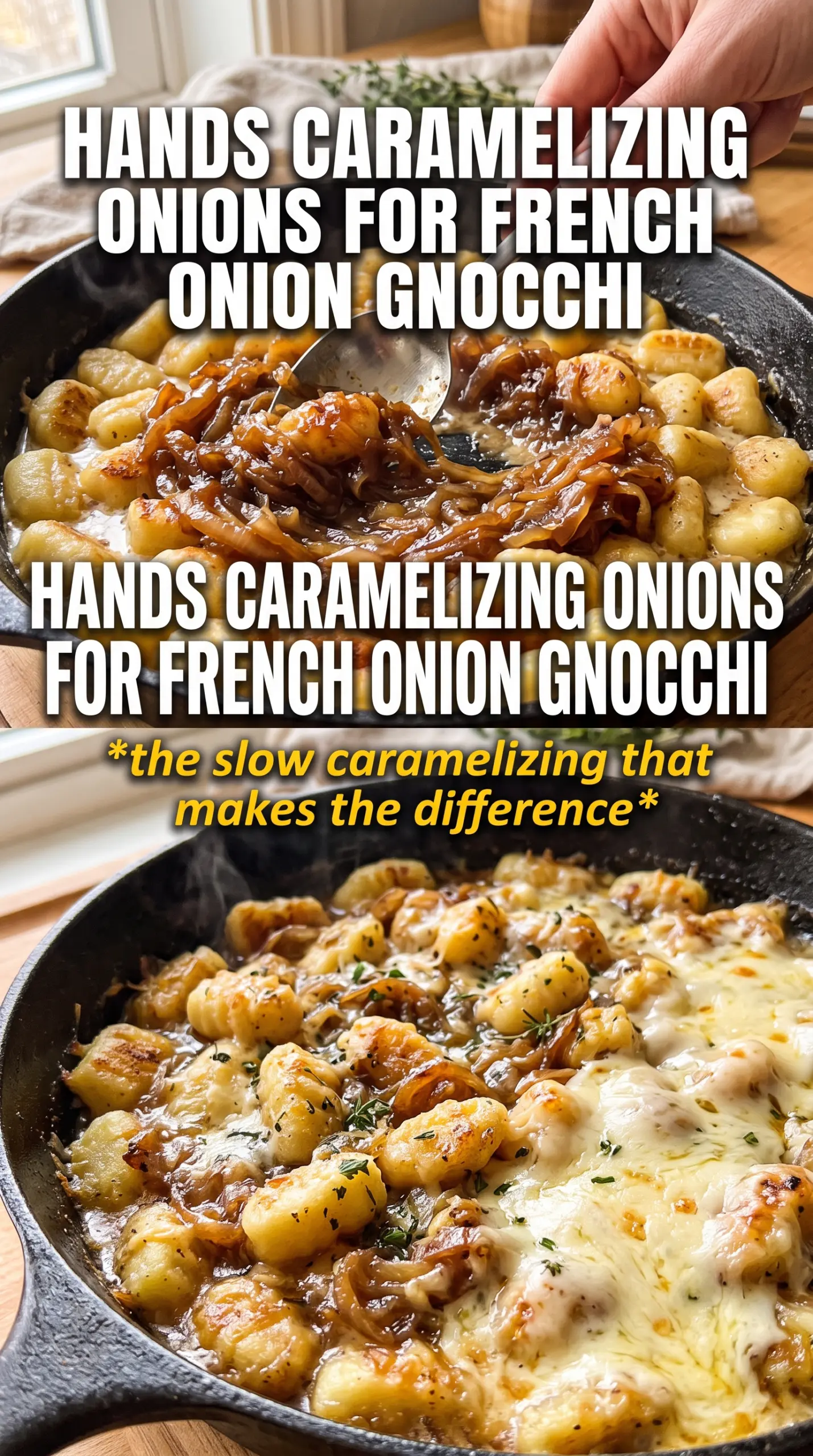
- Potato gnocchi — These little dumplings thicken the sauce as they cook and bring the soft, pillowy texture that makes the dish feel substantial. Shelf-stable gnocchi works well here because it holds its shape in the sauce.
- Beef broth — This is the backbone of the French onion flavor. A good broth adds savory depth that water can’t provide, and it keeps the sauce from tasting one-note.
- Worcestershire sauce — It adds a quiet hit of umami and a little tang. Don’t skip it unless you have to; it makes the onion base taste fuller without shouting for attention.
- Heavy cream — It softens the broth into a sauce and gives the finished skillet a velvety body. Half-and-half can work in a pinch, but the sauce will be thinner and a little less luxurious.
- Fresh thyme — Fresh thyme gives a cleaner, more fragrant finish than dried. If you substitute dried, use less and add it with the wine so it has time to bloom.
Building the Sauce So the Gnocchi Stays Tender and the Cheese Melts Cleanly
Caramelizing the onions slowly
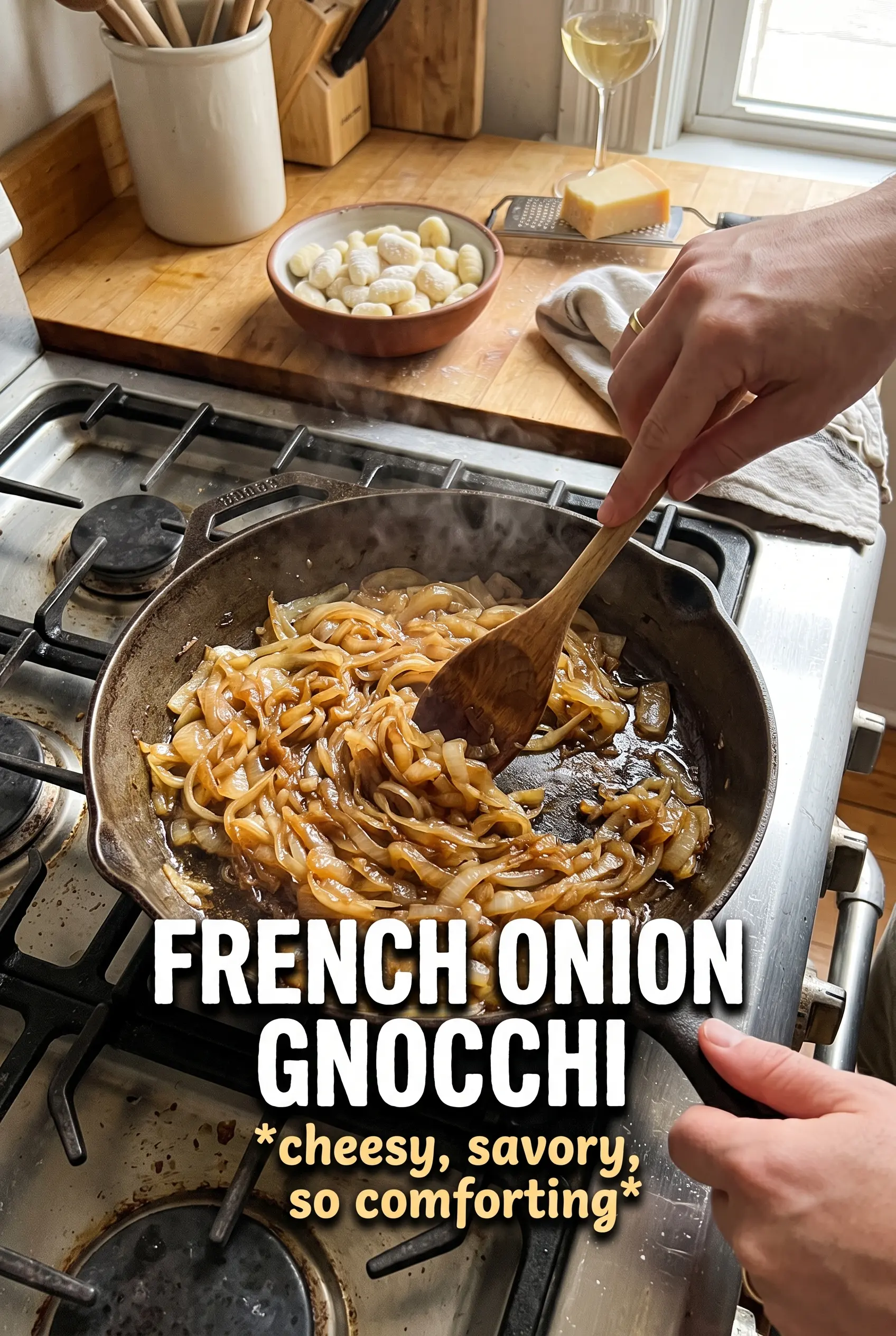
Start the onions in butter over medium-low heat and give them time to soften, then brown, then turn deep amber. They should look glossy, shrunken, and almost spreadable by the time you’re done. If they start sticking hard or scorching on the bottom, the heat is too high and the pan needs a splash of liquid and a lower flame.
De-glazing with wine and layering the broth
Add the garlic and thyme briefly, just until fragrant, then pour in the wine to pull up the browned bits. Let it simmer until the sharp alcohol smell fades and the pan looks less wet. This step matters because those brown bits are concentrated onion flavor, and leaving them stuck to the pan means leaving flavor behind.
Cooking the gnocchi right in the sauce
Stir in the broth, Worcestershire, and cream, then bring everything to a gentle simmer before the gnocchi goes in. The sauce should bubble lazily, not boil hard, or the cream can separate and the gnocchi can start breaking apart before it finishes cooking. After 4 to 5 minutes, the gnocchi should be tender and the sauce just thick enough to coat a spoon.
Melting the Gruyere under the broiler
Scatter the cheese evenly across the surface and broil until it bubbles and spots of gold appear. Stay close to the oven. The line between perfectly bronzed and burnt is short when cheese is sitting under direct heat, especially with a skillet full of hot sauce underneath.
Make it vegetarian without losing the onion depth
Swap the beef broth for a deeply flavored vegetable broth and add an extra teaspoon of Worcestershire-style seasoning if you have it. The dish will still taste rich, but the savory edge will be a little lighter and cleaner.
Go dairy-free with a different finish
Use olive oil instead of butter and swap the cream for unsweetened oat cream or cashew cream. You won’t get the same Gruyere melt on top, so finish with a dairy-free cheese that browns well or skip the broil and serve it as a glossy onion-broth skillet.
Make it gluten-free with the right gnocchi
Use certified gluten-free gnocchi and check your Worcestershire sauce and broth labels. The texture stays nearly the same, but gluten-free gnocchi can soften faster, so keep an eye on it during the simmer.
Turn it into a heartier main dish
Stir in cooked shredded chicken or browned mushrooms before the broil. Chicken makes it more filling without changing the flavor much, while mushrooms deepen the savory notes and echo the caramelized onions.
Storage and Reheating
- Refrigerator: Store leftovers in an airtight container for up to 3 days. The gnocchi will absorb more sauce as it sits, so the dish thickens noticeably.
- Freezer: Freezing isn’t ideal. The cream and gnocchi both change texture after thawing, and the sauce can turn grainy.
- Reheating: Reheat gently on the stove over low heat with a splash of broth or cream. High heat is the fastest way to break the sauce and turn the gnocchi gummy.
Questions I Get Asked About This Recipe
French Onion Gnocchi
Ingredients
Equipment
Method
- Melt the butter in a cast iron skillet over medium-low heat, then add the onions. Cook 35-40 minutes, stirring occasionally, until deeply caramelized and dark golden-brown.
- Stir in the garlic and fresh thyme and cook for 1 minute. Add the dry white wine and deglaze, cooking for 2 minutes while the liquid reduces slightly and smells aromatic.
- Pour in the beef broth, Worcestershire sauce, and heavy cream. Bring to a simmer over medium heat, with steady bubbling around the edges.
- Add the potato gnocchi in a single layer. Cook 4-5 minutes, stirring gently as needed, until the gnocchi is cooked through and the sauce thickens to a light coating consistency.
- Scatter the shredded Gruyere over the top and season with salt and pepper to taste. Broil 3-4 minutes until golden and bubbly, with browned spots on the cheese.