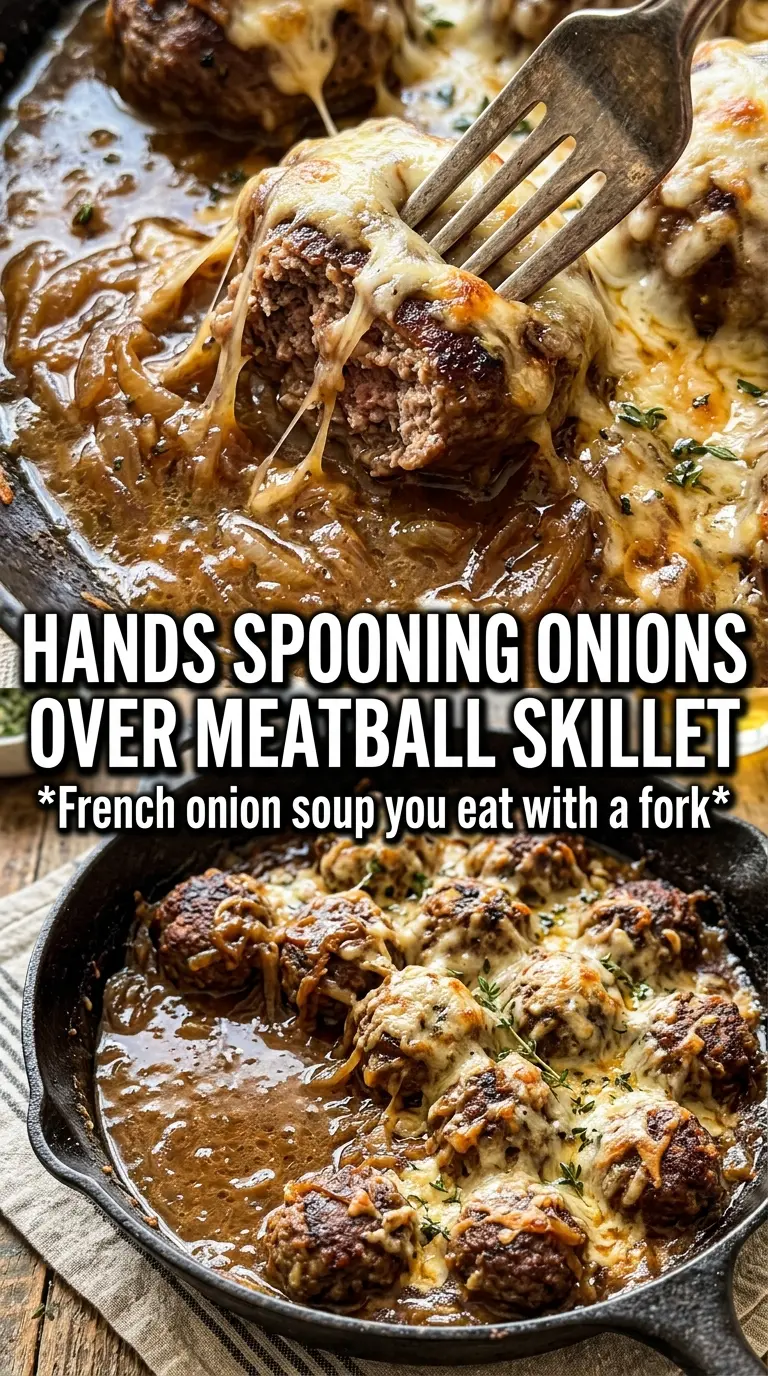
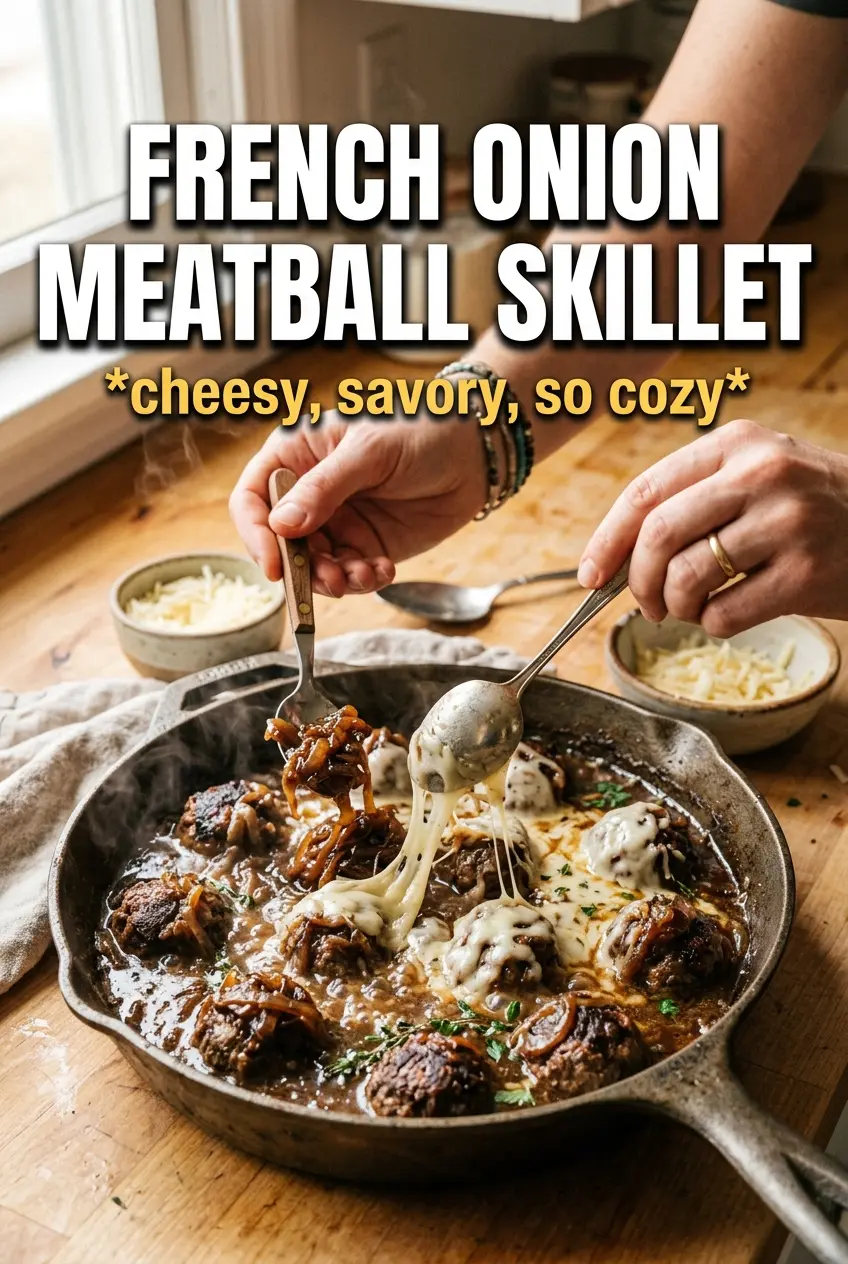
Golden meatballs tucked into deeply caramelized onions make this skillet feel bigger than the sum of its parts. The onions melt down into a dark, savory broth, the meatballs stay juicy, and the Gruyere on top turns the whole pan into something glossy and spoonable with just enough richness to make you want bread on the table.
What makes this version work is patience at the stovetop. The onions need time to lose their water and pick up real color before the broth goes in, and that slow browning is what gives the sauce its French onion depth. Browning the meatballs first also matters, because it builds flavor in the pan and keeps them from stewing in the liquid right away.
Below, I’ve included the timing cues that matter most, plus a few smart swaps for when you need to work with what’s in the fridge. The difference between a good skillet dinner and one that tastes like you meant it is all in those details.
The onions cooked down into that deep jammy broth I was hoping for, and the Gruyere melted in a perfect blanket without turning greasy. I simmered the meatballs for 10 minutes and they stayed tender all the way through.
Save this French Onion Meatball Skillet for the night you want caramelized onion gravy, tender meatballs, and bubbling Gruyere in one pan.
The Onion Pan Needs Patience, Not Heat
The mistake most people make with French onion flavors is rushing the onions until they’re browned on the outside but still sharp underneath. That gives you color without depth. For this skillet, the onions need to cook low and slow until they collapse, turn sweet, and leave a brown film on the pan that tells you the fond is building underneath.
That slow cook also keeps the broth from tasting thin later. Once the wine hits the pan, it should pick up the sticky bits from the bottom instead of just loosening raw onion juice. If the onions start to scorch, the heat is too high; drop it and keep going. Deep caramelization should smell sweet and savory, not bitter.
- Ground beef — An 80/20 blend works best because it stays juicy after browning and simmering. Leaner beef can work, but the meatballs will be firmer and a little drier.
- Breadcrumbs and egg — These hold the meatballs together without making them dense. If you need a gluten-free version, use gluten-free breadcrumbs or crushed rice crackers in the same amount.
- Gruyere — This is the cheese that gives the skillet its French onion finish. Swiss cheese melts fine in a pinch, but Gruyere brings the nutty edge that makes the top taste complete.
- Dry white wine — Use something crisp and dry, not sweet. If you skip the wine, add a splash of broth plus a teaspoon of white wine vinegar to replace some of the brightness.
What Each Ingredient Is Actually Doing in This Recipe
- Primary ingredient (the star) — Quality matters most. Choose the best you can find.
- Cooking medium (oil, butter, or broth) — This carries flavors and prevents dryness.
- Seasonings (salt, pepper, spices, herbs) — Layer flavors so nothing overpowers. Build depth gradually.
- Aromatics (garlic, onion, herbs) — Cook with fat to bloom flavors. Become the foundation.
- Supporting ingredients — Complement the main ingredient without overpowering it.
- Sauce or liquid (if applicable) — Brings flavors together. Balance richness with acid.
- Acid (lemon, vinegar, wine, or other) — Brightens and prevents flat-tasting results.
- Final finish (garnish, glaze, or sauce) — Prevents one-dimensional taste and adds visual appeal.
Building the Skillet in the Right Order
Browning the Meatballs First
Mix the meatball ingredients just until combined, then roll them gently. Overworking the mixture makes the meatballs springy instead of tender. Brown them in the skillet until they pick up a deep crust on several sides; they don’t need to cook through yet. Pull them out once they’re browned, not gray, because the final simmer in the onion broth finishes the job without drying them out.
Caramelizing the Onions Slowly
Use the same skillet and the same fat. That’s where the flavor is. Add the onions and keep the heat around medium-low so they soften first, then slowly turn amber and finally deep brown over 30 to 35 minutes. If the pan looks dry before the onions are done, add a small knob of butter, not a splash of water, so they keep cooking instead of steaming.
Deglazing Into the French Onion Base
When the onions are dark and jammy, stir in the garlic and thyme just long enough for their aroma to bloom, then pour in the wine. It should sizzle and loosen the brown bits on the bottom right away. After the wine reduces slightly, add the broth and Worcestershire. The sauce should look loose at first; it thickens a little as the onions continue to break down and the flavors concentrate.
Finishing Under the Broiler
Return the meatballs to the skillet and simmer until they’re cooked through and the sauce has settled around them. Then cover everything with Gruyere and broil just until the cheese bubbles and turns spotted gold. Walk away for even a minute and the top can go from melted to scorched, so keep the skillet close and watch the edges first. Fresh thyme over the top after broiling gives the whole pan a cleaner finish.
How to Adapt This French Onion Meatball Skillet Without Losing the Point
Make it gluten-free
Swap the breadcrumbs for a gluten-free version and check that your Worcestershire sauce is gluten-free too. The texture stays close to the original as long as you don’t add extra binder, which would make the meatballs heavy.
Use all beef broth, no wine
If you don’t cook with wine, replace it with more broth plus a teaspoon of vinegar or lemon juice. You’ll lose a little of the sharp edge wine brings, but the dish still lands in the same savory place.
Swap the cheese
Gruyere melts best, but Swiss, provolone, or a mild fontina will all work. The flavor gets a little less nutty with each swap, so if you use a milder cheese, keep the thyme and onion deeply caramelized to carry more of the taste.
Make it lighter
Ground turkey works, but it needs a little help because it won’t brown as richly as beef. Use a touch more butter for the onions and don’t skip the wine, since that extra depth helps replace the flavor you lose from the leaner meat.
Storage and Reheating
- Refrigerator: Store leftovers for up to 4 days. The sauce thickens as it chills, so expect it to look more concentrated the next day.
- Freezer: It freezes well for up to 2 months if you freeze the meatballs and sauce together without the cheese topping. Add fresh Gruyere after reheating for the best melt.
- Reheating: Warm it gently on the stovetop over low heat with a splash of broth to loosen the sauce. High heat can tighten the meatballs and make the cheese oily if you reheat it too fast.
Answers to the Questions Worth Asking
French Onion Meatball Skillet
Ingredients
Equipment
Method
- In a bowl, combine ground beef, breadcrumbs, egg, Worcestershire, garlic powder, salt, and pepper, then mix until evenly combined.
- Roll the mixture into meatballs, about 1 to 1.5 inches wide.
- Heat 1 tablespoon butter in an oven-safe skillet over medium-high heat, then brown the meatballs in batches until golden on multiple sides.
- Remove the browned meatballs to a plate and keep any browned bits in the skillet.
- Melt the remaining butter in the same skillet over medium-low heat, then add the thinly sliced onions.
- Cook the onions for 30-35 minutes, stirring occasionally, until deeply caramelized and jammy.
- Stir in the minced garlic and fresh thyme for 30-60 seconds, just until fragrant.
- Pour in the dry white wine and scrape up the browned bits, then simmer for 2-3 minutes to reduce slightly.
- Add beef broth and Worcestershire, stirring to combine.
- Nestle the meatballs into the caramelized onion sauce so they’re partially submerged.
- Simmer for 10 minutes, letting the meatballs absorb some onion broth.
- Scatter the shredded Gruyère evenly over the skillet.
- Broil 3-5 minutes until the cheese is golden and bubbly, with browned spots across the surface.