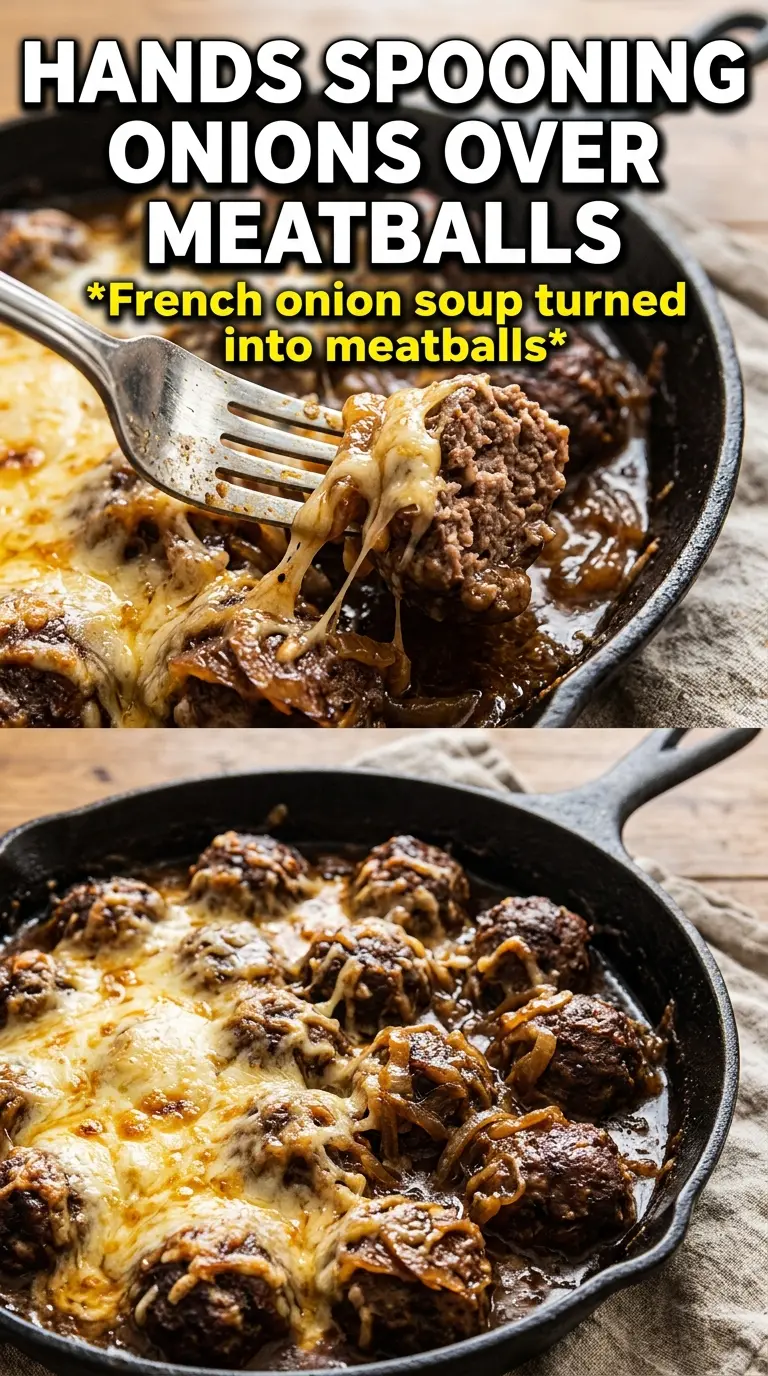
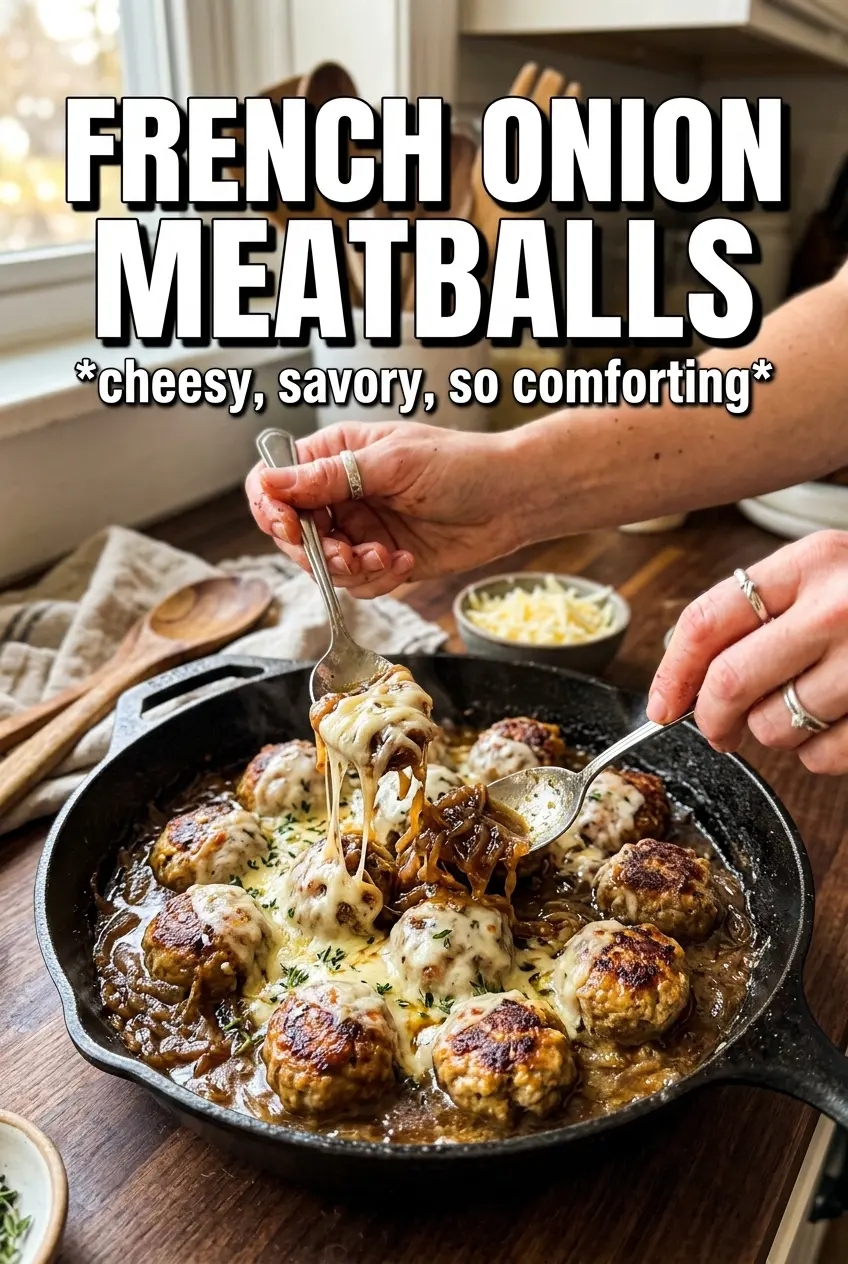
French onion meatballs hit that sweet spot between cozy and a little dramatic: tender browned meatballs tucked into a savory onion broth, then finished under a blanket of melted Gruyere or provolone. The onions turn jammy and deep gold, the sauce picks up all the browned bits from the pan, and the final broil gives you that glossy, bubbly top that makes people hover around the table before dinner is even served.
What makes this version work is patience in the skillet. The onions need time over medium-low heat so they soften and caramelize instead of burning, and the meatballs get browned first so the pan starts with flavor already built in. A splash of white wine or broth loosens those browned bits, and Worcestershire adds the kind of savory depth that makes the whole dish taste like it cooked longer than it did.
Below, I’m walking through the key points that keep the onions sweet instead of bitter, the meatballs tender instead of dense, and the cheese topping browned without drying out the sauce.
The onions went all the way sweet and jammy, and the cheese browned beautifully under the broiler without the sauce getting watery. My husband kept going back for more and said it tasted like French onion soup met meatball night.
Save these French onion meatballs for the night you want deep caramelized onion flavor, melty cheese, and a one-pan dinner that feels special.
The Onion Pan Needs Time, Not Heat
The biggest mistake with French onion-style dishes is rushing the onions. If you turn up the heat to hurry them along, they brown unevenly, taste sharp, and never build that soft, sweet base this recipe depends on. Medium-low heat gives the onions time to collapse, release their moisture, and slowly concentrate into something silky and rich.
The other place people lose the dish is at the deglaze. Those browned bits on the bottom are not stuck-on mess; they’re the backbone of the sauce. Wine or broth lifts them into the liquid, and once the Worcestershire and thyme go in, the skillet starts tasting like French onion soup instead of plain browned meatballs.
- Caramelized onions — these carry the sweetness of the dish. Don’t swap in raw onions and expect the same result; you’ll lose the deep, savory backbone.
- Browned meatballs — the crust adds flavor and helps the meatballs hold together when they finish simmering in the sauce.
- Dry white wine or beef broth — wine adds brightness and helps deglaze more cleanly, but broth works if you want to skip alcohol. Use broth for a rounder, milder sauce.
- Gruyere or provolone — Gruyere gives the classic nutty finish, while provolone melts into a softer, stretchier top. Either one works; use freshly shredded cheese for the best melt.
Building the Sauce Before the Broiler Takes Over
- Ground beef — 80/20 or similar keeps the meatballs juicy. Leaner beef can work, but the texture gets firmer and a little drier after simmering.
- Breadcrumbs and egg — these hold the meatballs together without making them dense. If you use gluten-free breadcrumbs, the structure stays nearly the same.
- Worcestershire — this adds savory depth to both the meatballs and the sauce. There isn’t a perfect stand-in, but soy sauce can cover some of the same ground in a pinch.
- Fresh thyme — dried thyme will work if that’s what you have, but use less. Fresh thyme stays brighter and keeps the sauce from tasting dusty.
Mix the Meatballs Gently
Combine the beef, breadcrumbs, egg, Worcestershire, garlic powder, onion powder, salt, and pepper just until the mixture comes together. If you work it too much, the meatballs get tight and bouncy instead of tender. Roll them into 1.5-inch balls so they brown evenly and finish cooking at the same pace in the sauce.
Brown for Flavor, Not Doneness
Use butter in a skillet and brown the meatballs on the outside before setting them aside. You’re looking for color and a little crust, not a fully cooked center. If the pan gets crowded, the meatballs steam instead of sear, so cook in batches if needed.
Slow-Cook the Onions Until They Turn Sweet
In the same skillet, add the sliced onions and cook them in butter over medium-low heat for 30 to 35 minutes, stirring often. They should soften, shrink down, and turn deep golden brown with a jammy texture. If they start catching too fast, lower the heat and add a splash of broth to loosen the bottom of the pan.
Finish in the Sauce and Under the Broiler
Deglaze with the wine or broth, then stir in the beef broth, Worcestershire, and thyme. Return the meatballs to the sauce and simmer them for about 15 minutes so they finish cooking and pick up the onion flavor. Transfer everything to a baking dish if your skillet isn’t oven-safe, scatter the cheese over the top, and broil just until it melts into a golden, bubbly crust. Watch it closely; broilers go from perfect to scorched in a minute.
How to Adapt French Onion Meatballs for Different Nights
Gluten-Free Meatballs
Use gluten-free breadcrumbs in the meatballs and check that your Worcestershire sauce is gluten-free. The texture stays tender, and the sauce doesn’t need flour or starch to work, so this swap is easy and low-risk.
Dairy-Free Version
Use a neutral oil instead of butter for browning the meatballs and onions, then finish without cheese or with a good dairy-free meltable cheese. You’ll lose a little of the classic French onion richness, but the caramelized onions and beef broth still carry the dish.
Provolone Instead of Gruyere
Provolone melts more smoothly and gives you a milder, stretchier cheese cap. Gruyere tastes nuttier and more classic, so choose provolone when you want a softer finish and Gruyere when you want the deeper French onion flavor to come through.
Make-Ahead Dinner
Brown the meatballs and caramelize the onions a day ahead, then store them separately in the fridge. Reheat the sauce gently, add the meatballs, and broil with cheese just before serving so the top stays bubbly instead of rubbery.
Storage and Reheating
- Refrigerator: Store leftovers for up to 4 days. The onions get even more savory overnight, though the cheese top softens.
- Freezer: Freeze the meatballs and sauce without the cheese for up to 2 months. Thaw overnight in the fridge before reheating, then add the cheese and broil fresh.
- Reheating: Warm gently on the stovetop or in the oven until hot. Don’t blast it in the microwave on high, or the meatballs can toughen and the sauce can separate.
Questions I Get Asked About This Recipe
French Onion Meatballs
Ingredients
Equipment
Method
- Mix ground beef, breadcrumbs, egg, Worcestershire, garlic powder, onion powder, salt, and pepper, then roll into 1.5-inch meatballs.
- Heat butter in a cast iron skillet over medium-high heat and brown meatballs, then transfer to a plate.
- In the same skillet, cook thinly sliced onions in butter over medium-low heat for 30-35 minutes, stirring occasionally until deeply caramelized.
- Deglaze with white wine (or beef broth) and scrape up browned bits from the bottom of the skillet.
- Add beef broth, Worcestershire, and fresh thyme, then bring the sauce to a gentle simmer.
- Return browned meatballs to the sauce and simmer for 15 minutes until tender and coated.
- If your skillet is not oven-safe, transfer meatballs and sauce to a baking dish, then scatter Gruyère–provolone over the top.
- Broil for 3-4 minutes at high heat until the cheese is golden and bubbly.