Garlic Parmesan Bowtie Pasta with Ground Beef lands on the table with that hard-to-beat combination of silky sauce, tender pasta, and browned beef in every bite. The bowties catch the creamy parmesan sauce in their folds, and the whole skillet eats like something much richer than the short ingredient list suggests. It’s the kind of dinner that feels comforting without being fussy, which is exactly why it ends up in regular rotation.
The trick here is building the sauce in the same pan after the beef browns. That means the broth picks up the savory bits left behind, and the pasta cooks right in that flavored liquid instead of in plain water. The cream goes in before the pasta is tender, which gives the sauce time to thicken gradually instead of turning thin and separated at the end. Parmesan finishes the job, but only after the heat drops enough that it melts smoothly.
Below, I’ll walk through the part that matters most: how to keep the sauce creamy, not grainy, and how to tell when the pasta has taken on the right texture. I’ve also included a few practical swaps and storage notes for the nights when you want this dinner to stretch a little further.
The pasta cooked right in the sauce and came out perfectly tender, and the parmesan stayed silky instead of clumping. I added a little extra black pepper at the end and my husband asked for seconds before I even sat down.
Save this garlic parmesan bowtie pasta for the nights when you want a creamy one-skillet dinner with beef and plenty of parmesan.
The Small Mistake That Turns This Sauce Heavy Instead of Silky
The difference between a creamy skillet pasta and a gluey one usually comes down to heat control. Parmesan is delicate once it hits hot liquid, and if the pan is still aggressively boiling when you stir it in, the fat can separate and the cheese can turn grainy. Pulling the pan back to a gentler simmer before the final stir keeps the sauce smooth and lets it cling to the bowties instead of pooling at the bottom.
The other thing that matters is letting the pasta finish in the sauce, not in a separate pot of salted water. Bowtie pasta needs a little room and a little time, and as it cooks in the broth and cream, it absorbs flavor instead of washing it away. Stir occasionally so the farfalle doesn’t stick to the skillet, but don’t stir so often that you break the shape before it softens.
What Each Ingredient Is Actually Doing in the Skillet
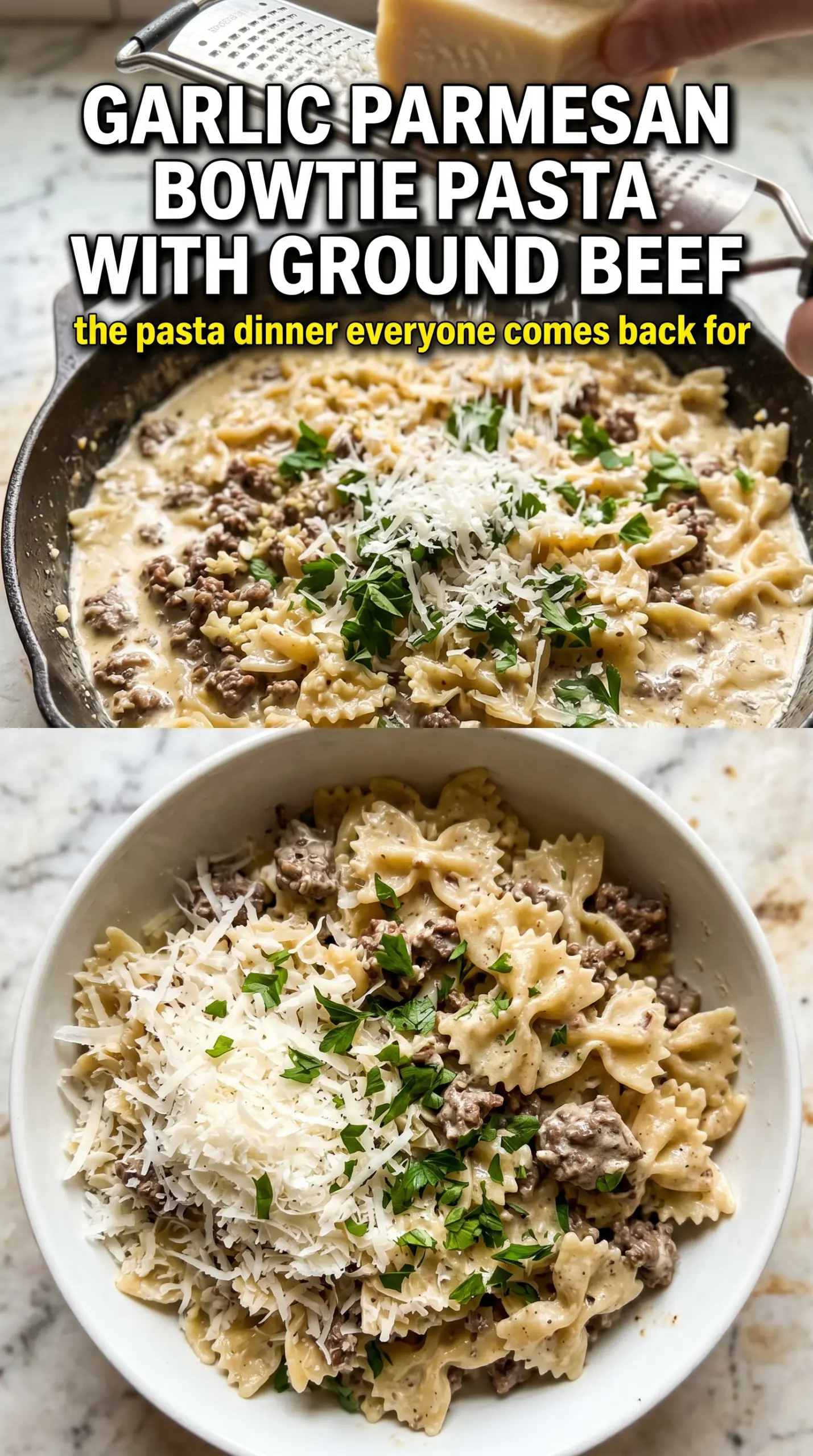
- Ground beef — This gives the dish its savory backbone. An 85/15 or 90/10 blend works well; you want enough fat for flavor, but not so much that the sauce turns greasy. If you use a leaner beef, leave a spoonful of drippings in the pan for better depth.
- Bowtie pasta — Farfalle holds up well in a creamy skillet sauce because the ridges and folds catch the parmesan. Don’t swap in a tiny pasta shape that overcooks quickly; you’ll lose the texture contrast that makes this bowl satisfying.
- Beef broth — This seasons the pasta from the inside out and keeps the sauce from tasting flat. A good boxed broth is fine here, but if yours is especially salty, hold back on the final seasoning until the end.
- Heavy cream — This is what gives the sauce its plush texture. Half-and-half can work in a pinch, but the sauce will be looser and less stable, especially once the parmesan goes in.
- Parmesan cheese — Use freshly grated parmesan if you can. Pre-shredded cheese often has anti-caking agents that make the sauce less smooth. Add it off the highest heat so it melts into the cream instead of clumping.
- Butter — This adds a round, glossy finish at the end. Stir it in after the pasta is cooked so it can emulsify the sauce and give it that restaurant-style sheen.
- Garlic and Italian seasoning — Garlic brings the sharp aromatic note, and the seasoning ties the beef and cream together. The garlic only needs a minute; once it smells toasted, it’s done, and leaving it in longer risks bitterness.
Building the Sauce Around the Pasta, Not the Other Way Around
Browning the Beef First
Start by cooking the ground beef in a large skillet over medium-high heat until it’s well browned and no pink remains. Don’t rush this part by cranking the heat too high; you want the beef to actually brown, not steam in its own juices. If there’s a lot of fat in the pan, drain most of it, but leave a little behind so the garlic and seasoning have something to cling to.
Waking Up the Garlic
Add the minced garlic and stir it for about a minute, just until it smells fragrant. The garlic should look glossy, not dark, because browned garlic turns bitter fast. This is the point where the skillet should already smell rich and savory, with the beef and garlic working together before any liquid goes in.
Cooking the Pasta in the Sauce
Stir in the uncooked bowties, beef broth, heavy cream, and Italian seasoning, then bring everything up to a boil before reducing to medium heat and covering. The sauce will look thin at first. That’s normal. As the pasta cooks, the starch helps thicken the liquid, and the cream takes on a fuller body. Stir occasionally so the pasta doesn’t settle into the bottom and stick.
Finishing Without Breaking the Sauce
When the pasta is tender and most of the liquid has been absorbed, stir in the butter and parmesan. If the sauce looks loose at this stage, give it a minute off the heat; it tightens as it rests. Season with salt and black pepper only after the cheese is in, since parmesan and broth already bring a good amount of salt to the pan.
How to Adapt This Skillet Pasta Without Losing the Creamy Texture
Make it lighter with half-and-half
Half-and-half will work, but the sauce won’t be as rich or as stable. If you use it, keep the heat lower and stop cooking as soon as the pasta is tender so the dairy doesn’t break.
Swap the beef for ground turkey
Ground turkey works if you want a leaner version, but it needs a little help. Add an extra tablespoon of butter or a drizzle of olive oil when you brown it, because turkey doesn’t leave the same savory drippings behind.
Make it gluten-free
Use a sturdy gluten-free farfalle and watch the liquid closely, since gluten-free pasta can go from firm to soft faster than regular pasta. Stir a little more often and check a few minutes early so it keeps some bite.
Add spinach or peas at the end
A handful of spinach wilts into the sauce in a minute, and peas add a sweet pop that works well with the parmesan. Stir them in at the very end so they stay bright instead of turning dull and overcooked.
Storage and Reheating
- Refrigerator: Store in an airtight container for up to 4 days. The sauce will thicken as it sits, and the pasta will keep absorbing liquid.
- Freezer: It can be frozen, but the cream sauce may separate a little after thawing. For the best texture, freeze in portions and expect a looser sauce when reheated.
- Reheating: Warm it gently on the stovetop or in the microwave with a splash of broth or cream. High heat is what makes the sauce tighten into a thick, dry coating, so go low and stir often.
Answers to the Questions Worth Asking
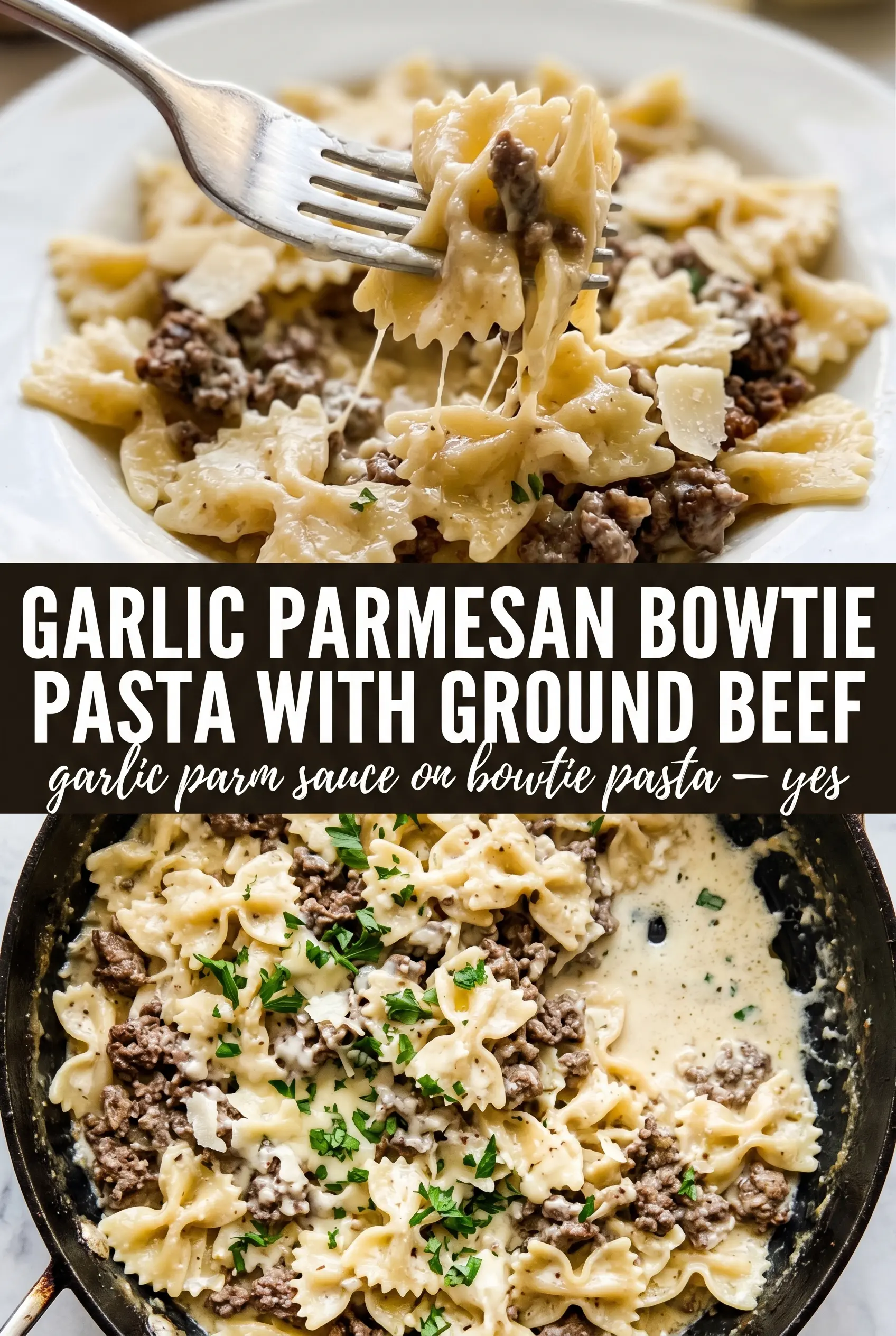
Garlic Parmesan Bowtie Pasta with Ground Beef
Ingredients
Equipment
Method
- Brown the ground beef in a large skillet over medium-high heat, breaking apart until cooked through and draining off excess fat.
- Add the minced garlic and cook for 1 minute until fragrant, stirring so it doesn’t scorch.
- Stir in the bowtie pasta, beef broth, heavy cream, and Italian seasoning, then bring the mixture to a boil.
- Cover and cook on medium heat for 12–14 minutes, stirring occasionally, until the pasta is tender.
- Stir in the butter and grated parmesan until the sauce turns silky and visibly coats the pasta.
- Season with salt and black pepper, garnish with fresh parsley and extra parmesan, and serve immediately.