Gnocchi chicken pot pie bakes up with the kind of comfort that makes people hover around the oven. The filling turns creamy and savory, the vegetables stay tender instead of mushy, and the gnocchi take on a soft, dumpling-like texture that feels made for pot pie. The top goes deeply golden and crisp, which gives every spoonful that good contrast between flaky pastry and rich filling.
What makes this version work is that the gnocchi go in uncooked, right before baking. They cook in the sauce and pull in flavor instead of turning watery or falling apart. A quick roux gives the filling enough body to hold everything together, and using cooked chicken keeps the whole dish weeknight-friendly without tasting rushed.
Below you’ll find the one detail that keeps the sauce from going gluey, the best swap if you want to use biscuits instead of pastry, and a few practical notes for making it ahead without losing that just-baked texture.
The filling thickened up beautifully and the gnocchi stayed soft without getting soggy. I used the biscuit topping and my husband kept scraping the corners of the dish for the crispy bits.
Love a creamy, golden Gnocchi Chicken Pot Pie? Save it to Pinterest for the nights when you want comfort food with a crisp top and a rich, spoonable filling.
The Trick That Keeps the Gnocchi From Turning Mushy
Pot pie filling needs enough thickness to support the top crust, but it also has to stay loose enough that the gnocchi can cook without turning dense. That balance is the part people usually miss. If the sauce is too thin when it goes into the oven, the gnocchi release starch into a soupy filling and the bottom turns slack. If it’s too thick, the gnocchi don’t have enough moisture to cook through and they come out chewy in the middle.
The answer is to simmer the broth, cream, and roux until the sauce coats a spoon but still moves when you stir it. Think of it as a gravy that’s just shy of finished. The gnocchi finish the job in the oven, so they need that little cushion of liquid around them.
- Roux — The butter and flour build the body here. Cook the flour for a full minute so the sauce doesn’t taste pasty.
- Uncooked gnocchi — These go in straight from the package. Preboiling them would make them too soft by the time the pie finishes baking.
- Heavy cream — This gives the filling its rounded, rich texture. Half-and-half works in a pinch, but the sauce will be a little lighter and less plush.
What Each Ingredient Is Actually Doing in the Filling
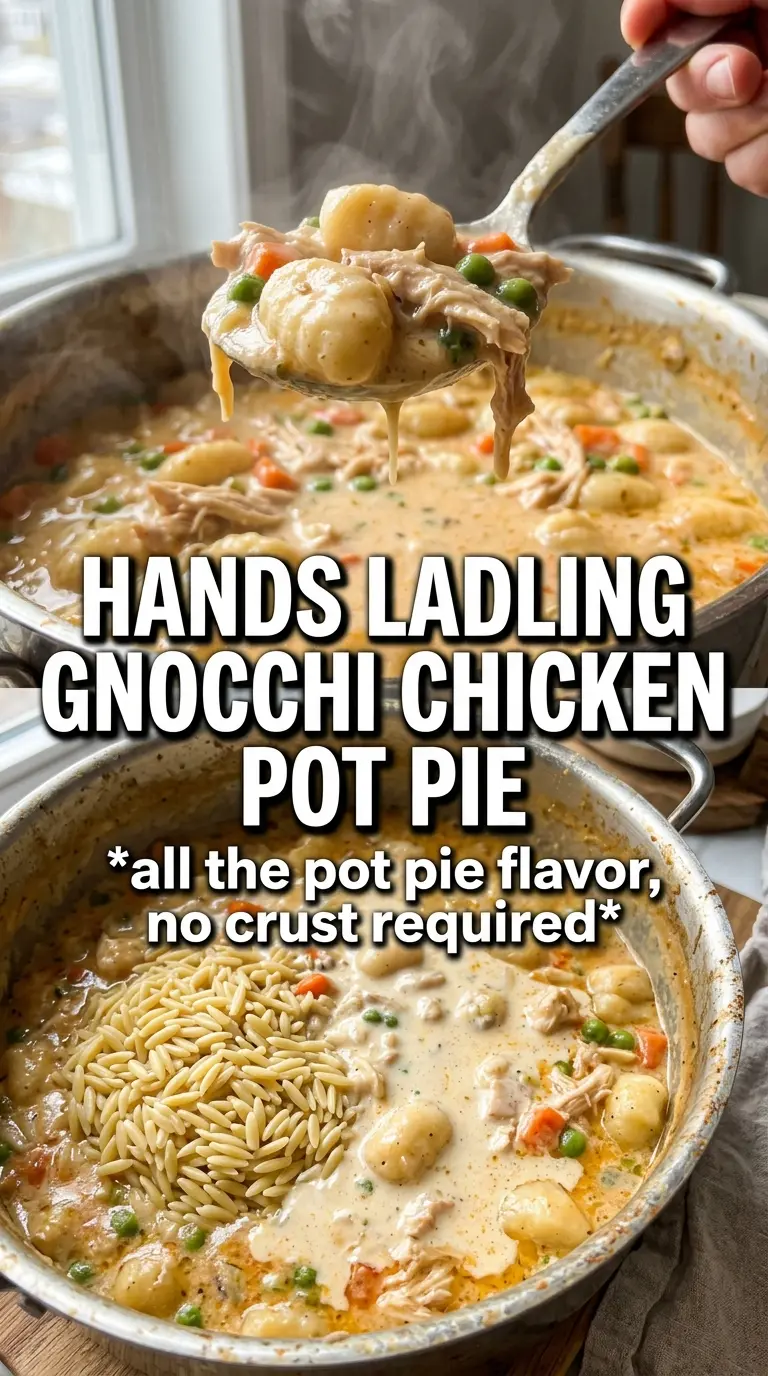
- Potato gnocchi — They stand in for the usual pie crust bottom and give you that soft dumpling feel inside the filling. Shelf-stable or refrigerated gnocchi both work; just don’t use the frozen kind unless you thaw it first so it cooks evenly.
- Cooked chicken — Rotisserie chicken is the easiest route and the flavor is good enough for this dish. If you cook chicken breast from scratch, shred it while it’s still warm so it stays tender instead of stringy.
- Carrots, celery, and onion — This is the classic pot pie base, and it needs a real sauté so the vegetables soften before baking. If they go in raw, they stay too firm by the end.
- Frozen peas — Add them straight from frozen. They hold their shape better than thawed peas and keep their color.
- Puff pastry or biscuits — Puff pastry gives you a flaky lid, while biscuits make the topping more rustic and bread-like. Biscuit dough is the better choice if you want a thicker, more substantial finish.
Building the Filling So It Bakes Up Thick, Not Soupy
Softening the vegetables first
Melt the butter, then cook the onion, carrots, and celery until the onion is translucent and the carrots start to take on a little edge of color. This step matters because the oven time is for finishing, not for fully cooking raw vegetables. If you rush it, the carrots stay hard while the top overbakes.
Cooking out the flour
Stir in the garlic and thyme, then add the flour and cook it for about a minute. The mixture should look pasty and smell slightly nutty, not raw or dusty. That minute is what keeps the sauce from tasting like wet flour later.
Thickening the sauce
Whisk in the broth slowly first, then the cream, and keep stirring until the mixture turns glossy and lightly thickened. If you dump the liquid in all at once, the flour can clump and you’ll spend the rest of the time chasing lumps around the pan. By the time it’s ready for the baking dish, it should coat the back of a spoon but still pour easily.
Finishing in the oven
Fold in the chicken, peas, and gnocchi, then pour everything into the baking dish and top it immediately. Brush the pastry or biscuits with egg wash so they brown instead of drying out. Bake until the top is deep golden and the filling is bubbling around the edges; that bubbling is the sign the gnocchi have had enough time to cook through.
Three Ways to Fit This Gnocchi Chicken Pot Pie to Your Table
Use biscuit topping for a heartier finish
Biscuit dough gives you a softer, more substantial lid than puff pastry. It soaks up a little of the sauce near the edges, which many people actually prefer in a pot pie. Bake until the biscuits are cooked through in the center, not just browned on top.
Make it dairy-free
Swap the butter for a neutral plant-based butter and use full-fat unsweetened oat cream or cashew cream in place of the heavy cream. The filling will still thicken, but it won’t be quite as rich, so keep the sauce a touch looser before it goes into the oven.
Add extra vegetables without watering it down
Mushrooms, corn, or diced green beans all fit here, but keep the total add-ins modest so the sauce can still hold together. If you add watery vegetables like mushrooms, cook them with the onion first so they don’t thin the filling in the oven.
Make it ahead for later
You can build the filling earlier in the day and refrigerate it before topping and baking. If the filling is cold from the fridge, add a few extra minutes in the oven so the center heats through before the crust gets too dark.
Storage and Reheating
- Refrigerator: Store leftovers covered for up to 4 days. The gnocchi will soften a bit more as it sits, but the filling still reheats well.
- Freezer: Freeze the baked filling without the topping for the best texture, or freeze the whole dish if you don’t mind a softer crust later. Thaw overnight before reheating for more even results.
- Reheating: Reheat in a 350F oven until hot in the center. The biggest mistake is using the microwave for the whole portion, which makes the crust limp and can turn the gnocchi rubbery.
Questions I Get Asked About This Recipe
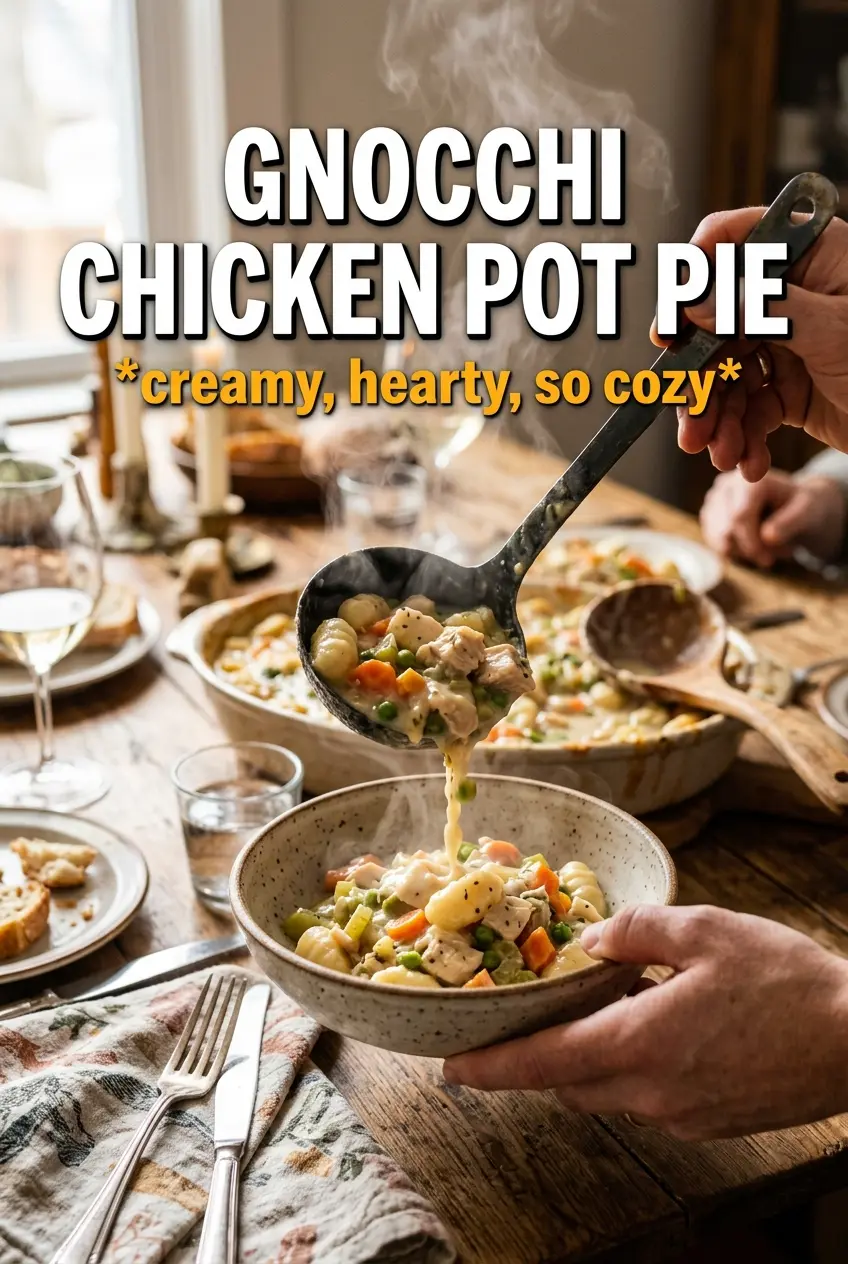
Gnocchi Chicken Pot Pie
Ingredients
Equipment
Method
- Preheat the oven to 400F. This heats while you build the creamy chicken-vegetable base.
- Sauté the onion, carrots, and celery in the butter over medium heat for 5 minutes, until softened. Stir occasionally and watch for light browning on the edges.
- Add the garlic and thyme for 30 seconds, then whisk in the flour and cook for 1 minute. The mixture should look slightly paste-like and smell fragrant.
- Gradually add the chicken broth and heavy cream, whisking as you pour. Simmer until thickened, so it coats the back of a spoon.
- Fold in the shredded chicken, frozen peas, and uncooked potato gnocchi, then season with salt and pepper to taste. Stir until the gnocchi is evenly distributed and the filling is well combined.
- Pour the filling into a baking dish in an even layer. Use a spoon to level the surface so the top bakes uniformly.
- Top with the puff pastry sheet or arrange the refrigerated biscuits over the filling. Make sure the top covers the filling with minimal gaps.
- Brush the pastry or biscuits with the egg wash. Use a light coating so it turns golden with a glossy finish.
- Bake for 25-30 minutes at 400F until golden and bubbly with steam visibly rising from a vent. Let it stand 5 minutes before serving so the filling sets.