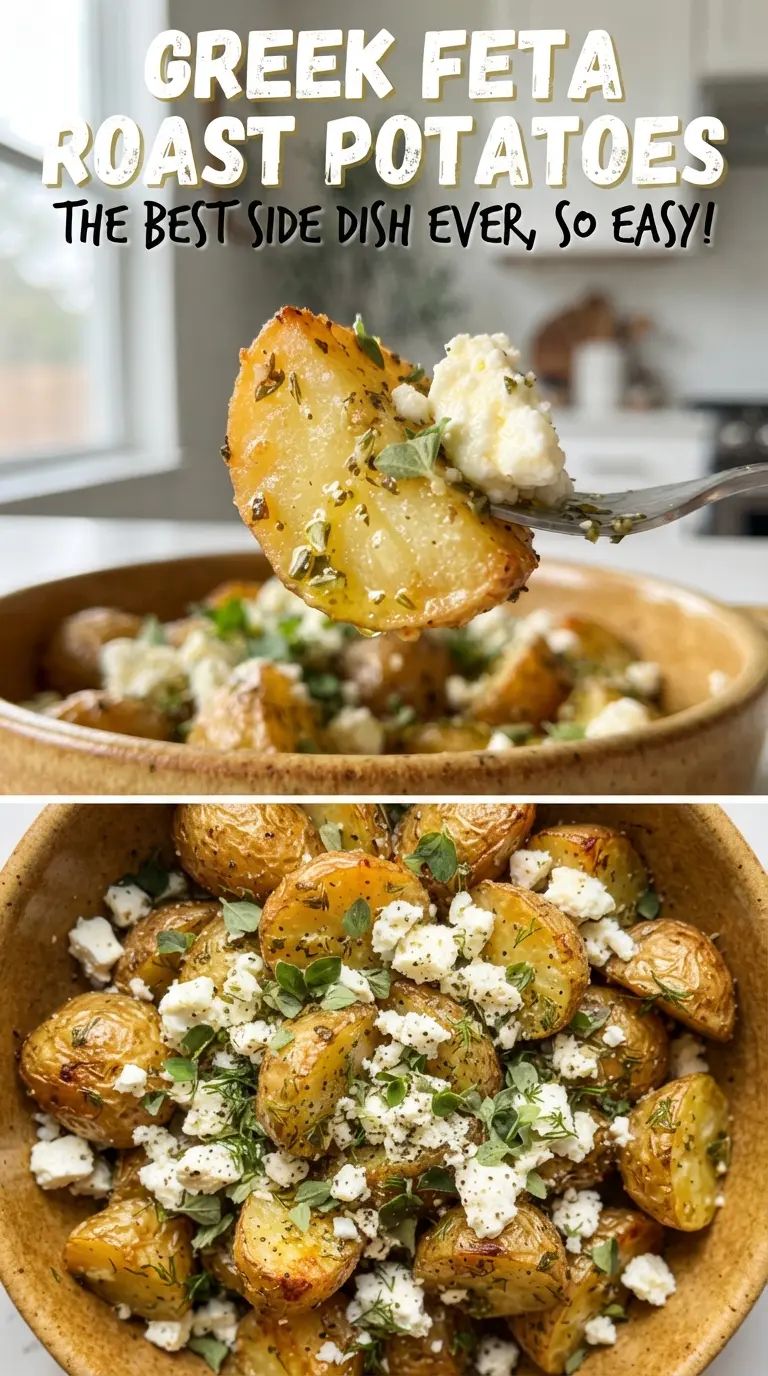
Crispy Greek feta roast potatoes land at the table with browned edges, soft centers, and just enough lemon to keep every bite bright. The potatoes roast in a shallow bath of olive oil, lemon juice, broth, and garlic, so the flavor gets pulled all the way through instead of sitting on the surface. By the time they come out of the oven, the liquid has mostly disappeared and the wedges have picked up that craggy, golden edge that makes people keep reaching back for one more piece.
The trick here is giving the potatoes enough room to roast instead of stew. A single layer in a wide pan lets the cut sides caramelize while the broth and lemon reduce underneath. Feta gets added at the end, which keeps it creamy and tangy instead of dry and salty, and the fresh dill or parsley wakes everything up right before serving.
If you’ve ever made roast potatoes that came out soft all over, the section below is worth a read. There’s a small detail about the pan and the liquid level that makes a bigger difference than you’d expect.
The potatoes soaked up the lemon-garlic broth and still browned beautifully on the edges. I flipped them once and the pan came out with those crispy bits stuck to the bottom that tasted incredible.
Save these Greek feta roast potatoes for the night you want crispy lemon-oregano wedges with creamy feta on top.
The Pan Trick That Keeps These Potatoes Crispy
The difference between roast potatoes that crisp and potatoes that go soft is usually the pan. If the wedges are crowded, the steam has nowhere to go and the bottoms stay pale. A wide roasting pan lets the lemony liquid reduce around the edges while the exposed potato surfaces brown properly.
The other thing that matters is the amount of broth. You want enough to carry the garlic, oregano, and lemon into the potatoes, but not so much that they braise for the entire roast. By the halfway point, the liquid should be mostly gone. If there’s still a puddle at the end, the potatoes needed a wider pan or a little more uncovered space.
- Yukon gold potatoes — These hold their shape and turn creamy inside without falling apart. Russets can work, but they’re fluffier and more likely to break around the edges when you flip them.
- Olive oil — This is what helps the wedges brown and carry the oregano flavor. Use a good everyday olive oil here; you don’t need your fanciest bottle.
- Fresh lemon juice — Bottled juice tastes flat in a recipe this simple. Fresh lemon gives the potatoes their sharp, clean finish and keeps the dish from feeling heavy.
- Chicken broth — It adds savoriness and helps the pan juices reduce into something worth spooning over the potatoes. Vegetable broth works too, but the final flavor is a little lighter.
- Feta — Use block feta if you can and crumble it yourself. Pre-crumbled feta is convenient, but it’s usually drier and less creamy when it hits the hot potatoes.
What Each Ingredient Is Actually Doing in This Recipe
- Primary ingredient (the star) — Quality matters most. Choose the best you can find.
- Cooking medium (oil, butter, or broth) — This carries flavors and prevents dryness.
- Seasonings (salt, pepper, spices, herbs) — Layer flavors so nothing overpowers. Build depth gradually.
- Aromatics (garlic, onion, herbs) — Cook with fat to bloom flavors. Become the foundation.
- Supporting ingredients — Complement the main ingredient without overpowering it.
- Sauce or liquid (if applicable) — Brings flavors together. Balance richness with acid.
- Acid (lemon, vinegar, wine, or other) — Brightens and prevents flat-tasting results.
- Final finish (garnish, glaze, or sauce) — Prevents one-dimensional taste and adds visual appeal.
Roasting the Potatoes Until the Edges Turn Gold
Coating the wedges
Toss the potatoes directly in the roasting pan so every wedge picks up oil, lemon, broth, garlic, oregano, salt, and pepper. The liquid should look pooled at the bottom, not soupy enough to cover the potatoes. If the pan is too small, the wedges will crowd and soften instead of roast.
Giving them room to brown
Spread the wedges into a single layer before the pan goes into the oven. Turn the potatoes once halfway through so the cut sides get their turn against the hot pan. If they start sticking a little, that’s fine; the browned bits are part of the flavor.
Knowing when they’re done
Roast until the liquid is absorbed and the edges look crisp and deep golden, not pale blond. The potatoes should give easily at the center when pierced, but the outside should have a firm, crackly look. If they’re tender before they’re browned, keep roasting uncovered for a few more minutes so the moisture can finish evaporating.
Finishing with feta and herbs
Add the feta only after the potatoes come out of the oven. The residual heat softens it just enough without melting it into the pan juices. Finish with dill or parsley right before serving so the herbs stay fresh and the whole dish tastes bright at the table.
What to Change When You Want a Different Finish
Dairy-Free Version
Skip the feta and finish with extra herbs plus a little lemon zest. You lose the salty creaminess, but the potatoes still taste bright and savory, especially if you add another pinch of salt at the end.
Vegetarian Swap
Use vegetable broth instead of chicken broth. The potatoes will still get plenty of body and seasoning, but the flavor will be a touch lighter and less savory than the original.
Extra Crispy Edges
Use a wider roasting pan and leave a little more space between wedges. If you want more browning, roast the potatoes 5 minutes longer before adding the feta so the exposed edges get darker and more crackly.
Storage and Reheating
- Refrigerator: Store leftovers in an airtight container for up to 4 days. The potatoes soften a little as they sit, but the flavor holds up well.
- Freezer: They freeze, but the texture turns mealy after thawing, so I don’t recommend it for the best result.
- Reheating: Reheat on a sheet pan in a hot oven at 400F until the edges crisp again. The microwave will warm them through, but it makes the potatoes soft and the feta rubbery.
Answers to the Questions Worth Asking
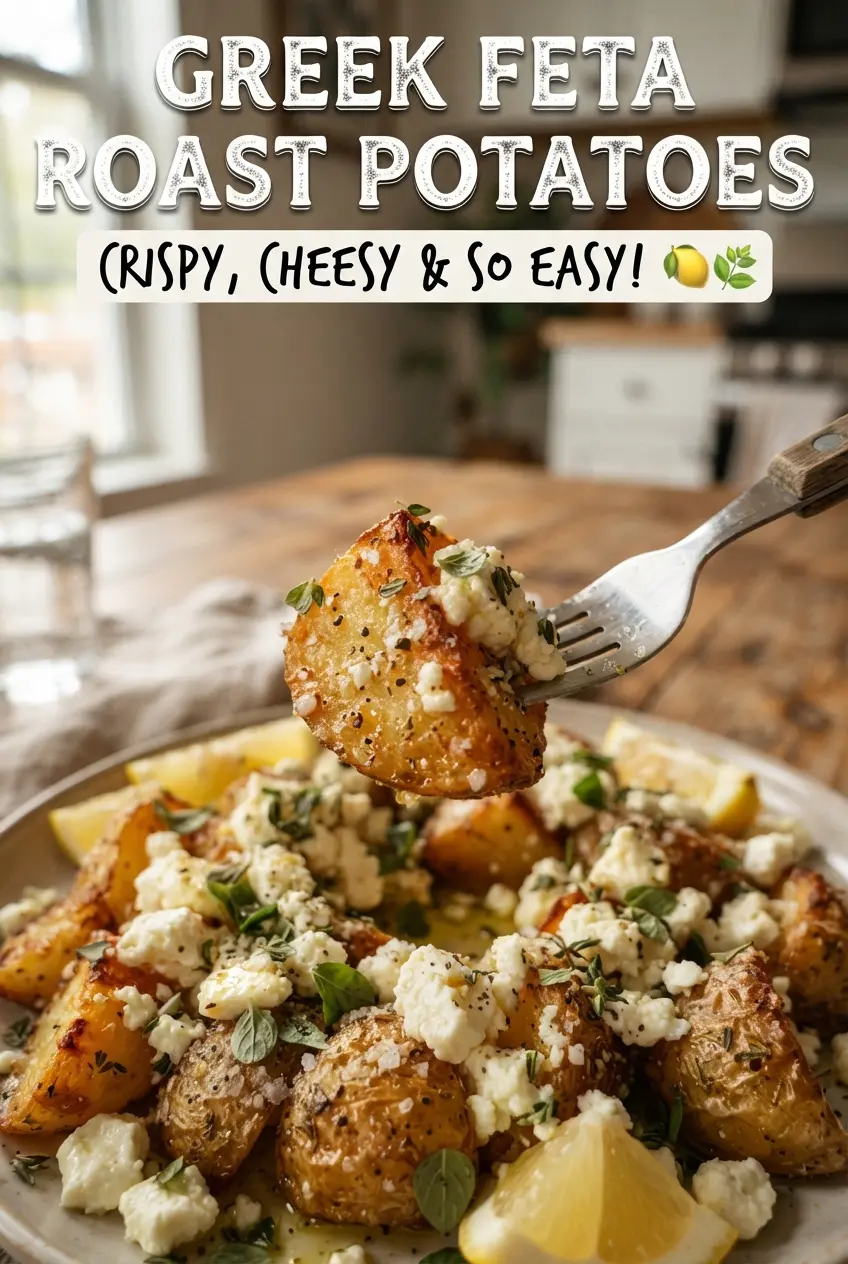
Greek Feta Roast Potatoes
Ingredients
Equipment
Method
- Preheat your oven to 425F and get a roasting pan ready for spreading the wedges in a single layer.
- In the roasting pan, toss the Yukon gold potatoes with olive oil, lemon juice, chicken broth, minced garlic, dried oregano, salt, and black pepper until evenly coated.
- Spread the potatoes into a single layer so they can crisp instead of steam.
- Roast at 425F for 45-50 minutes, flipping halfway, until the liquid is absorbed and the edges are crispy and golden, watching for deep browning on the edges.
- Remove the pan and top the hot potatoes with crumbled feta so it softens slightly from the residual heat.
- Sprinkle with fresh dill or parsley and serve hot.