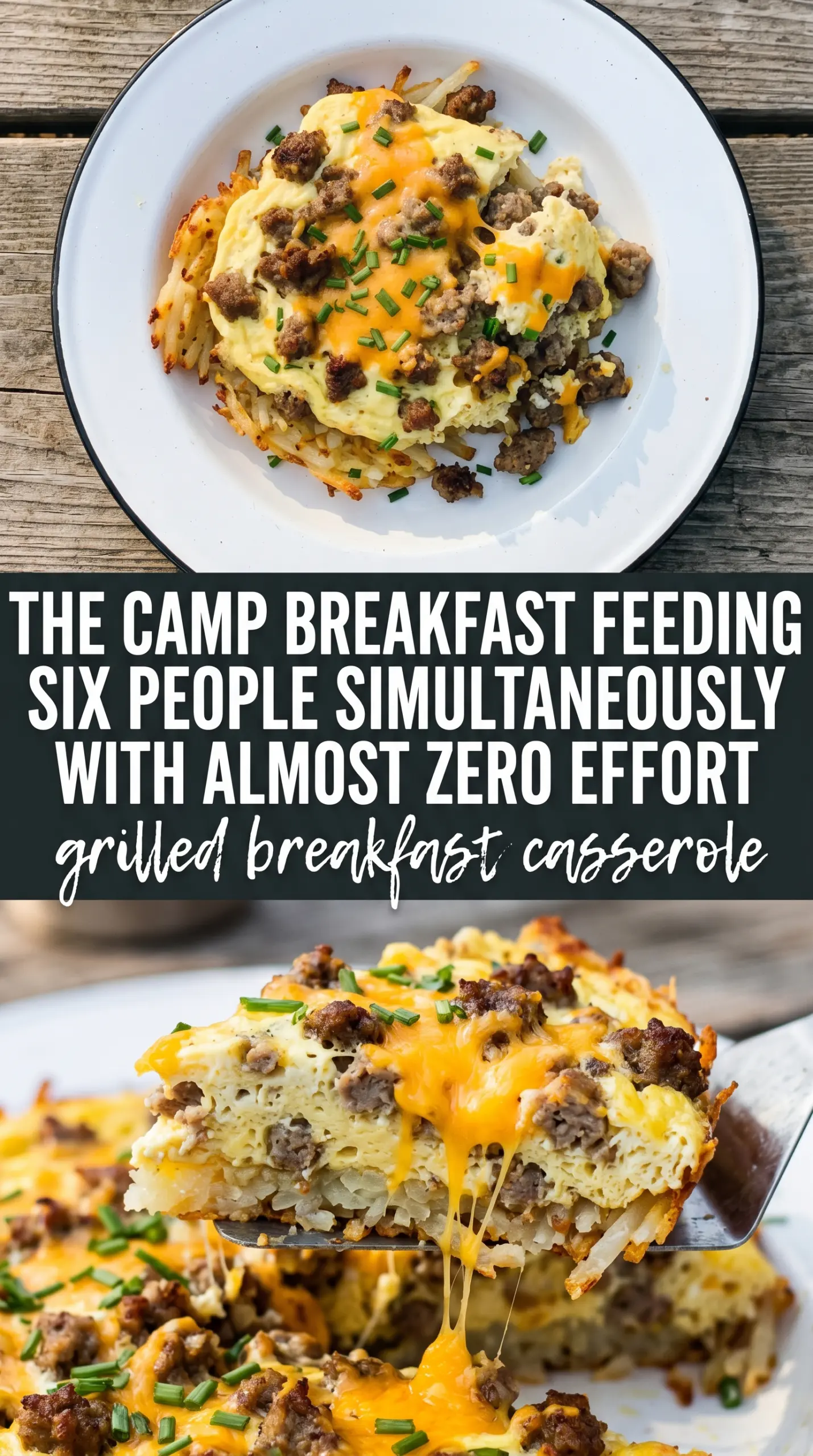
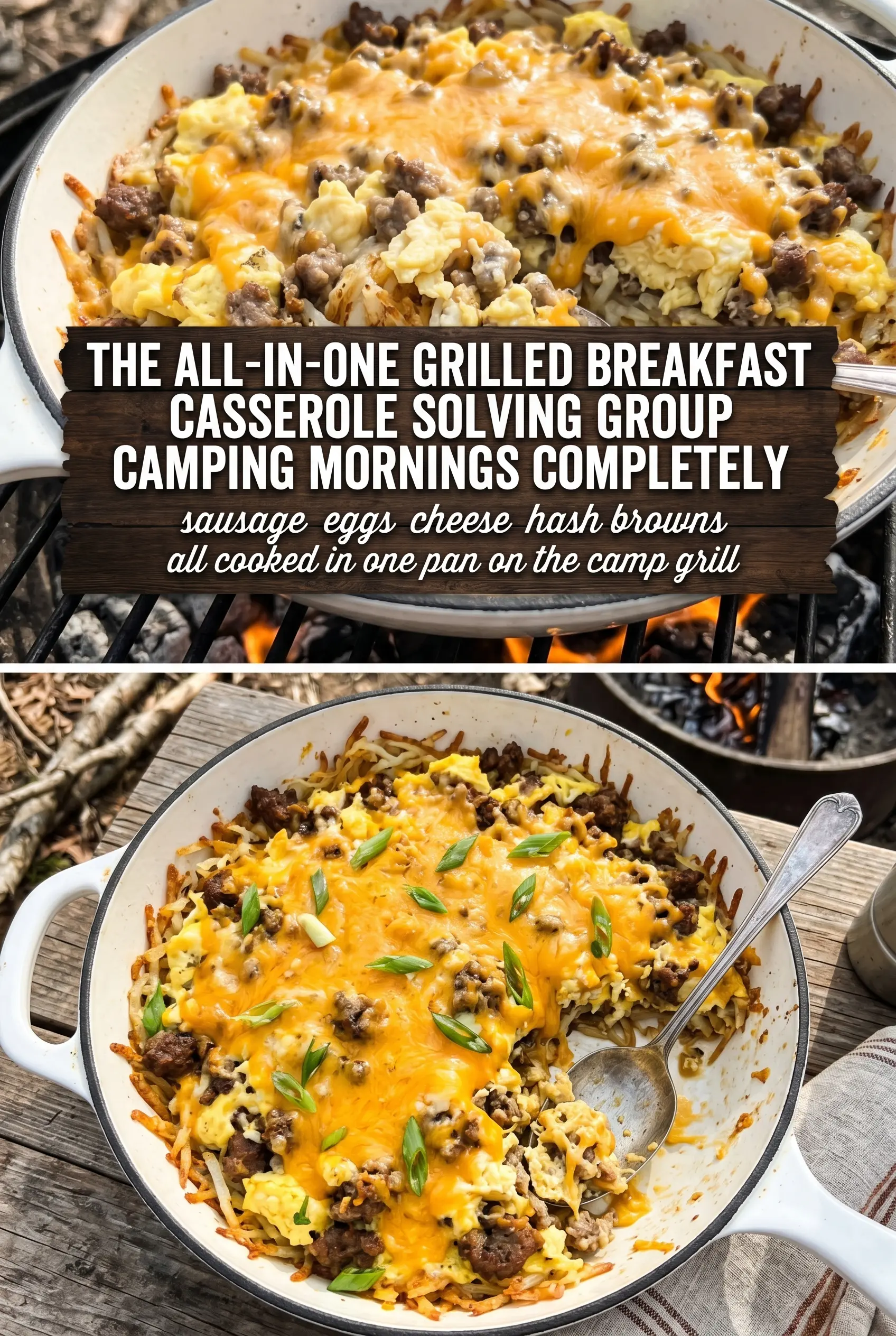
Golden, cheesy, and sturdy enough to feed a hungry group, this grilled breakfast casserole is the kind of campfire breakfast that gets scraped clean before the coffee is gone. The hash browns turn crisp at the edges, the eggs set into a tender sliceable layer, and the sausage gives every bite enough savory heft to stand on its own.
What makes this version work is the order. The frozen hash browns go in first so they can catch heat from the Dutch oven and form a base instead of disappearing into the eggs. The sausage is already cooked, which keeps the casserole from turning greasy, and the cheese stays on top where it melts into a browned, savory lid instead of sinking all the way through.
Below, I’ve included the one Dutch oven detail that keeps the center from staying loose, plus a few smart variations for when you need to stretch it, lighten it up, or adapt it for different diets.
The eggs set up perfectly in my Dutch oven and the hash browns stayed in layers instead of getting mushy. The cheese on top browned beautifully and it fed all six of us with seconds.
Save this grilled breakfast casserole for your next campfire morning when you want golden hash browns, sausage, and eggs all in one Dutch oven.
Why the Dutch Oven Heat Pattern Matters More Than the Timer
The biggest mistake with a campfire casserole is trusting the clock before you trust the heat. A Dutch oven picks up heat from the bottom and the lid, and that top heat is what finishes the eggs without burning the base. If the coals are too hot underneath and not hot enough on top, you’ll get browned edges with a loose center that looks done until you cut into it.
The other thing that matters is starting with thawed-or-partially-thawed hash browns. Frozen clumps can dump extra moisture into the pan and slow everything down. Spread the potatoes in an even layer, then build the rest of the casserole on top so the bottom has a chance to set before the egg mixture floods in.
- Hash browns — They’re the base and they need room to heat through. If they’re packed in a frozen block, the casserole steams instead of setting cleanly.
- Cooked breakfast sausage — Pre-cooked sausage is the right move here because raw sausage releases too much grease before the eggs have time to set. Drain it well after cooking.
- Eggs and milk — The milk softens the eggs just enough to keep the finished casserole from feeling rubbery. Whole milk gives the richest texture, but 2% works fine.
- Cheddar cheese — Sharp cheddar gives the best payoff because the flavor still comes through after campfire heat. Pre-shredded cheese melts well enough here, though freshly shredded cheese browns a little more evenly.
What Each Ingredient Is Actually Doing in Grilled Breakfast Casserole
- High heat (essential for browning) — High heat creates crust and caramelization. Medium heat just cooks without developing flavor.
- Oil or fat (for browning and flavor) — The fat helps transfer heat and create crust. It also carries seasonings.
- Salt and seasoning (bold, applied before) — Season confidently. The high heat cooking mellows flavors slightly.
- No moving it around (let it sit) — The food needs time to develop crust. Constant flipping and moving prevents browning.
- Timing (watch carefully) — High heat cooks fast. Check doneness frequently to avoid overcooking.
- Optional: finishing sauce or glaze — Apply in the last minute for flavor without burning. Heavy sauces applied early can char.
- Resting time (5-10 minutes before serving) — Resting allows juices to reabsorb. Cutting right away lets them run out.
- Optional: smoke or char flavor (if available) — Wood smoke or char adds depth. Build the fire strategically for the flavor you want.
Building the Layers So the Center Sets Before the Edges Burn
Preparing the Dutch Oven Base
Coat the Dutch oven well with cooking spray so the potatoes and cheese release cleanly after the long heat. Add the hash browns in an even layer, then scatter the sausage over the top instead of mixing everything together. That layering keeps the bottom from becoming dense and lets the egg mixture seep down into the potatoes instead of pooling in one spot.
Whisking the Egg Mixture
Whisk the eggs with the milk, salt, and pepper until the mixture looks uniform and slightly foamy. You don’t need to whip in a ton of air. Too much froth can make the center puff and collapse, while a properly blended mixture bakes into a tighter, custardy slice.
Covering and Cooking Over Coals
Pour the egg mixture over the potatoes and sausage, then finish with the cheese and green onions. Cover the Dutch oven and place it over campfire coals with coals on the lid, because balanced top-and-bottom heat is what cooks the eggs through. Pull it when the center is set and the top is golden; if the middle still sloshes when you move the pot, it needs a few more minutes.
Resting Before Serving
Let the casserole sit for about 5 minutes before scooping. That short rest gives the eggs time to finish setting and makes cleaner servings. If you cut in too soon, the center can look softer than it really is and the pieces won’t hold together as well.
How to Adjust This Campfire Breakfast Without Losing the Texture
Make it vegetarian
Skip the sausage and add sautéed mushrooms, peppers, or spinach that has been cooked down first. The key is removing moisture before it goes into the Dutch oven, or the casserole can turn watery in the center.
Go dairy-free
Use an unsweetened dairy-free milk and swap in a good melting plant-based cheese. The flavor will be a little less rich, but the casserole still sets well because the eggs do the structural work.
Stretch it for a bigger group
Add another cup of hash browns and one or two extra eggs, then keep the layers even so the middle doesn’t lag behind. A deeper Dutch oven can handle the extra volume better than a shallow one.
Swap the cheddar
Monterey Jack, Colby, or a pepper jack blend all work here. Cheddar gives the strongest flavor, while milder cheeses melt a little softer and make the casserole taste less sharp.
Storage and Reheating
- Refrigerator: Store leftovers in an airtight container for up to 4 days. The hash browns soften a little, but the flavor stays good.
- Freezer: It freezes, but the egg texture gets a little softer after thawing. Wrap individual portions tightly and freeze for up to 2 months.
- Reheating: Reheat slices in a 325°F oven until warmed through, or use a skillet over low heat. High heat dries out the eggs before the center warms, which is the fastest way to turn a good casserole rubbery.
Questions I Get Asked About This Recipe
Grilled Breakfast Casserole
Ingredients
Equipment
Method
- Spray a Dutch oven with cooking spray to prevent sticking. Make sure the base and sides are evenly coated.
- Layer the frozen hash browns and cooked, crumbled breakfast sausage in the bottom of the Dutch oven. Spread into an even layer so the casserole cooks uniformly.
- Whisk together eggs, milk, salt, and pepper until smooth. Pour the egg mixture evenly over the hash browns and sausage.
- Top with shredded cheddar cheese and sliced green onions. Cover the Dutch oven after topping so heat stays trapped.
- Place the covered Dutch oven on campfire coals, setting coals on top of the lid as well for even heating. Maintain an even coal bed for steady cooking.
- Cook for 30-35 minutes until the eggs are set and the top is golden. The casserole should look firm in the center with a browned, bubbling top.
- Let the casserole cool for 5 minutes before serving. This rest helps it set up for easier scooping and cleaner portions.