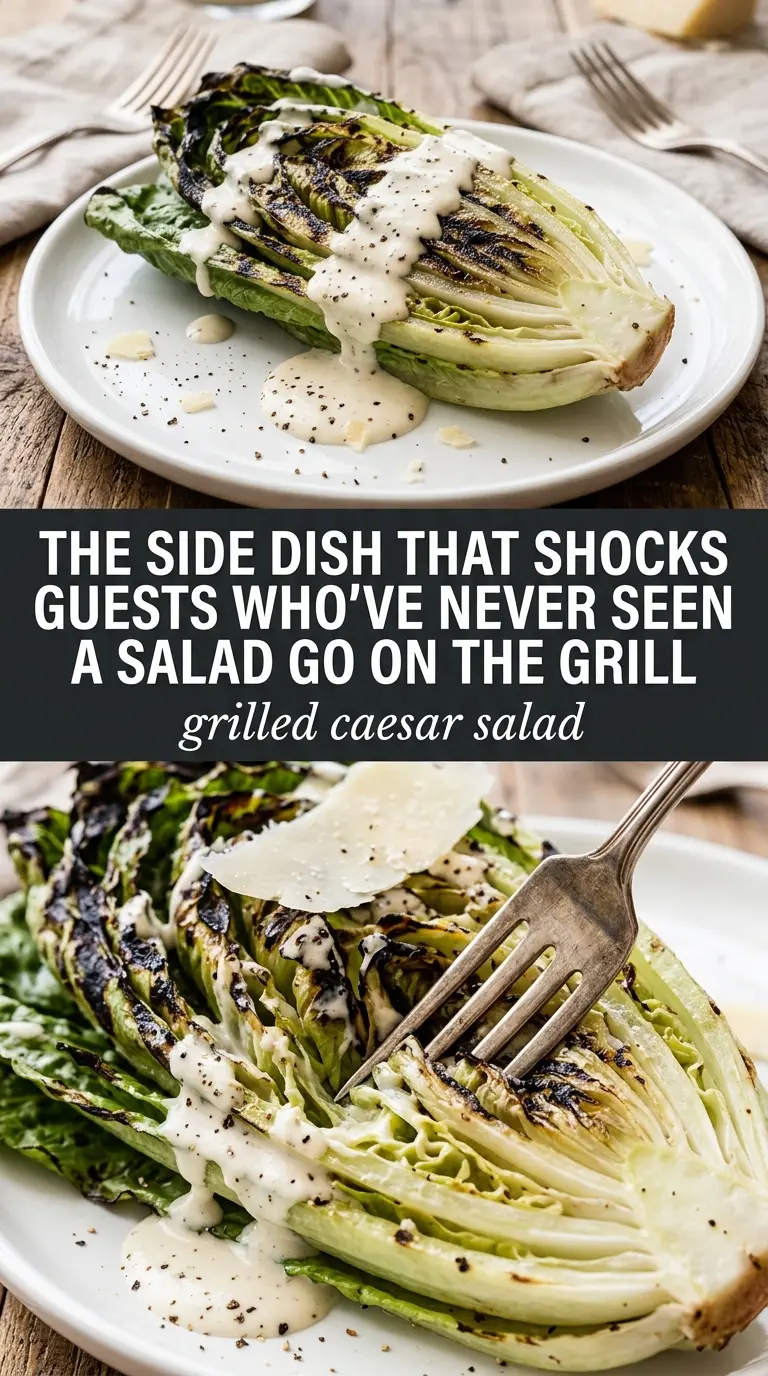
Charred romaine changes Caesar salad in the best way. The lettuce stays crisp at the core, but the cut sides pick up smoky edges that taste like they came off a proper grill instead of a salad bowl. Once the warm leaves meet cool Caesar dressing, every bite gets that contrast of smoky, creamy, salty, and bright that makes the whole plate feel restaurant-level without asking for much work.
The trick is to use high heat and keep the romaine on the grill just long enough to mark it. Romaine has enough structure to hold its shape, but not if you drown it in dressing before it hits the heat. A light coating of oil protects the cut surface and helps the char happen fast, while the dressing stays classic and punchy with lemon, garlic, Dijon, and Worcestershire.
Below, I’ve included the small details that matter most: how to get clean grill marks without turning the lettuce limp, which ingredient gives the dressing its backbone, and a few easy ways to adapt this salad for different meals.
The romaine picked up those perfect grill marks in under 3 minutes, and the dressing clung to every leaf without making it soggy. I served it with burgers and my husband asked if we could have the salad again the next night.
Love the smoky char on this grilled Caesar salad? Save it to Pinterest for the next burger night or easy summer supper.
The Part Most People Get Wrong: Grilling the Lettuce Without Wilting It
The biggest mistake with grilled Caesar salad is treating romaine like a delicate green. It’s sturdy enough for heat, but only if you grill it fast and cut-side down. If the grill isn’t hot enough, the leaves soften before they char, and you end up with limp lettuce instead of crisp edges and a smoky bite.
Keep the cut side oiled and seasoned, then put it straight onto the grates. Two to three minutes is usually enough over medium-high heat. You want visible char marks and leaves that still hold their shape when lifted with tongs. If the lettuce sticks, it usually means it needed another minute before you moved it — let it release on its own.
- Romaine hearts — Hearts work better than loose leaves because they stay compact on the grill and give you that dramatic split presentation. Trim only the dry stem end so the halves stay intact.
- Olive oil — This helps the lettuce char instead of steam. A thin coating is enough; too much oil can make the grill flare and soften the leaves.
- Medium-high heat — This is what gives you the fast sear you need. Lower heat cooks the romaine through before the surface has a chance to brown.
What Each Ingredient Is Actually Doing in Grilled Caesar Salad
- High heat (essential for browning) — High heat creates crust and caramelization. Medium heat just cooks without developing flavor.
- Oil or fat (for browning and flavor) — The fat helps transfer heat and create crust. It also carries seasonings.
- Salt and seasoning (bold, applied before) — Season confidently. The high heat cooking mellows flavors slightly.
- No moving it around (let it sit) — The food needs time to develop crust. Constant flipping and moving prevents browning.
- Timing (watch carefully) — High heat cooks fast. Check doneness frequently to avoid overcooking.
- Optional: finishing sauce or glaze — Apply in the last minute for flavor without burning. Heavy sauces applied early can char.
- Resting time (5-10 minutes before serving) — Resting allows juices to reabsorb. Cutting right away lets them run out.
- Optional: smoke or char flavor (if available) — Wood smoke or char adds depth. Build the fire strategically for the flavor you want.
What Gives This Caesar Dressing Its Backbone
The dressing here is built for grilled lettuce, so it needs to be bold enough to stand up to smoky romaine. Mayonnaise gives it body without fuss, Parmesan brings salt and umami, and Dijon keeps the whole thing from tasting flat. Lemon juice and Worcestershire are doing a lot of work too: one brightens, the other deepens the savory note that makes Caesar taste like Caesar.
Freshly grated Parmesan matters more here than in some other salads because it melts into the dressing instead of sitting grainy at the bottom of the bowl. If you only have pre-grated cheese, it will work, but the texture won’t be as smooth. Minced garlic should be fine, not chunky, or it can dominate every bite once the dressing sits for a few minutes.
How to Grill, Dress, and Finish the Salad in the Right Order
Brush and Season the Romaine
Cut the romaine hearts lengthwise so each half keeps its core and stays easy to handle. Brush the cut sides with olive oil, then season with salt and pepper right before grilling. If you season too far ahead, the salt pulls moisture to the surface and the lettuce won’t char as cleanly.
Build the Char Fast
Lay the romaine cut-side down on a hot grill and leave it alone for 2 to 3 minutes. You’re looking for dark grill marks and just-wilted outer leaves, not collapsed lettuce. If the leaves are browning before you see char, the grill is too cool; if they blacken too fast and smell acrid, move them to a slightly cooler spot.
Whisk the Dressing Until Smooth
Mix the mayonnaise, Parmesan, lemon juice, garlic, Dijon, and Worcestershire until the dressing looks creamy and cohesive. It should spoon easily but still cling to the lettuce. If it tastes sharp at first, let it sit a few minutes; the garlic and Parmesan soften as they meld.
Plate While the Lettuce Is Still Warm
Set the grilled romaine on plates and drizzle the dressing over the top while the lettuce is still warm. That little bit of heat helps the dressing loosen and spread into the cut edges. Finish with croutons, shaved Parmesan, and lemon wedges so every bite gets crunch, salt, and a fresh squeeze at the end.
How to Adjust This Salad for Different Tables
Dairy-Free Version
Swap the Parmesan in the dressing for a dairy-free Parmesan-style cheese or 1 to 2 teaspoons of nutritional yeast plus a pinch more salt. You’ll lose a little of the classic sharpness, but the dressing still gets that savory Caesar feel, especially with the Worcestershire and garlic carrying the flavor.
Gluten-Free Plate
Use gluten-free croutons or skip them and add toasted sunflower seeds for crunch. Also check your Worcestershire sauce, since some brands contain gluten. The grilled romaine and dressing itself are naturally easy to keep gluten-free.
Make It a Meal
Top the grilled romaine with sliced grilled chicken, shrimp, or hard-boiled eggs. The salad holds up well to added protein because the lettuce keeps its shape and the dressing is thick enough to coat everything without running to the bottom of the plate.
No Grill, Use a Grill Pan
A cast-iron grill pan gives you the same charred edges indoors, just with a little less smoke. Preheat the pan until it’s hot enough that a drop of water dances, then press the romaine cut-side down without moving it around. The marks won’t be identical, but the smoky bitterness and warm-crisp texture will still be there.
Storage and Reheating
- Refrigerator: Store the grilled romaine and dressing separately for up to 2 days. The lettuce will soften after it’s dressed, so only assemble what you plan to eat right away.
- Freezer: This salad doesn’t freeze well. The lettuce turns watery and the dressing texture breaks once thawed.
- Reheating: There’s no true reheating needed. If the romaine has been chilled, let it sit at room temperature for 10 to 15 minutes before serving, then add fresh dressing and toppings so it tastes bright instead of dull.
Answers to the Questions Worth Asking

Grilled Caesar Salad
Ingredients
Method
- Brush the cut sides of the romaine hearts with olive oil and season with salt and pepper. Keep the cut-side well coated so it chars properly.
- Grill the romaine cut-side down over medium-high heat for 2-3 minutes until charred with visible grill marks. Flip carefully if needed, then remove when the hearts are lightly wilted.
- Whisk together the mayonnaise, Parmesan, lemon juice, minced garlic, Dijon mustard, Worcestershire sauce, salt, and pepper until smooth and creamy.
- Place the grilled romaine on plates, drizzle with Caesar dressing, and top with croutons. Finish with shaved Parmesan and lemon wedges for bright, tangy flavor.