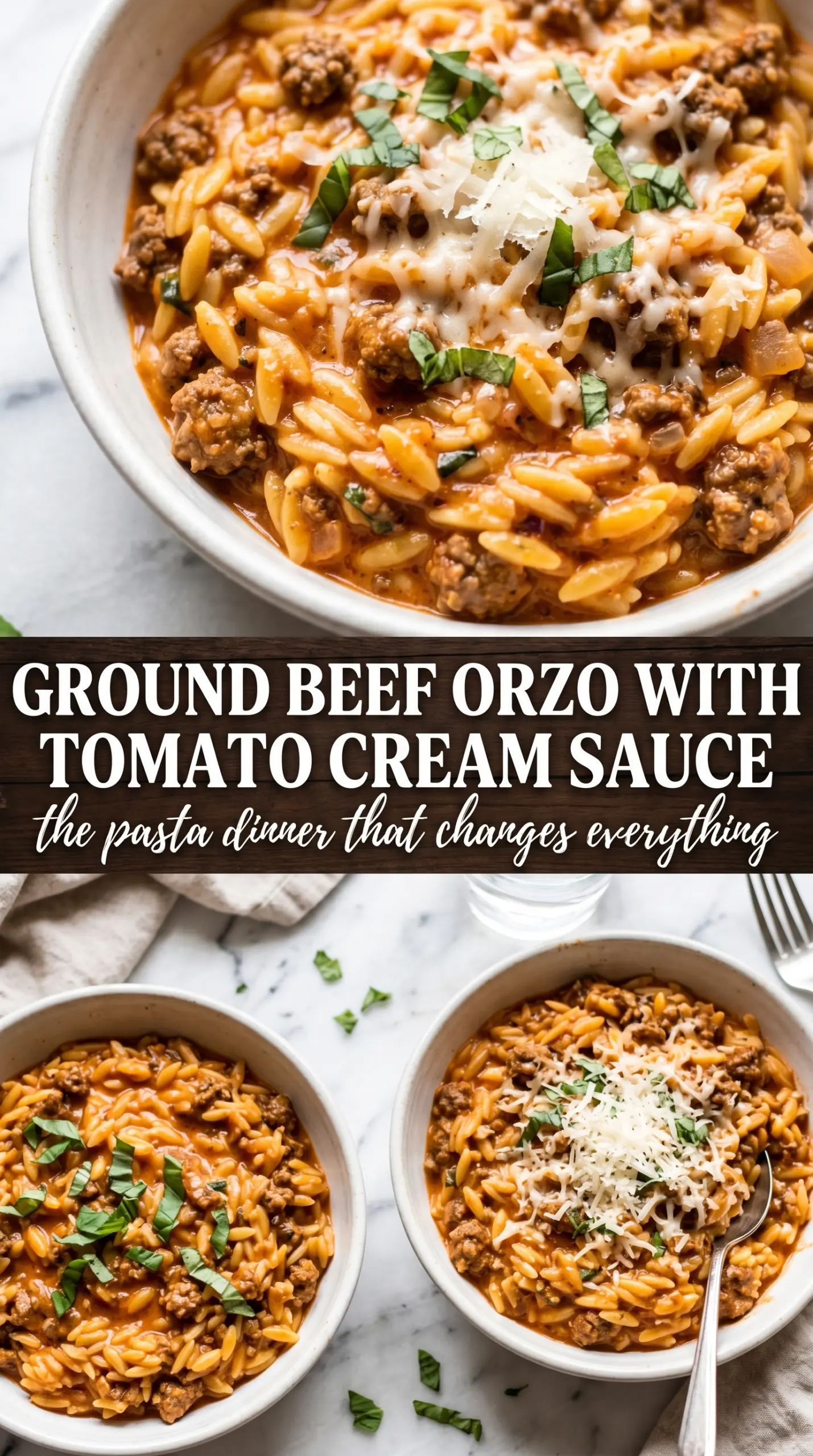
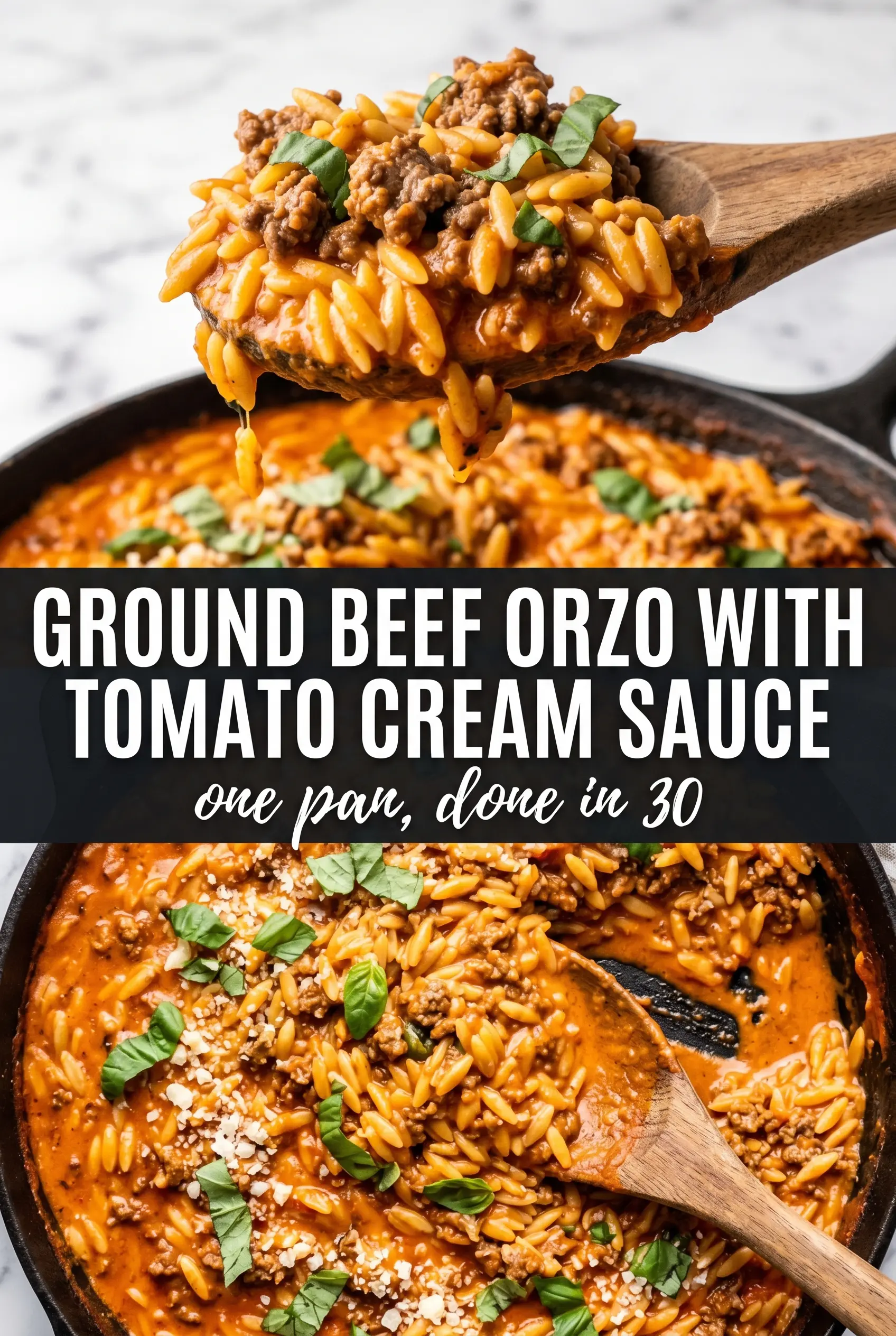
Ground beef orzo turns into one of those skillet dinners that looks humble going in and ends up tasting like you worked much harder than you did. The orzo cooks right in the sauce, so every little piece picks up the savory beef, tomato, and cream while the parmesan melts into the gaps. What you get is spoonable, glossy, and rich without feeling heavy.
The trick is building flavor in layers instead of dumping everything in at once. Browning the beef first gives you the base, then toasting the orzo for a minute keeps it from turning bland and soft. The tomato broth finishes cooking the pasta, and the cream goes in at the end so it thickens the sauce instead of getting lost or breaking.
Below, I’m walking through the part that matters most: how to keep the orzo tender but not mushy, how to get the sauce silky, and what to change if you need a lighter version or want to stretch it for leftovers.
The orzo stayed tender without turning mushy, and the tomato cream sauce thickened up beautifully once I added the parmesan. My husband went back for seconds before I’d even sat down.
Save this ground beef orzo with tomato cream sauce for the nights when you want a one-skillet dinner with a silky, parmesan-rich finish.
The Reason the Orzo Stays Creamy Instead of Turning Gluey
Orzo is small enough to go from perfectly tender to pasty fast, especially in a sauce with dairy. The thing that saves this dish is using enough broth for the pasta to cook in, then stopping the simmer at the right moment. If the pan boils hard the whole time, the liquid cooks off too quickly and the orzo can catch on the bottom before the center softens.
The other key move is adding the cream after the pasta is already cooked. Heavy cream doesn’t need a long boil; it needs a short simmer to tighten up around the starch in the pan. That keeps the sauce smooth and coats the beef and pasta instead of thinning out into a pink broth.
- Toasting the orzo gives it a slightly nutty edge and helps it hold its shape better during the simmer.
- Crushed tomatoes create body. Tomato sauce can get a little too smooth here, while crushed tomatoes keep the texture hearty.
- Beef broth matters more than plain water because it seasons the orzo from the inside out.
- Parmesan at the end helps thicken the sauce and adds saltiness without making the cream taste flat.
What Each Ingredient Is Doing in the Skillet
- Ground beef brings the savory base. Use 85/15 or similar for the best balance of flavor and not too much grease. If yours is leaner, keep a tablespoon or two of the fat in the pan for better browning.
- Onion and garlic build the background flavor. The onion should go soft before the garlic goes in; if you add both together, the garlic can scorch before the onion is ready.
- Orzo is the structure of the dish. There isn’t a true substitute that behaves the same way, but small pasta shapes like ditalini or pearl couscous can work in a pinch, with slightly different liquid needs and texture.
- Crushed tomatoes are the acid and body here. They keep the sauce from tasting flat and help balance the richness of the cream.
- Heavy cream is what turns this from tomato-beef pasta into a proper tomato cream sauce. Half-and-half can work, but the sauce will be thinner and a little less plush.
- Parmesan adds salt, nuttiness, and a final bit of thickness. Grate it fresh if you can; pre-grated cheese doesn’t melt as smoothly.
Building the Sauce So It Stays Silky
Browning the Beef First
Cook the ground beef over medium-high heat until it loses its raw color and you see some browned bits on the bottom of the pan. Those browned bits are where the flavor lives, so don’t rush this stage or stir constantly. If the pan fills with liquid, keep cooking until it evaporates and the meat starts to sizzle again. Drain off excess fat, but leave a little behind so the onion has something to cook in.
Softening the Onion and Waking Up the Garlic
Once the beef is drained, add the onion and cook until it turns translucent and loses its raw edge. The garlic only needs about a minute; when it smells fragrant, you’re done. If garlic goes in too early or sits on high heat, it turns bitter and will throw off the whole sauce. This stage should smell savory and sweet, not sharp.
Cooking the Orzo in the Sauce
Stir in the orzo and let it toast for about a minute before adding the tomatoes and broth. That little bit of heat gives the pasta a better texture and keeps the finished dish from tasting one-note. After the liquid goes in, bring it to a boil once, then drop it to medium-low and cover the pan. Stir every few minutes so the orzo cooks evenly and doesn’t stick to the bottom.
Finishing with Cream and Parmesan
When the orzo is tender and the liquid has reduced, stir in the cream and let it simmer uncovered just long enough to thicken slightly. Pull the pan off the heat before adding the parmesan if the sauce is already bubbling hard, since high heat can make the cheese seize or turn grainy. The finished sauce should cling to the pasta and look glossy, not soupy. Fresh basil at the end wakes everything up.
How to Adapt This for a Different Pantry or a Lighter Plate
Dairy-Free Version with a Creamy Finish
Use full-fat coconut milk or an unsweetened oat-based cooking cream in place of heavy cream, then skip the parmesan or use a dairy-free hard cheese. The sauce will taste a little different, but it still gets that rounded, creamy finish if you keep the heat low at the end.
Gluten-Free Swaps That Actually Hold Up
Use a gluten-free orzo if you can find one and watch the liquid closely, since different brands absorb differently. If you can’t find GF orzo, small gluten-free pasta shapes work, but they may need a little extra broth and a shorter simmer to stay tender.
Making It a Little Leaner
Use lean ground beef and swap half the cream for whole milk. The sauce won’t be quite as plush, so let it simmer a minute longer after adding the dairy and don’t skip the parmesan. That’s what keeps the sauce feeling rich enough.
Stretching It for Leftovers
Stir in a handful of spinach or peas at the end if you want more volume without changing the flavor much. The pasta will absorb sauce as it sits, so save a splash of broth for reheating and loosen it in the pan or microwave before serving.
Storage and Reheating
- Refrigerator: Store in an airtight container for up to 4 days. The orzo will thicken as it sits, which is normal.
- Freezer: It freezes well for up to 2 months, though the cream sauce may separate slightly when thawed. Freeze in portions and stir well after reheating.
- Reheating: Warm it gently on the stovetop or in the microwave with a splash of broth or milk. The common mistake is blasting it on high heat, which tightens the sauce and makes the pasta feel dry.
Questions I Get Asked About This Recipe
Ground Beef Orzo with Tomato Cream Sauce
Ingredients
Equipment
Method
- Heat a large deep skillet over medium-high heat, then brown the ground beef, breaking it apart until no longer pink. Drain excess fat for a less greasy sauce.
- Add diced onion to the skillet and cook for 3 minutes, until softened. Stir in minced garlic and cook 1 more minute until fragrant.
- Stir in the uncooked orzo and toast for 1 minute, coating it with the beef and aromatics. Pour in the crushed tomatoes and beef broth and stir to combine.
- Add Italian seasoning, smoked paprika, salt, and black pepper, then bring the mixture to a boil. Reduce to medium-low, cover, and cook for 12 minutes, stirring occasionally, until the orzo is tender.
- Stir in the heavy cream and simmer uncovered for 2–3 minutes until the sauce thickens. Remove from heat, then stir in the grated parmesan until melted and glossy.
- Garnish with fresh basil before serving to add a fresh green finish.