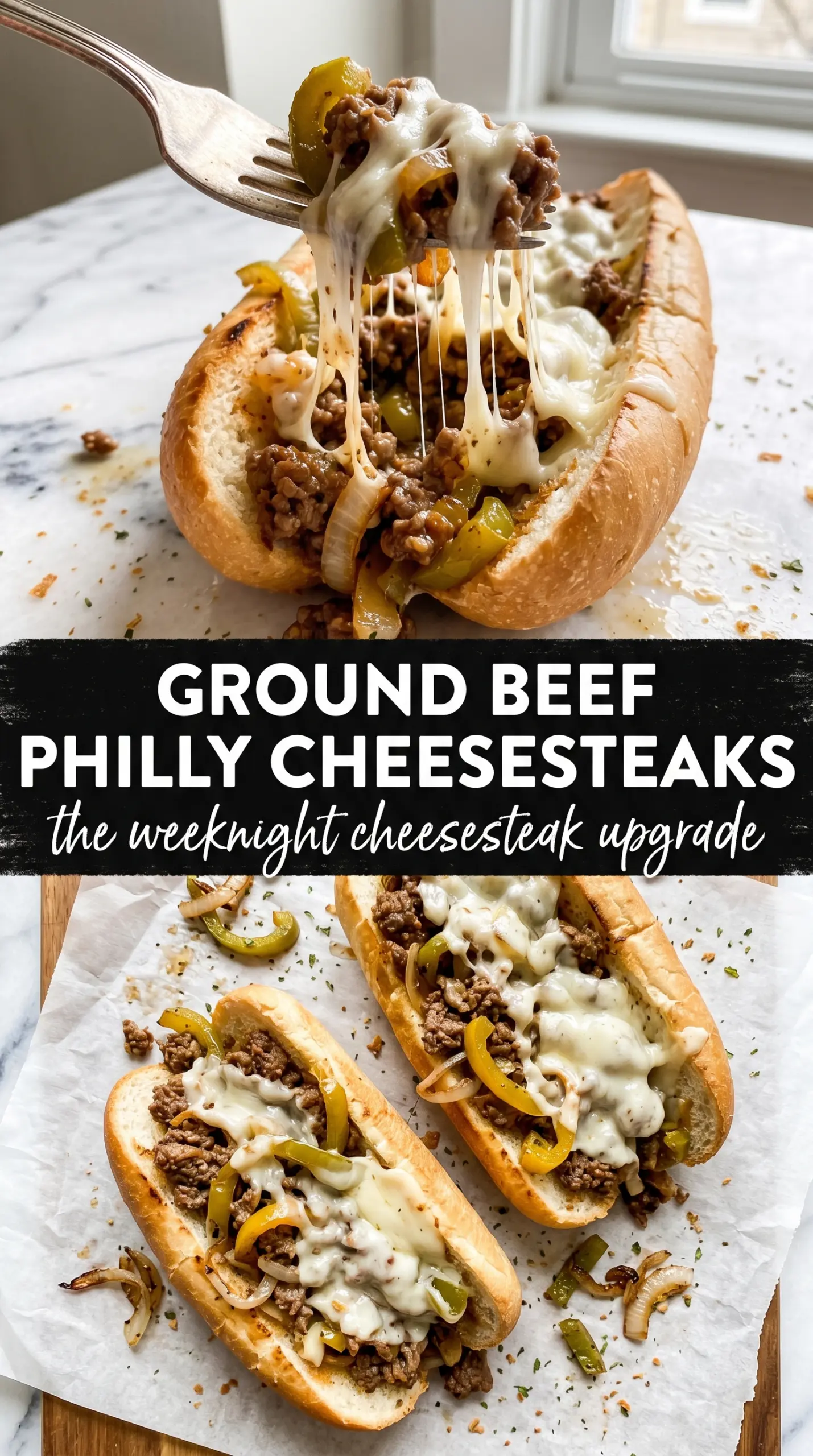
Toasted hoagie rolls, savory ground beef, sweet peppers, and onions under a blanket of melted provolone make these ground beef Philly cheesesteaks the kind of dinner that disappears fast. They hit that classic cheesesteak craving without needing thin-sliced steak, a special griddle, or a lot of extra fuss. The filling stays juicy, the vegetables keep a little bite, and the cheese melts right over the beef so every bite tastes built instead of thrown together.
The trick here is giving the vegetables enough time to soften and pick up some color before the garlic goes in. That keeps the sandwich from tasting flat or watery. Worcestershire and soy sauce do the heavy lifting on seasoning, adding a deeper beefy edge that makes ground beef taste closer to a true cheesesteak filling. Toasted rolls matter too; if the bread is soft, the juices from the skillet take over fast.
Below, I’ve included the small details that keep the filling from getting greasy and the cheese from turning clumpy. There’s also a section on smart swaps, storage, and the questions that usually come up the first time people make these at home.
The peppers stayed tender without getting mushy, and the provolone melted into the beef instead of sliding off the bread. I toasted the rolls like you said and they held up all the way to the last bite.
Save these ground beef Philly cheesesteaks for the night you want a hot, cheesy hoagie with almost no cleanup.
The Mistake That Turns Cheesesteaks Watery Instead of Sizzling
The biggest problem with skillet cheesesteaks is rushing the vegetables. If the onions and peppers go in and out too fast, they release water, and that water turns the beef into a steamy pile instead of a browned filling. Give them a few minutes to soften and take on color before the garlic and sauces go in. That little stretch of time is what gives the sandwich that savory, cooked-down flavor people expect from a cheesesteak.
Ground beef needs the same kind of attention. Break it up well, let it brown instead of just turning gray, and drain off excess fat if the pan looks greasy. Too much fat on the finished sandwich makes the roll soggy and masks the cheese. Once the beef is seasoned and the sauces reduce, the filling should look glossy, not watery.
What Each Ingredient Is Actually Doing in This Sandwich
- Ground beef — This gives you the hearty, beefy base without having to slice steak paper-thin. An 80/20 blend has enough fat for flavor, but if you use something fattier, drain it well so the rolls don’t soak through.
- Green and red bell peppers — The mix brings both freshness and sweetness. The green pepper keeps the filling grounded and classic, while the red pepper softens into a sweeter note that balances the saltiness of the beef and cheese.
- Onion — This is the backbone of the filling. Cook it until it’s soft and just starting to brown at the edges so it adds sweetness instead of sharp bite.
- Worcestershire sauce and soy sauce — These two make the beef taste deeper and more savory than plain salt alone can. Worcestershire adds tang and complexity, while soy sauce boosts the meaty flavor and helps the filling taste seasoned all the way through.
- Provolone — Provolone melts smoothly and blankets the filling without getting greasy or stringy. Freshly sliced cheese melts more evenly than pre-shredded, which often has anti-caking agents that can make the texture less silky.
- Hoagie rolls — A sturdy roll matters here. Toasting the cut sides gives you a little barrier against the juices in the pan and keeps the sandwich from collapsing halfway through dinner.
Building the Filling So the Cheese Melts Right Over It
Browning the Beef First
Cook the ground beef in a large skillet over medium-high heat and break it apart as it cooks. You want actual browning on the meat, not just cooked-through gray crumbles, because that browned edge gives the filling its best flavor. If the pan fills with liquid, keep cooking until it evaporates before you move on. Drain off excess fat if the skillet looks slick; that step keeps the sandwich from turning greasy.
Softening the Peppers and Onions
Add the sliced peppers and onion straight into the skillet with the beef once the meat is mostly cooked. Stir them around and let them cook for 5 to 6 minutes until the onions turn translucent and the peppers soften with a few charred spots. Those browned bits matter. If you stop too early, the vegetables taste raw and release more water once they hit the bread.
Reducing the Seasoning Into the Meat
Stir in the garlic, Worcestershire, and soy sauce and cook for 2 more minutes. The garlic should smell fragrant, not sharp, and the liquid should cling to the meat instead of pooling at the bottom of the pan. If the skillet still looks wet at this point, keep it on the heat a minute longer. That concentration is what makes the filling taste layered instead of salty.
Melting the Cheese Over Portions, Not the Whole Pan
Divide the filling into four piles in the skillet and lay two slices of provolone over each portion. Cover the pan for 1 to 2 minutes until the cheese turns glossy and starts to slump over the beef. This is the part that gives you those stretchy, melty layers instead of a single blob of cheese mixed through the pan. Slide each portion into a toasted roll right away so the cheese sets on the filling, not on the skillet.
How to Change These Cheesesteaks Without Losing the Point
Make It Dairy-Free
Swap the provolone for your favorite dairy-free meltable slices and keep the pan covered just long enough to soften them. The flavor will be a little less rich, but the sandwich still works because the seasoning lives in the beef, onions, and peppers.
Use Mushrooms for a Meatier Vegetable Mix
Add sliced mushrooms with the peppers and onions if you want a deeper, earthier filling. They absorb the Worcestershire sauce well, but they also release moisture, so cook until the pan dries out again before adding the garlic.
Make It Gluten-Free
Use certified gluten-free rolls and swap in a gluten-free soy sauce or tamari. The filling itself stays the same, and this is the easiest place to keep the recipe safe without changing the texture of the beef mixture.
Turn It Into a Bowl Dinner
Skip the rolls and spoon the cheesesteak filling over rice, roasted potatoes, or even cauliflower rice. You lose the toasted bread contrast, but you gain a lower-carb meal that still has the same savory, cheesy core.
Storage and Reheating
- Refrigerator: Store the filling separately from the rolls for up to 4 days. The vegetables soften a bit more as they sit, but the flavor holds up well.
- Freezer: The beef and pepper mixture freezes well for up to 2 months. Cool it completely first, then pack it in a freezer bag or container with as much air removed as possible.
- Reheating: Reheat the filling in a skillet over medium heat with a small splash of water if needed. The common mistake is microwaving it too long, which can make the beef rubbery and the peppers limp before the cheese is ready.
Answers to the Questions Worth Asking

Ground Beef Philly Cheesesteaks
Ingredients
Equipment
Method
- Cook the ground beef in a large skillet over medium-high heat, breaking it apart until it browns. Drain the fat.
- Add the green bell pepper, red bell pepper, and onion, then cook for 5–6 minutes until softened and slightly charred.
- Stir in the garlic, Worcestershire sauce, and soy sauce, and cook for 2 more minutes to coat the vegetables.
- Season the mixture with salt and pepper to taste, then stir to distribute evenly.
- Divide the beef mixture into 4 portions in the skillet, then lay 2 provolone slices over each portion. Cover the pan and heat for 1–2 minutes until the cheese melts.
- Scoop each cheesy portion into a toasted hoagie roll and serve immediately.