Ground beef shawarma bowls deliver everything people love about a great takeout-style bowl: warm spice, juicy beef with crisped edges, cool crunch from the vegetables, and a creamy garlic sauce that ties the whole thing together. The best part is that this version comes together fast enough for a weeknight, but it still tastes layered and deliberate, not rushed.
The trick is building the spice blend first so the beef gets coated evenly before it ever hits the pan. Cumin, coriander, turmeric, paprika, cinnamon, and a little cayenne give the meat that unmistakable shawarma character, while the garlic goes in with the beef so it softens in the fat and seasons the whole pan. I also like cooking the beef long enough for some browned, slightly crispy bits to form instead of stopping at just-cooked; that extra step gives the bowls a deeper, more satisfying flavor.
Below, I’ve included the little details that matter most: how to keep the sauce smooth, what to do if your beef releases a lot of fat, and the swaps that still keep the bowls balanced if you need to work with what’s in the fridge.
The beef got those crispy edges just like you said, and the garlic sauce was perfect over the rice. I added extra pickled red onion and my husband said it tasted like a restaurant bowl.
Save these Ground Beef Shawarma Bowls for a fast dinner with spiced beef, cool toppings, and that creamy garlic sauce.
The Reason the Beef Needs to Brown Before You Think About the Sauce
Ground beef shawarma can go bland fast if it’s steamed in its own moisture. The difference between a good bowl and one that tastes flat is getting enough heat on the pan to drive off that moisture and leave behind browned edges. That’s where the deeper, toasty flavor comes from, and it’s why I don’t crowd the skillet or turn the heat down too early.
The garlic belongs in the pan with the beef, but only because the beef is cooking in enough oil and fat to keep it from scorching. If your pan is too cool, the garlic tastes raw and the meat turns gray. If it’s too hot, the spices can taste bitter. Medium-high heat is the sweet spot here: hot enough for color, controlled enough to keep the seasoning clean.
- Use a wide skillet — more surface area means more browning and less steaming. A cramped pan traps moisture and gives you soft beef instead of shawarma-style edges.
- Don’t skip the drain — if the beef leaves a lot of fat behind, pour most of it off after cooking. Too much grease will dull the spice blend and make the bowl feel heavy.
- Pickled onions matter — they cut through the richness and keep the bowl from tasting one-note. If you leave them out, add extra lemon to the sauce or a little vinegar to the salad.
What the Spices, Sauce, and Toppings Are Each Doing Here
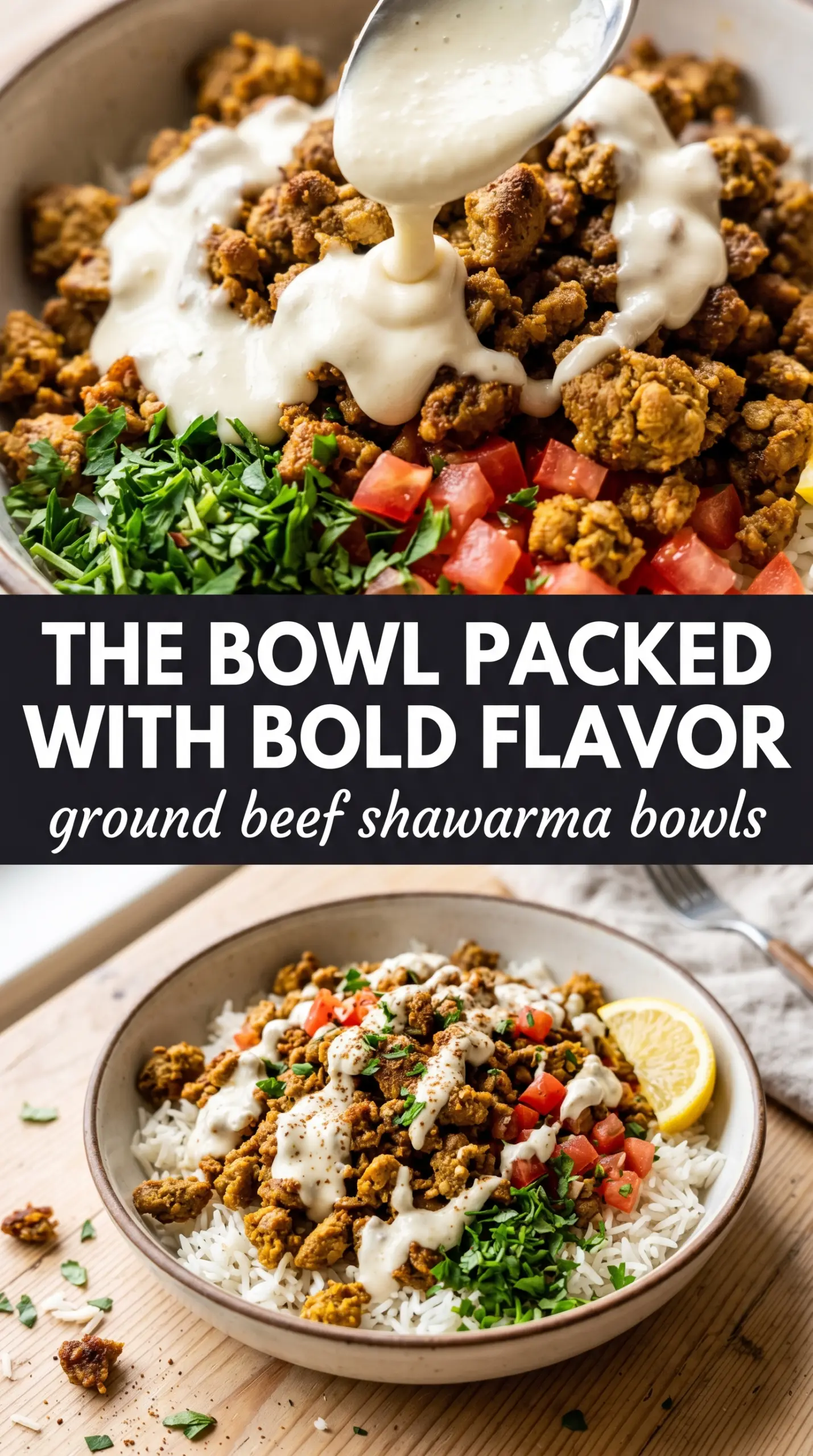
- Cumin, coriander, turmeric, paprika, cinnamon, and cayenne — this blend is the backbone of the dish. Cumin and coriander give the warm, earthy shawarma base, turmeric adds color and a little bitterness, paprika deepens the savoriness, cinnamon adds the unmistakable sweet-spice note, and cayenne keeps it from tasting soft.
- Ground beef — choose beef with enough fat to stay juicy, around 85/15 or 90/10. Leaner beef works, but it dries out faster and won’t give you as much of that crisped edge.
- Mayonnaise in the garlic sauce — mayo keeps the sauce creamy and stable without needing a blender or egg yolk. Greek yogurt can stand in if you want something tangier and lighter, but it won’t have the same rich, silky finish.
- Rice and toppings — the rice carries the spice, while cucumber, tomato, lettuce, and pickled red onion keep each bite fresh. Warm rice matters here; cold rice makes the beef taste heavier and the sauce feel thicker than it should.
Building the Bowl So Every Bite Has Heat, Crunch, and Creaminess
Mix the Spice Blend First
Stir the cumin, coriander, turmeric, paprika, cinnamon, cayenne, salt, and pepper together before the pan ever heats up. That keeps the seasoning even, which matters because ground beef cooks quickly and doesn’t give you much time to correct uneven spice. If you sprinkle each spice separately into the skillet, some bites end up over-seasoned and others taste plain.
Brown the Beef Before You Judge the Flavor
Heat the olive oil in a skillet over medium-high heat, then add the ground beef and garlic and break the meat apart as it cooks. Let it sit long enough between stirs to pick up color; that’s how you get those tiny browned crumbles instead of soft, gray meat. Cook until the beef is done and the edges look crisp in spots, then drain off any excess fat before tasting.
Whisk the Garlic Sauce Until It Turns Smooth
Mix the mayo, garlic, lemon juice, and salt until the sauce looks fully blended and glossy. If the garlic tastes sharp, give it a few minutes to sit; the lemon softens the raw bite. This sauce should be spoonable and creamy, not runny, so if it loosens too much, a little more mayo tightens it back up.
Assemble While the Components Still Have Their Contrast
Spoon the rice into bowls first, then top with the beef, cucumber, tomato, pickled onion, and shredded lettuce. Drizzle the garlic sauce generously over the top and serve with warm pita on the side. The goal is to keep the rice warm, the vegetables cool, and the sauce rich enough to coat everything without drowning it.
How to Adjust These Bowls When You Need a Different Lane
Make It Dairy-Free Without Losing the Creamy Finish
The base recipe is already dairy-free as written, which makes it easy to keep the same flavor structure for more people. If you want a richer sauce without dairy, use a good mayonnaise and add the lemon gradually so it stays thick and plush instead of turning thin and sharp.
Swap the Rice for a Lower-Carb Bowl
Cauliflower rice works if you want a lighter bowl, but it needs to be cooked and dried out first or it turns watery under the beef. Warm it in a skillet until the surface moisture evaporates, then build the bowl the same way so the sauce still has something to cling to.
Use Ground Turkey or Chicken for a Leaner Version
Ground turkey or chicken takes the same spice blend well, but it needs a little extra oil and careful browning because it dries out faster than beef. Keep the heat at medium-high and pull it as soon as it’s cooked through so the meat stays tender.
Storage and Reheating
- Refrigerator: Store the beef, rice, sauce, and toppings separately for up to 4 days. The beef holds up well, but the vegetables will soften if they sit in the sauce.
- Freezer: The seasoned beef and rice both freeze well for up to 2 months. Freeze the garlic sauce separately; mayo-based sauces can split after thawing.
- Reheating: Reheat the beef and rice gently in the microwave or a skillet with a splash of water to loosen the rice. Don’t reheat the toppings; add those fresh after the hot components are warmed through.
Questions I Get Asked About This Recipe
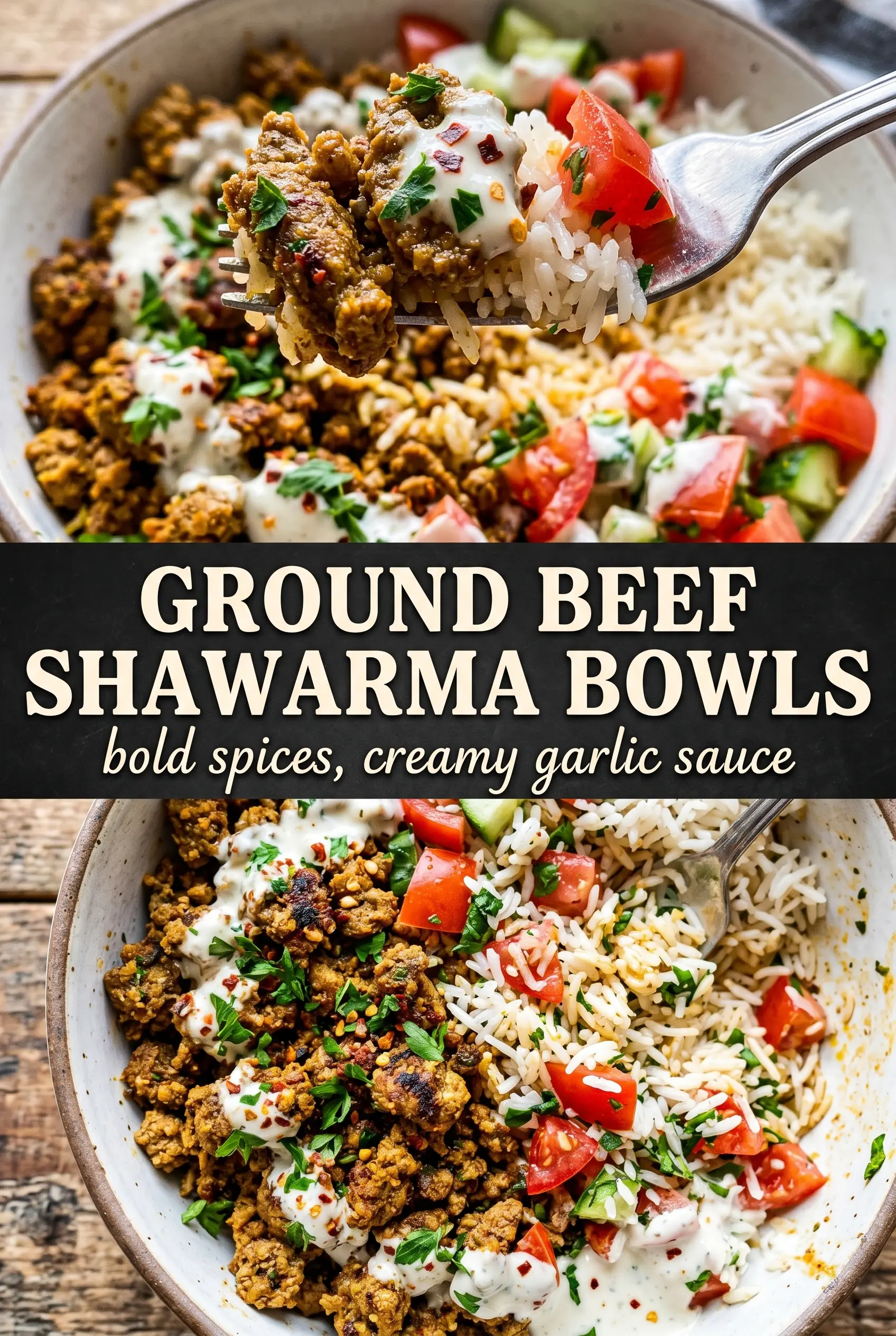
Ground Beef Shawarma Bowls
Ingredients
Equipment
Method
- Combine cumin, coriander, turmeric, smoked paprika, cinnamon, cayenne, and salt and pepper in a small bowl until evenly blended, creating a uniform spice mix.
- Set the spice blend aside so it’s ready for the beef.
- Heat olive oil in a skillet over medium-high heat, then add ground beef and minced garlic, breaking the meat apart as it starts to brown.
- Cook for 8–10 minutes, stirring occasionally, until the beef is cooked through with slightly crispy edges; drain any excess fat.
- Mix mayo, minced garlic, lemon juice, and salt until smooth and creamy, scraping the bowl for any unmixed pockets.
- Build each bowl with warm rice, then top with spiced beef.
- Add cucumber, tomato, pickled red onion, and shredded lettuce over the beef.
- Drizzle generously with garlic sauce, then serve with warm pita.