Hobo casserole lands in that sweet spot between old-school comfort food and a practical weeknight dinner: tender potato slices, savory beef, and a creamy, cheesy finish that slices clean instead of collapsing into a saucy pile. The top gets bubbling and browned while the potatoes underneath turn soft and rich with the mushroom gravy, which is exactly why this one earns repeat status.
What makes this version work is the way the potatoes are sliced thin enough to cook through in the oven without turning mushy, and the beef is seasoned before it goes into the dish so every layer has some flavor of its own. The soup gets thinned just enough with milk to move through the casserole and coat the potatoes without drowning them. That balance matters more than extra cheese on top.
Below, I’ll walk through the one part that trips people up most often — getting the potatoes tender at the same pace as the beef mixture — plus a few swaps that keep the casserole sturdy if you need to use what’s already in the kitchen.
The potatoes were tender all the way through and the mushroom sauce soaked into the layers without making it watery. My husband went back for seconds before I even sat down.
Save this hobo casserole for the nights when you want cheesy potato layers, seasoned beef, and a no-fuss baked dinner.
The Trick to Tender Potatoes Without Overcooking the Beef
The biggest mistake in a potato casserole is cutting the potatoes too thick and assuming the oven will sort it out. It won’t. Thick slices stay firm while the beef dries out, and by the time the center is done, the top is already past its best. Thin, even slices are what let everything finish together.
Another thing that matters here is moisture control. The soup mixture needs to be loose enough to move between the layers, but not so thin that it turns the casserole soupy. Brown the beef fully and drain the fat so the sauce can cling instead of sliding around in the pan.
- Russet potatoes — These hold their shape well enough for layering, but they also turn soft and comforting in the oven. Slice them about 1/8 inch thick so they cook at the same pace as the beef mixture.
- Cream of mushroom soup — This is the shortcut that gives the casserole its body. A homemade white sauce can work, but the mushroom soup brings seasoning and thickness in one move.
- Cheddar cheese — Sharp cheddar gives the finished dish enough bite to stand up to the creamy layers. Mild cheddar melts fine, but the flavor gets flatter.
- Worcestershire sauce — This adds depth to the beef and keeps the filling from tasting one-note. Don’t skip it unless you’re replacing it with a splash of soy sauce or tamari.
What Each Layer Is Doing Before It Hits the Oven
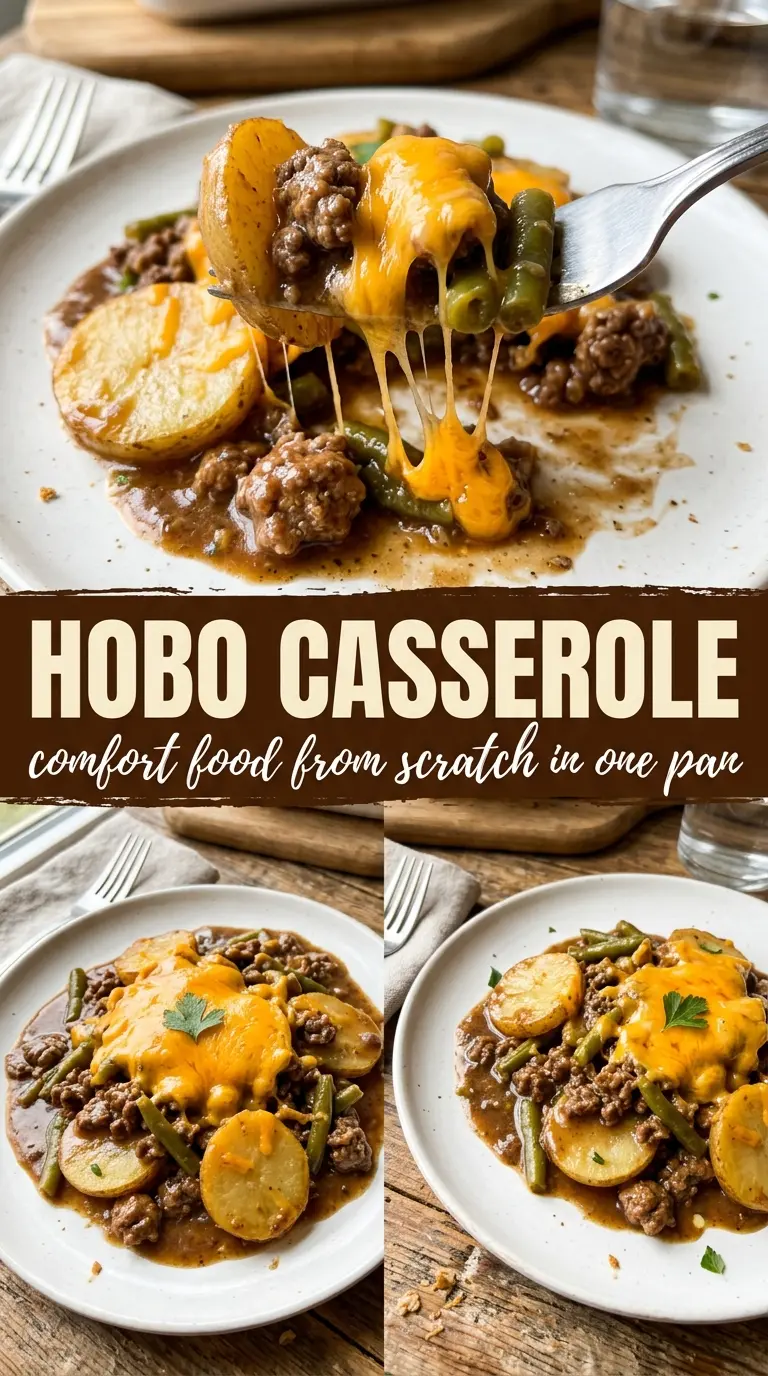
- Ground beef — This is the backbone of the dish. Browning it first builds flavor and keeps the casserole from tasting boiled.
- Onion — Sliced onion softens right in the skillet and adds sweetness that balances the creamy sauce. If you only have yellow or white onion, either works.
- Milk — Just enough milk loosens the soup so it can slip between the layers. Use whole milk if you have it; lower-fat milk still works, but the sauce will be a little lighter.
- Fresh parsley — This is mostly for the finish, but it matters. The color and fresh bite wake up a dish that’s otherwise rich all the way through.
Building the Layers So the Center Cooks Through
Brown the Beef and Onion Together
Cook the ground beef and sliced onion over medium-high heat until the beef has lost its pink color and the onion has softened at the edges. You want some browning in the pan, not a gray steam bath, because that caramelized flavor carries through the whole casserole. Drain off the fat after cooking so the final dish doesn’t end up greasy. Season the beef while it’s still hot so the garlic powder, onion powder, Worcestershire, salt, and pepper sink into the meat instead of sitting on the surface.
Whisk the Sauce Until It Moves Easily
Stir the cream of mushroom soup and milk together until smooth and pourable. If it still looks thick and clumpy, it won’t spread evenly through the casserole and you’ll get dry pockets around the potatoes. The goal is a sauce that coats a spoon and drips off in a steady ribbon. That’s thick enough to stay in the dish, but loose enough to reach the lower layers.
Layer From the Bottom Up
Spread half the potato slices in an even layer across the baking dish, then add half the beef and half the sauce. Repeat the same order with the remaining potatoes, beef, and sauce. Press the potatoes down gently as you build so the sauce can settle between them. If the layers are piled unevenly, the edges dry out before the center softens.
Bake Covered, Then Finish Uncovered
Cover the dish tightly with foil and bake until the potatoes are nearly tender. The foil traps steam, which is what cooks the potatoes through without scorching the top. Once the potatoes are soft, uncover the casserole, add the cheddar, and bake until the cheese is melted and bubbling. If the top browns before the potatoes are done, the slices were too thick or the dish wasn’t covered tightly enough.
Make It with Ground Turkey Instead of Beef
Ground turkey works well if you want a lighter casserole, but it needs a little help. Add a touch more Worcestershire and a pinch extra salt, because turkey is milder and can taste flat next to the potatoes and soup. The texture stays the same, but the flavor becomes cleaner and less rich.
Dairy-Free Version That Still Bakes Up Creamy
Use a dairy-free cream soup substitute and swap the milk for unsweetened oat or almond milk. The casserole will still hold together, though the sauce won’t taste as rich and the top cheese layer won’t brown the same way unless you use a dairy-free cheddar-style shred. Keep an eye on seasoning, since dairy-free swaps often need more salt to taste full.
Extra Cheesy and a Little More Filling
Add a thin layer of cheese between the potato and beef layers if you want the casserole richer and more molten in the middle. That gives you a looser, more indulgent slice, but it also makes the layers softer, so don’t overdo it or the structure gets heavy. This is the version to make when you want the casserole to feel closer to diner-style comfort food.
Storage and Reheating
- Refrigerator: Store covered for up to 4 days. The potatoes soften a bit more as it sits, but the flavor gets even better on day two.
- Freezer: It freezes well in portions, though the potatoes will be softer after thawing. Cool completely, wrap tightly, and freeze for up to 2 months.
- Reheating: Reheat covered in a 350°F oven until hot in the center, or microwave single portions in short bursts. Don’t blast it uncovered, or the edges dry out before the middle warms through.
Answers to the Questions Worth Asking
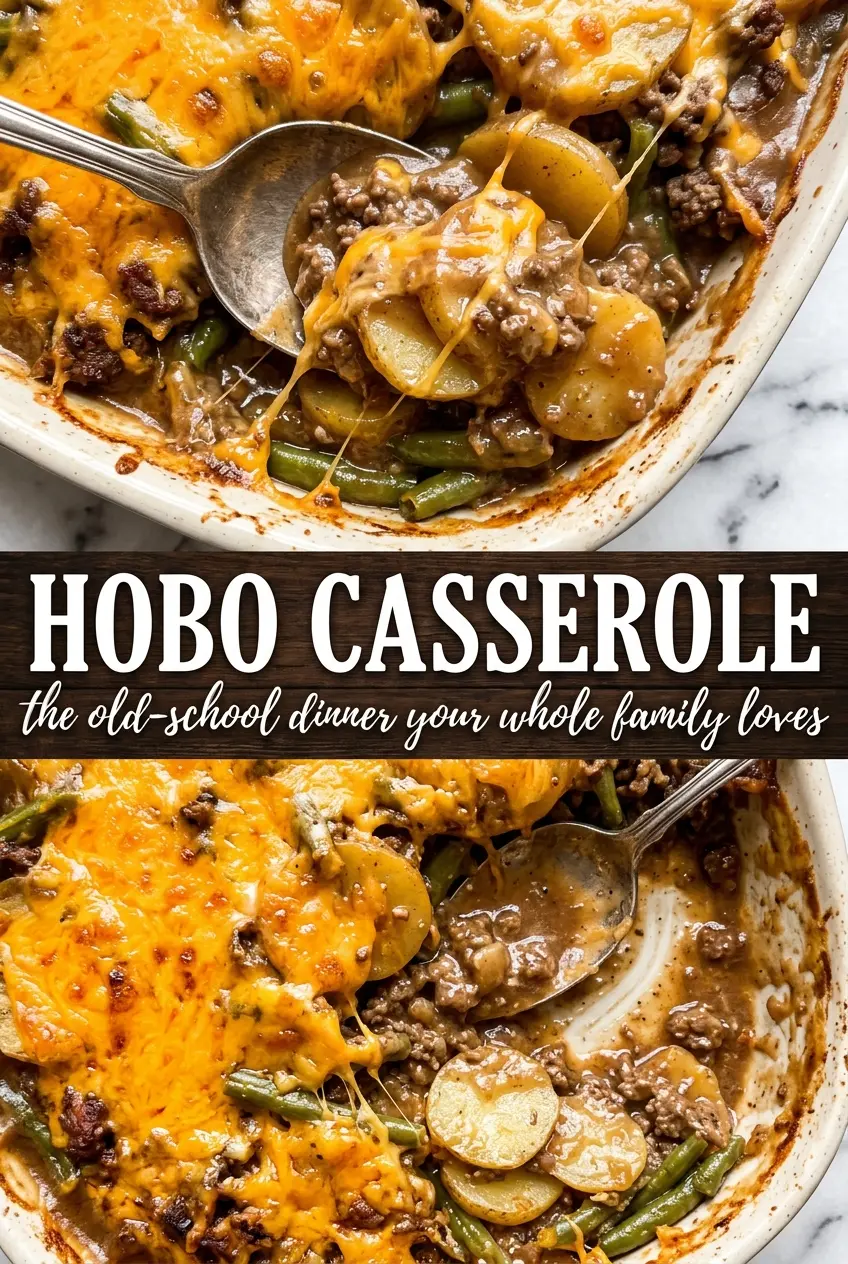
Hobo Casserole
Ingredients
Equipment
Method
- Preheat the oven to 350°F and grease a 9x13 baking dish so the casserole releases easily.
- Brown the ground beef with the sliced onion over medium-high heat, then drain excess fat and season with garlic powder, onion powder, Worcestershire sauce, salt, and black pepper.
- Whisk the cream of mushroom soup with the milk until smooth.
- Layer half the potato slices in the baking dish.
- Top the potato layer with half the beef mixture.
- Pour half the soup mixture over the beef and potatoes, then repeat the layers with remaining potatoes, beef, and soup mixture.
- Cover with foil and bake for 40 minutes, until the potatoes begin to soften at the edges.
- Uncover, top with shredded cheddar, and bake for 15 more minutes at 350°F until potatoes are tender and the cheese is bubbly.
- Garnish with fresh parsley and serve hot.