Hobo dinner foil packets come off the fire with everything you want in one place: juicy beef, tender potatoes, sweet carrots, and onions that melt into the butter and juices. The best part is the way the foil traps the steam, so the vegetables soften without drying out and the beef stays flavorful instead of turning crumbly and overcooked.
This version works because the potatoes and carrots go down first, right against the hot foil, while the beef sits on top where it can cook through as the packet steams. Thin patties cook more evenly than a loose mound of ground beef, and the butter gives you just enough fat to keep the vegetables from tasting flat. Heavy-duty foil matters here. Regular foil tears too easily once the packet gets flipped over a fire grate.
Below, you’ll find the small details that make these packets dependable, plus a few smart swaps if you’re cooking at camp, in the oven, or for a different kind of crowd.
The potatoes were tender all the way through and the beef stayed juicy, even after flipping the packets over the fire. I added a little extra onion and the butter made everything taste like it cooked in its own gravy.
Save these hobo dinner foil packets for the nights when you want a campfire-style beef and vegetable meal with almost no cleanup.
The Trick to Keeping the Potatoes Tender Before the Beef Overcooks
The biggest mistake with foil packet dinners is piling in thick-cut vegetables and expecting everything to finish at the same time. Beef cooks fast on a grate, but potatoes need a head start. Slicing the potatoes and carrots thinly gives them a fighting chance, and keeping the beef in a thin patty helps the whole packet cook evenly instead of leaving you with browned meat and crunchy vegetables.
The foil also matters more than people think. A tightly sealed packet traps steam, which is what softens the potatoes and onions. If the seams are loose, moisture escapes and the vegetables dry out before they’re ready. That’s why crimping the edges firmly is part of the cooking method, not just a neat finishing touch.
- Thin potato slices — These cook through at the same pace as the beef. Thick chunks usually stay firm unless you give the packets much longer than the meat really wants.
- Butter — It’s not just for richness. It carries the seasoning and gives the vegetables enough fat to taste full instead of steamed-out.
- Heavy-duty foil — This is worth buying for this recipe. Thin foil tears when you flip the packets or move them off the heat.
- Ground beef shaped into patties — Patties cook more evenly than crumbled meat in a packet, and they keep the juices where you want them.
What Each Ingredient Is Doing Inside the Packet
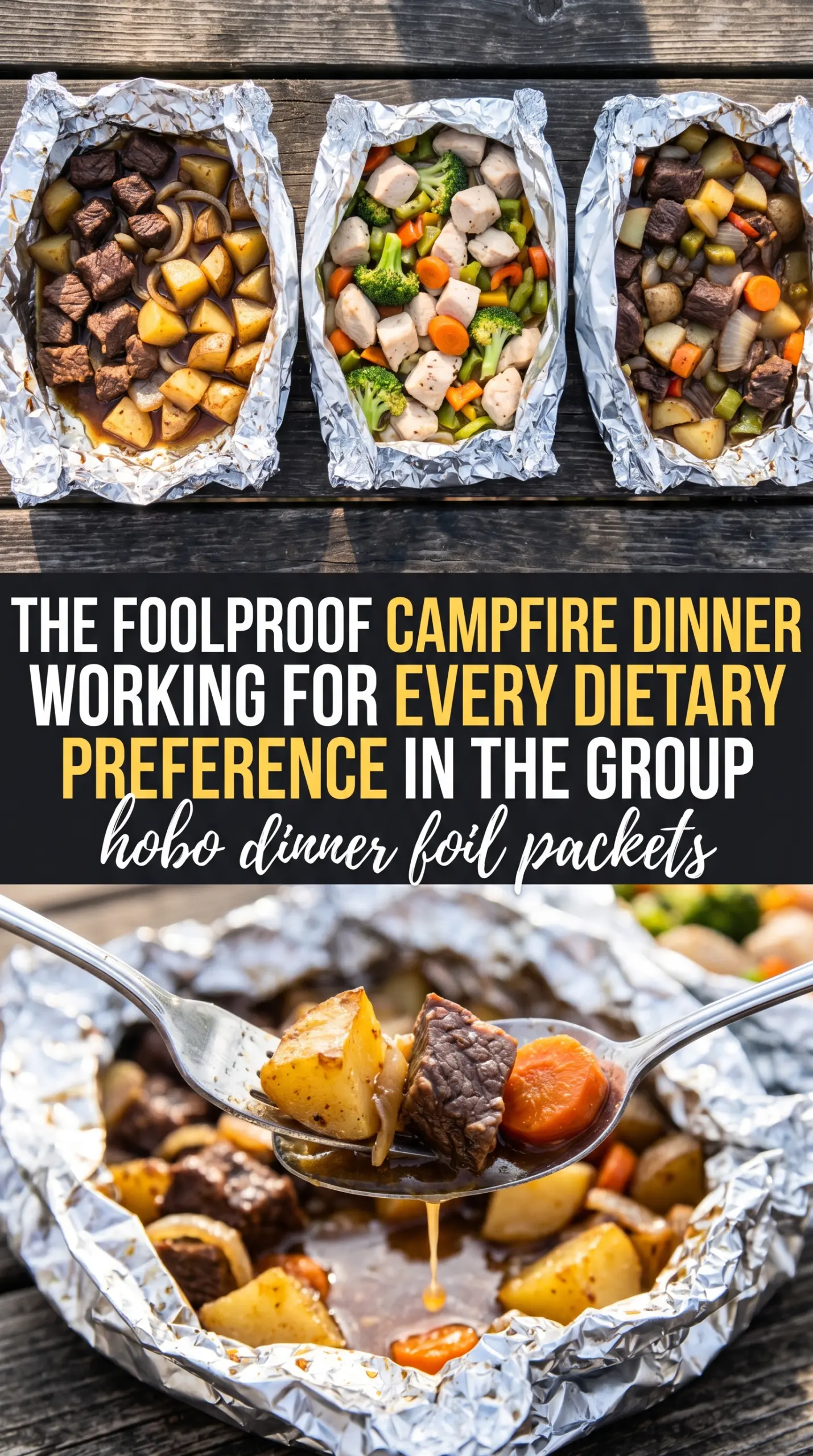
- Ground beef — Use an 80/20 blend if you can. Leaner beef can turn dry before the vegetables finish. If all you have is lean beef, the butter becomes more important.
- Potatoes — Russets or Yukon Golds both work. Yukon Golds hold their shape a little better, while russets get softer and more rustic. Slice them thinly so they steam instead of just sitting there.
- Carrots — Cut them no thicker than the potatoes. If they’re chunky, they lag behind and stay too firm when the beef is done.
- Onion — Onion adds moisture and a little sweetness as it cooks. Yellow onion is the best all-purpose choice, but white onion works if that’s what you have.
- Garlic powder — Fresh garlic can burn in a packet over open fire. Garlic powder spreads through the butter and seasons everything without turning bitter.
- Butter — The butter melts over the beef and runs down into the vegetables. If you want a richer packet, add an extra half tablespoon, but too much can make the foil slippery and harder to seal.
How to Build the Packets So Nothing Ends Up Undercooked
Shaping the Beef First
Divide the beef into four equal portions and press each one into a thin patty. Thin is the goal here, not dense. A thick round of beef takes longer to cook in the middle than the vegetables need, and by the time it’s safe, the outside can get dry. Season the meat after shaping so the salt and pepper stay on the surface and don’t get buried in the packet juices.
Layering for Even Heat
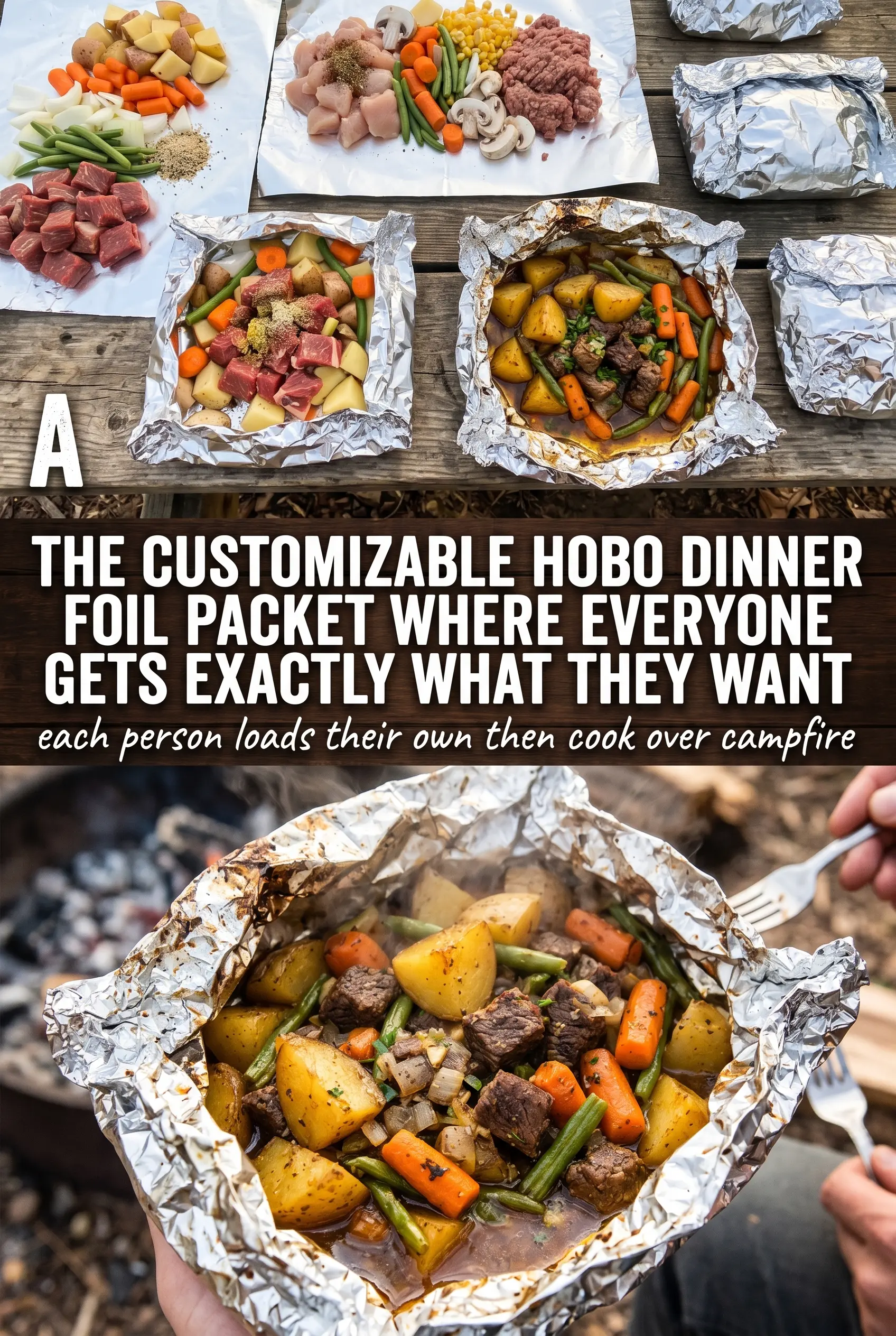
Start with potatoes, then carrots, then onions, then the beef on top. That order lets the vegetables closest to the foil get the most direct steam and heat while the beef cooks through from the top and center. Keep the layers loose enough for steam to move around, but not so loose that the packet turns into a pile of separate ingredients. The butter goes right on top so it melts down through everything as the packet cooks.
Sealing and Cooking Over the Fire
Fold the foil tightly and crimp the edges so the packet stays closed when you flip it. Place the packets over medium heat, not roaring flames. If the fire is too hot, the outside of the foil can scorch while the vegetables still need time. Flip halfway through so the bottom doesn’t overbrown, and watch for the packet to puff a little as the steam builds inside.
Opening Without Losing the Steam You Worked For
When the packets come off the heat, let them rest for five minutes before opening. That pause finishes the vegetables and keeps the juices from rushing out too soon. Open the foil away from your face because the steam is intense. The beef should be cooked through and the potatoes should give easily when pierced with a fork.
How to Adapt These Foil Packets for the Oven, Grill, or a Different Crowd
Oven-Baked Hobo Packets
Bake the sealed packets on a sheet pan at 400°F until the potatoes are tender and the beef is cooked through. The result is nearly the same as campfire cooking, just with more even heat and less smoke. If your foil packets keep tearing on the grill, the oven is the most reliable backup.
Turkey or Plant-Based Swap
Ground turkey works well if you want a lighter packet, but it needs the butter to keep it from drying out. For a vegetarian version, swap in hearty mushrooms and extra potatoes, then add a little more seasoning since you lose the savory depth of beef. The texture changes, but the foil-packet method still gives you the same easy cleanup.
Bigger-Batch Camping Dinner
This recipe doubles cleanly as long as you keep the packets the same size instead of making them overcrowded. If you stuff too much into each one, the center steams unevenly and the beef takes longer than the vegetables. It’s better to make more small packets than a few giant ones.
Storage and Reheating
- Refrigerator: Store leftovers in an airtight container for up to 3 days. The potatoes soften a little more after chilling, but the flavor holds well.
- Freezer: These packets freeze, but the potatoes turn a bit softer after thawing. Freeze cooked portions in airtight containers for up to 2 months if you don’t mind a more tender texture.
- Reheating: Reheat in a covered skillet over low heat or in a 350°F oven until warmed through. High heat dries out the beef and turns the potatoes mealy before the center is hot.
Answers to the Questions Worth Asking
Hobo Dinner Foil Packets
Ingredients
Equipment
Method
- Divide the ground beef into 4 portions and shape each into a thin patty.
- Set the patties aside while you slice the potatoes, carrots, and onion.
- Place 1 sheet of heavy-duty aluminum foil on a flat surface and layer sliced potatoes, then carrots, then onions.
- Set 1 beef patty on top of the vegetables on the same foil sheet.
- Season each packet with salt, pepper, and garlic powder, then top with 1 tablespoon butter.
- Fold the foil into a sealed packet and crimp the edges tightly so no steam escapes.
- Place packets on a campfire grate over medium heat for 25-30 minutes, flipping halfway through.
- Watch for bubbling steam at the seams as a visual cue the packets are cooking evenly.
- Carefully open each packet, watching for steam, and check that the beef is cooked through and vegetables are tender.
- Let packets cool for 5 minutes, then serve directly from the packets.