Hobo foil packets deliver the kind of dinner that feels simple when you open the packet and see everything cooked together just right: tender potatoes, soft onions, sweet carrots, and meat that stays juicy instead of drying out. The best part is the steam that rushes out when you tear one open. That little moment tells you the packet did its job.
This version works because the vegetables are cut to a size that can finish in the same window as the meat, and the butter melts down through everything instead of sitting on top. Heavy-duty foil matters here. Thin foil tears too easily on the grate, and once a packet leaks, you lose steam and end up with unevenly cooked vegetables.
Below, I’ll walk through the small choices that make these packets cook evenly, plus a few variations for oven and campfire cooking when you want the same comfort with less guesswork.
The potatoes were tender all the way through and the beef stayed juicy. I worried the carrots wouldn’t cook in time, but everything came out perfectly after 30 minutes over the coals.
Save these hobo foil packets for an easy campfire dinner with tender potatoes, buttery vegetables, and juicy meat in every packet.
The Part That Keeps the Meat Juicy Instead of Steaming Itself Dry
The biggest mistake with foil dinners is loading everything in loose and hoping the packet sorts itself out. It doesn’t. The vegetables need to sit under the meat so they catch the dripping juices and soften in the steam, while the butter melts through the layers and keeps the top from drying out. That little structure is what gives you a packet that eats like a full meal instead of a pile of separate ingredients.
Cut the potatoes and carrots into even, thin slices so they finish at the same pace. If the potatoes are thick and the carrots are skinny, one turns soft while the other stays firm. The foil seal matters just as much: fold it tight enough that steam stays inside, but leave a little room for expansion so the packet doesn’t burst open over the heat.
What Each Ingredient Is Doing Inside the Packet
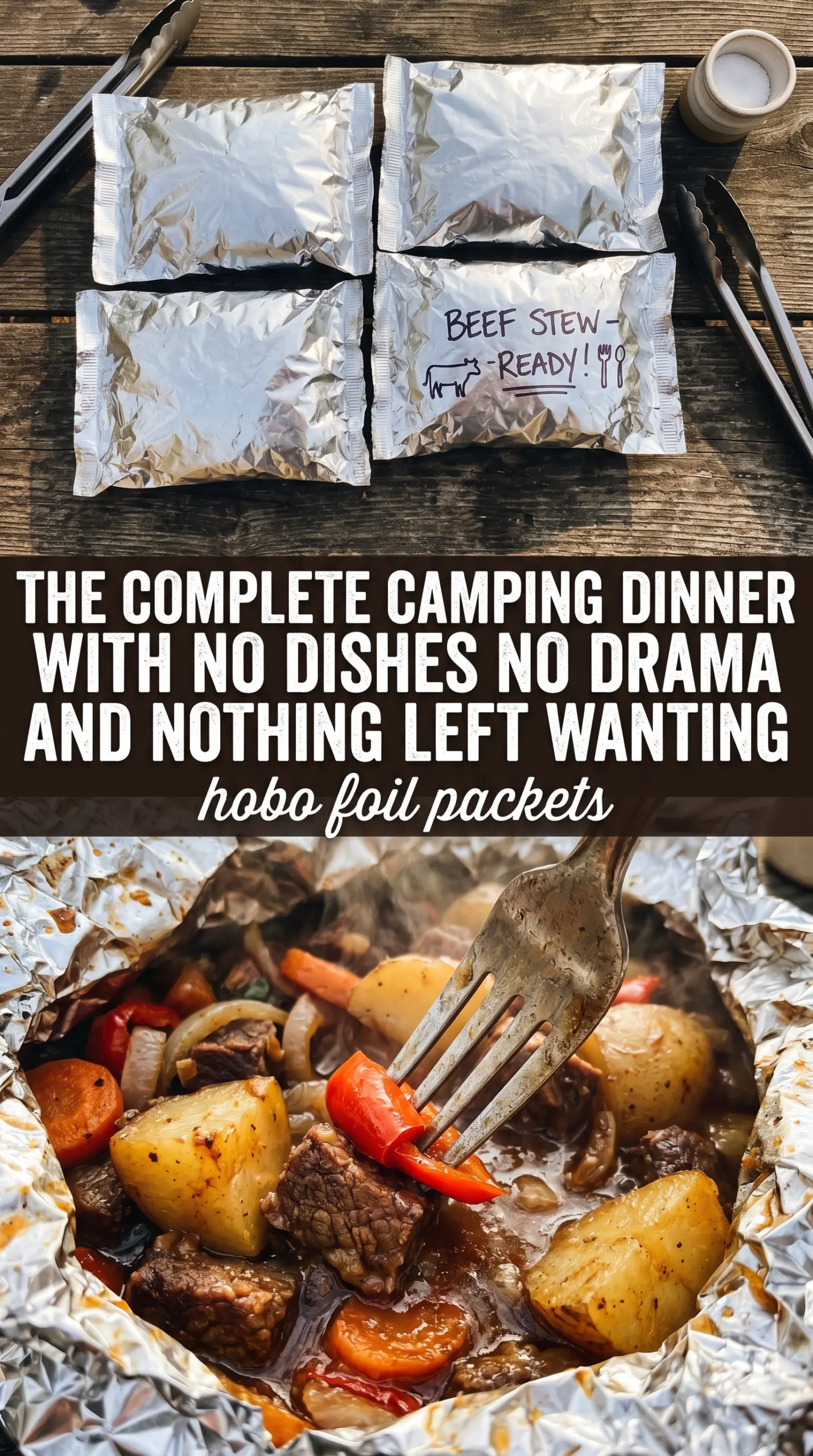
- Ground beef or stew meat — Ground beef cooks faster and gives you a softer, more familiar foil-dinner texture. Stew meat brings a deeper beefy bite, but it needs the full cook time and works best when the pieces are small and evenly sized.
- Potatoes — These are the backbone of the packet. Slice them thin, about 1/4 inch, so they turn tender by the time the meat is done; thicker slices need more time than the rest of the packet can give.
- Carrots and onion — Carrots bring sweetness and onion softens into the juices, which keeps the whole packet from tasting flat. Cut both thin enough to soften in the same window as the potatoes.
- Green beans — Canned green beans are already soft, so they don’t need long heat. Drain them well before adding them or they can water down the packet and mute the seasoning.
- Butter — This is the built-in sauce. It melts over the vegetables and meat, carrying the seasoning through the whole packet; don’t swap it for oil if you want the same rich finish.
- Heavy-duty foil — Regular foil tears too easily over a grate or campfire. Heavy-duty foil holds the steam in and gives you enough strength to flip the packets without losing the contents.
How to Layer and Seal the Packets So Everything Cooks Evenly
Building the Vegetable Base
Lay the potatoes down first, then carrots, onion, and green beans so the densest vegetables sit closest to the heat and the softer ones ride above them. That bottom layer takes the longest to soften, and it also catches the butter as it melts. If you pile the meat straight on the foil, the vegetables underneath can end up undercooked while the top dries out.
Adding the Meat and Seasoning
Place the meat on top of the vegetables and season it before sealing the packet. The salt pulls out a little moisture, which mixes with the butter and makes its own broth inside the foil. If the meat is ground beef, press it into a patty so it cooks more evenly; if it’s stew meat, keep the pieces in a loose mound so the steam can move around them.
Sealing for Steam, Not a Leak
Fold the foil up and over the filling, then crimp the edges tightly so nothing leaks when the butter starts to melt. You want a sealed pouch, not a flattened envelope. If the packet is packed too tightly, the steam has nowhere to circulate and the vegetables cook unevenly, so leave a little air space above the food.
Cooking Over the Fire
Set the packets over medium heat and flip them halfway through so both sides get steady heat. You’re looking for a packet that puffs a little and gives off a rich, savory smell when you open it. If the potatoes still feel firm after 25 to 30 minutes, close the packet back up and give it a few more minutes instead of opening it every couple of minutes and losing the steam you need.
How to Adapt These Foil Packets for the Oven, the Grill, or a Different Diet
Oven-Baked Foil Packets
Bake the sealed packets on a sheet pan at 400°F for about 35 to 40 minutes. The oven gives you more even heat than a campfire, so it’s a good choice when you want less guesswork and no char from the grate.
Gluten-Free and Naturally Dairy-Free
This recipe is already gluten-free, and it can be made dairy-free by swapping the butter for a dairy-free butter alternative. You lose a little of the classic buttery flavor, but the packet still cooks the same way because the steam and sealed foil do the real work.
Using Stew Meat Instead of Ground Beef
Stew meat gives you a heartier, more old-school campfire feel, but the pieces need to be trimmed into smaller chunks so they finish at the same time as the potatoes. If the chunks are too large, the vegetables will be done before the beef turns tender.
Storage and Reheating
- Refrigerator: Store leftovers in an airtight container for up to 3 days. The potatoes soften a bit more as they sit, but the flavor holds up well.
- Freezer: These freeze okay after cooking, though the potatoes can turn a little grainy once thawed. Wrap tightly and freeze for up to 2 months if you want to batch them ahead.
- Reheating: Reheat in a covered skillet over low heat with a splash of water or broth, or warm in a 350°F oven until hot. High heat dries out the meat and makes the potatoes tough before the center heats through.
Questions I Get Asked About This Recipe
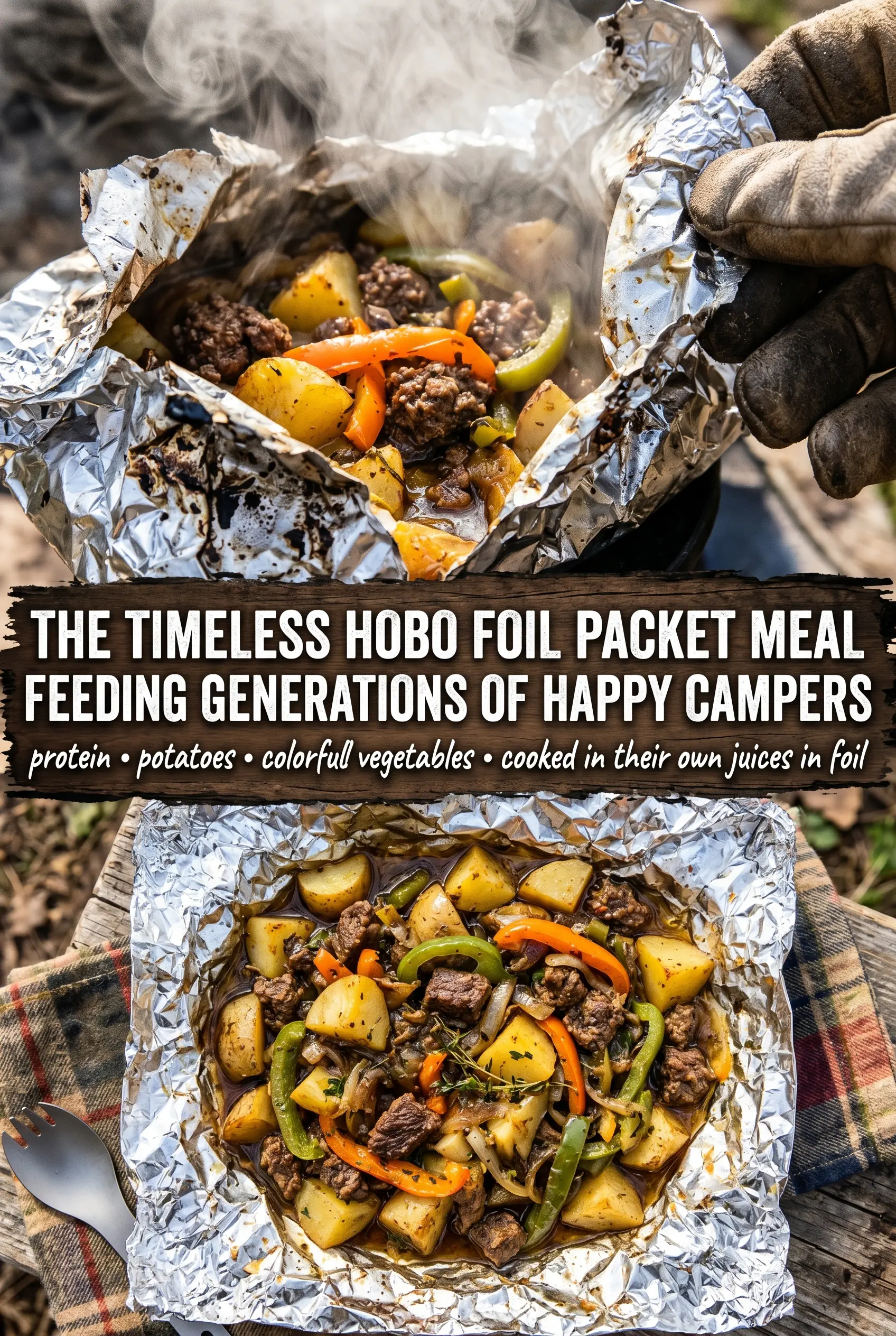
Hobo Foil Packets
Ingredients
Method
- If using ground beef, form the meat into 4 patties; if using stew meat, divide into 4 portions so each packet gets an even layer.
- On each sheet of heavy-duty aluminum foil, layer the vegetables in this order: potatoes, carrots, onions, then green beans.
- Place one portion of meat on top of the vegetables in each foil sheet.
- Season each packet with salt, pepper, and garlic powder, then top with 1 tablespoon butter so it melts during cooking.
- Fold the foil into sealed packets, pressing edges closed to prevent steam leaks.
- Place the packets on a campfire grate over medium heat for 25-30 minutes, flipping halfway for even cooking.
- Let the packets cool for 5 minutes before carefully opening, so steam doesn’t escape too violently.