Honey mustard potatoes come out with the kind of edges that get picked off the pan before they ever make it to the table. The outside turns sticky and caramelized, the centers stay creamy, and the sharp mustard cuts through the sweetness so the whole dish tastes balanced instead of heavy. It’s the sort of side that works with roast chicken, grilled sausages, or a simple piece of salmon, but it disappears fast enough to stand on its own.
The trick here is treating the glaze like a coating, not a sauce. Dijon brings the backbone, whole grain mustard adds texture, and a little apple cider vinegar keeps the honey from tasting flat. The potatoes need enough space on the pan to roast, not steam, so a single layer matters more than people think. If they’re crowded, the glaze softens instead of browning, and you lose the best part.
Below, I’m walking through the small choices that keep these potatoes crisp at the edges and glossy in the middle, plus the swaps that still work when you need them.
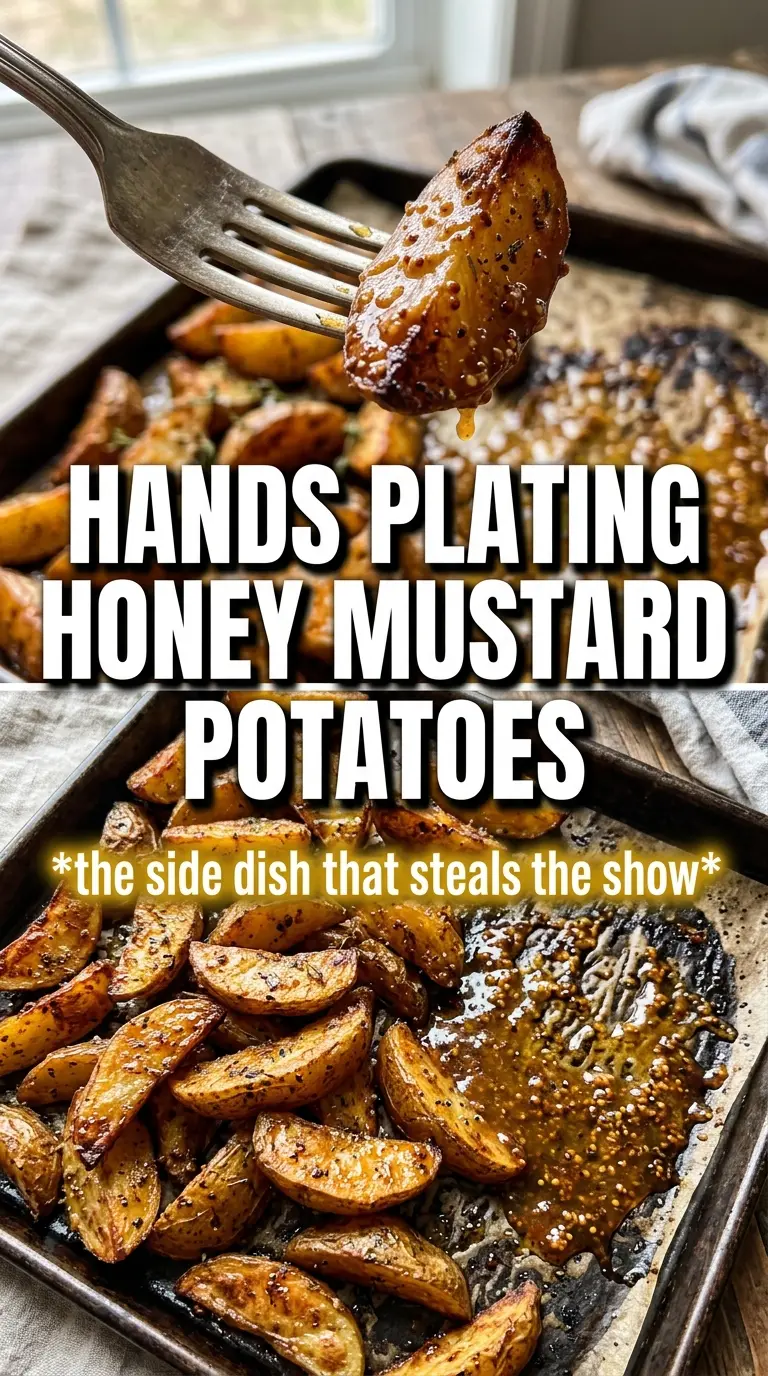
The glaze caramelized onto the potatoes instead of running off, and the whole grain mustard gave every bite a little pop. I tossed them halfway through and the edges came out crisp without drying out the centers.
Save these honey mustard potatoes for the nights when you want crisp roasted edges and a sticky, tangy glaze.
The Part That Keeps the Glaze From Going Thin and Boring
Most honey mustard potato recipes go wrong because the glaze is treated like a marinade. Honey and mustard don’t need a long soak here; they need heat and a dry surface to cling to. Once the potatoes hit the oven, the moisture on the outside turns to steam, and that’s what blunts browning if the pan is too full.
Roasting at 425F gives the potatoes enough heat to caramelize the honey without burning it immediately. The vinegar matters more than it looks like it should. It sharpens the mustard, keeps the sweetness in check, and helps the glaze taste like a sauce instead of candied potatoes.
- Baby potatoes or Yukon Golds — Both hold their shape and roast into creamy centers. Baby potatoes give you smaller, crisper edges; Yukon Golds bring a little more buttery texture. Russets are too starchy for this style and tend to break down before the glaze finishes.
- Dijon mustard — This is the backbone of the glaze. It emulsifies with the oil and honey and gives the potatoes that clean mustard bite. Yellow mustard won’t taste as rounded, though it can work in a pinch if you add a touch more vinegar.
- Whole grain mustard — The seeds add texture and keep the glaze from tasting smooth and flat. If you skip it, the potatoes still work, but you lose that little burst of mustard in each bite.
- Apple cider vinegar — This keeps the honey from turning cloying and helps the potatoes brown instead of just glossing over. Lemon juice works if that’s what you have, but it reads brighter and less rounded.
- Fresh rosemary — Dried rosemary can be used if needed, but use less and crush it between your fingers first. Fresh rosemary perfumes the potatoes without taking over, especially once it hits the heat.
What Each Ingredient Is Actually Doing in This Recipe
- Primary ingredient (the star) — Quality matters most. Choose the best you can find.
- Cooking medium (oil, butter, or broth) — This carries flavors and prevents dryness.
- Seasonings (salt, pepper, spices, herbs) — Layer flavors so nothing overpowers. Build depth gradually.
- Aromatics (garlic, onion, herbs) — Cook with fat to bloom flavors. Become the foundation.
- Supporting ingredients — Complement the main ingredient without overpowering it.
- Sauce or liquid (if applicable) — Brings flavors together. Balance richness with acid.
- Acid (lemon, vinegar, wine, or other) — Brightens and prevents flat-tasting results.
- Final finish (garnish, glaze, or sauce) — Prevents one-dimensional taste and adds visual appeal.
How to Roast the Potatoes So They Caramelize Instead of Steam
Whisking the glaze until it looks unified
Start with the mustard, honey, oil, vinegar, garlic, rosemary, smoked paprika, salt, and pepper in a bowl and whisk until the mixture looks glossy and combined. It should be loose enough to coat, not thick like paste. If the honey sits in streaks at the bottom, the potatoes won’t season evenly and the glaze will cook in patches.
Coating every cut surface
Toss the halved potatoes in the glaze until every cut side is coated. Those flat, exposed sides are where the best browning happens, so don’t rush this part. If the potatoes look dry after tossing, they haven’t been coated enough and the roast will taste uneven. Use a bowl large enough to move them around without scraping off all the glaze.
Roasting on a sheet with breathing room
Spread the potatoes in a single layer on a lined baking sheet. Leave space between them so the hot air can reach the edges and the sugars can brown. If they’re piled up or overlapping, they’ll soften before they caramelize. Toss them halfway through roasting so the sticky glaze doesn’t burn in one spot while the bottoms stay pale.
Finishing for crunch and contrast
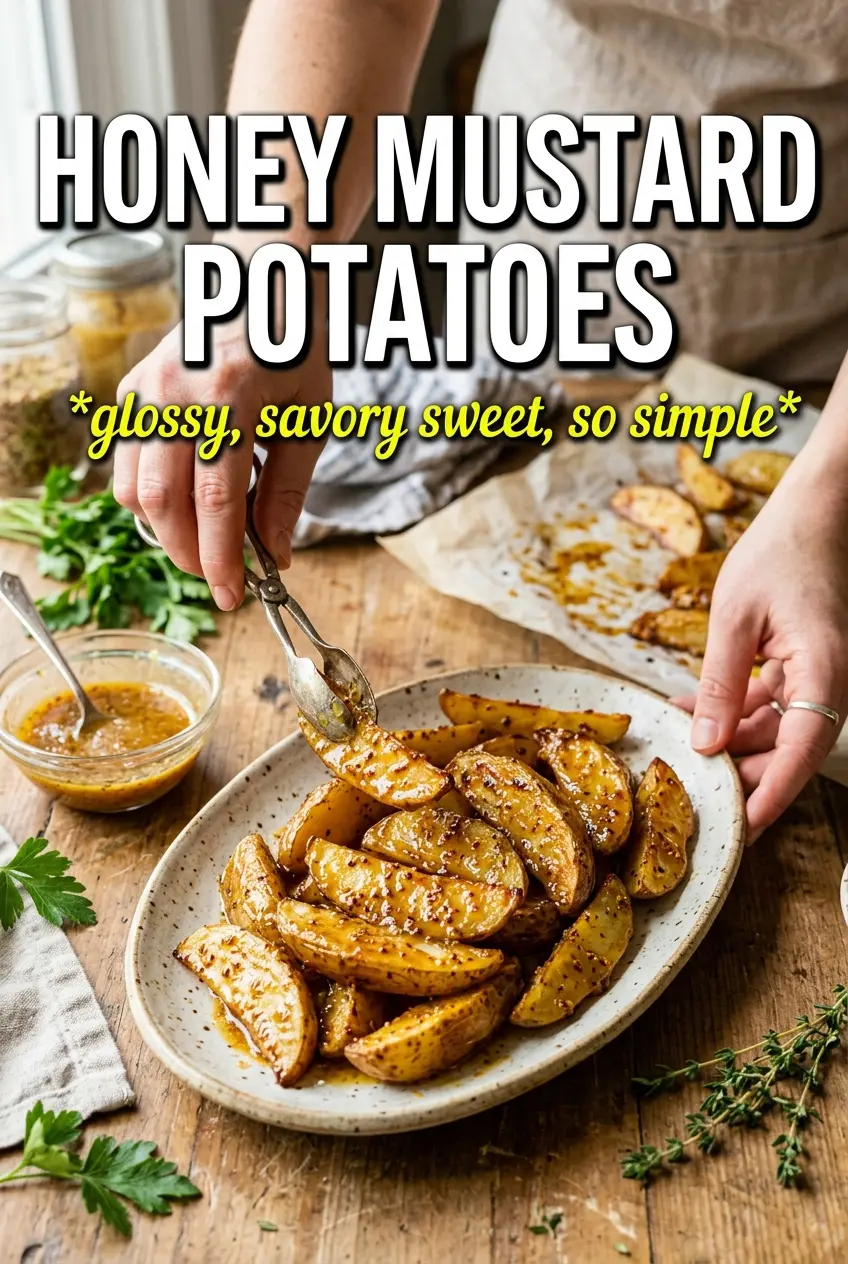
When the potatoes are deeply golden and the edges look lacquered, pull them from the oven and finish with parsley and flaky salt. The parsley cuts through the richness, and the flaky salt wakes up the glaze right at the end. If you add the salt too early, it can melt into the glaze and disappear instead of giving you that final pop.
How to Change These Potatoes Without Losing the Good Part
Dairy-Free and Naturally Gluten-Free
This recipe already fits both diets as written, which is part of why it’s such an easy side to bring to a mixed table. Just check your mustard label if you’re cooking for someone with a gluten sensitivity, since a few brands use additives that aren’t obvious at first glance. The texture and browning stay the same.
Make It Less Sweet, More Sharp
Cut the honey back by a tablespoon and add a little more Dijon if you want a punchier, less glazed finish. The potatoes will still caramelize, but the final flavor leans more savory and mustard-forward. This is the version I make when the potatoes are going next to something rich, like pork or sausage.
Use Red Potatoes or Fingerlings
Both work well as long as you cut them into similar-sized pieces so they finish at the same time. Fingerlings give a slightly firmer bite, while red potatoes stay tender and creamy inside. The only thing that changes is the texture of the center; the glaze behaves the same.
Storage and Reheating
- Refrigerator: Store in an airtight container for up to 4 days. The glaze softens a little as it sits, but the flavor holds well.
- Freezer: They freeze, but the texture isn’t ideal. The potatoes can turn a little grainy after thawing, so I only freeze them if I’m okay using them in a hash or breakfast skillet later.
- Reheating: Rewarm on a sheet pan in a 400F oven until the edges sharpen back up. The microwave will heat them, but it also turns the glaze loose and the potatoes soft.
Questions I Get Asked About This Recipe
Honey Mustard Potatoes
Ingredients
Equipment
Method
- Preheat the oven to 425F and line a sheet pan with parchment or foil for easy cleanup, then keep the pan hot while you assemble the potatoes.
- Whisk Dijon mustard, whole grain mustard, honey, olive oil, apple cider vinegar, garlic, fresh rosemary, smoked paprika, salt, and pepper until smooth and glossy, then set it aside.
- Toss the halved baby potatoes or Yukon golds in the honey mustard mixture until evenly coated, then spread them on the sheet pan in a single layer.
- Roast for 30-35 minutes at 425F, tossing halfway, until the potatoes are caramelized and golden with visible browned edges.
- Finish by sprinkling fresh parsley and flaky salt over the hot potatoes so they cling and taste bright.