Honey pepper chicken pasta lands in that sweet spot between weeknight comfort and restaurant-style payoff. The sauce turns glossy and clingy instead of watery, the chicken stays savory under a bright hit of honey, and every bite carries enough black pepper to keep the sweetness in check. It’s the kind of pan pasta that disappears fast because it tastes finished, not rushed.
What makes this version work is balance. The honey brings body and shine, the soy sauce deepens the base without making it taste overtly Asian, and the cornstarch slurry gives you a sauce that coats the pasta instead of pooling in the bowl. The black pepper isn’t background seasoning here; it’s part of the structure. Use a generous hand or the dish will lean too sweet.
Below you’ll find the small details that keep the sauce smooth, the chicken juicy, and the pasta from turning heavy. There’s also a few smart swaps if you need to work with what’s already in the kitchen.
The sauce thickened up beautifully and coated the penne instead of sliding off. I added a little extra black pepper at the end and the sweet-salty balance was spot on.
Save this honey pepper chicken pasta for the night you want glossy sauce, tender chicken, and a peppery finish without a complicated sauce pan.
The Sauce Fails When the Pepper Gets Treated Like an Afterthought
This dish only works when the pepper is part of the sauce, not something sprinkled on at the end and called good. The honey brings sweetness and shine, but the black pepper and red pepper flakes give it backbone, which is what keeps the finished bowl from tasting flat. If you’ve ever had a honey sauce that felt sticky in a one-note way, this is where the fix lives.
The other mistake is rushing the sauce once the broth and honey hit the pan. Let it simmer long enough for the garlic to soften and the liquid to take on a slightly syrupy edge before the slurry goes in. If you thicken too early, the sauce can taste raw and thin at the same time. A short simmer gives it depth, and that’s what lets it cling to penne instead of running to the bottom of the bowl.
What Each Ingredient Is Actually Doing in This Dish
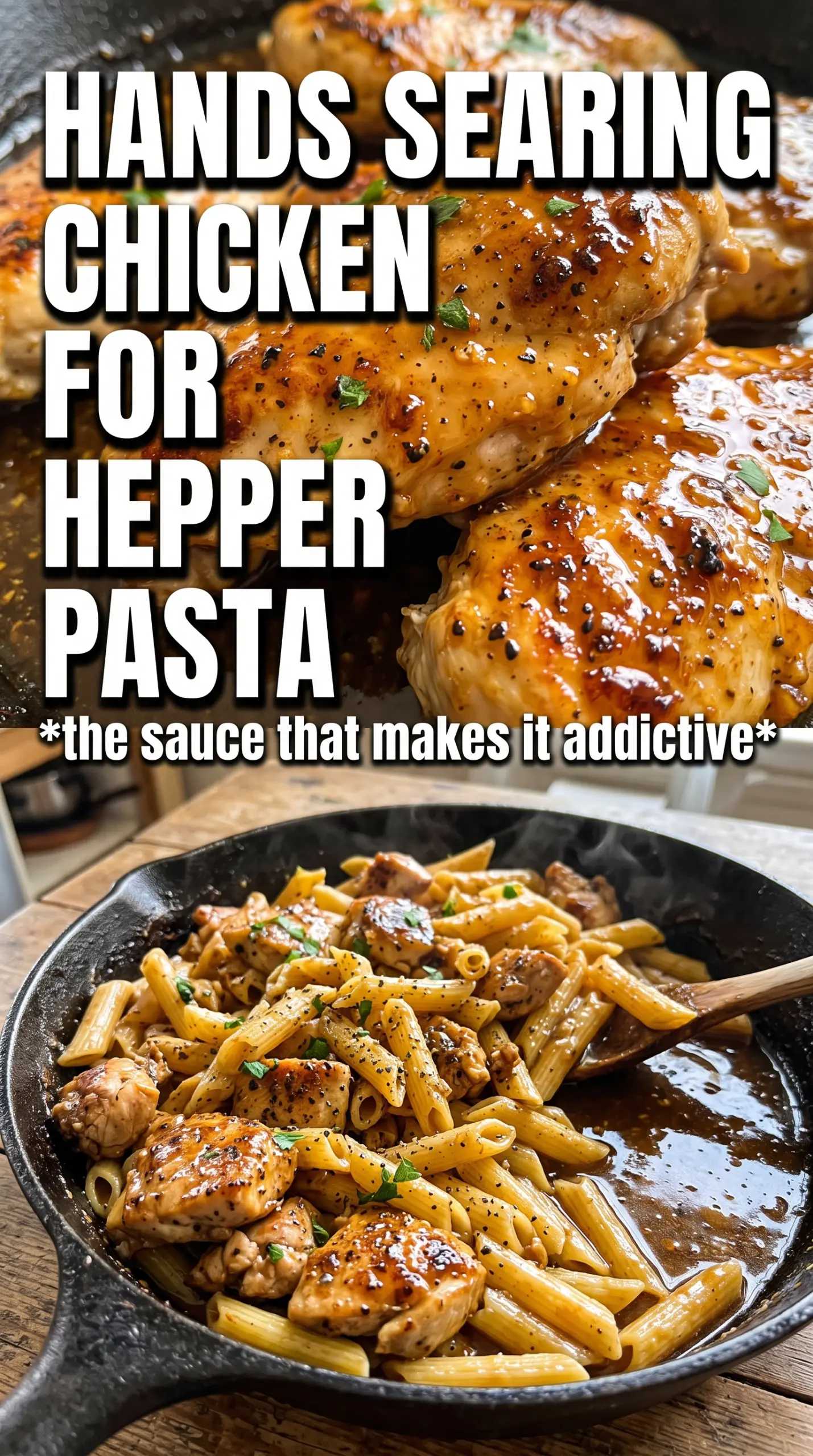
- Chicken breast — Slicing it thin helps it sear fast and stay tender. If the pieces are thick, the outside overcooks before the center is done.
- Honey — This is the sweetness and the gloss. There isn’t a clean substitute that behaves the same way, though maple syrup can work in a pinch and gives a deeper, earthier finish.
- Soy sauce — It pulls the sauce away from cloying sweetness and adds salt plus depth. Low-sodium soy sauce works well if you want more control over the seasoning.
- Black pepper — Don’t reduce it unless you want a much milder sauce. It’s not just heat; it sharpens the honey and makes the whole dish taste more intentional.
- Cornstarch slurry — This is what turns the sauce from thin to glossy. Add it while the sauce is simmering, not boiling hard, or it can turn a little ropey.
- Parmesan — It adds salt, body, and a little nutty finish. Grated Parmesan melts in smoothly; pre-shredded can work, but it won’t disappear as cleanly into the sauce.
Getting the Chicken and Sauce to Come Together Cleanly
Brown the Chicken First
Season the sliced chicken with salt and black pepper, then sear it in butter until the edges turn golden and the center is just cooked through. Thin slices cook fast, so watch the color more than the clock. If the pan is crowded, the chicken will steam instead of browning, and you’ll lose the savory base that makes the sauce taste richer. Pull it out once it’s done; it goes back in later.
Build the Sauce in the Same Pan
Use the same pan for the garlic, broth, honey, soy sauce, black pepper, and red pepper flakes. Those browned bits left behind by the chicken dissolve into the sauce and give you more flavor than starting from a clean pan ever could. Let the garlic cook for about a minute only, just until it smells fragrant. If it browns, the sauce can pick up a bitter edge.
Thicken, Toss, and Finish Fast
Stir in the cornstarch slurry and simmer until the sauce turns glossy and lightly coats the back of a spoon. Add the cooked pasta and a splash of reserved pasta water if it needs loosening; the starch in that water helps the sauce cling instead of thinning it out. Return the chicken, add Parmesan, and toss until everything looks evenly coated. Finish with parsley right before serving so the bowl stays bright.
Three Ways to Make This Work in Your Kitchen
Dairy-Free Version
Swap the butter for olive oil and skip the Parmesan, or finish with a dairy-free hard cheese if you use one that melts well. The sauce will still be glossy and balanced, but it loses a little of the round, savory finish that Parmesan gives. Add a pinch more salt at the end to replace that missing depth.
Gluten-Free Pasta Swap
Use a sturdy gluten-free penne or rigatoni and cook it just to tender, not soft. Gluten-free pasta can break apart if it sits too long in the sauce, so toss and serve right away. Keep a little extra pasta water nearby, since GF pasta often needs more help loosening the sauce.
Lower-Sugar Balance
Reduce the honey slightly and add a small splash more broth plus a touch more soy sauce to keep the sauce from tasting thin. You’ll lose some of the sticky glaze, but the result still tastes complete if you lean harder on the pepper and Parmesan. This works best if you’re after a less sweet dinner, not a fully sugar-free one.
Chicken Thigh Option
Boneless chicken thighs work well if you want a richer, juicier bite. They take a minute or two longer to cook, but they’re more forgiving if you get distracted at the stove. The sauce tastes a little deeper with thighs, which is a nice match for the honey and pepper.
Storage and Reheating
- Refrigerator: Store in an airtight container for up to 4 days. The pasta will absorb some sauce as it sits, so it thickens up.
- Freezer: It freezes, but the pasta softens a bit after thawing. Freeze in portions for up to 2 months if you don’t mind a softer texture.
- Reheating: Warm it gently on the stove or in the microwave with a splash of broth or water. High heat can make the sauce too tight and dry out the chicken, so heat just until it loosens and steams through.
Answers to the Questions Worth Asking
Honey Pepper Chicken Pasta
Ingredients
Equipment
Method
- Cook the penne or rigatoni in salted water until al dente, then reserve 1/2 cup pasta water before draining. Set aside the pasta and pasta water for later tossing.
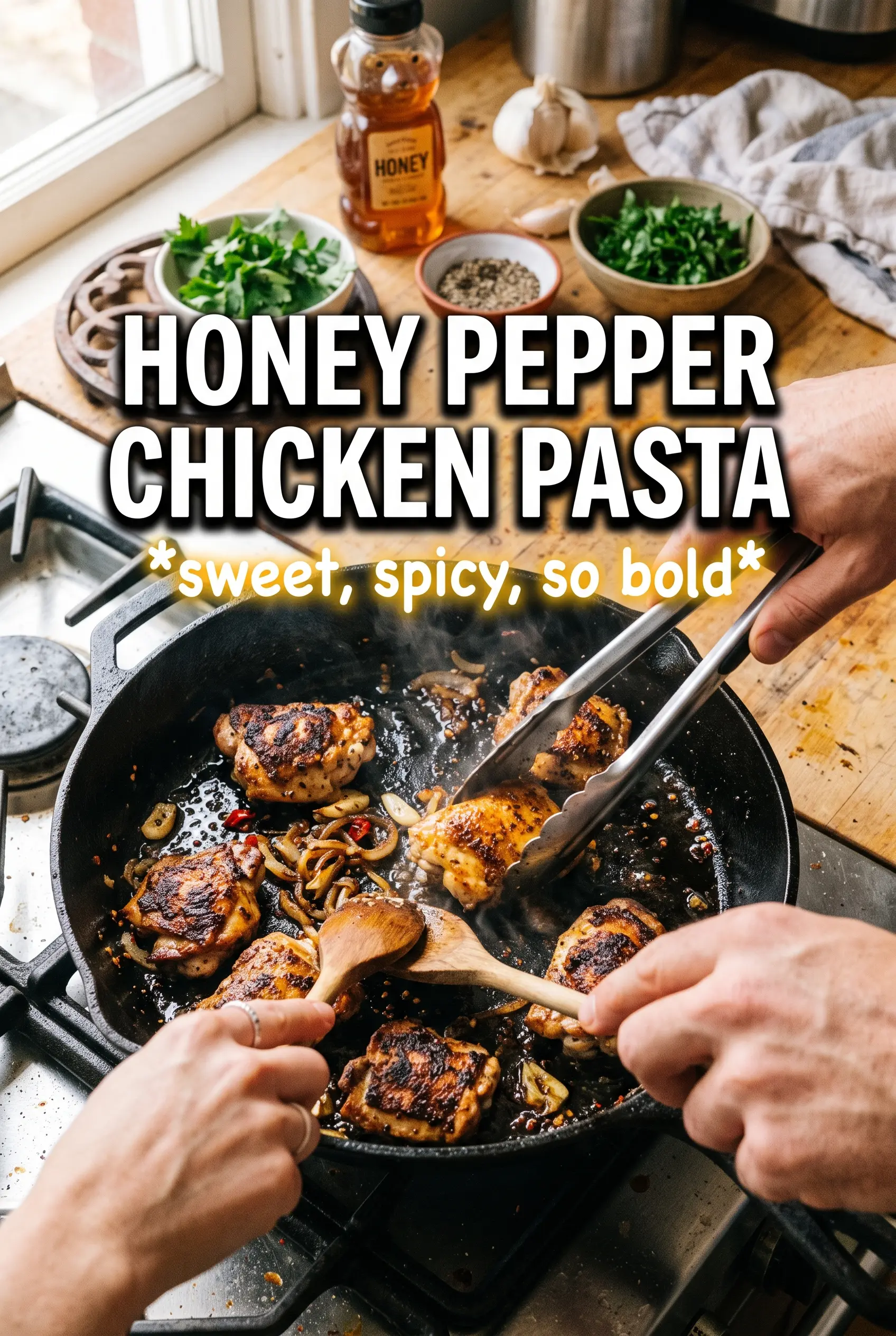
- Pat the sliced chicken breast dry, then season it with salt and the generous black pepper. Heat the butter in a cast iron skillet over medium-high and sear the chicken 4-5 minutes per side until golden, then remove and slice.
- In the same skillet, sauté the minced garlic for 1 minute until fragrant, stirring constantly. Avoid browning so the garlic stays sweet rather than bitter.
- Add chicken broth, honey, soy sauce, black pepper, and red pepper flakes to the skillet and bring to a simmer. Cook 2-3 minutes to meld flavors.
- Whisk the cornstarch slurry (cornstarch + 2 tablespoons water) into the sauce, then simmer until thickened, about 2-4 minutes. Stir often to remove any lumps and achieve a glossy coating consistency.
- Toss the cooked pasta with the sauce, adding reserved pasta water as needed to loosen it. Return the sliced chicken to the skillet and toss until everything is evenly coated.
- Turn off the heat and finish by stirring in the parmesan. Top with fresh parsley and serve immediately.