Honey roasted sweet potatoes come out with crisp, caramelized edges, soft centers, and a glossy finish that tastes like much more effort than it takes. The honey and brown sugar turn the cut sides burnished and sticky, while cinnamon and smoked paprika keep the sweetness grounded instead of one-note. They land on the table looking simple, but the pan usually comes back scraped clean.
The part that matters most is the roast itself. Sweet potatoes need space and high heat, or they steam and go soft before the sugars have a chance to brown. A little butter helps the glaze cling, olive oil keeps it from turning heavy, and rosemary adds a savory edge that makes the whole dish feel balanced instead of sugary. The flaky salt at the end is not decoration; it wakes everything up.
Below you’ll find the trick for getting real caramelization without burning the honey, plus a few smart swaps for making these work with what you already have in the kitchen.
The cubes caramelized beautifully at 425, and tossing them halfway kept the bottoms from sticking. The rosemary and flaky salt at the end made them taste way less sweet and more balanced.
Keep these honey roasted sweet potatoes handy for the nights when you want a glossy, caramelized side with almost no extra cleanup.
The Real Reason Sweet Potatoes Need Space to Brown
Sweet potatoes are naturally high in moisture, which is why crowded pans turn them soft before the edges ever caramelize. A single layer matters more here than almost anywhere else in roasting. If the cubes are stacked or touching too tightly, the steam trapped between them keeps the honey from browning and leaves you with a glossy but pale tray.
The other thing people miss is the sugar balance. Honey alone can scorch before the centers finish cooking, especially at 425F, so the butter and olive oil help distribute the heat and keep the coating from tasting burnt. Brown sugar reinforces the caramelized crust, while the cinnamon and smoked paprika keep the sweetness from reading flat.
- Single layer: This is what gives you edges that darken instead of a pan full of soft cubes.
- High heat: 425F is hot enough to brown the sugars before the potatoes collapse.
- Tossing halfway: It exposes fresh surfaces to the pan so more sides can caramelize.
What Each Ingredient Is Actually Doing in This Dish
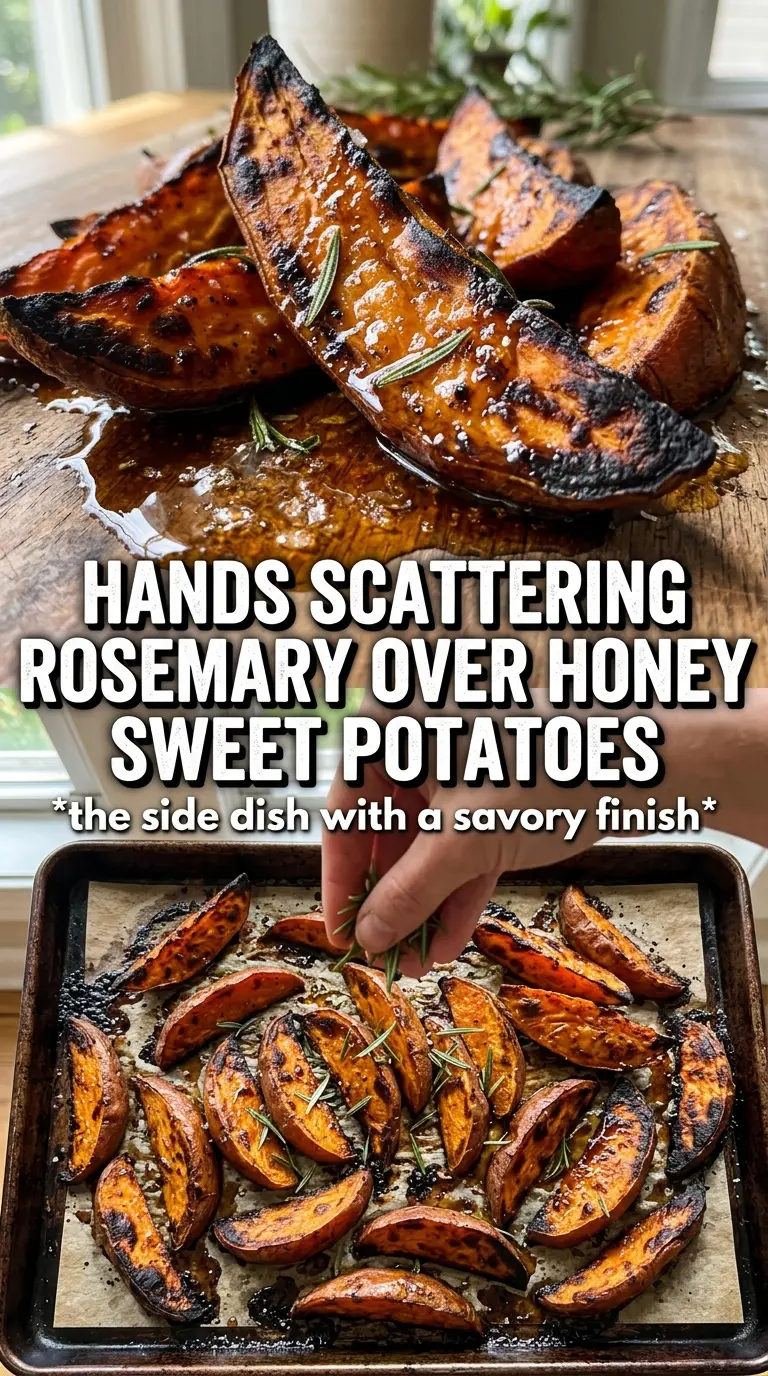
- Sweet potatoes: Choose firm, evenly sized potatoes so the cubes roast at the same pace. Larger cubes hold their shape better and give you better contrast between the crisp exterior and soft center.
- Honey: This is the glaze. Maple syrup works in a pinch, but honey gives a tighter, stickier finish and a more noticeable shine.
- Butter and olive oil: Butter adds flavor and helps the spices cling; olive oil keeps the coating from tasting heavy and supports browning. You need both for the best texture.
- Brown sugar: It deepens the caramel notes and helps the edges darken faster. You can leave it out, but the potatoes will taste less rounded.
- Smoked paprika and cayenne: These keep the dish from tipping too sweet. The cayenne is optional, but even a tiny bit gives the glaze a little lift.
- Fresh rosemary: Use chopped rosemary, not whole needles, so it disperses evenly and doesn’t feel woody on the bite.
The 30 Minutes That Turn Glazed Cubes Into Caramelized Sweet Potatoes
Coating the Potatoes Evenly
Start with a large bowl so you can toss the cubes without breaking them up. The honey and butter need to coat every cut side, because the exposed surfaces are what brown first. If the mixture looks patchy, keep tossing until the cubes pick up a glossy, even sheen. Dry spots will roast faster than coated spots and can scorch before the rest of the pan is ready.
Roasting Without Steaming
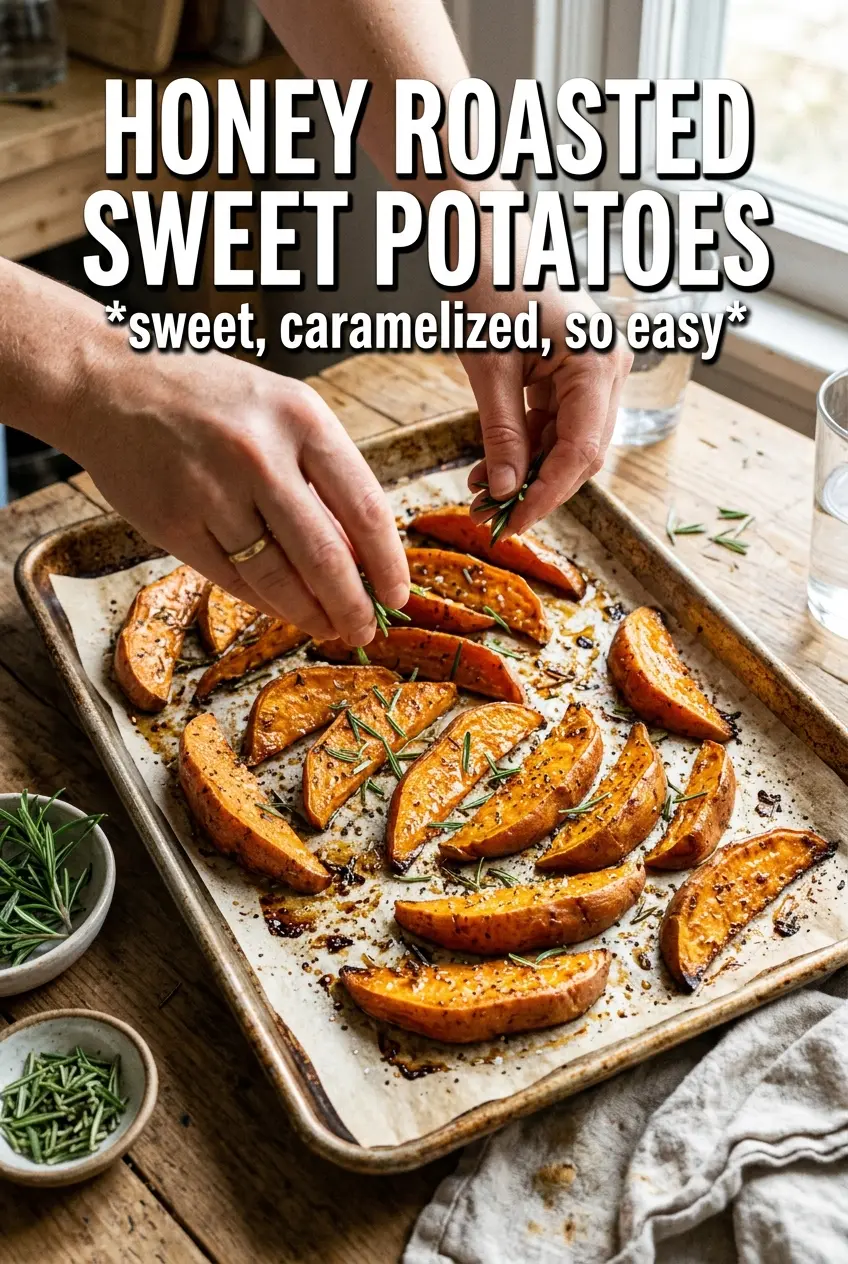
Spread the sweet potatoes on a lined baking sheet in a single layer and leave a little breathing room between pieces. If the pan is packed, the bottom layer steams and you lose the browned edges that make this side dish worth making. Roast at 425F for 30 to 35 minutes, and pull the pan halfway through to toss so the lower sides can hit the hot pan again. You’re looking for deep golden edges, soft centers, and some darker caramelized spots, not a uniform pale gloss.
Finishing for Balance
The flaky salt goes on after roasting, not before. That last pinch sharpens the sweetness and makes the rosemary stand out. Fresh thyme adds a clean herbal note, but use it sparingly so it doesn’t compete with the honey glaze. Serve them right away while the edges are still crisp and the coating is tacky, not fully set.
Make Them Dairy-Free
Swap the butter for more olive oil or a plant-based butter that browns well. Olive oil gives a lighter finish and a cleaner roast flavor, while plant butter brings back some of the richness and helps the spices cling.
Skip the Heat, Keep the Flavor
Leave out the cayenne if you want a sweeter side dish. You won’t lose any caramelization, but the final flavor will lean more toward dessert-like warmth than a sweet-savory balance.
Make It Gluten-Free Without Changing Anything
This recipe is naturally gluten-free as written, so there is nothing to swap. Just check your spices and honey if you’re working from a shared pantry where cross-contact might matter.
Turn It Into a Bigger Batch
Double the ingredients only if you use two baking sheets. If you pile the potatoes onto one pan, they will steam and soften instead of roasting, which is the fastest way to lose the texture this recipe is built for.
Storage and Reheating
- Refrigerator: Store in an airtight container for up to 4 days. The edges soften after chilling, but the flavor holds up well.
- Freezer: They freeze, but the texture turns softer after thawing. Freeze in a single layer first, then transfer to a bag or container for up to 2 months.
- Reheating: Reheat on a sheet pan in a 400F oven until hot and the edges start to crisp again. The microwave works for speed, but it will wipe out the caramelized texture.
Answers to the Questions Worth Asking
Honey Roasted Sweet Potatoes
Ingredients
Equipment
Method
- Preheat the oven to 425F and line a baking sheet for easy cleanup.
- Toss sweet potato cubes with honey, melted butter, olive oil, brown sugar, cinnamon, smoked paprika, cayenne, fresh rosemary, salt, and pepper until evenly coated.
- Spread the cubes in a single layer on the baking sheet so they roast rather than steam.
- Roast for 30-35 minutes, tossing halfway, until caramelized and golden at the edges.
- Finish with flaky sea salt and fresh thyme for bright flavor and a fresh, fragrant cue.