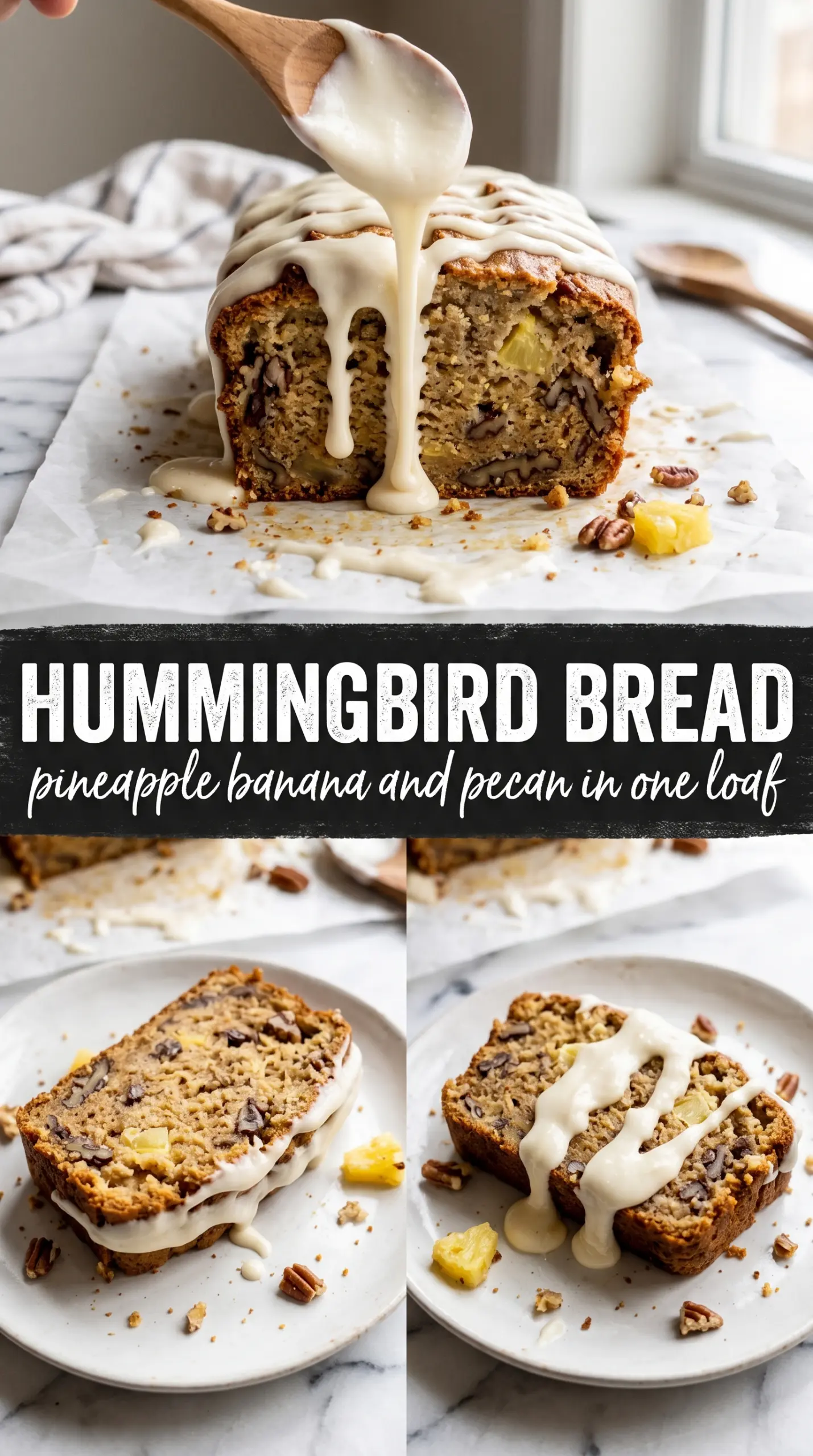
Hummingbird bread bakes into a tender, fragrant loaf with banana, pineapple, and toasted pecans in every slice. The crumb stays moist without turning heavy, and the cream cheese frosting gives each piece just enough tang to balance the sweetness. It’s the kind of quick bread that disappears fast because it feels familiar and a little special at the same time.
What makes this version work is the moisture balance. Mashed banana and crushed pineapple both bring softness, but the flour and pecans keep the loaf from collapsing into something gummy. The pineapple goes in with its juice, which sounds like a lot until you taste the finished bread and realize that’s where the tropical flavor and tenderness come from. Toasting the pecans first matters too; it deepens their flavor and keeps them from tasting flat against the sweet loaf.
Below, I’ve included the trick for keeping the top from overbrowning before the center sets, plus a few smart swaps if you want to make the loaf a little lighter or skip the frosting.
The loaf came out incredibly moist and the pineapple flavor stayed bright without making it soggy. I covered the top with foil for the last 15 minutes and it baked through perfectly, then the cream cheese frosting set up beautifully once it cooled.
Save this hummingbird bread for the mornings when you want banana, pineapple, and cream cheese frosting in one soft, pecan-topped loaf.
The Part That Keeps Hummingbird Bread Moist Instead of Dense
Hummingbird bread has a reputation for being rich, but it only turns heavy when the batter is overmixed or the fruit balance is off. The batter should look thick but still soft, with visible banana and pineapple moving through it. If you beat it like a cake batter, the flour tightens up and the loaf loses that tender, almost plush crumb people expect from a good hummingbird loaf.
The other common failure is underbaking the center because the top looks done early. Pineapple adds a lot of moisture, and that moisture needs time to cook off in the middle. If the crust is getting dark before the middle is set, lay foil loosely over the pan and keep baking until the center springs back and a tester comes out clean, not wet.
- Bananas — Use ripe bananas with lots of brown speckles. They mash smoothly and bring sweetness plus the soft texture that gives the loaf its banana bread backbone.
- Crushed pineapple with juice — Don’t drain it. The juice is part of the recipe, and it keeps the loaf moist while giving it the signature hummingbird flavor.
- Toasted pecans — Toasting changes everything here. Untoasted pecans can taste dull against the sweet batter, while toasted pecans add warmth and a little crunch.
- Cream cheese frosting — This is the finish that makes the loaf feel complete. The tang cuts through the sugar and makes each slice taste balanced instead of sugary.
What Each Ingredient Is Actually Doing in This Loaf
- Vegetable oil — Oil keeps the crumb soft for days, which is exactly what you want in a fruit-heavy quick bread. Butter can work, but it firms up more as the loaf cools, so the texture won’t stay as tender.
- Sugar — The sugar does more than sweeten. It also helps the loaf brown and keeps the crumb soft, especially with all the fruit moisture in the batter.
- All-purpose flour — Standard all-purpose flour is the right call here because it gives the loaf enough structure without making it chewy. If you swap in whole wheat, use part whole wheat only, or the bread gets too dense and dry.
- Baking soda — This loaf needs baking soda to react with the acidic fruit and help it rise. If your bread seems flat, old baking soda is often the reason.
- Cinnamon — It doesn’t overpower the fruit; it just rounds out the banana and pineapple so the loaf tastes warmer and more complete.
- Pecans — Chop them after toasting so you get uneven little pockets of crunch instead of fine crumbs. That texture contrast is part of what makes each slice interesting.
- Cream cheese, butter, powdered sugar, vanilla — Use softened cream cheese and butter or the frosting will stay lumpy. Beat it until smooth before adding the sugar, and the finish spreads cleanly over a fully cooled loaf.
Getting the Batter and Bake Time Right
Mixing the Wet Ingredients First
Start by whisking the oil, sugar, eggs, and vanilla until the mixture looks smooth and a little glossy. Then stir in the mashed banana and crushed pineapple with all of its juice. That sequence matters because it helps the sugar dissolve and keeps the fruit from clumping at the bottom of the bowl.
Adding the Dry Ingredients Without Toughening the Loaf
Fold in the flour, baking soda, cinnamon, and salt just until the dry streaks disappear. The batter should still look a little rough. If you keep stirring after that point, the loaf bakes up tighter and loses the soft crumb that makes hummingbird bread worth making.
Watching the Center, Not Just the Top
Pour the batter into the prepared pan and bake until the loaf is deeply golden and a tester comes out clean. Expect the top to color before the middle is finished because the fruit makes the loaf bake wetter than plain banana bread. If the top is getting too dark, cover it loosely with foil and keep going until the center is set and no longer damp.
Frosting a Fully Cooled Loaf
Let the loaf cool all the way before you spread on the cream cheese frosting. Warm bread melts the frosting into the crumb, and you lose that thick, creamy layer on top. Finish with more toasted pecans while the frosting is still soft so they stick instead of sliding off.
How to Change This Loaf Without Losing What Makes It Good
Skip the Frosting and Keep It Breakfast-Ready
Leave off the cream cheese frosting and the loaf becomes a sturdy breakfast or snack bread that still tastes complete. The pineapple and banana keep it moist enough on their own, and the toasted pecans give it enough texture that you won’t miss the topping.
Make It Dairy-Free
The loaf itself is already dairy-free, so the main change is the frosting. Use a dairy-free cream cheese and plant-based butter, or skip the frosting entirely and dust the cooled loaf with powdered sugar. The texture of the bread stays the same.
Swap the Pecans for Walnuts
Walnuts work if that’s what you have, but they taste a little earthier and less sweet than pecans. Toast them the same way so they still stand up to the banana and pineapple, then chop them coarsely for the best texture.
Reduce the Sugar Slightly
You can cut the sugar by a couple of tablespoons if your bananas are very ripe or if you plan to frost the loaf generously. Don’t reduce it too far, though, or the bread loses some of its softness and browning.
Storage and Reheating
- Refrigerator: Store frosted or unfrosted loaf in an airtight container for up to 5 days. The crumb stays moist, but the frosting will firm up in the fridge.
- Freezer: Freeze the unfrosted loaf for up to 3 months, wrapped tightly and sealed well. Frosting doesn’t freeze as nicely, so add it after thawing for the best texture.
- Reheating: Warm slices briefly in the microwave or a low oven until just heated through. If the loaf is frosted, reheat only until the bread is warm and the frosting starts to soften, not melt.
Questions I Get Asked About This Recipe
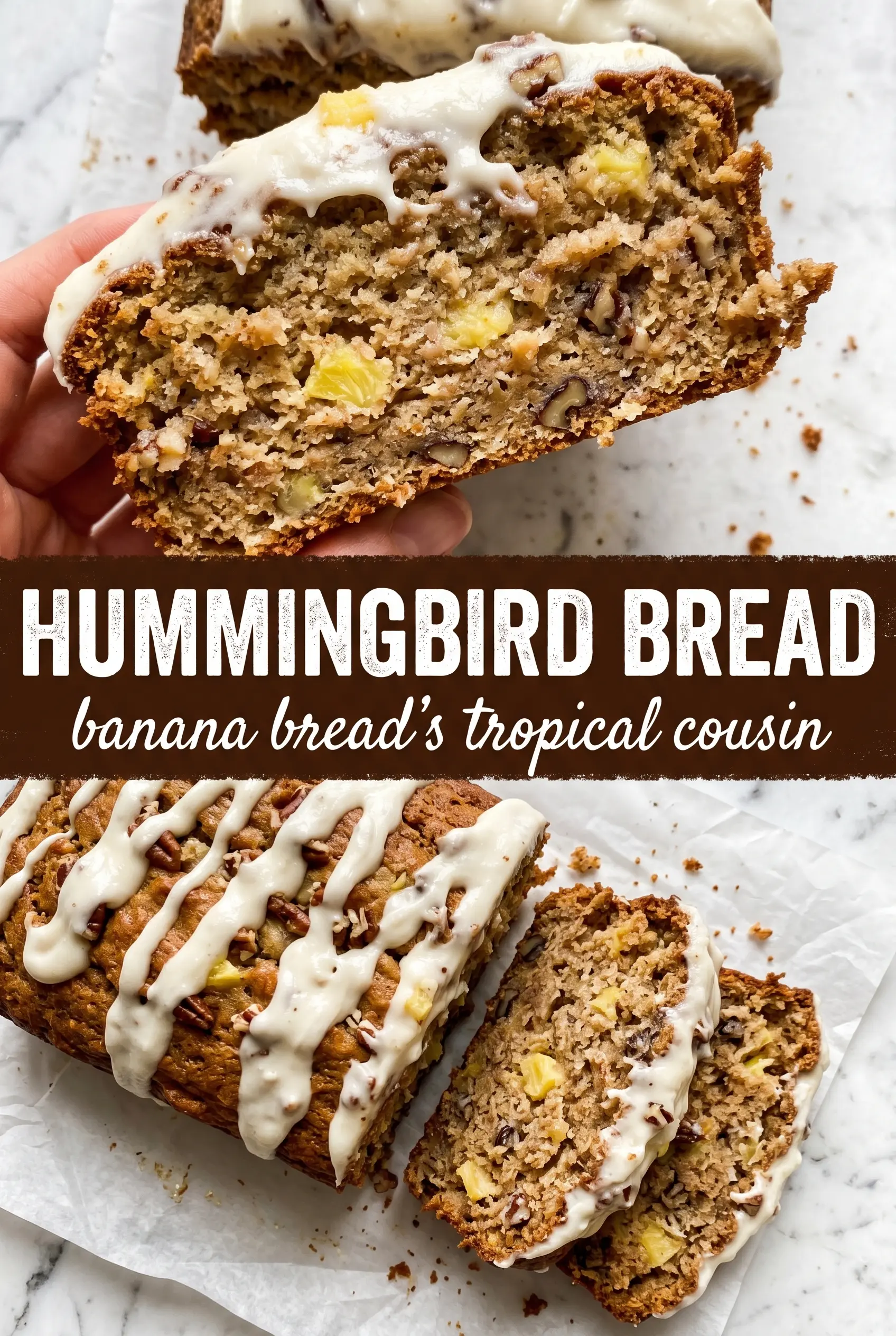
Hummingbird Bread
Ingredients
Equipment
Method
- Preheat the oven to 350°F and grease a 9x5 loaf pan.
- Whisk vegetable oil, sugar, eggs, and vanilla extract together.
- Stir in mashed ripe bananas and crushed pineapple with all its juice.
- Fold in all-purpose flour, baking soda, cinnamon, and salt until just combined.
- Fold in toasted pecans and chopped pecans.
- Pour the batter into the loaf pan.
- Bake for 60–70 minutes at 350°F until deeply golden and a toothpick comes out clean; cover loosely with foil if the top browns too fast.
- Cool the loaf completely before frosting.
- Beat softened cream cheese, softened butter, powdered sugar, and vanilla until smooth.
- Spread the cream cheese frosting over the cooled loaf.
- Top with additional toasted pecans before serving.