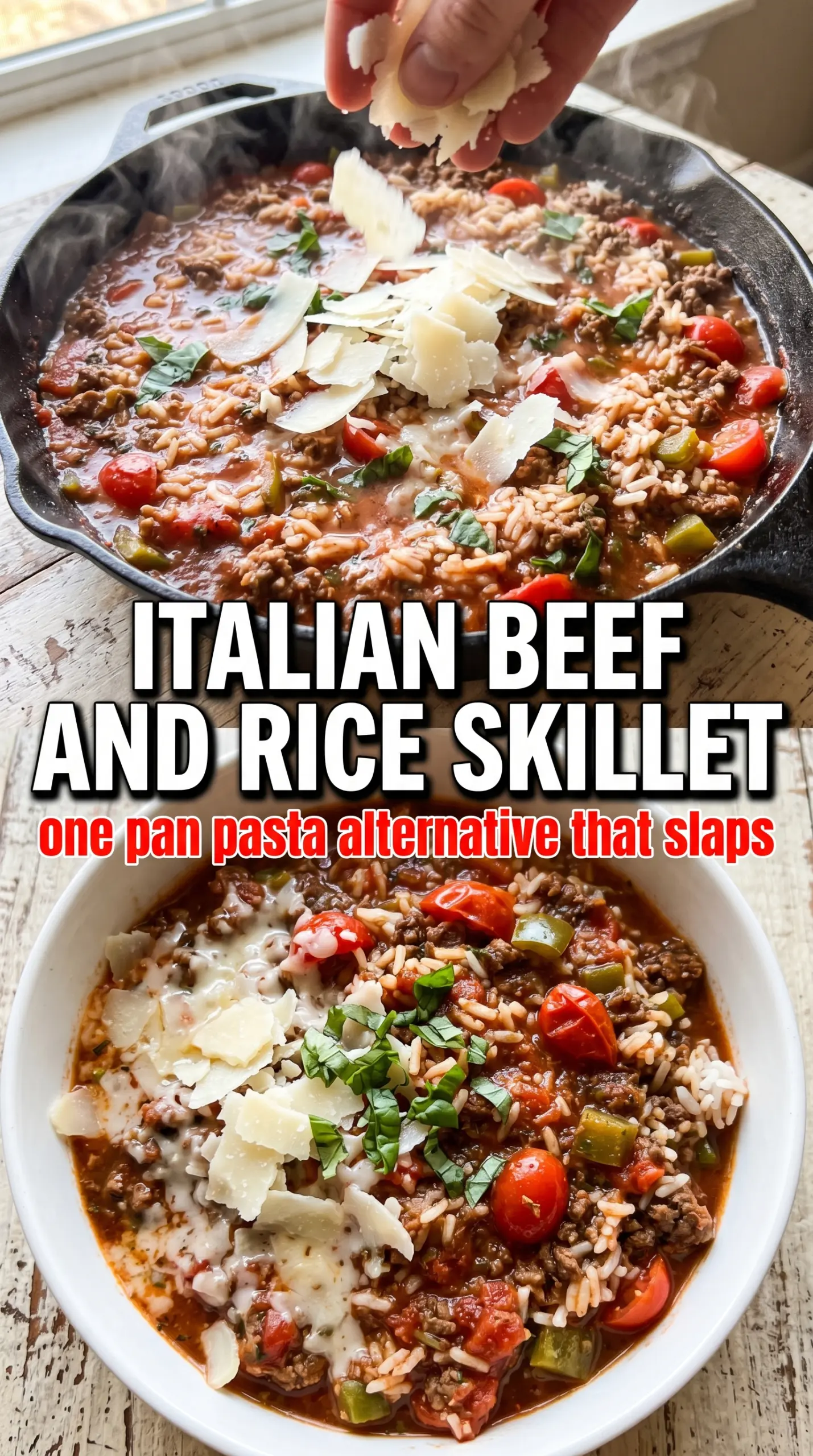
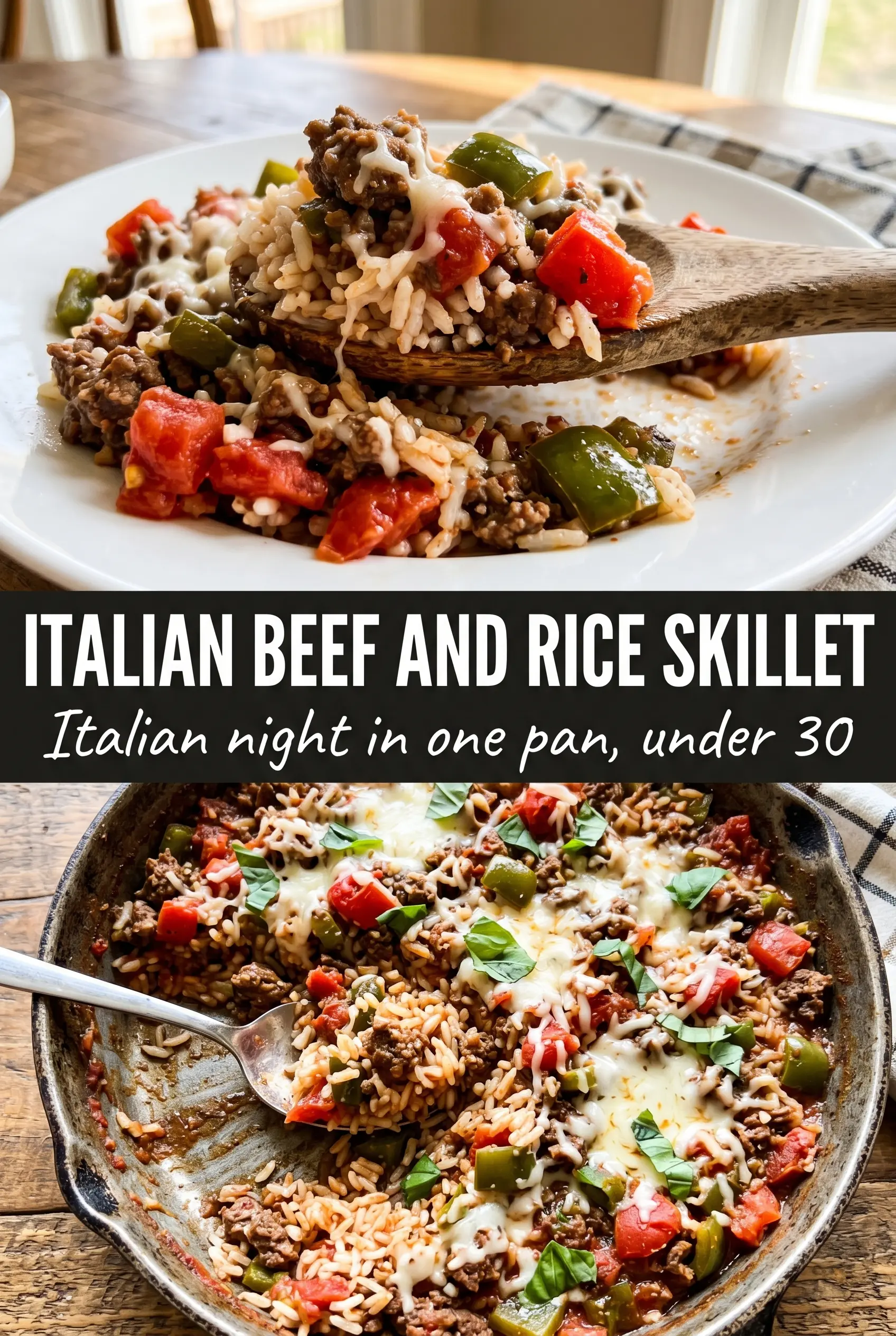
Savory beef, tender rice, and a blanket of melted mozzarella make this skillet dinner land on the table with the kind of comfort that doesn’t need much explaining. Everything cooks together in one pan, so the rice catches the seasoned tomato broth as it simmers and turns into something deeper than plain rice and beef. The finished dish is hearty without feeling heavy, and the basil at the end keeps it tasting fresh instead of flat.
What makes this version work is the order. Browning the beef with the onion and bell pepper builds the base, then the garlic and Italian seasoning bloom in the hot fat before the rice goes in. That brief step matters because it wakes up the herbs and keeps the broth from tasting thin. Long-grain white rice is the right choice here because it stays separate and fluffy instead of collapsing into a paste.
Below, I’ve included the small details that keep the rice tender, the skillet from drying out, and the cheese layer from turning greasy. If you’ve ever had a one-pan rice dinner come out uneven or bland, this method fixes the usual trouble spots.
The rice cooked through perfectly and soaked up all that tomato-beef flavor without getting mushy. I also liked that the mozzarella melted on top instead of disappearing into the skillet.
Save this Italian Beef and Rice Skillet for a one-pan dinner with cheesy mozzarella and fluffy rice.
The Reason the Rice Stays Tender Instead of Turning to Mush
The biggest mistake in a skillet rice dinner is letting the liquid boil too hard once the rice goes in. That pushes the starch out fast and leaves you with a sticky, uneven pan. Here, the boil only gets the process started. As soon as the lid goes on, the heat drops to low so the rice can steam gently and absorb the broth at the same pace all the way through.
Another detail that matters is using long-grain white rice, not quick-cooking or a short-grain variety. Long-grain rice holds its shape better under pressure, which is exactly what you want when it’s cooking alongside beef, tomatoes, and melted cheese. If the pan looks a little loose when you lift the lid at 20 minutes, give it another couple of minutes covered off the heat before fluffing. That final rest finishes the texture without overcooking the bottom.
What Each Ingredient Is Actually Doing in This Skillet
- Ground beef — Use 80/20 if you can. It brings enough fat to carry the seasoning and build flavor, but still drains cleanly. Lean beef works too, though the skillet will taste a little drier, so don’t skip the broth.
- Onion and green bell pepper — These aren’t just filler. They give the beef a sweeter, more rounded base and help the whole dish taste cooked, not just mixed together. Dice them small so they soften before the rice starts absorbing liquid.
- Garlic and Italian seasoning — Garlic goes in after the beef browns so it doesn’t scorch. The seasoning needs that hot pan moment to bloom; if it goes in with cold liquid, it tastes flatter and more one-dimensional.
- Diced tomatoes — The tomatoes add acidity and enough moisture to keep the rice from tasting heavy. Use the can as written, juices and all. Draining them would throw off the liquid balance.
- Beef broth — This is where the savory backbone comes from. Stock can work, but broth usually tastes fuller in a one-pan meal like this. If you use low-sodium broth, season a little more boldly before covering the skillet.
- Mozzarella — Shred it yourself if you want the smoothest melt. Pre-shredded cheese works in a pinch, but it has anti-caking starches that make the top a little less silky.
Getting the One-Pan Cook Time Right
Browning the Beef and Softening the Vegetables
Start with a large skillet that has enough room for the rice to expand later. Cook the beef with the onion and bell pepper until the meat loses its pink color and the vegetables soften around the edges. If there’s a lot of grease in the pan, drain it off before moving on; too much fat can keep the rice from absorbing the broth evenly. The garlic goes in last and only needs a minute, just until it smells fragrant.
Simmering the Rice Under a Tight Lid
Once the rice, tomatoes, and broth are in, bring the pan to a real boil first. That gets the liquid moving before you turn the heat down, which helps the rice cook evenly from the start. Then cover the skillet and drop the heat to low. If the lid is loose, the rice on top can stay hard while the bottom goes soft, so use a snug cover and leave it alone for the full 20 minutes.
Melting the Cheese Without Stirring It In
When the rice is tender, fluff it once with a fork instead of stirring hard through the pan. Stirring can break the grains and turn the whole thing pasty. Scatter the mozzarella over the top, cover again, and let the residual heat melt it for a couple of minutes. The cheese should soften into a glossy layer, not sink into the rice or turn oily.
Finishing With Basil
Add the basil right at the end so it stays bright and fresh. If it goes in too early, it darkens and loses that clean herbal note that keeps the skillet from tasting heavy. A few torn leaves on top are enough. They give the whole dish a fresh finish and make the melted cheese look even more inviting.
How to Adapt This for Different Nights
Make It a Little Spicier
Increase the red pepper flakes to 3/4 teaspoon or add a pinch of crushed chili flakes at the end. This keeps the heat noticeable without overpowering the tomato and mozzarella. If you want a sharper kick, add a spoonful of chopped pepperoncini with the tomatoes.
Dairy-Free Version
Skip the mozzarella or use a dairy-free shred that melts well. The skillet still tastes complete because the beef, tomatoes, and herbs do the heavy lifting. Without the cheese, add a drizzle of olive oil at the end to give the rice a little extra richness.
Use Ground Turkey Instead of Beef
Ground turkey works well, but it needs a little help because it has less fat and a milder flavor. Brown it with a tablespoon of olive oil and season it a touch more aggressively. The finished skillet will be lighter and less rich, but still cozy and filling.
Storage and Reheating
- Refrigerator: Store in an airtight container for up to 4 days. The rice will firm up a little as it chills, but the flavor holds well.
- Freezer: It freezes fine for up to 2 months, though the rice softens slightly after thawing. Cool it completely first and freeze in portions for the easiest reheating.
- Reheating: Reheat covered in the microwave with a splash of broth or water, or warm it on the stove over low heat. The common mistake is blasting it on high, which dries out the rice before the center is hot.
Answers to the Questions Worth Asking
Italian Beef and Rice Skillet
Ingredients
Equipment
Method
- In a large skillet over medium-high heat, brown the ground beef with diced onion and green bell pepper until cooked through, then drain excess fat.
- Stir in minced garlic, Italian seasoning, red pepper flakes, salt, and pepper and cook for 30 seconds to bloom the spices.
- Add long-grain white rice, diced tomatoes, and beef broth, then bring the mixture to a boil while stirring.
- Reduce heat to low, cover, and cook for 20 minutes until the rice is tender.
- Fluff the rice with a fork, then top evenly with shredded mozzarella.
- Cover and heat for 2 minutes until the mozzarella is melted.
- Garnish with fresh basil and serve.