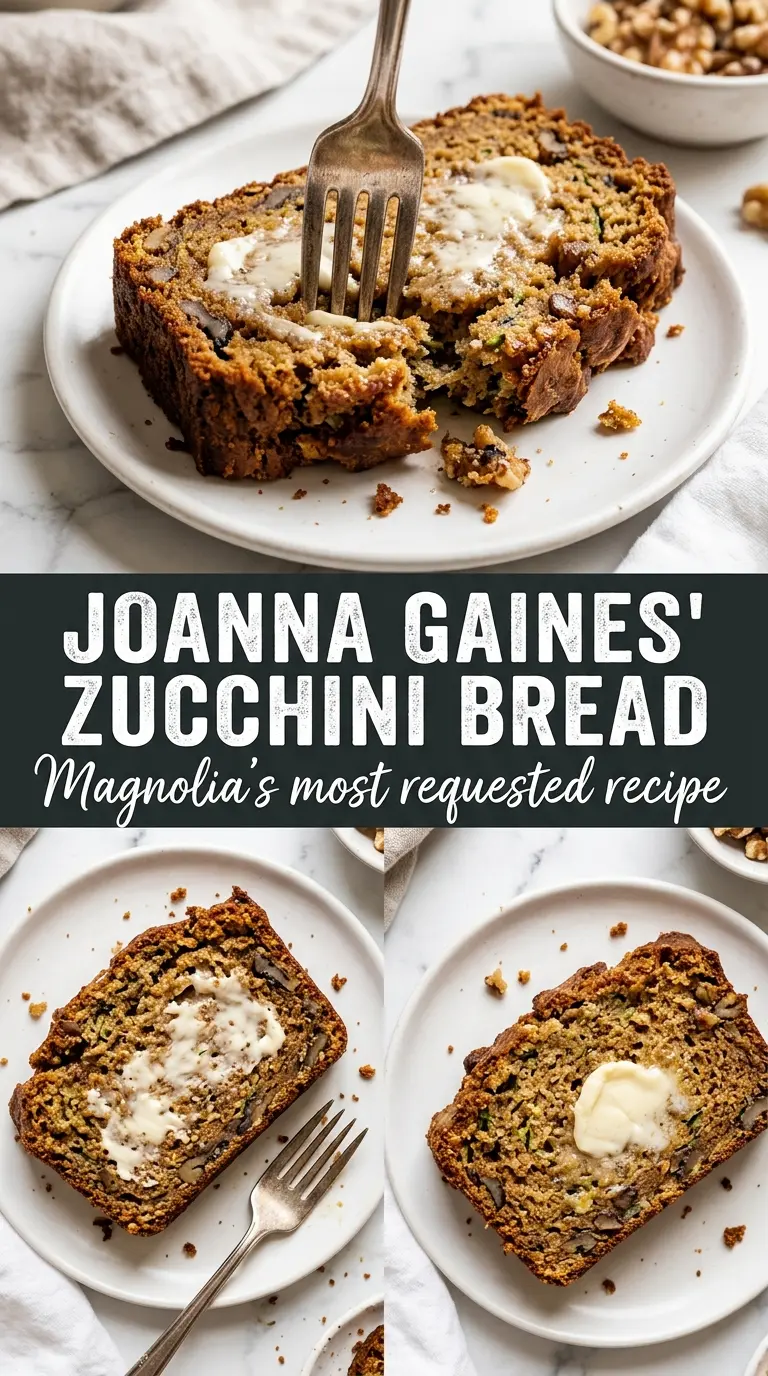
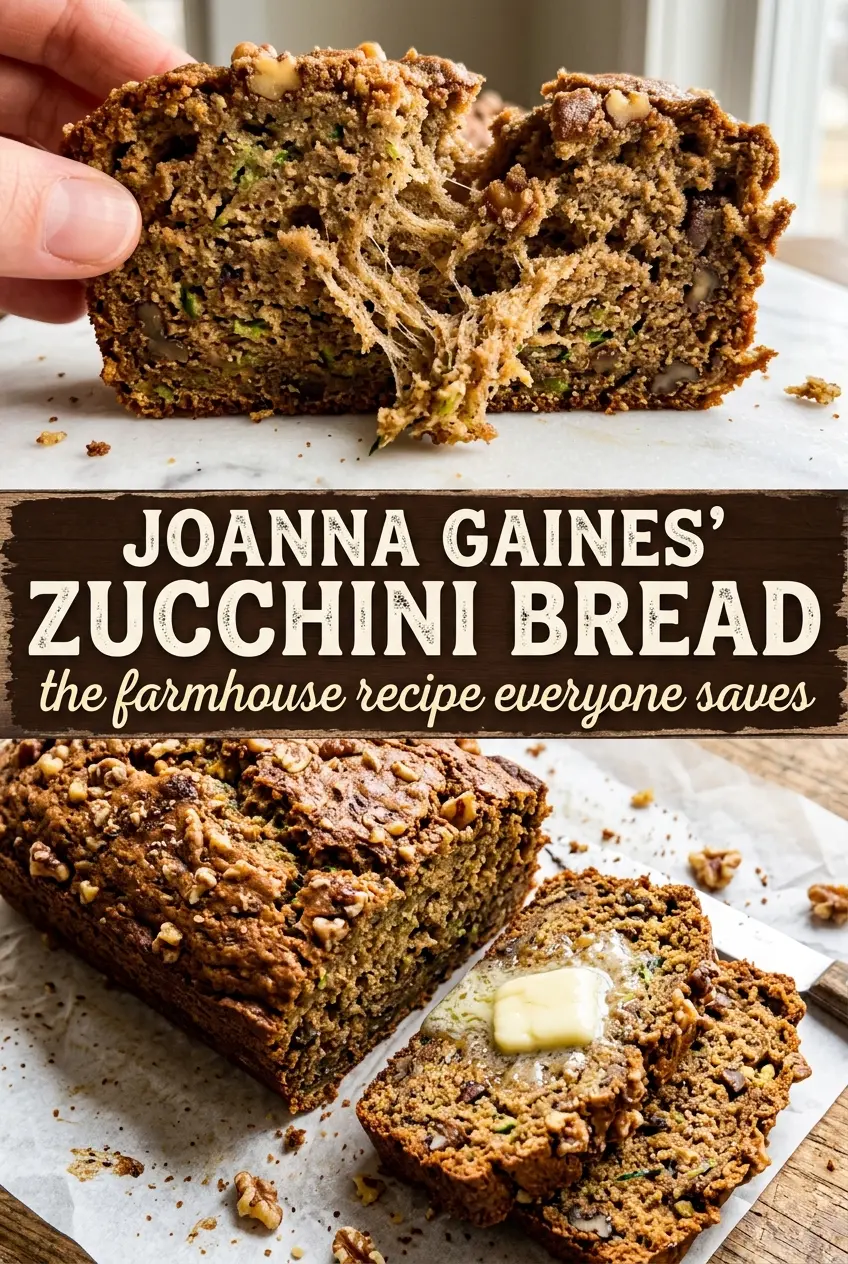
Joanna Gaines’ zucchini bread bakes up with a tall, domed top, a tender crumb, and that bakery-style crack right down the middle that makes you want to slice it while it’s still warm. The crumb stays moist for days without turning heavy, and the cinnamon-nutmeg background gives it that familiar, old-fashioned comfort people remember after one bite.
What makes this version work is the balance: plenty of zucchini for moisture, enough sugar to keep the loaf soft, and oil instead of butter so the texture stays plush even after it cools. The zucchini goes in unsqueezed, which sounds counterintuitive until you taste the result. That extra moisture is part of why the loaf stays so tender instead of drying out around the edges.
Below, I’ve included the small details that matter most, including why the top splits the way it does and what to do if you want to swap the walnuts or bake it as a single large loaf.
The loaf rose beautifully and the top split just like the photo. I left the zucchini unsqueezed, and the crumb stayed super moist for three days without getting gummy.
Like this Joanna Gaines’ zucchini bread? Save it to Pinterest for that tall domed top, moist crumb, and cinnamon-scented loaf everyone asks for again.
The Reason This Loaf Stays Moist Instead of Heavy
The biggest mistake with zucchini bread is overthinking the moisture. People squeeze the zucchini dry, then wonder why the loaf bakes up tighter and a little dusty around the edges. Here, the zucchini goes in grated and untouched, which helps the batter stay loose enough to rise while still baking into a tender slice.
The other thing that matters is how the batter is mixed. Once the dry ingredients go in, stop as soon as the flour disappears. If you keep stirring, the gluten tightens and the loaf turns tough instead of soft and cakey. This recipe wants a light hand, not a smooth batter.
What Each Ingredient Is Doing in This Zucchini Bread
- All-purpose flour — This gives the loaf enough structure to hold all that zucchini without collapsing. Bread flour is too sturdy here; it pushes the crumb toward chewy.
- Baking soda and baking powder — The soda reacts with the moisture and sugar, while the baking powder gives the loaf extra lift. If you only use baking soda, the bread can lean dense and dark.
- Cinnamon and nutmeg — These are the backbone of the flavor. Fresh nutmeg matters more than people think, because it gives the loaf that warm bakery smell the second it comes out of the oven.
- Vegetable oil — Oil keeps the crumb soft even after the loaf cools. Butter tastes great, but it sets firmer once cooled, which changes the texture of this particular bread.
- Unsqueezed zucchini — This is the ingredient that keeps the bread moist. If your zucchini looks especially watery, that’s fine; just grate it and add it as is.
- Turbinado sugar — The coarse sugar on top bakes into a crackly crust that gives each slice a little crunch. Regular sugar won’t give you the same finish.
- Walnuts — Optional, but they add a toasted bite that plays well with the soft crumb. Leave them out if you want a smoother, more classic loaf.
Building the Batter So the Loaf Rises Tall
Mix the dry ingredients first
Whisk the flour, leaveners, salt, cinnamon, and nutmeg together until the color looks even. That spreads the spice through the batter and keeps the baking soda from clumping in one spot. If you skip this, one slice can taste flat while another gets a bitter pocket.
Keep the wet mixture loose
Stir the sugar, eggs, oil, and vanilla until the mixture looks glossy and fully blended. You’re not whipping air into it here; you’re dissolving the sugar enough that it mixes cleanly with the zucchini. The batter should look smooth and a little thick before the zucchini goes in.
Fold in the zucchini at the very end
Add the grated zucchini straight into the wet mixture and stir just until it disappears. It will look wet and shaggy, and that’s exactly right. If you drain the zucchini first, the loaf loses the moisture that keeps it soft for days.
Stop mixing as soon as the flour is gone
Once the dry ingredients go in, stir only until you no longer see streaks of flour. A few small pockets are better than overmixing, which is the fastest way to make the crumb dense. If you’re adding walnuts, fold them in with just a few turns.
How to Adapt This Loaf Without Losing the Classic Texture
Make it nut-free
Leave out the walnuts and the loaf still bakes up soft and complete. You lose the little crunch and toasty finish, but the cinnamon-zucchini crumb stays exactly where it should be.
Turn it into muffins
Portion the batter into lined muffin cups and start checking around 20 to 24 minutes. You’ll lose the dramatic domed loaf top, but you gain faster bake time and crisp edges.
Gluten-free version
Use a 1:1 gluten-free flour blend that includes xanthan gum. The loaf will be a little more delicate when sliced warm, so let it cool fully before cutting.
Reduce the sugar slightly
You can cut the sugar by up to 1/2 cup if you prefer a less sweet loaf, but don’t take out more than that. Sugar isn’t just for sweetness here; it also helps hold the moisture and tenderness in the crumb.
Storage and Reheating
- Refrigerator: Store tightly wrapped for up to 5 days. The crumb stays moist, though the top crust softens a bit after day one.
- Freezer: This loaf freezes well. Wrap slices or whole loaves tightly in plastic, then foil, and freeze for up to 3 months.
- Reheating: Thaw at room temperature, then warm slices briefly in the oven or toaster oven. The mistake people make is microwaving too long, which turns the crumb rubbery instead of soft.
Questions I Get Asked About This Recipe
Joanna Gaines' Zucchini Bread
Ingredients
Equipment
Method
- Preheat the oven to 350°F and grease two 9x5 loaf pans (or prepare one large pan). Grease thoroughly so the domed loaf releases cleanly after baking.
- Whisk all-purpose flour, baking soda, baking powder, salt, cinnamon, and nutmeg together. Keep whisking until the spices are evenly distributed with no visible clumps.
- Whisk granulated sugar, eggs, vegetable oil, and vanilla extract until well combined. The mixture should look glossy and smooth before you add zucchini.
- Stir in the grated zucchini (no squeezing). The batter will look slightly thick but should stay moist because the zucchini releases moisture as it bakes.
- Add the dry ingredients and stir until just combined, folding in walnuts if using. Stop as soon as no dry streaks remain to avoid a tough loaf.
- Divide the batter between the prepared pans, sprinkle turbinado sugar on top, and bake 55–65 minutes at 350°F. Bake until a toothpick inserted in the center comes out clean and the crust turns deep golden-brown.
- Cool the loaves for 20 minutes before removing from the pans. Letting them set helps the split dome hold its shape when you slice.