Juicy Greek chicken earns its place in the regular dinner rotation because the meat stays tender, the edges pick up a clean char, and every bite tastes bright with lemon, garlic, and oregano. It’s the kind of grilled chicken that doesn’t need a sauce to carry it, but it still plays nicely with feta, olives, potatoes, or a simple salad on the side.
The difference here is in the marinade balance. Olive oil keeps the lean chicken from drying out, lemon juice adds sharpness without overpowering the meat, and the zest brings the citrus flavor forward without adding extra acid. Fresh oregano gives the cleanest herbal finish, but dried works well too as long as you give it enough time to hydrate in the marinade. The rest time after grilling matters just as much as the marinating time — that’s what keeps the juices where they belong.
Below, you’ll find the small timing choices that make this chicken stay moist instead of stringy, plus the best swaps if you only have dried herbs or want to cook it another way.
The chicken stayed unbelievably juicy and the lemon-garlic marinade gave it that bright Greek flavor without turning sour. I grilled it for 6 minutes per side and it came off the grill with perfect char marks and no dryness at all.
Save this Greek chicken for the nights when you want lemony, oregano-scented grilled chicken with crisp edges and zero sauce needed.
The Marinade Timing That Keeps Greek Chicken Juicy Instead of Dry
With Greek chicken, the marinade does more than add flavor. It seasons the meat all the way through and helps protect it from the high heat of the grill, but only if you give it enough time to work. Four hours is the minimum I’d use for noticeable flavor; overnight gives you the most rounded result without making the texture soft or stringy.
The one place people go wrong is overdoing the acid or leaving the chicken in too long with a weak marinade. Here, the olive oil balances the lemon juice, and the zest boosts the citrus flavor without pushing the meat into ceviche territory. If your chicken turns out chalky, it’s usually because the grill ran too hot or the chicken came off before it reached 165°F in the thickest part.
- Lemon juice and zest — The juice seasons the meat, but the zest is what makes the lemon taste bright instead of flat. Don’t skip the zest if you want that classic Greek-style finish.
- Olive oil — This keeps the exterior from drying out and helps the marinade cling to the chicken. A good everyday olive oil works fine here; save the expensive finishing oil for serving.
- Fresh oregano — Fresh oregano gives the cleanest herbal lift. If you only have dried, use half the amount and marinate longer so the herb has time to bloom in the oil.
- Chicken pieces — Bone-in, skin-on pieces stay juicier on the grill, but boneless thighs or breasts work too. If you use breasts, watch them closely and pull them as soon as they hit temperature so they don’t dry out.
What Each Ingredient Is Actually Doing in Juicy Greek Chicken

- Protein (quality, proper thickness) — Good quality protein tastes better. Even thickness ensures even cooking.
- Seasoning (bold, distributed throughout) — Don’t be shy with salt and pepper. Quality seasoning elevates everything.
- Oil or fat (protective and flavorful) — The fat helps develop crust and carries flavors. Use generously.
- Heat management (appropriate temperature for the protein) — Too high and the outside burns before the inside cooks. Too low and it steams.
- Technique (sear, then finish based on thickness) — Proper technique creates flavor. Sear for crust, then cook through gently.
- Aromatics and seasonings (garlic, herbs, spices) — These add complexity and depth. Distribute them throughout the cooking process.
- Resting time (let it rest before serving) — Resting allows juices to reabsorb. This keeps the protein moist and tender.
- Optional: finishing sauce or glaze — A light sauce adds richness without overwhelming. Apply at the very end.
Grilling It Hot Enough to Char Without Burning the Marinade
Mixing the Marinade
Whisk the olive oil, lemon juice, zest, garlic, oregano, thyme, salt, and pepper until the mixture looks slightly emulsified and not separated into thin layers. That helps the garlic and herbs coat the chicken evenly instead of sliding off in the bowl. If the garlic looks clumpy, keep whisking; if you dump everything in without mixing, the first pieces of chicken get all the lemon and the last pieces taste underseasoned.
Marinating for Flavor
Coat the chicken thoroughly and turn it once or twice during the marinating time so every surface gets seasoned. Keep it refrigerated while it rests. Four to 24 hours is the window that works best; less than that gives you surface flavor only, and much longer can make the texture loose if your lemon is especially sharp.
Grilling Over Medium-High Heat
Preheat the grill until it’s hot enough that the chicken sizzles as soon as it hits the grates. Medium-high heat gives you color before the juices run out. If the marinade has pooled on the chicken, let the excess drip off before grilling so the sugars and garlic don’t scorch into bitter spots. Grill until the thickest part reaches 165°F, turning once if needed for even char.
Resting Before You Slice or Serve
Move the chicken to a plate and let it rest for 5 minutes before serving. That short pause keeps the juices from flooding out the moment you cut in. If you slice too early, the board gets all the flavor that should have stayed in the meat.
How to Adapt This Greek Chicken for Thighs, Breasts, or the Oven
Boneless chicken thighs for the juiciest result
Thighs are the easiest cut for this recipe because they stay tender even if the grill runs a little hotter than planned. Use the same marinade, grill until they’re cooked through and nicely charred, and expect a richer, meatier bite than you’d get from breasts.
Chicken breasts without the dry texture
Breasts work, but they need close attention because they go from juicy to dry fast. Pound them to an even thickness so they cook evenly, then pull them right at 165°F and let them rest before slicing. That even thickness matters more than the marinade here.
Oven-baked instead of grilled
If you don’t have a grill, bake the marinated chicken on a rack over a sheet pan so air can move around it. A hot oven gives you good browning, though you’ll lose a little of the smoky edge that the grill adds. Broil for the last minute or two if you want more color.
Dairy-free and naturally gluten-free
This recipe is already dairy-free and gluten-free as written, which is one reason it’s such an easy crowd-pleaser. Keep the side dishes simple — rice, potatoes, grilled vegetables, or a cucumber salad all fit the same Greek-inspired plate without changing the main dish at all.
Storage and Reheating
- Refrigerator: Store cooked chicken in an airtight container for up to 4 days. The lemon flavor gets a little more pronounced by day two.
- Freezer: Freezes well for up to 2 months. Wrap tightly or freeze in portions so you can thaw only what you need.
- Reheating: Reheat gently in a covered skillet with a splash of water or broth, or warm in a 300°F oven until just heated through. High heat dries grilled chicken out fast, so don’t blast it in the microwave unless you want rubbery edges.
Questions I Get Asked About This Recipe
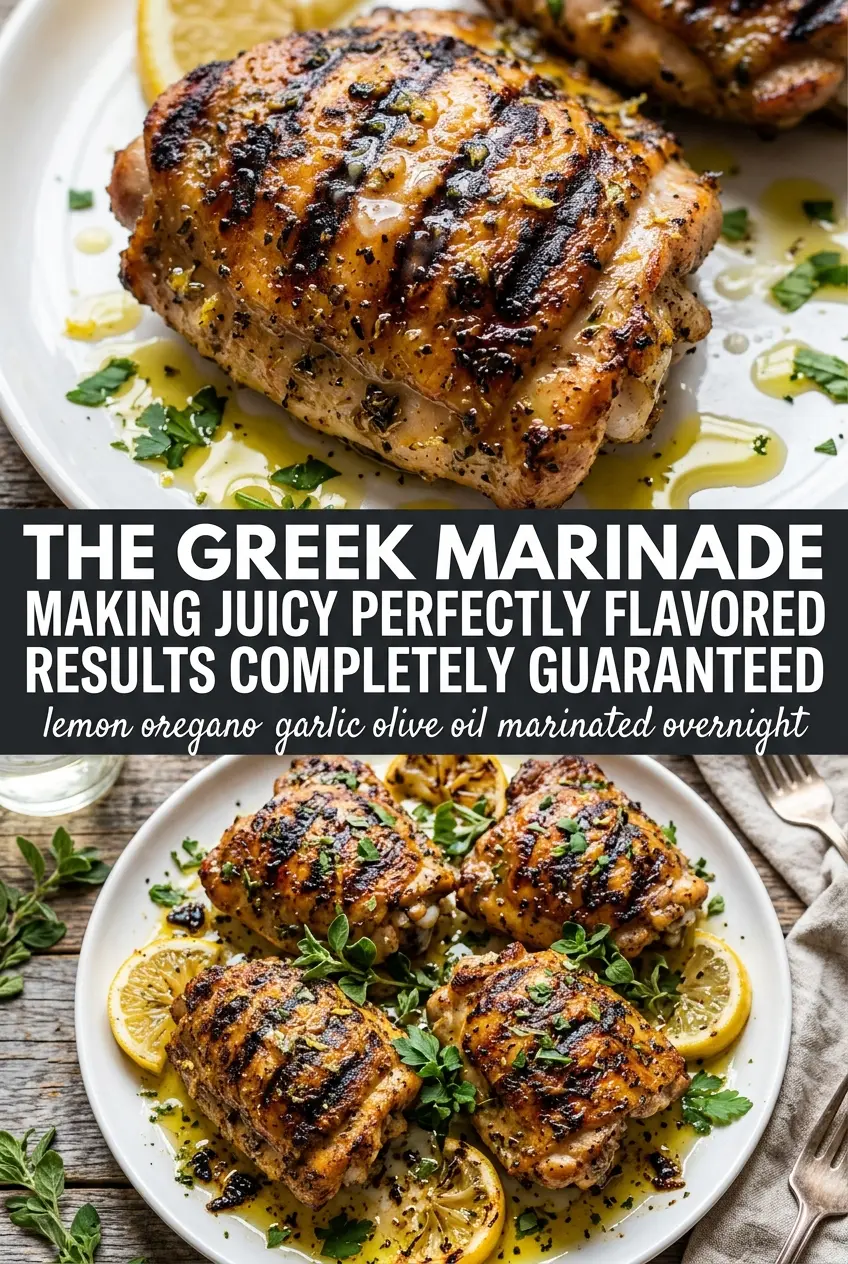
Juicy Greek Chicken
Ingredients
Equipment
Method
- Whisk together olive oil, lemon juice, lemon zest, minced garlic, oregano, dried thyme, salt, and pepper until well combined and fragrant.
- Place chicken pieces on a sheet pan in an even layer so the marinade can coat all sides.
- Pour the marinade over the chicken and turn to coat all pieces, then cover and refrigerate for 4 to 24 hours.
- Preheat the grill to medium-high heat and grill the chicken until the internal temperature reaches 165°F, turning as needed for even browning.
- Transfer chicken to a plate and let it rest for 5 minutes before serving to keep the juices inside.