Golden cornbread layers stacked with honey butter frosting land somewhere between a celebratory layer cake and the kind of dessert you want to cut into while it’s still barely cool. The crumb is tender but sturdy, with that familiar cornbread warmth from cornmeal and honey, and the frosting brings a creamy sweetness that keeps each slice from feeling rustic in a heavy-handed way. Finished with a drizzle of honey and a little flaky salt, it hits sweet, salty, and buttery all at once.
What makes this version work is balance. The batter uses both milk and buttermilk, which gives the crumb lift and a little tang, while melted butter keeps the layers moist without making them dense. The frosting leans into honey, but not so much that it turns loose or sticky; the butter and powdered sugar keep it pipeable enough to hold between the layers and around the sides. Bake the layers just until the center springs back and the toothpick comes out clean. Cornmeal cakes dry out fast if they go too far.
Below, I’ve included the part that matters most: how to keep the layers soft, how to get the frosting fluffy instead of grainy, and a few smart swaps if you need to adjust for what’s in your kitchen.
The layers baked up so tender, and the honey butter frosting stayed fluffy instead of slipping off the cake. I loved the little crunch from the flaky salt on top with the honey drizzle.
Layered Cornbread Cake With Honey Butter Frosting is the kind of sweet-savory cake worth saving for birthdays, brunch, and the honey drizzle on top.
The Reason Cornbread Layers Stay Tender Instead of Turning Dry
Cornbread cake wants to dry out before it’s even cooled, and the problem usually starts with overbaking or a batter that’s too lean. This version avoids both by using a good amount of fat, three sources of moisture, and enough sugar to keep the crumb soft without turning it into plain vanilla cake. The cornmeal gives the layers their character, but the flour holds everything together so you can stack and frost them cleanly.
The other thing that matters is mixing. Once the wet and dry ingredients meet, stir only until the streaks disappear. Overmixing develops the flour and makes the cake tougher, which is the opposite of what you want in a layered dessert. If your layers dome a little, that’s normal; just level them before frosting so the cake stacks evenly.
What the Honey, Buttermilk, and Cornmeal Each Bring to the Cake
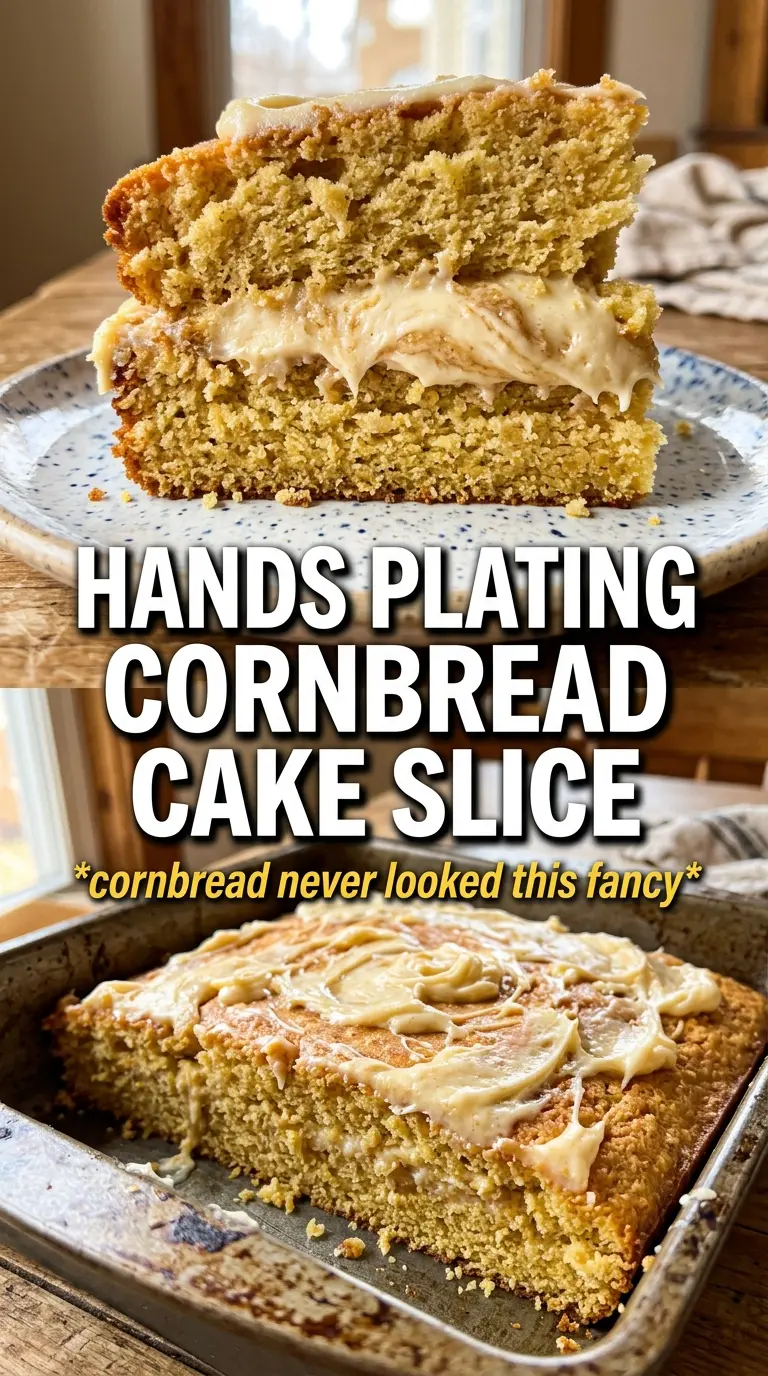
- Cornmeal — This is what gives the cake its cornbread identity. Yellow cornmeal brings flavor and a slight grit that keeps the texture interesting, but don’t use coarse stone-ground cornmeal here unless you want a more rustic, less delicate crumb.
- Buttermilk — The acidity softens the crumb and helps the baking soda do its job. If you don’t have buttermilk, use whole milk with a teaspoon of lemon juice or vinegar, then let it sit a few minutes before mixing.
- Honey — Honey adds depth in both the cake and the frosting. In the cake, it keeps the crumb moist; in the frosting, it gives a warm, floral note that plain sugar can’t match. Use a mild honey if you want the cornbread flavor to stay front and center.
- Butter — Melted butter in the cake helps with tenderness, while softened butter in the frosting gives structure. Don’t swap in oil for the frosting; it won’t whip up with the same body.
- Heavy cream — Just enough cream loosens the frosting so it spreads smoothly. Add it slowly. Too much and the frosting turns soft before you finish assembling the cake.
Building the Layers So the Frosting Stays Light and Clean
Mixing the batter without overworking it
Whisk the dry ingredients in one bowl and the wet ingredients in another so the baking powder and baking soda distribute evenly before the batter gets thick. When you fold them together, stop as soon as the flour disappears. The batter will look a little rustic, and that’s fine. If you beat it smooth like a cake batter, the layers bake up tighter and lose that tender cornbread crumb.
Baking until set, not overdone
Divide the batter evenly between the pans so all three layers finish around the same time. Bake until the tops spring back lightly and a toothpick comes out clean or with just a few moist crumbs. If the edges pull away too much or the tops look deeply browned, they’ve gone too far. Let the layers cool completely before frosting or the honey butter frosting will melt and slide.
Whipping the frosting until it turns pale
Beat the butter first until it looks smooth and lighter in color, then work in the honey, powdered sugar, cream, vanilla, and salt. The frosting should look fluffy and hold soft peaks, not droop like glaze. If it feels grainy, the butter was too cold or the powdered sugar was added too fast. A minute or two of extra whipping usually fixes it.
Stacking and finishing with the right amount of pressure
Spread a generous layer between each cake round, then use the rest on the outside. Don’t press hard as you stack; let the frosting support the layers rather than forcing them into place. Finish with a drizzle of honey and a pinch of flaky salt. That last touch wakes everything up and keeps the cake from tasting one-note sweet.
How to Adjust the Cake for Different Kitchens and Occasions
Gluten-Free Version
Use a 1:1 gluten-free baking flour in place of the all-purpose flour. The cornmeal still gives the cake its texture, but the gluten-free flour helps the layers hold together cleanly. Don’t swap in almond flour here; it changes the structure too much for a layered cake.
Dairy-Free Adaptation
Use plant-based butter for both the cake and frosting, and replace the milk and buttermilk with an unsweetened dairy-free milk plus a little lemon juice. The cake still bakes up tender, but the frosting may be a touch softer, so chill it briefly before assembling if needed.
Cupcake-Style Presentation
Bake the batter in lined muffin tins for a smaller dessert with the same flavor. The bake time drops a lot, so start checking early and pull them when the tops spring back. Pipe the frosting high and finish each one with a drop of honey and a few grains of flaky salt.
Storage and Reheating
- Refrigerator: Store covered for up to 4 days. The cake stays moist, though the frosting will firm up in the fridge.
- Freezer: Freeze unfrosted layers tightly wrapped for up to 2 months. Thaw at room temperature before frosting. Frosted slices can be frozen, but the honey butter frosting loses some of its airy texture.
- Reheating: Bring slices to room temperature before serving. If you want the cake slightly warm, heat a slice for just 10 to 15 seconds in the microwave. Longer than that and the frosting starts to melt and separate.
Answers to the Questions Worth Asking
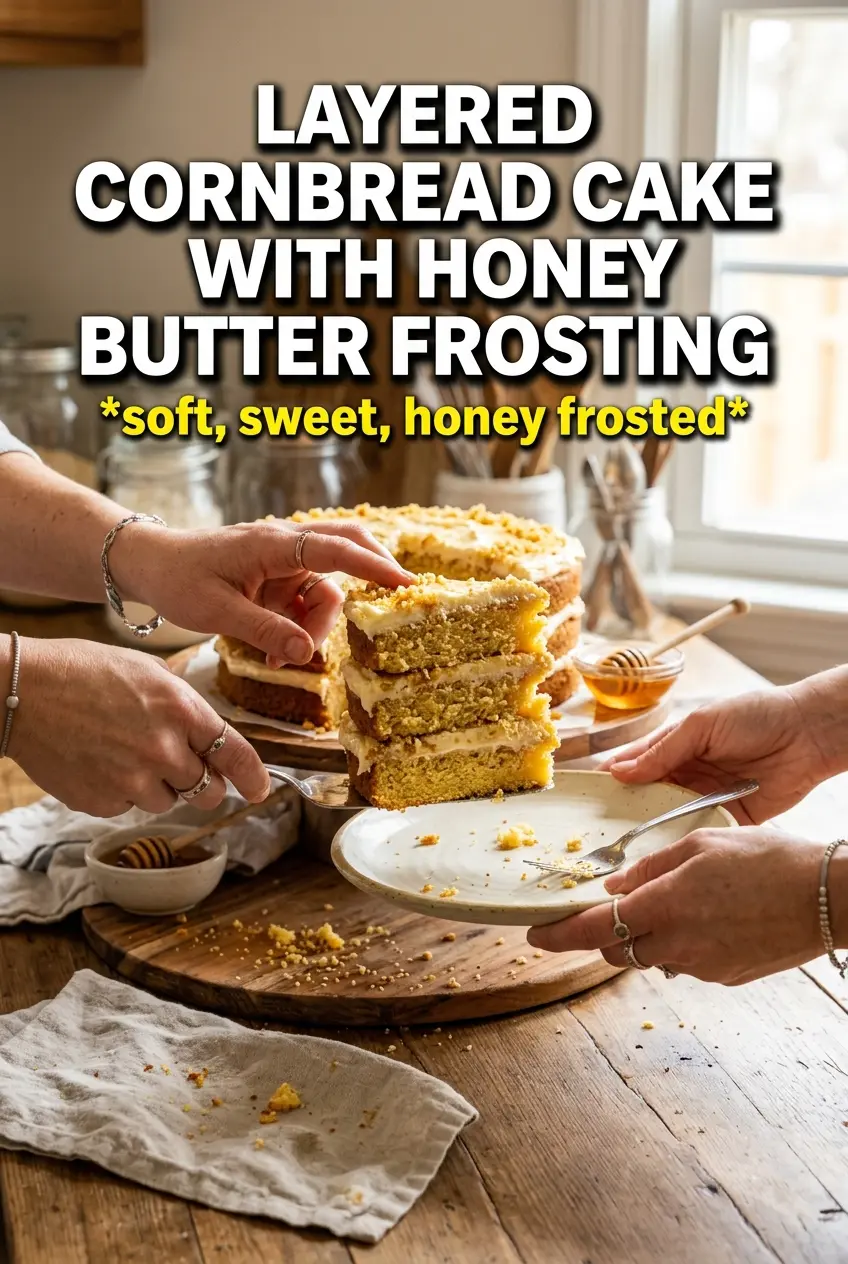
Layered Cornbread Cake With Honey Butter Frosting
Ingredients
Equipment
Method
- Preheat the oven to 350F and grease three 8-inch round pans so the layers release cleanly.
- Whisk together the all-purpose flour, yellow cornmeal, granulated sugar, baking powder, baking soda, and salt until evenly combined.
- Whisk the eggs, whole milk, buttermilk, melted unsalted butter, honey, and vanilla together in a separate bowl.
- Fold the wet mixture into the dry mixture just until no dry streaks remain, then divide the batter evenly among the pans.
- Bake at 350F for 22-25 minutes, until a toothpick inserted in the center comes out clean.
- Cool the baked layers completely before frosting so the honey butter frosting won’t melt or slide.
- Beat the softened unsalted butter with the honey until smooth and fluffy.
- Gradually beat in the powdered sugar, then mix in the heavy cream, vanilla, and salt until the frosting is light and spreadable.
- Frost generously between all layers, using a smooth layer of frosting to help the cake stack evenly.
- Spread remaining frosting over the outside of the cake, creating swirls and covering the sides fully.
- Drizzle with honey and sprinkle flaky sea salt over the top as the final finishing step.