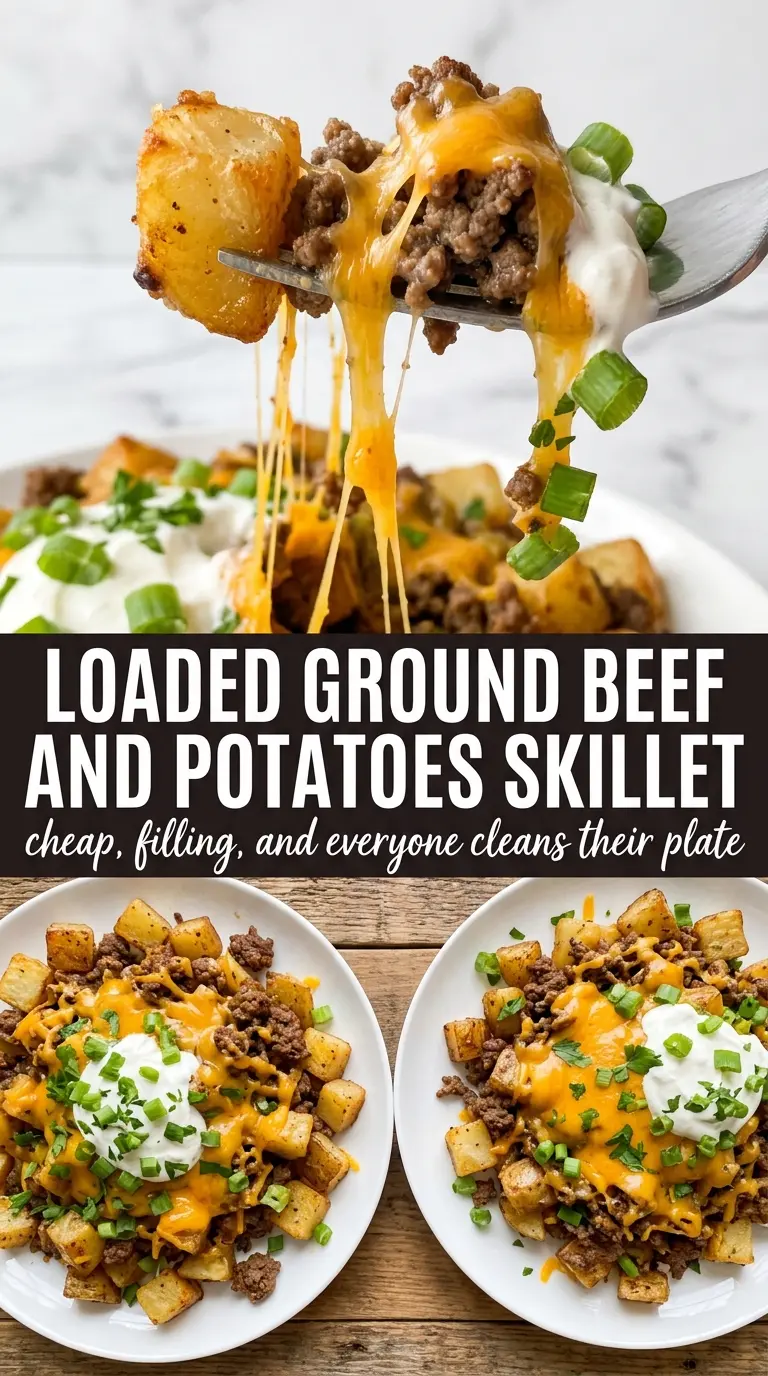
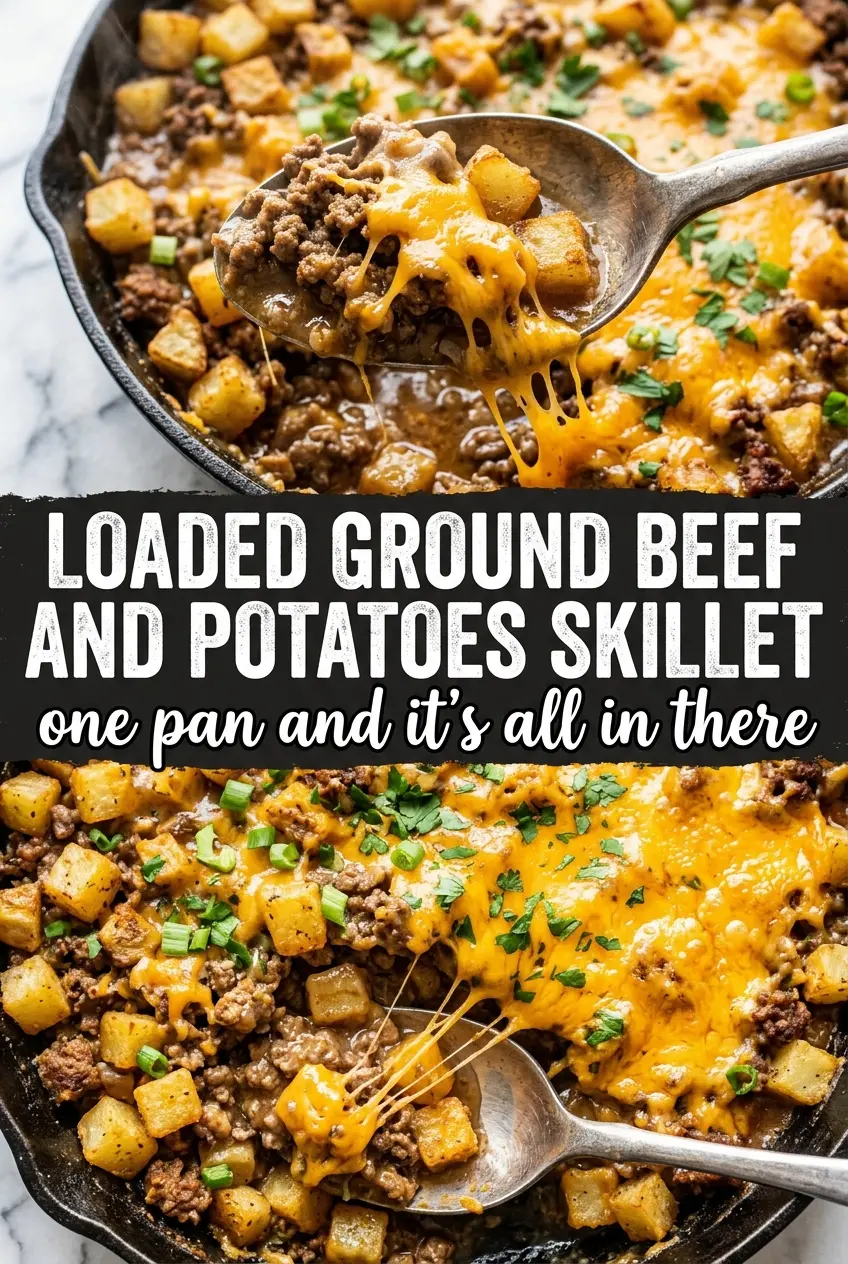
Golden potatoes, browned beef, and melted cheddar make this skillet dinner one of those meals that disappears fast the second it hits the table. The potatoes stay crisp on the edges instead of turning soft and soggy, the beef brings plenty of savory depth, and the toppings give it that loaded baked potato feel without the oven.
What makes this version work is the order. The potatoes get time in the hot skillet first, so they can develop color before the pan gets crowded with beef and vegetables. Using Yukon gold potatoes helps too, since they hold their shape and turn creamy inside without falling apart. A little smoked paprika adds that warm, smoky note that makes the whole pan taste like it cooked longer than it did.
Below, I’ll walk you through the part that matters most: getting the potatoes crisp and the cheese melted without steaming everything underneath. I’ve also included a few swaps and fixes for the spots where this kind of skillet dinner usually goes sideways.
Save this loaded ground beef and potatoes skillet for nights when you want crispy potatoes, melty cheddar, and one pan to clean.
The Trick to Crispy Potatoes Before the Pan Gets Crowded
The biggest mistake with a skillet like this is rushing the potatoes. If they go in too early over low heat, they steam and turn soft before they ever have a chance to brown. You want a hot skillet, enough oil to coat the bottom, and space for the pieces to make contact with the pan.
Yukon gold potatoes are the right choice here because they get crisp on the outside while staying tender in the middle. Cut them into even half-inch cubes so they finish at the same time. If your potatoes are sticking, leave them alone for another minute or two; they release once the crust forms.
What Each Ingredient Is Actually Doing in This Skillet
- Yukon gold potatoes: These hold their shape and give you a creamy center with crisp edges. Russets work in a pinch, but they’re starchier and can fall apart more easily if you stir too often.
- Ground beef: Use 80/20 if you want the best flavor. Leaner beef works, but you’ll lose some of that rich skillet taste and may need a little extra oil.
- Onion and green bell pepper: These build the savory base and keep the dish from tasting flat. Dice them small enough to soften quickly once they hit the pan.
- Smoked paprika and garlic powder: These season the whole pan evenly and give the beef-patato combo that loaded, smoky finish. Fresh garlic is added later so it doesn’t burn while the potatoes are browning.
- Sharp cheddar: Sharp cheddar melts cleanly and stands up to the beef. Pre-shredded cheese works, but freshly shredded melts smoother and faster.
- Sour cream, green onions, and bacon crumbles: These go on at the end for contrast. The cool tang from the sour cream and the salty bacon are what make the dish taste loaded instead of just cheesy.
Building the Skillet So the Cheese Melts Without Steaming the Potatoes
Start with the Potatoes
Heat the oil in a large cast iron skillet over medium-high heat, then add the potatoes in a single layer. Let them sit long enough to pick up color before stirring, and keep turning them only occasionally so the sides can crisp. If you stir constantly, they’ll brown unevenly and never get that deep golden crust.
Brown the Beef in the Open Spaces
Push the potatoes to one side and add the ground beef and onion to the empty space in the pan. Break the meat into small crumbles and let it brown before mixing everything together; pale, gray beef gives you a duller result. If there’s a lot of fat in the pan, drain the excess so the finished skillet doesn’t feel greasy.
Finish with the Cheese Under a Lid
Once the bell pepper, garlic, and seasonings have cooked briefly, mix everything together and scatter the cheddar over the top. Cover the skillet just until the cheese melts, about 2 minutes. If you leave it covered too long, the potatoes lose their crisp edges and the toppings sink into the pan.
How to Adjust This Skillet for What You’ve Got on Hand
Make It Lower Carb
Swap the potatoes for diced cauliflower florets or chopped turnips. Cauliflower cooks faster and won’t give you the same crispy bite, while turnips hold up better and bring a mild earthy note that works well with the beef.
Make It Dairy-Free
Skip the cheddar and finish with dairy-free shredded cheese or leave it off and lean on the bacon and green onions for the topping. The skillet still tastes complete, but you’ll lose the creamy, stretchy finish that cheddar gives.
Use Ground Turkey Instead
Ground turkey works, but it needs help. Add an extra tablespoon of oil and season it a little more aggressively, since turkey doesn’t bring the same richness as beef. The final skillet will be lighter and a bit less savory.
Storage and Reheating
- Refrigerator: Store leftovers in an airtight container for up to 4 days. The potatoes soften a bit, but the flavor stays solid.
- Freezer: It freezes well for up to 2 months, though the potatoes will be softer after thawing. Freeze in flat portions so it reheats more evenly.
- Reheating: Warm it in a skillet over medium heat with a small splash of oil or water and cover briefly to heat the center. The oven or skillet keeps the potatoes from drying out better than the microwave, which can make them rubbery.
Questions I Get Asked About This Recipe
Loaded Ground Beef and Potatoes Skillet
Ingredients
Equipment
Method
- Heat olive oil in a large cast iron skillet over medium-high heat. Add potatoes and cook, stirring occasionally, 12–15 minutes until golden and crispy, then season with salt, black pepper, and smoked paprika.
- Push potatoes to the side, add ground beef and onion, and cook breaking apart until browned; drain any excess fat. Stir in bell pepper, garlic, and garlic powder and cook 3 more minutes.
- Mix everything together in the skillet. Top with shredded cheddar, cover, and cook 2 minutes until the cheese melts.
- Spoon loaded potato skillet onto plates. Top with sour cream, green onions, and bacon crumbles before serving.