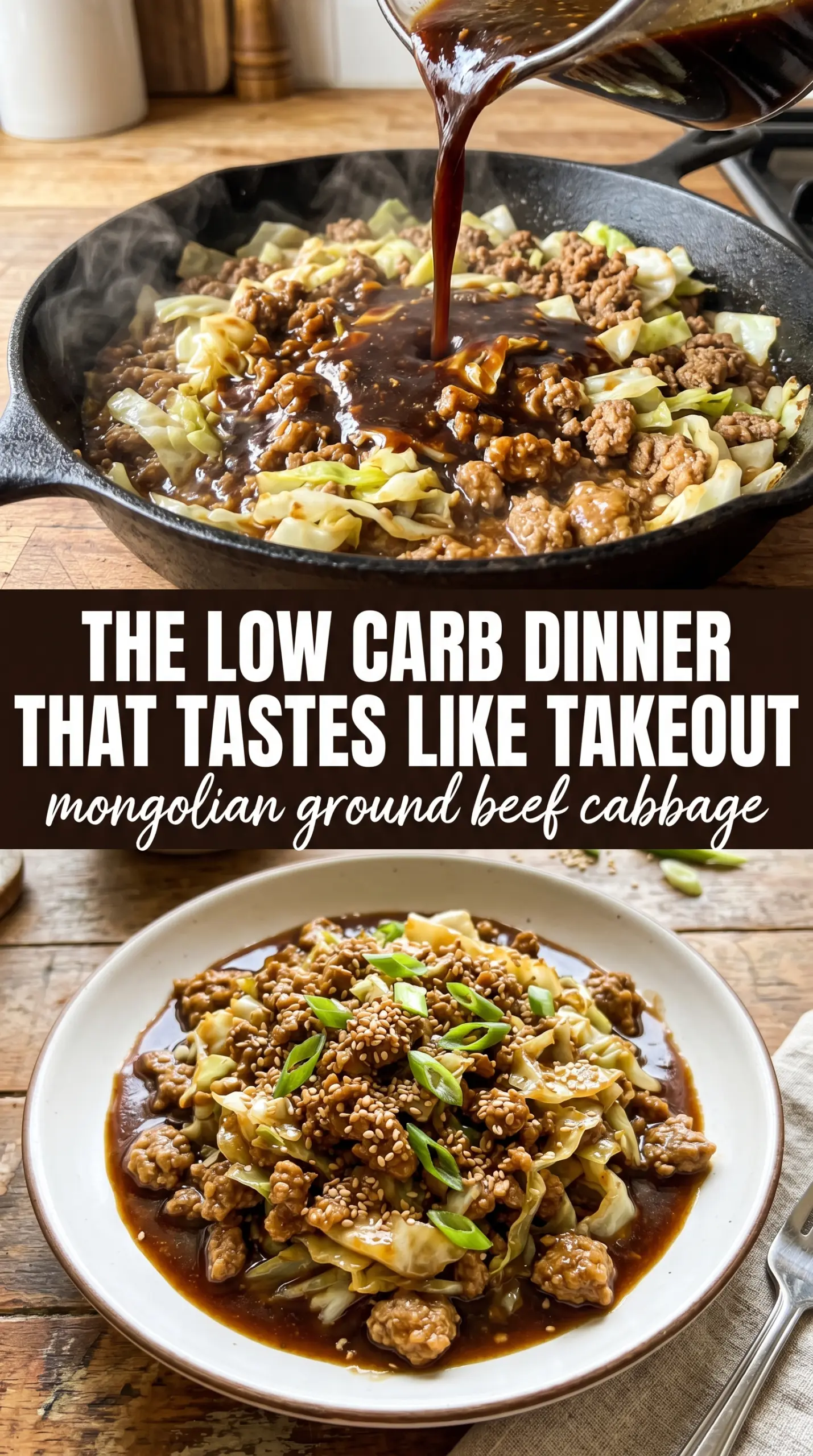
Saucy Mongolian-glazed ground beef and tender cabbage hit the pan fast, and that glossy, sticky coating is what makes this dish earn repeat status. It tastes like takeout in the best way: savory, lightly sweet, a little garlicky, and just rich enough to feel like dinner instead of a side note. The cabbage softens into silky ribbons without disappearing, so every bite still has a little crunch.
What makes this version work is the order. The beef needs to brown first so you get deep flavor in the pan, and the cabbage goes in before the sauce so it can pick up some heat and shed a bit of moisture. That keeps the final glaze thick instead of watery. The sauce itself is built with cornstarch and broth, which gives it that clingy finish without needing a long simmer.
Below, I’ve included the small details that matter most, from how to keep the cabbage from turning limp to the swaps that work if you need this dairy-free, gluten-free, or a little leaner.
The sauce coated every bit of cabbage and tightened up just enough in the pan. I served it over cauliflower rice and my husband went back for seconds before I sat down.
Save this sticky Mongolian ground beef cabbage for a fast low carb dinner with glossy takeout-style sauce.
The Reason the Cabbage Goes In Before the Sauce
Ground beef and cabbage can go from perfect to soggy in a hurry if the pan gets crowded or the sauce goes in too early. The beef needs direct contact with heat to brown, not steam, and that browned surface is what keeps the dish tasting deep instead of flat. Once the cabbage is added, it should still have a little bite when the sauce hits. If it goes in soft and watery, the final glaze has to fight too much extra moisture.
The cornstarch in the sauce does its best work when it meets a hot pan and has a little surface area to cling to. That’s why the sauce gets poured over the beef and cabbage at the end instead of simmered on its own for long enough to reduce. You get the thick, glossy coating faster, and the cabbage stays recognizable instead of melting into the skillet.
What the Sauce Ingredients Are Doing in This Bowl
- Ground beef — Use a version with some fat for the best flavor and browning. Very lean beef works, but it can taste dry once the cabbage and sauce go in. If you use leaner beef, leave a spoonful of fat in the pan instead of draining it completely.
- Green cabbage — This is what keeps the dish low carb while still giving you bulk and texture. Thin shreds cook fast and drink up the sauce without turning mushy. Thick chunks take longer and won’t coat as evenly.
- Garlic and ginger — These two carry the whole Mongolian-style flavor. Fresh ginger matters here because the sharp, clean heat balances the sweet sauce. Ground ginger will work in a pinch, but it tastes flatter and less bright.
- Soy sauce, hoisin, brown sugar, and broth — This is the backbone of the glaze. Soy sauce brings salt and depth, hoisin adds that takeout-style body, brown sugar gives the sticky finish, and broth keeps the sauce from becoming too intense before it thickens.
- Cornstarch — This is what turns the sauce from thin and salty into glossy and clingy. Whisk it in fully before the pan gets hot, or you’ll chase little lumps around the skillet. Arrowroot can work as a substitute, but it thickens a little more gently.
- Sesame oil — Use the real thing, not a neutral oil swap. A little goes a long way, and it gives the dish that nutty finish that makes the whole bowl taste complete.
Building the Glaze Without Making the Cabbage Watery
Whisk the sauce first
Mix the soy sauce, brown sugar, sesame oil, hoisin, broth, and cornstarch before the skillet gets hot. Once the beef is browned and the cabbage is in the pan, you want the sauce ready to go. If you add cornstarch directly to a hot pan, it can clump before it ever has a chance to thicken evenly.
Brown the beef hard enough to matter
Get the skillet hot before the beef goes in, then break it up and let it sit in contact with the pan long enough to pick up color. Stirring constantly keeps it pale. If there’s a lot of grease left, drain most of it, but leave enough behind that the garlic and ginger have something to bloom in.
Cook the garlic and ginger just until fragrant
Thirty seconds is enough. Any longer and the garlic can turn harsh while the ginger loses its sharp edge. You’re looking for a quick hit of aroma, not browning.
Stir-fry the cabbage until it just softens
Add the shredded cabbage and toss it over high heat for 3 to 4 minutes. It should wilt at the edges and stay a little crisp in the thicker parts. If it cooks until fully soft before the sauce goes in, the final dish will feel heavy and stewy instead of glazed.
Finish with heat and movement
Pour in the sauce and keep everything moving for 2 to 3 minutes. The sauce should thicken enough to coat the beef in a shiny layer and leave a light trail on the skillet as you stir. Pull it off the heat as soon as it looks glossy; if you keep cooking after it thickens, the cabbage gets limp and the glaze can tighten too far.
How to Adapt This for a Few Different Kitchens
Make it gluten-free
Swap in tamari or a certified gluten-free soy sauce and use a gluten-free hoisin if you can find one. The flavor stays close to the original, but the brand you choose matters because some hoisin sauces are much sweeter than others. If yours is very sweet, cut the brown sugar slightly.
Make it leaner without losing the sauce
Use lean ground beef and don’t skip the sesame oil. Since lean meat gives you less fat and flavor in the pan, the sauce has to do more of the work. Keep a close eye on the skillet and add a splash of broth if the bottom looks dry before the cabbage goes in.
Swap in ground turkey or chicken
This works well with ground turkey or chicken, but they need extra help to taste full-bodied. Add a little more sesame oil and don’t overcook them before the cabbage goes in. The sauce stays the same, though a pinch of extra salt often helps round out the lighter meat.
Storage and Reheating
- Refrigerator: Store leftovers in an airtight container for up to 4 days. The cabbage softens a bit more as it sits, but the flavor holds up well.
- Freezer: It freezes, but the cabbage loses some of its texture. If you plan to freeze it, cool it fully and pack it tightly for up to 2 months.
- Reheating: Warm it in a skillet over medium heat with a splash of water or broth to loosen the sauce. The most common mistake is blasting it in the microwave until the beef toughens and the cabbage turns limp.
Answers to the Questions Worth Asking
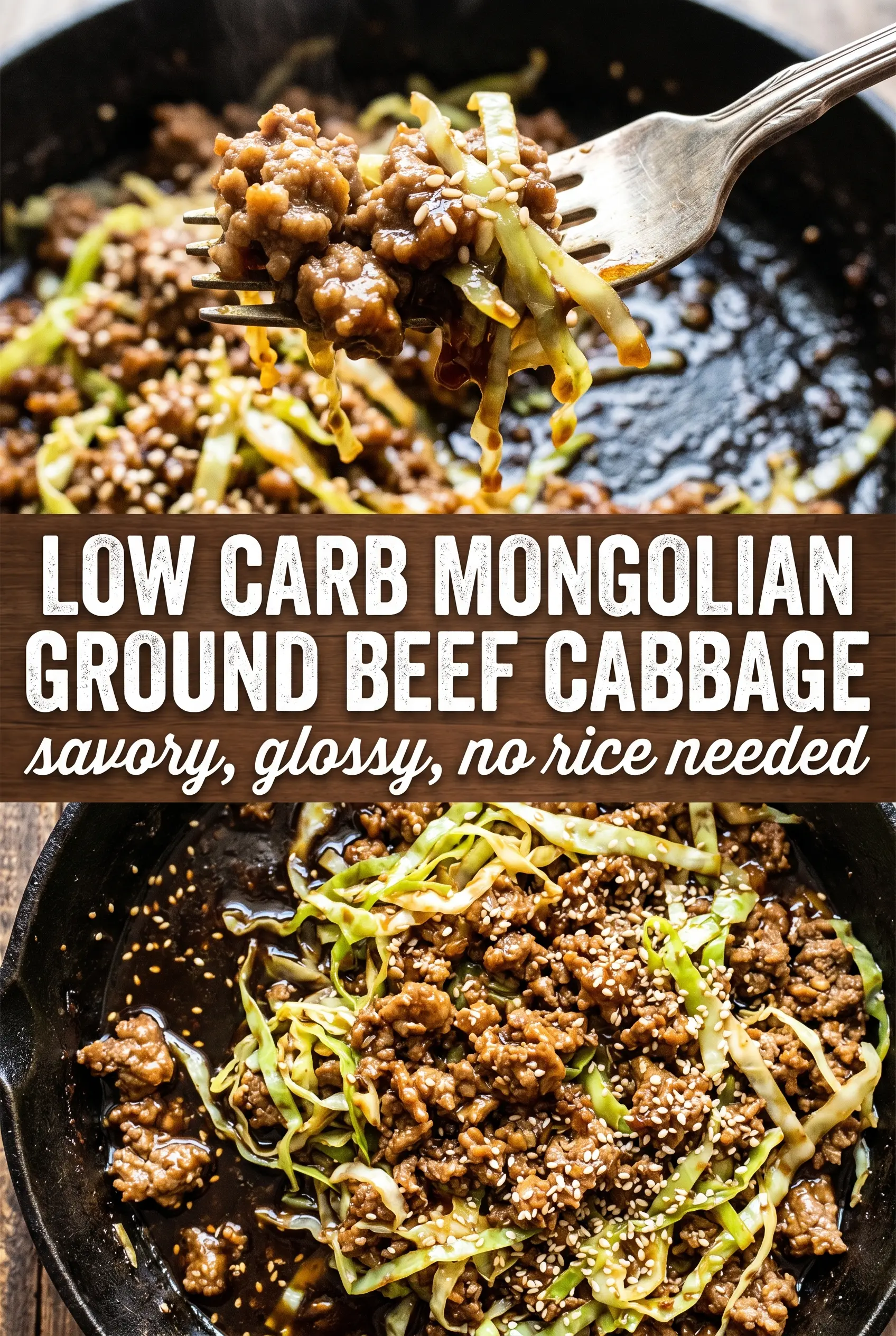
Low Carb Mongolian Ground Beef Cabbage
Ingredients
Equipment
Method
- Whisk together soy sauce, brown sugar, sesame oil, hoisin sauce, beef broth, and cornstarch until smooth, then set aside.
- Heat vegetable oil in a large wok or skillet over high heat, then add ground beef and brown it, breaking apart, until fully cooked and fat is released—drain excess fat if needed.
- Add minced garlic and grated ginger and cook for 30 seconds, stirring constantly so they don’t burn.
- Add thinly shredded green cabbage and stir-fry for 3–4 minutes, until wilted but still slightly crisp.
- Pour the Mongolian sauce over the beef and cabbage and toss to combine, then cook for 2–3 minutes until the sauce thickens and glazes the pan mixture.
- Garnish with green onions and sesame seeds, then serve immediately while the cabbage still has bite.