Maple bacon carrots come out glossy, tender, and caramelized at the edges with just enough salt from the bacon to keep every bite from leaning too sweet. The carrots soften in the oven without turning limp, and the sticky maple glaze clings to them instead of pooling on the pan. It’s the kind of side dish that disappears fast because it tastes like more effort than it actually takes.
The trick is roasting the carrots in a glaze that already has balance built in: maple syrup for shine, a little brown sugar for deeper caramel notes, Dijon to keep the sweetness in check, and just enough bacon fat to carry the whole dish. I also like to add the bacon at the end instead of roasting it the whole time, which keeps the bits crisp and prevents them from turning chewy in the oven.
Below, you’ll find the little details that make these carrots work on a crowded holiday table or next to a plain weeknight roast. The difference is in the timing, and once you’ve made them this way, it’s hard to go back.
The glaze thickened up beautifully and the bacon stayed crisp when I added it at the end. I used whole carrots cut in half and they came out tender with those caramelized edges everyone fought over.
Save these maple bacon carrots for the next time you need a sweet-savory side with crisp bacon and caramelized edges.
The Trick to Keeping the Glaze on the Carrots Instead of the Pan
The biggest mistake with glazed carrots is crowding them or starting with a sauce that’s too thin. If the carrots are piled up, they steam before they caramelize, and if the glaze is watery, it slides right off and burns on the sheet instead of coating each piece. A hot oven and a light hand with the pan size matter here more than an extra minute of stirring.
The bacon fat adds depth, but only about a tablespoon should stay in the skillet. That’s enough to give the glaze richness without turning the carrots greasy. The Dijon doesn’t make the dish taste like mustard; it keeps the maple from going flat and gives the finish a sharper edge.
- Baby carrots or halved whole carrots — Baby carrots are the easiest route because they roast evenly and don’t need much prep. If you use whole carrots, cut them into pieces that are similar in thickness so the skinny ends don’t dry out before the center is tender.
- Pure maple syrup — Use the real stuff here. Pancake syrup won’t reduce the same way and leaves the glaze tasting one-note.
- Bacon fat — That little bit left in the pan carries the savory flavor through the glaze. If your bacon is especially salty, you can keep the fat to a tablespoon and skip extra salt until the end.
- Dijon mustard — A teaspoon is enough to sharpen the sweetness without taking over. If you don’t have Dijon, whole-grain mustard works in a pinch, but the glaze will look a little more rustic.
What Each Ingredient Is Actually Doing in This Recipe
- Primary ingredient (the star) — Quality matters most. Choose the best you can find.
- Cooking medium (oil, butter, or broth) — This carries flavors and prevents dryness.
- Seasonings (salt, pepper, spices, herbs) — Layer flavors so nothing overpowers. Build depth gradually.
- Aromatics (garlic, onion, herbs) — Cook with fat to bloom flavors. Become the foundation.
- Supporting ingredients — Complement the main ingredient without overpowering it.
- Sauce or liquid (if applicable) — Brings flavors together. Balance richness with acid.
- Acid (lemon, vinegar, wine, or other) — Brightens and prevents flat-tasting results.
- Final finish (garnish, glaze, or sauce) — Prevents one-dimensional taste and adds visual appeal.
Roasting the Carrots Until the Edges Turn Sticky and Brown
Cooking the Bacon First
Start the bacon in a cold skillet and cook it slowly until the pieces are crisp and browned. Fast heat renders the outside before the fat has time to come out, which leaves you with chewy bacon and not much usable fat. Drain the bacon on paper towels and leave just enough fat in the skillet to coat the bottom.
Whisking the Glaze
Stir the maple syrup, melted butter, brown sugar, Dijon, thyme, and pepper until the sugar looks dissolved and the mixture turns glossy. The glaze should be thick enough to cling to a spoon, not run like dressing. If the butter is too hot, the mixture can look separated at first, but it comes together once it’s tossed with the carrots.
Roasting to Caramelization
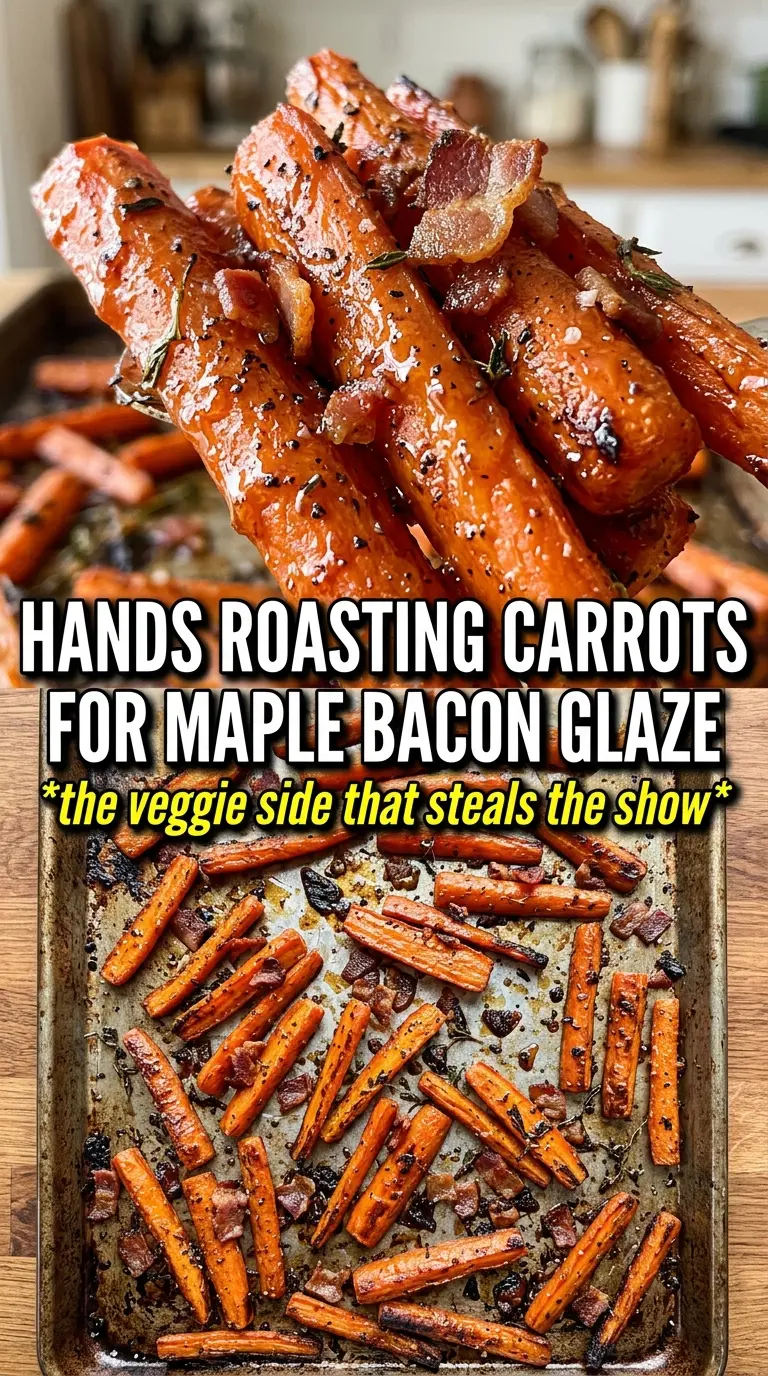
Spread the carrots on a baking sheet in a single layer and roast at 400°F until they’re tender and browned at the edges. Toss them halfway through so the glaze catches on all sides and doesn’t burn in one spot. If the pan is overcrowded, you’ll lose the caramelized edges and end up with soft carrots in a puddle of syrup.
Finishing with Bacon and Salt
Scatter the crisp bacon over the carrots after they come out of the oven. That keeps the bacon crunchy and gives the dish a better texture contrast. A pinch of flaky sea salt at the end wakes up the maple and makes the whole tray taste brighter.
How to Adapt These Carrots for Different Tables and Different Diets
Make Them Without Bacon
Leave out the bacon and use an extra tablespoon of butter or olive oil in the glaze. You’ll lose the smoky-salty edge, so add a pinch more flaky salt at the end and, if you want, a tiny pinch of smoked paprika to bring some of that depth back.
Use Whole Carrots for a More Substantial Side
Whole carrots cut on the bias give you firmer pieces with deeper roasted edges. They take a few minutes longer than baby carrots, but the flavor is stronger and the texture stays a little meatier, which works well next to roast chicken or ham.
Make It Gluten-Free Without Changing the Method
This recipe is naturally gluten-free as long as your Dijon mustard is certified gluten-free. The texture and roasting method stay the same, so this is one of the easiest sides to keep on the table for mixed diets.
Storage and Reheating
- Refrigerator: Store leftovers in an airtight container for up to 4 days. The carrots soften a bit as they sit, but the flavor stays good.
- Freezer: Freezing isn’t ideal because the carrots lose their roasted texture and the glaze can turn watery when thawed.
- Reheating: Warm them in a 375°F oven until hot, about 10 minutes. The microwave works in a pinch, but it makes the carrots softer and mutes the bacon crispness.
Questions I Get Asked About This Recipe
Maple Bacon Carrots
Ingredients
Equipment
Method
- Preheat the oven to 400°F. Heat a cast iron skillet over medium heat and cook the diced bacon until crispy, about 6-10 minutes, then remove to a drain and leave 1 tablespoon fat in the pan.
- In the same pan, whisk together the pure maple syrup, melted butter, brown sugar, Dijon mustard, fresh thyme, and black pepper until smooth and glossy, about 1 minute.
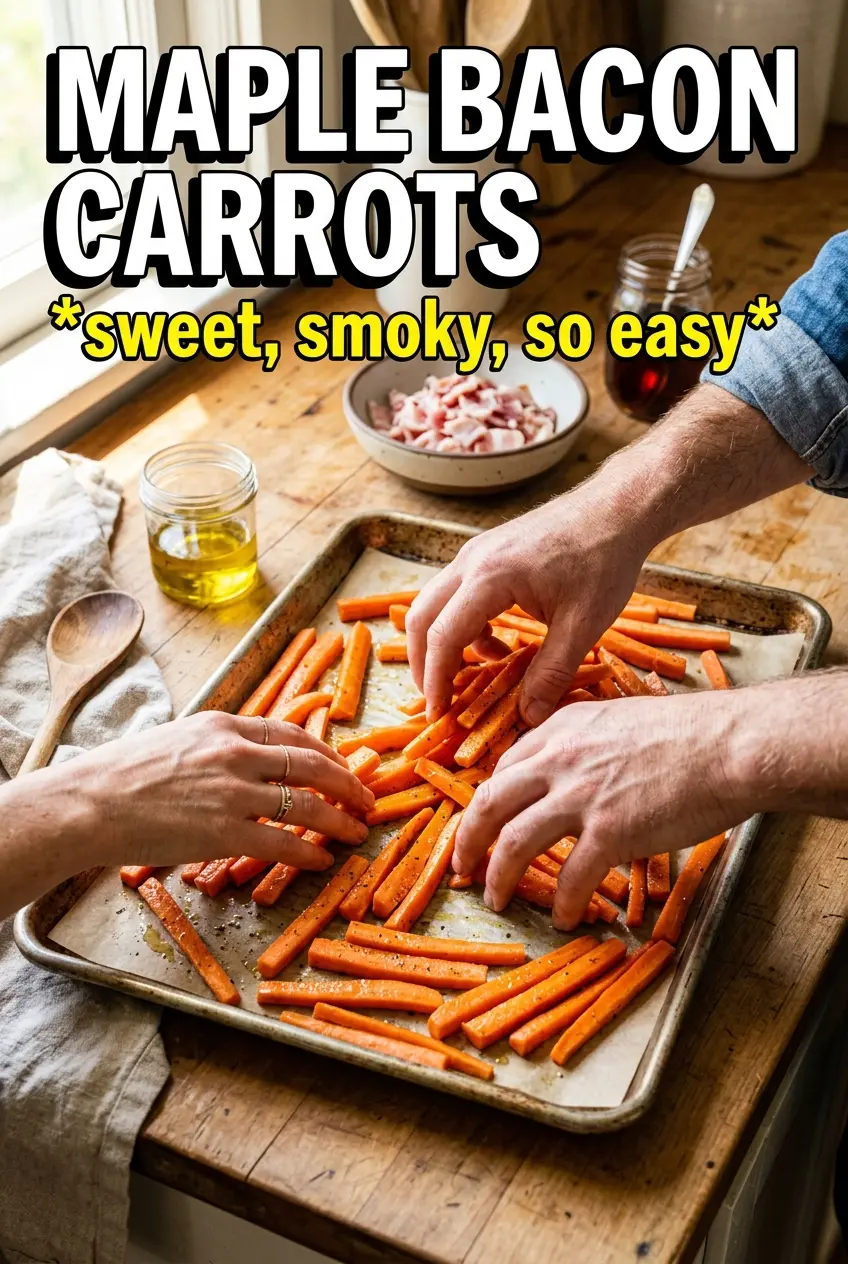
- Toss the halved baby carrots in the maple mixture until evenly coated, then spread them in a single layer on a sheet pan.
- Roast for 25-30 minutes at 400°F, tossing halfway, until caramelized and tender, with the carrots turning deep amber and starting to blister.
- Scatter the crispy bacon bits over the roasted carrots immediately, then finish with flaky sea salt for contrast and sparkle.