Golden seared chicken coated in a glossy maple bourbon pan sauce earns its place at the center of the table fast. The sauce clings instead of running off, the pecans stay toasted and buttery, and every bite lands with that mix of sweet, savory, and just enough sharpness from Dijon to keep it from tasting heavy. It’s the kind of skillet dinner that feels a little special without asking for much more than a few pantry staples and one good pan.
What makes this version work is the balance in the sauce. Maple syrup brings body and sweetness, bourbon adds depth, and Dijon cuts through both so the glaze tastes finished instead of sugary. The chicken sears first, then finishes in the sauce, which keeps the meat juicy while giving the glaze time to thicken around it. Toasted pecans go on at the end so they keep their crunch.
Below you’ll find the exact cue for when the sauce is ready, plus a few swaps that actually work if you need to adjust the dish for what’s in the kitchen.
The sauce thickened up beautifully and never turned grainy. I served it over rice, and the toasted pecans on top kept every bite interesting.
Save this Maple Bourbon Pecan Chicken for the nights when you want a glossy skillet sauce and a crunchy pecan finish.
The Part That Stops the Sauce From Getting Clunky
The mistake with bourbon pan sauces is rushing the reduction. If the bourbon doesn’t get a minute or two to simmer before the maple syrup and broth go in, it can taste harsh and the sauce never quite settles into itself. Once the liquid reduces a little, the maple syrup has something to grab onto, and the Dijon helps emulsify the butter at the end so the sauce looks glossy instead of greasy.
Another thing that matters here is the order. The chicken sears first, then rests while the sauce builds in the same pan. Those browned bits left behind are not background noise; they’re the deepest part of the flavor. If you wipe them out or use too much heat while the sauce reduces, you lose both the color and the clean finish.
What Each Ingredient Is Actually Doing in This Skillet
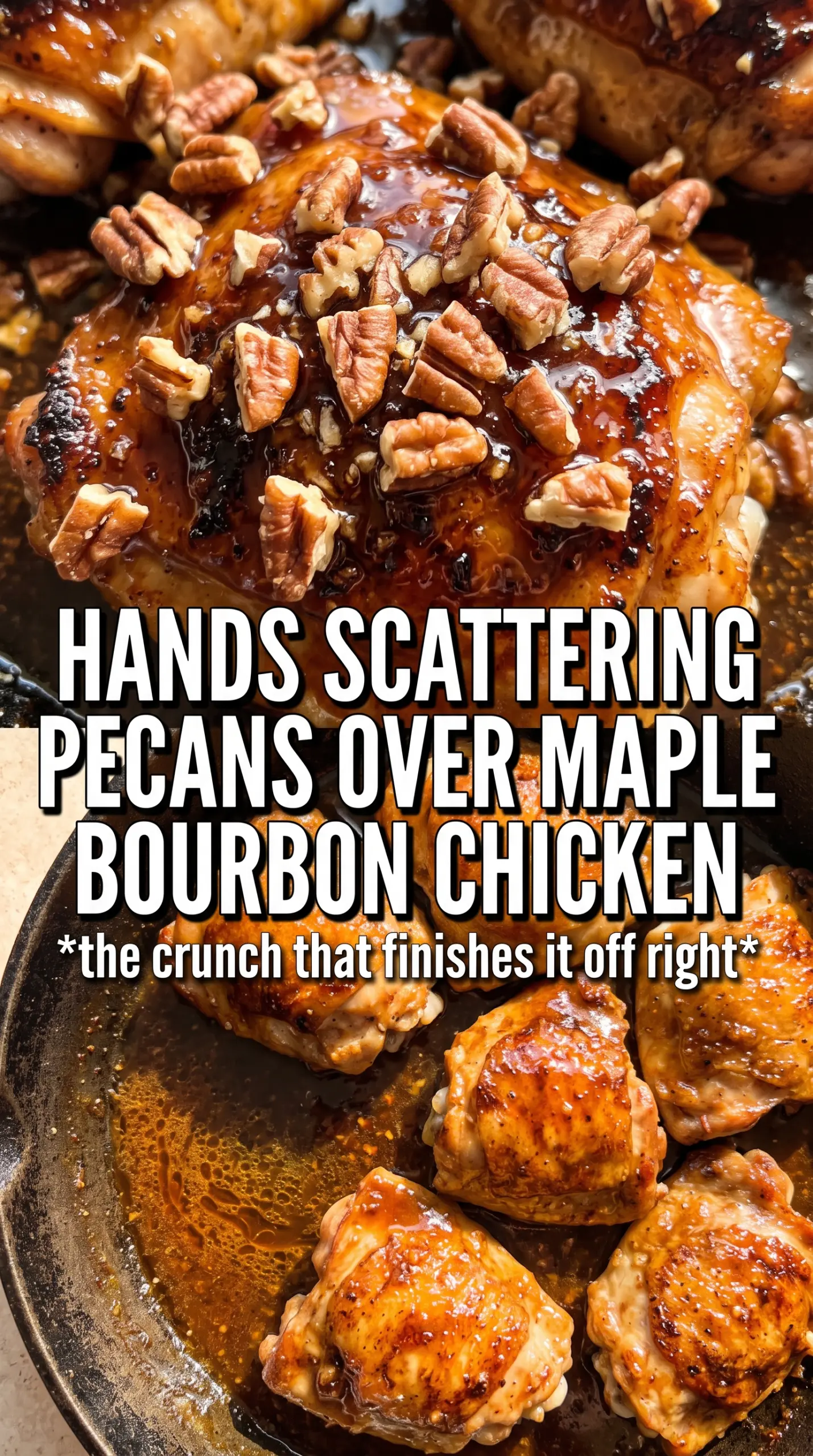
- Chicken breasts — Boneless breasts cook quickly and give the sauce a neutral canvas. Slice thick pieces horizontally if they’re uneven so they finish at the same time. Chicken thighs also work, but they need a few extra minutes and give you a richer, fattier result.
- Bourbon — This is where the sauce gets its warmth and depth. You don’t need an expensive bottle, but use one you’d actually drink; harsh bourbon gets louder when it cooks down. If you want to skip the alcohol, replace it with extra broth plus a teaspoon of vanilla and a tiny splash of apple cider vinegar for brightness.
- Pure maple syrup — Real maple syrup gives the glaze body and a clean sweetness that pancake syrup can’t match. The syrup thickens as it simmers, so don’t substitute anything thinner unless you’re ready to reduce longer.
- Dijon mustard — Dijon keeps the sauce balanced and helps it emulsify with the butter. Yellow mustard won’t give the same sharp, rounded finish.
- Pecans — Toasted pecans bring the crunch that makes the dish feel complete. Toast them just until fragrant; if they go too far, they turn bitter once they hit the hot sauce.
- Fresh thyme — Thyme keeps the sweetness in check with an earthy note. Dried thyme can work in a pinch, but use less because its flavor lands harder.
Getting the Chicken Seared Before the Glaze Goes In
A dry pan starts the whole dish
Season the chicken well, then get the olive oil and butter hot enough that the chicken sizzles the second it hits the pan. You’re looking for a deep golden crust, not pale steamed chicken; if the pan is crowded or the heat is too low, the meat will give off liquid and slide instead of sear. Cook the first side until it releases cleanly, then flip and finish the second side. If the chicken is thick, lower the heat slightly after the first hard sear so the outside doesn’t outrun the center.
Build the sauce in the same skillet
Take the chicken out and add the garlic for just a minute, until it smells sweet and sharp but hasn’t browned. Pour in the bourbon carefully and let it bubble for a moment so the alcohol cooks off and the pan loosens any browned bits. Stir in the maple syrup, Dijon, broth, and thyme, then let the sauce simmer until it coats the back of a spoon. If it still looks thin after five minutes, keep it on the heat; once it starts reducing, it moves fast.
Finish with butter, chicken, and pecans
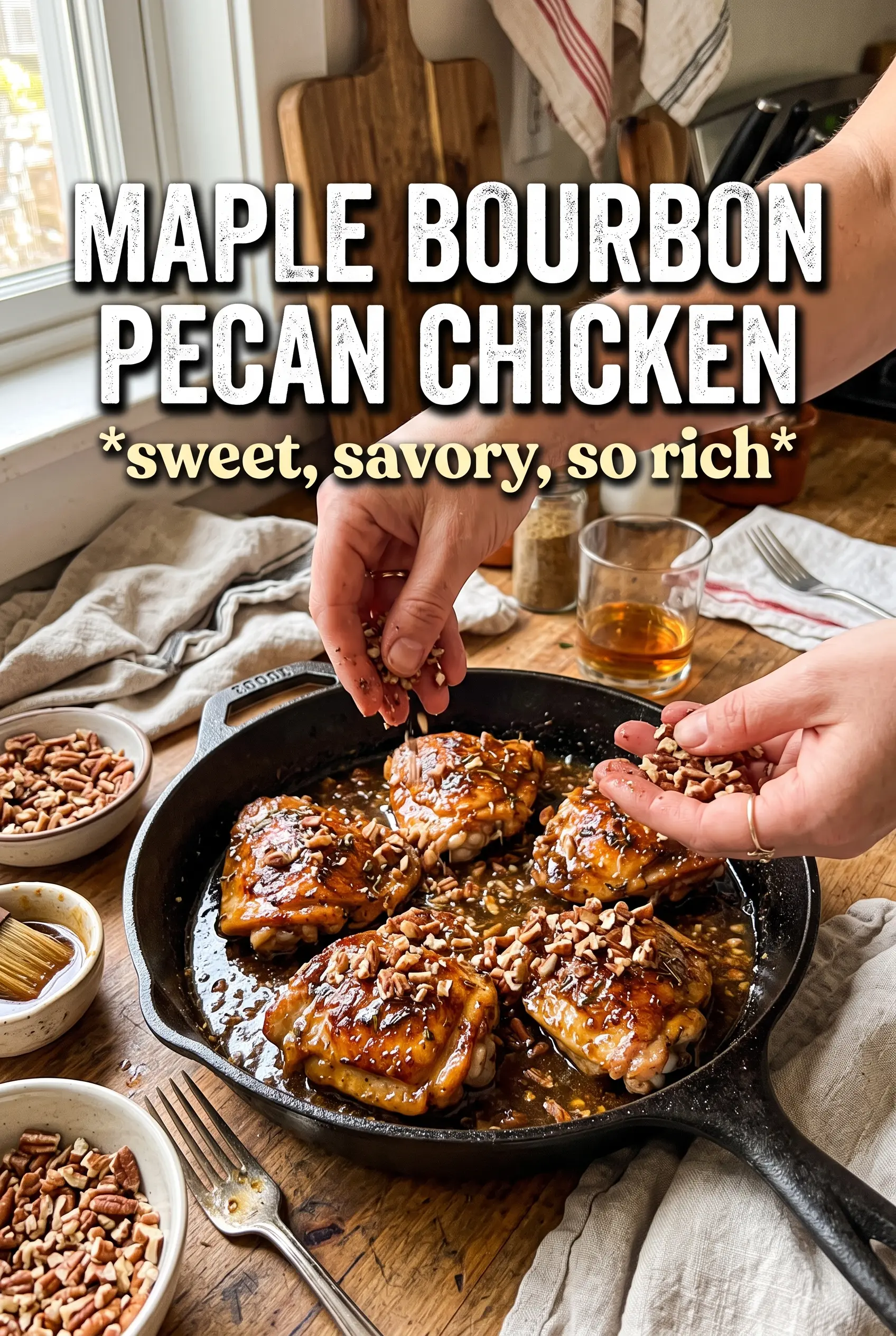
Return the chicken to the pan and spoon sauce over the top so it picks up the glaze on both sides. The butter gives the sauce a final shine, but it should go in off a lower heat so it doesn’t separate. Top with the toasted pecans right before serving so they stay crunchy. If you add them too early, they soften in the sauce and lose the whole point.
How to Adapt the Sweet-Savory Balance Without Losing the Dish
Dairy-free version
Skip the butter and use all olive oil, or replace the butter with a dairy-free butter that melts smoothly. You’ll lose a little richness, but the maple and bourbon still carry the sauce nicely. Keep the heat moderate so the sauce reduces instead of breaking.
Chicken thighs instead of breasts
Thighs make the dish juicier and a little more forgiving, especially if your pan runs hot. They need a longer cook time, so sear them well and let them finish gently in the sauce. The result is richer and more savory, with less of the lean, delicate texture you get from breast meat.
No bourbon on hand
Use extra chicken broth plus a teaspoon of vanilla and a small splash of apple cider vinegar. You won’t get the same caramelized edge bourbon brings, but you’ll still get a balanced, glossy sauce with enough depth to stand up to the maple.
Storage and Reheating
- Refrigerator: Store leftovers in an airtight container for up to 3 days. The sauce will thicken as it chills, and the pecans will soften a bit.
- Freezer: The chicken freezes well, but the sauce texture changes a little after thawing. Freeze without the pecans, then add fresh toasted pecans after reheating.
- Reheating: Warm gently in a covered skillet over low heat with a splash of broth or water. High heat can tighten the chicken and make the sauce separate.
Questions I Get Asked About This Recipe
Maple Bourbon Pecan Chicken
Ingredients
Equipment
Method
- Season the chicken breasts with salt and pepper, then sear in olive oil and butter in a hot skillet for 5-6 minutes per side until cooked through, with the surface turning golden brown and juices running clear.
- Remove the chicken to a plate, then add the minced garlic to the skillet and cook for 1 minute until fragrant and lightly sizzling.
- Carefully add the bourbon and cook for 2 minutes; keep it off the heat if using an open flame, and look for bubbling alcohol fumes to mellow.
- Add the maple syrup, Dijon mustard, chicken broth, and fresh thyme, then simmer for 4-5 minutes until the sauce thickens and looks glossy.
- Return the chicken to the skillet and coat each breast thoroughly in the sauce, then top with the toasted pecan halves for a toasted, crunchy finish.