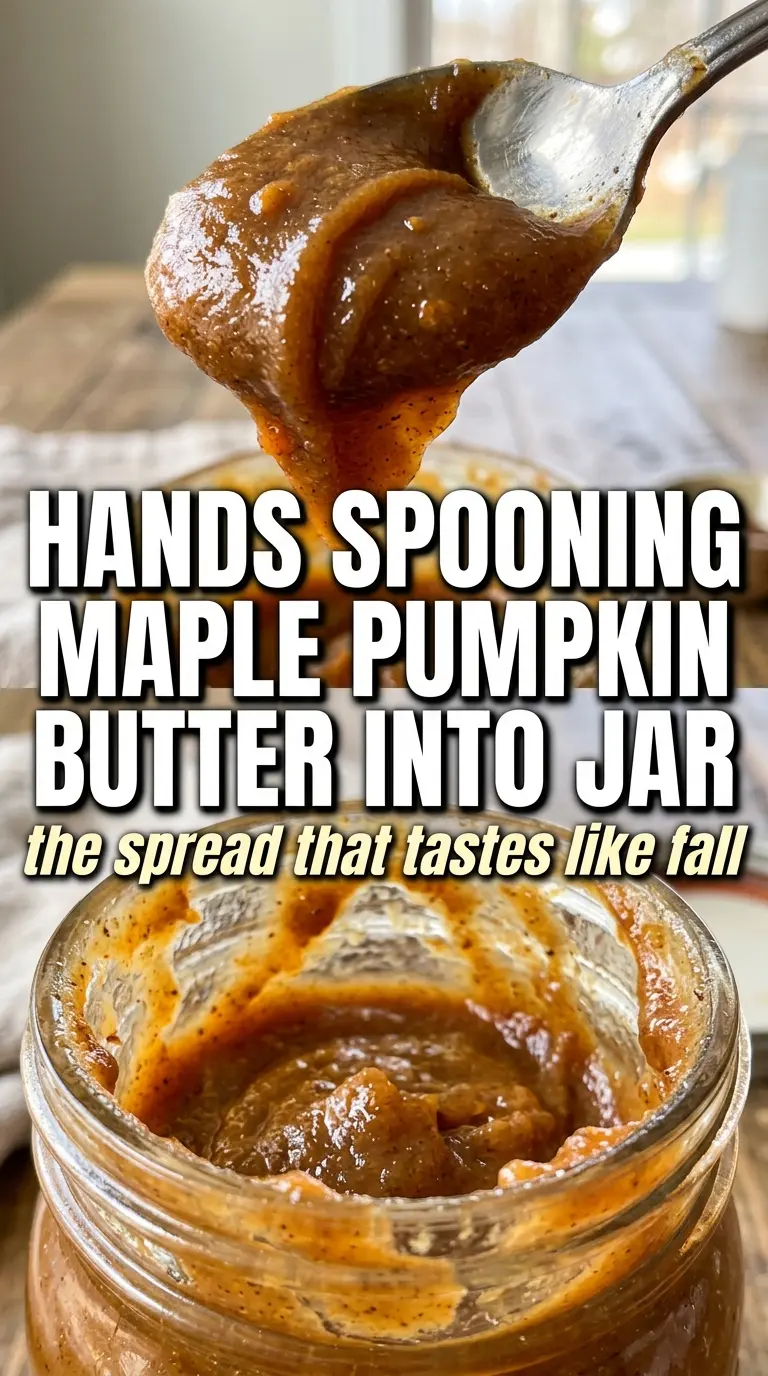
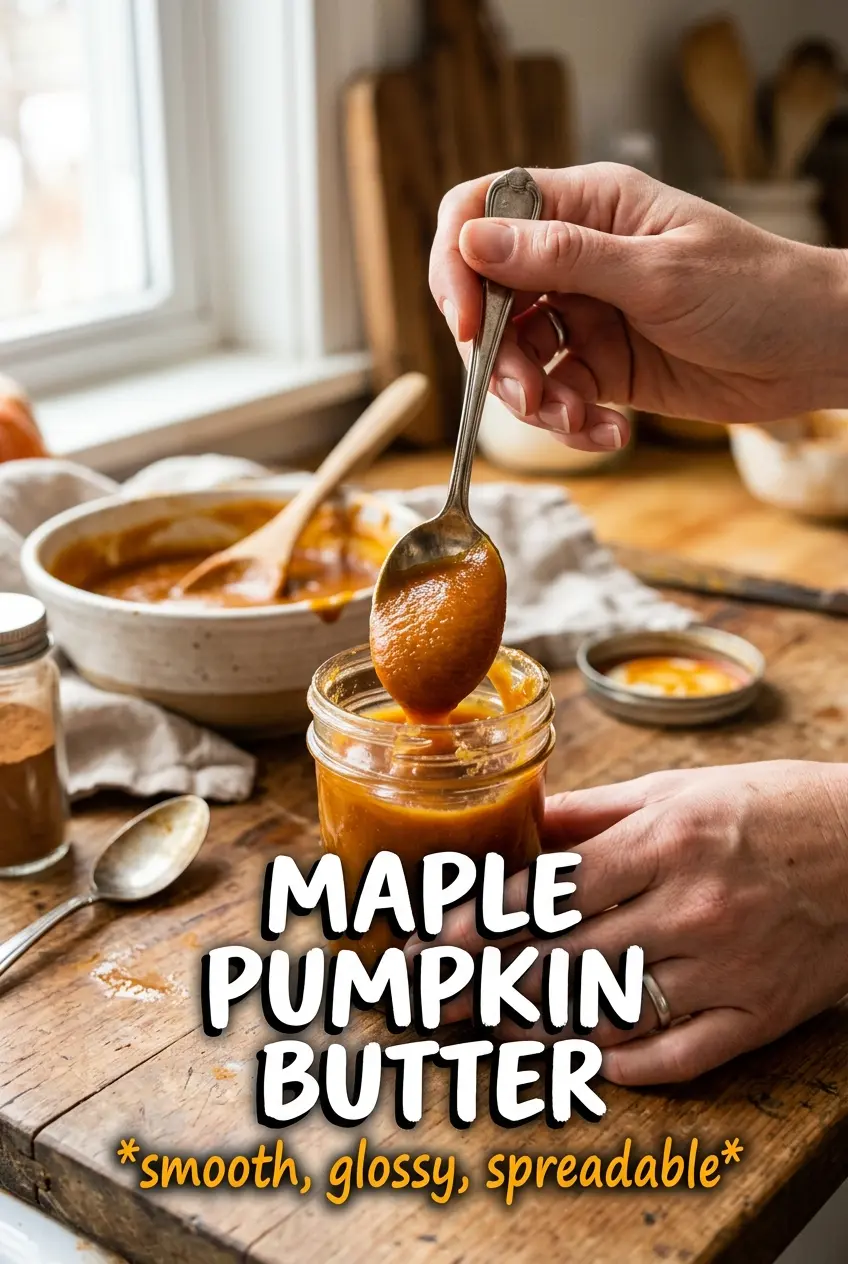
Maple pumpkin butter turns smooth, glossy, and spoonable in the pan, with a deep pumpkin flavor that tastes warmer and more concentrated than plain puree. The maple rounds out the edges, the spices bloom as the mixture reduces, and what you end up with is the kind of spread that makes plain toast feel like breakfast with a plan.
The trick is cooking it long enough to drive off extra moisture without letting it scorch. Pumpkin puree needs steady stirring because it can spit and catch on the bottom, and the spices need that low simmer to lose their raw edge. A little lemon juice at the end keeps the sweetness from going flat, while vanilla makes the whole jar taste finished instead of one-note.
Below you’ll find the exact timing that gives this pumpkin butter a thick, silky texture, plus a few smart ways to use it beyond toast. It’s one of those recipes that rewards a small amount of attention with a jar you’ll keep reaching for all week.
I cooked it the full 20 minutes and it thickened up into the prettiest spread. The maple and spice balance was spot on, and it was perfect on warm biscuits the next morning.
Save this maple pumpkin butter for toast, pancakes, and oatmeal when you want a glossy spread that tastes like fall without any fuss.
The Part That Keeps Pumpkin Butter from Tasting Flat
Most pumpkin butter recipes fail in one of two ways: they stay thin and spoonable like sauce, or they cook down so far they taste dull and slightly burnt. The sweet spot is a slow simmer that gives the pumpkin time to concentrate while the maple and brown sugar melt into it. You want steady bubbles, not a hard boil. Too much heat pushes the sugars toward the bottom of the pan before the water has a chance to evaporate.
The other detail that matters is when the acid and vanilla go in. Lemon juice at the end brightens the finished butter, but if you add it too early, the flavor fades during the cook. Vanilla also works best off the heat, where it stays fragrant instead of getting cooked out.
- Keep the heat at medium-low so the mixture thickens gradually and doesn’t stick.
- Stir from the bottom of the pan often, especially once it starts looking glossy and heavy.
- Stop when it coats a spoon and mounds slightly before settling back down.
- Expect it to thicken more as it cools; the pan version should look a little looser than the final jar.
What Each Ingredient Is Doing in the Jar
- Pumpkin puree — This is the body of the spread, and canned puree gives the most reliable texture. Pumpkin pie filling won’t work here because it’s already sweetened and spiced. If you use homemade puree, drain it well first or the butter may stay loose.
- Pure maple syrup — Maple adds depth that plain sugar can’t copy. Use real maple syrup, not pancake syrup, or the flavor turns sticky and one-dimensional.
- Brown sugar — This boosts sweetness and adds a little molasses note that makes the pumpkin taste richer. Light or dark brown sugar both work; dark brown just brings a deeper finish.
- Pumpkin pie spice, cinnamon, ginger, nutmeg, and cloves — These build layers instead of one flat spice note. If you’re out of pumpkin pie spice, you can lean on the individual spices already listed here and still get the same balanced result.
- Lemon juice — This keeps the finished butter from tasting heavy. Fresh or bottled both work, but add it after cooking so the brightness stays sharp.
- Vanilla extract — Vanilla rounds out the spices and softens any sharpness from the maple. Stir it in off the heat so it stays fragrant.
- Pinch of salt — Salt doesn’t make this salty; it makes the pumpkin taste more like itself and keeps the sweetness in check.
Reducing It Down Without Burning the Bottom
Building the base
Start everything except the lemon juice, vanilla, and salt in a small saucepan and set it over medium-low heat. The mixture will loosen first as the sugar melts, then begin to bubble in lazy bursts. That shift matters: once the pumpkin is hot all the way through, the surface starts to look glossy instead of matte. If you rush this on high heat, the bottom can darken before the center ever thickens.
The simmer that does the work
Let it cook for 15 to 20 minutes, stirring often and scraping the corners of the pan. The spoon test is your best guide here; drag it through the center and watch how slowly the gap closes. When the mixture falls off the spoon in thick ribbons instead of a loose pour, you’re close. If it starts sputtering aggressively, lower the heat a notch so the moisture can cook off without scorching the sugars.
Finishing off heat
Remove the pan from the burner before stirring in the lemon juice, vanilla, and salt. The flavor gets cleaner and brighter this way, and the vanilla stays rounded instead of cooked away. Taste it after a minute, once the steam settles. If it seems a touch too sweet, the answer is usually a little more salt, not more lemon.
Make it dairy-free and naturally gluten-free
This recipe already fits both of those needs as written. That’s part of why it’s such a useful jar to keep around, since the texture comes from reducing the pumpkin itself instead of relying on butter or flour.
Use honey instead of maple syrup
Honey will sweeten the pumpkin butter, but the flavor turns warmer and less woodsy. It works in a pinch, though you lose that maple note that gives the finished spread its deeper breakfast flavor.
Make it thicker for filling or baking
Cook it a few minutes longer until it holds a line across the pan for a second or two before closing back in. That firmer texture works better for swirls in oatmeal, sandwich fillings, or baking into bars and quick breads.
Stretch the spice in a more subtle direction
If you want a softer finish, cut the cloves and nutmeg back a little and lean more on cinnamon. The result tastes less like pie spice and more like a clean pumpkin spread that works on toast and yogurt without overpowering them.
Storage and Reheating
- Refrigerator: Store in a jar up to 2 weeks. It thickens as it chills and may need a quick stir before serving.
- Freezer: It freezes well for up to 3 months. Portion it into small freezer-safe containers so you can thaw only what you’ll use.
- Reheating: Warm only the amount you need, and do it gently in the microwave or in a small saucepan over low heat. High heat can make the sugars taste cooked and can dry out the texture.
Questions I Get Asked About This Recipe
Maple Pumpkin Butter
Ingredients
Equipment
Method
- Combine pumpkin puree, pure maple syrup, brown sugar, pumpkin pie spice, cinnamon, ginger, nutmeg, and cloves in a small saucepan.
- Bring to a simmer over medium-low heat, then cook 15-20 minutes, stirring frequently, until thickened and fragrant, with visible steam and a darker deep-orange color.
- Remove from heat and stir in lemon juice, vanilla extract, and salt until fully incorporated and glossy.
- Cool completely, then transfer to a jar and refrigerate up to 2 weeks.
- Serve spooned over toast, oatmeal, pancakes, or as a filling.