Flaky white fish tucked into a pan of blistered cherry tomatoes, briny olives, capers, and sweet roasted peppers is the kind of dinner that tastes like you worked harder than you did. The fish stays tender while the vegetables collapse into a light, savory sauce around it, and every bite gets a hit of garlic, lemon, and oregano. It’s one of those meals that lands on the table looking bright and restaurant-worthy, but it still fits on a regular Tuesday night.
The trick is giving the vegetables a head start. That first 10 minutes in the oven softens the tomatoes and wakes up the garlic before the fish ever goes in, which keeps the fillets from overcooking while the sauce builds underneath them. The white wine adds a little lift, but broth works just as well if that’s what you have open. What you want in the end is fish that flakes cleanly and vegetables that look glossy, not dry.
Below you’ll find the small details that matter most: how to keep the fish from going watery, which substitutions hold up best, and what to do if you want to stretch this into a fuller meal with bread, rice, or couscous.
The tomatoes and peppers made their own sauce in the oven, and the fish came out flaky without falling apart. I served it with crusty bread to soak up the pan juices and my husband asked me to make it again the next night.
Save this Mediterranean Baked Fish for a bright, briny dinner with flaky fillets and a tomato-olive pan sauce.
The Mistake That Makes Baked Fish Dry Before It Ever Hits the Plate
The biggest risk with baked fish is treating it like a stew ingredient and letting it sit in the oven too long. White fish cooks fast, and if you add it before the tomatoes and peppers have had time to soften, you end up with a watery pan and overdone fillets. The vegetable base needs that short roast first so it can start releasing juices and concentrating flavor.
Another thing that matters here is how the fish is nested into the pan. Press it just into the vegetable mixture, not all the way under it. That gives the fillets enough contact with the hot juices to stay moist, while the tops still steam gently and cook through without turning chalky.
- Cherry tomatoes — Halving them is worth the small bit of extra knife work. It exposes the juices so they burst and help build the sauce.
- Kalamata olives and capers — This is where the briny backbone comes from. There isn’t a true substitute for the salty, sharp punch, but if you need to soften the flavor, rinse the capers briefly before adding them.
- Jarred roasted red peppers — They bring sweetness and silkiness without extra roasting time. Fresh peppers need much longer in the oven and won’t give the same soft texture in this timeline.
- Dry white wine or broth — Wine adds acidity and depth, while broth keeps the dish savory and family-friendly. Use broth if you don’t want the alcohol note, but don’t skip the liquid entirely or the pan juices stay flat.
- Olive oil and garlic — The garlic slices soften as they roast, so they perfume the whole dish instead of burning. Thin slicing is better than mincing here because minced garlic can brown too fast and turn bitter.
What the Fish Needs From the Pan Before It Goes In
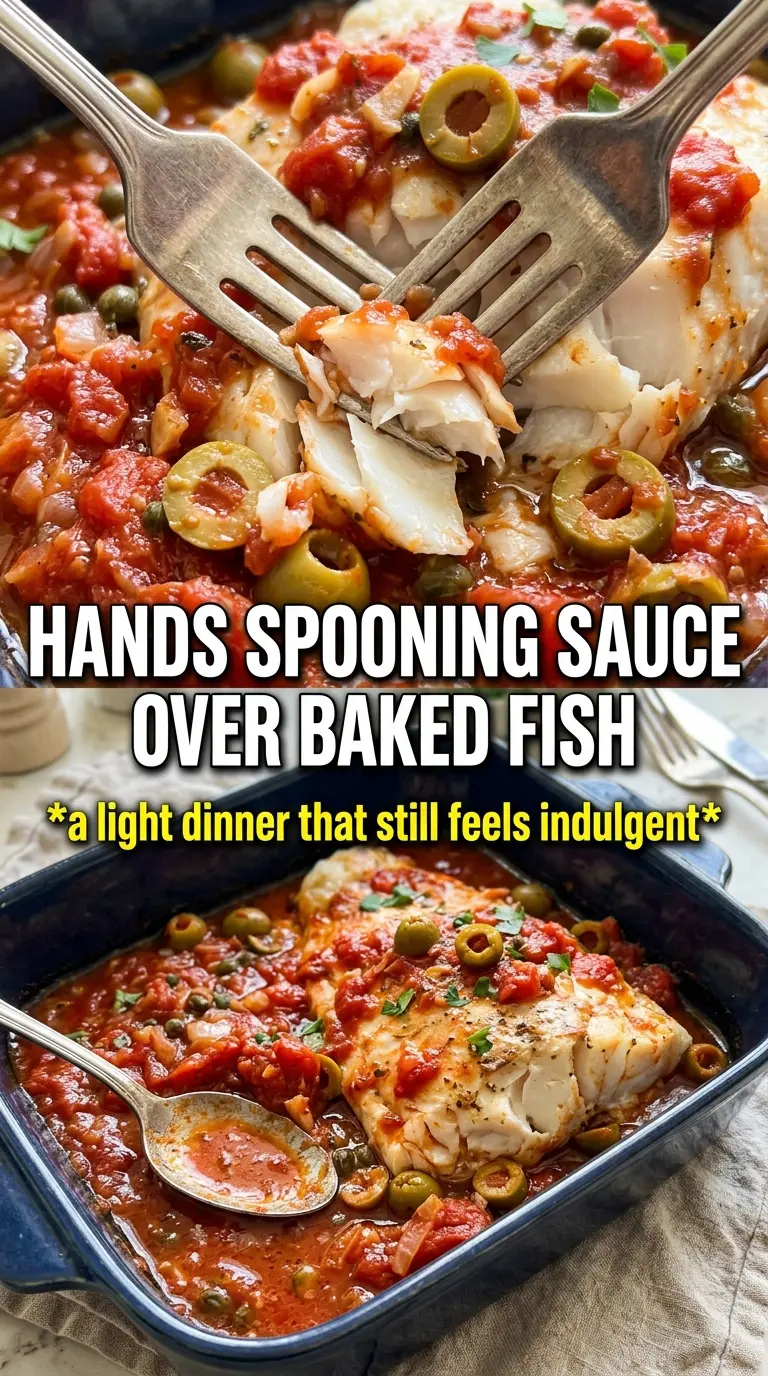
- Cod, halibut, or sea bass — Any firm white fish works, but thickness matters more than the name on the package. Try to use fillets that are similar in size so they finish at the same time. If one piece is much thinner, pull it early.
- Dry white wine or broth — The liquid should look like a shallow puddle, not a bath. It’s there to loosen the roasted vegetables into a sauce, not to poach the fish.
- Fresh parsley and lemon wedges — Don’t skip the finish. The lemon wakes up the olives and capers, and the parsley keeps the dish from tasting heavy after baking.
- Salt and pepper — Season the fish right before it goes into the pan. If you salt it too early, moisture pulls out of the fillets and the texture gets less tender.
Let the Vegetables Start the Sauce, Then Add the Fish
Roasting the Briny Base
Combine the tomatoes, olives, capers, roasted peppers, garlic, wine, olive oil, oregano, and red pepper flakes in the baking dish, then roast it until the tomatoes start to slump and the garlic smells sweet. You’re looking for juices pooling in the bottom of the pan and a glossy sheen on the vegetables. If the mixture looks dry after 10 minutes, add another tablespoon of broth or wine so the fish has enough steam and sauce to finish in.
Setting the Fillets Into the Pan
Season the fish with salt and pepper, then nestle the fillets into the hot vegetable mixture. Don’t bury them completely; the tops should stay visible so they roast instead of boil. If the fish is tucked too deep, it can go mushy on the bottom while the top stays undercooked.
Finishing to Flake
Bake just until the fish flakes easily with a fork and looks opaque all the way through. The exact timing depends on thickness, but 12 to 15 minutes is the right window for most 6-ounce fillets. Pull the pan as soon as the fish gives at the center with gentle pressure, because carryover heat keeps it cooking for a few minutes after it leaves the oven. Finish with parsley and lemon right away while the sauce is still hot and fragrant.
How to Adapt This Without Losing the Bright, Salty Balance
Gluten-Free and Naturally Light
This recipe is already gluten-free as written, which makes it an easy pan dinner when you need something simple without flour, breadcrumbs, or a thickener. Serve it with rice, potatoes, or polenta if you want a more filling plate, but the fish and vegetables stand on their own.
Dairy-Free Is the Default Here
There’s no butter or cream in the pan, so you don’t need to adjust anything for dairy-free cooking. The olive oil carries the flavors and keeps the vegetables glossy, which is why the dish still tastes rich without any dairy at all.
Swap the Wine for Broth
Broth gives you the same needed moisture, but the sauce will taste a little rounder and less sharp. If you use broth, add an extra squeeze of lemon at the end to replace the brightness that wine would normally bring.
Make It Heartier With Potatoes or Chickpeas
For a fuller meal, roast par-cooked baby potatoes or drained chickpeas in the pan with the vegetables before the fish goes in. Potatoes need enough time to turn tender, while chickpeas absorb the sauce and make the dish more substantial without changing the basic flavor.
Storage and Reheating
- Refrigerator: Store leftovers in an airtight container for up to 2 days. The fish will firm up a bit, but the sauce keeps it from drying out completely.
- Freezer: I don’t recommend freezing this one. Cooked white fish turns grainy after thawing, and the tomatoes lose their fresh texture.
- Reheating: Warm gently in a 300F oven, covered, just until heated through. High heat dries out the fish fast, so skip the microwave if you want the fillets to stay tender.
Answers to the Questions Worth Asking
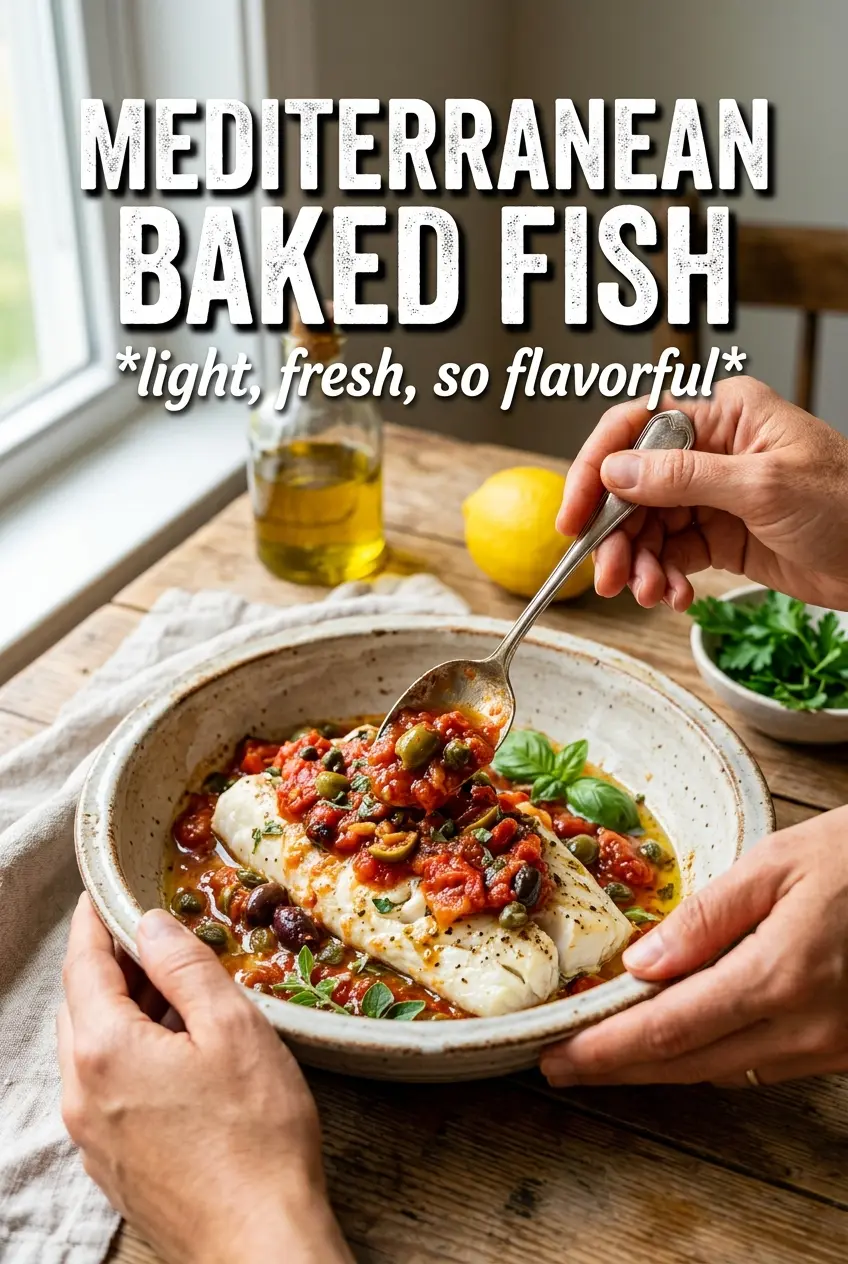
Mediterranean Baked Fish
Ingredients
Equipment
Method
- Preheat the oven to 400°F and grease a 9x13 baking dish. This keeps the fish from sticking and ensures even roasting.
- Combine the cherry tomatoes, Kalamata olives, capers, roasted red peppers, garlic, dry white wine or broth, olive oil, dried oregano, and red pepper flakes in the baking dish. Stir to distribute the garlic and seasonings through the vegetables.
- Roast the vegetable mixture for 10 minutes. You should see the tomatoes soften and the garlic begin to turn fragrant.
- Season the fish fillets with salt and pepper, then nestle them into the roasted vegetable mixture. Press them lightly into the sauce so the sides get some flavor.
- Bake for 12-15 minutes more at 400°F until the fish flakes easily with a fork. The fish should look opaque and separate into flakes without resistance.
- Garnish with fresh parsley and serve with lemon wedges. The bright citrus cuts through the briny olives and capers.