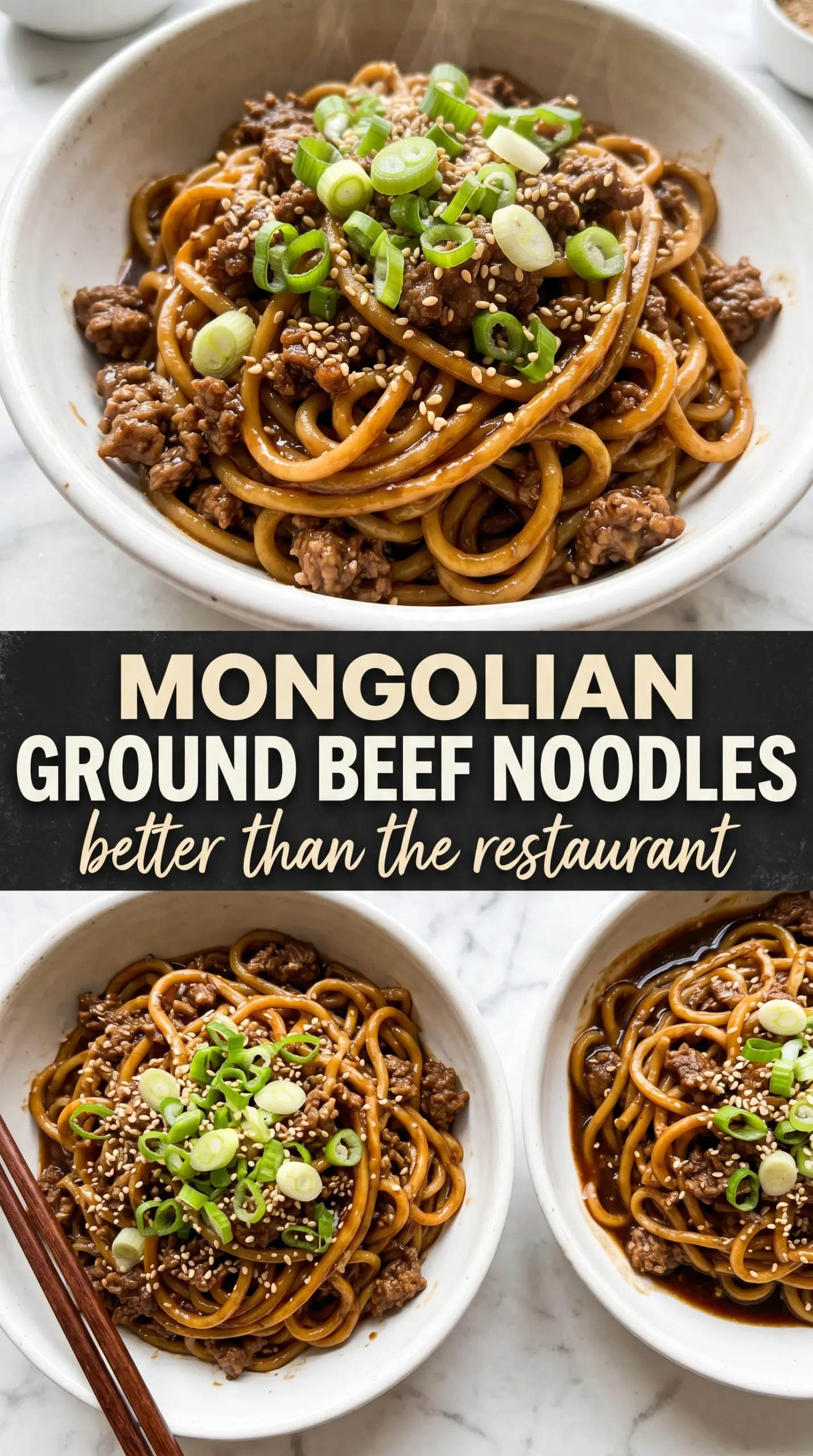
Glossy noodles coated in a savory-sweet soy garlic sauce have a way of disappearing fast, and this Mongolian ground beef noodles skillet earns that reaction every time. The sauce clings to every strand instead of pooling at the bottom of the pan, the beef stays deeply savory, and the green onions on top bring just enough sharpness to keep each bite from feeling heavy.
The trick is in the order. Browning the beef first builds flavor, but the sauce only gets that lacquered finish if the cornstarch is whisked in before it hits the pan and the sauce simmers long enough to thicken. I also like using a little broth, which gives the sauce enough volume to coat the noodles instead of turning sticky and tight.
Below, you’ll find the little details that matter most: how to keep the sauce glossy, which noodle shapes work best, and what to change when you want to make it a little spicier or a little lighter.
The sauce thickened up exactly like I wanted and coated every noodle without getting gluey. My husband went back for seconds before I even sat down.
Like this Mongolian Ground Beef Noodles skillet? Save it to Pinterest for a glossy, better-than-takeout noodle dinner that comes together fast.
The Mistake That Turns This Sauce Thick and Gloppy Instead of Glossy
This dish needs enough liquid to coat the noodles, but not so much that the sauce turns soupy or pasty. The cornstarch does the heavy lifting, but only if it’s whisked into the cold sauce before it meets the heat. If you dump cornstarch straight into the pan, you’ll get little lumps that never fully disappear.
The other place people run into trouble is the heat level. A hard boil can make the sauce tighten too fast and break its smooth, silky finish. Keep it at a steady simmer for a couple of minutes, and you’ll see the sauce go from thin and shiny to thick enough to cling to the beef and noodles without clumping.
- Ground beef — An 85/15 or 90/10 blend gives you enough fat for flavor without flooding the pan. If you use a fattier mix, drain the excess after browning so the sauce doesn’t turn greasy.
- Hoisin sauce — This is what gives the dish its deep, round sweetness and that takeout-style backbone. There isn’t a perfect swap, but a mix of extra soy sauce and a little more brown sugar will get you close in a pinch.
- Sesame oil — Use the toasted kind here. A little goes a long way, and it adds the nutty finish that makes the sauce taste complete.
- Noodles — Linguine, lo mein, or ramen all work because they hold sauce well. Cook them just to tender, then toss them right away so they don’t stick while the beef finishes.
- Beef broth — This loosens the sauce just enough to coat the noodles evenly. Water can work if that’s what you have, but the broth adds a deeper, meatier base.
What Each Ingredient Is Actually Doing in This Recipe
- Primary ingredient (the star) — Quality matters most. Choose the best you can find.
- Cooking medium (oil, butter, or broth) — This carries flavors and prevents dryness.
- Seasonings (salt, pepper, spices, herbs) — Layer flavors so nothing overpowers. Build depth gradually.
- Aromatics (garlic, onion, herbs) — Cook with fat to bloom flavors. Become the foundation.
- Supporting ingredients — Complement the main ingredient without overpowering it.
- Sauce or liquid (if applicable) — Brings flavors together. Balance richness with acid.
- Acid (lemon, vinegar, wine, or other) — Brightens and prevents flat-tasting results.
- Final finish (garnish, glaze, or sauce) — Prevents one-dimensional taste and adds visual appeal.
Building the Glaze Before the Noodles Go In
Brown the Beef Until the Pan Has Real Flavor
Cook the ground beef over medium-high heat and break it into small pieces as it browns. You want actual color on the meat, not just gray crumbles, because those browned bits at the bottom of the pan help the sauce taste richer. If there’s a lot of fat in the skillet, drain most of it off before you add the garlic and ginger.
Cook the Garlic and Ginger Briefly
Add the garlic and ginger and stir for about a minute, just until they smell sharp and fragrant. They should sizzle, not scorch. If the heat is too high here, the garlic turns bitter fast, and that bitterness carries through the whole dish.
Thicken the Sauce Before It Hits the Noodles
Whisk the soy sauce, brown sugar, hoisin, sesame oil, red pepper flakes, broth, and cornstarch together before pouring it into the skillet. As soon as it hits the hot pan, it should start bubbling around the edges. Let it simmer for 2 to 3 minutes until it looks shiny and lightly syrupy, with enough body to coat a spoon.
Toss Until Every Strand Is Coated
Add the cooked noodles and toss constantly so the sauce reaches every surface. If the pan looks tight, splash in a tablespoon or two of water or broth to loosen it, but only after the sauce has thickened. Finish with green onions and sesame seeds while the noodles are still hot so the garnish sticks instead of sitting on top like an afterthought.
How to Make These Noodles Spicier, Lighter, or Gluten-Free
Gluten-Free Version
Use gluten-free tamari instead of soy sauce and choose rice noodles or certified gluten-free noodles. Hoisin sometimes contains wheat, so check the label or replace it with a gluten-free stir-fry sauce if needed. The finished dish stays glossy and savory, but the flavor will be a little cleaner and less deep than the version with traditional hoisin.
Extra-Spicy Noodles
Add more red pepper flakes, or stir in a teaspoon of chili crisp at the end. That gives you heat with a little crunch and a toasted chili flavor that plays well with the sweet soy glaze. Add it after the sauce thickens so the spice stays sharp instead of getting muted.
Leaner Ground Beef Noodles
Use 93/7 ground beef and add an extra teaspoon of sesame oil for balance. Leaner beef won’t leave much fat behind, so the sauce tastes a little less rich but still holds together well. If the skillet looks dry after browning, a splash of broth brings back the gloss.
Storage and Reheating
- Refrigerator: Store leftovers in an airtight container for up to 4 days. The noodles soak up sauce as they sit, so expect a thicker, less glossy finish after chilling.
- Freezer: It freezes fairly well for up to 2 months, though the noodles soften a bit after thawing. Freeze in portions for the easiest reheat.
- Reheating: Warm gently in a skillet over medium-low heat with a splash of water or broth. The common mistake is blasting it in the microwave until the sauce turns dry and the noodles get chewy.
Questions I Get Asked About This Recipe
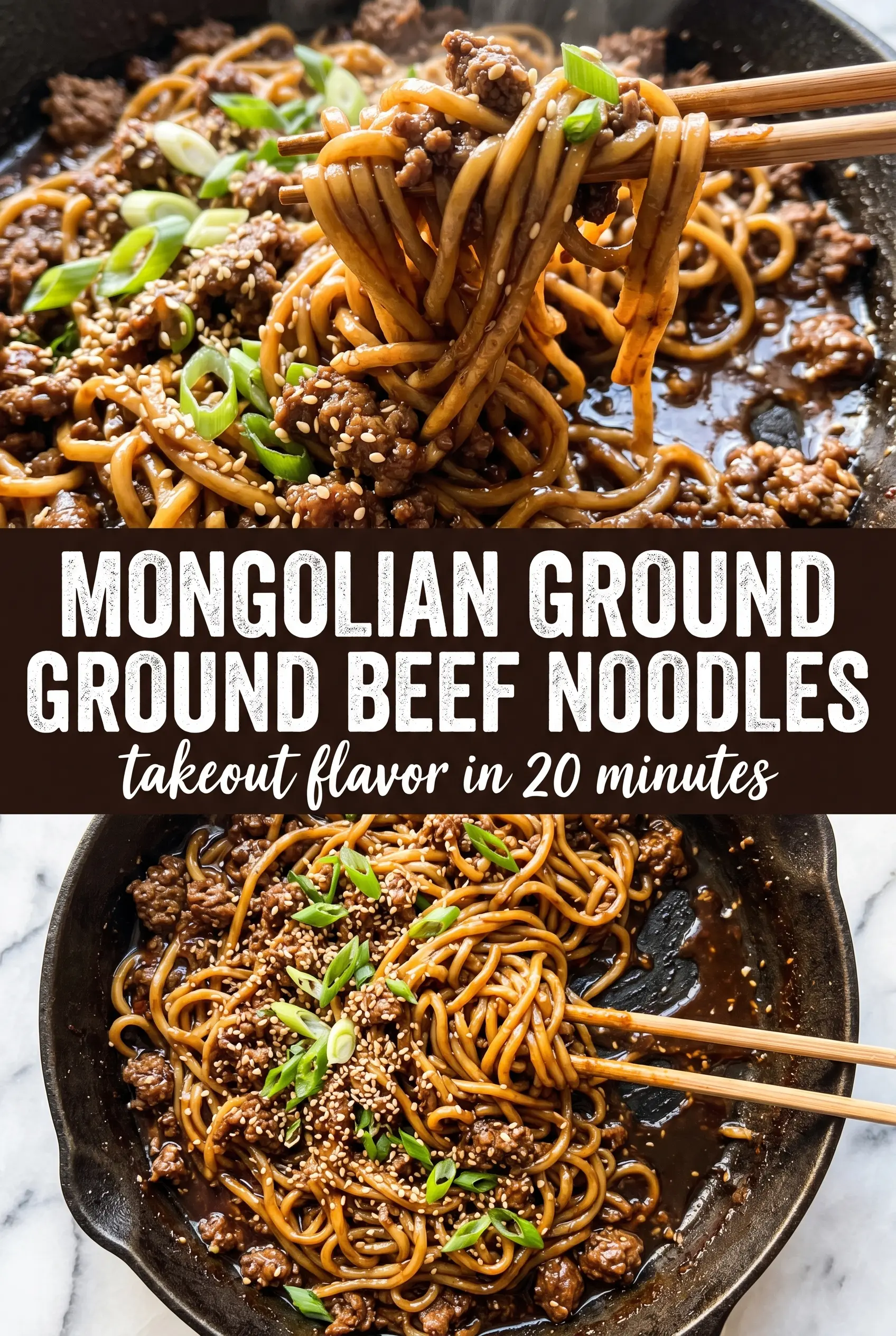
Mongolian Ground Beef Noodles
Ingredients
Equipment
Method
- Cook the noodles according to the package directions, then drain and set aside so they stay ready to toss.
- Heat the vegetable oil in a skillet over medium-high heat, then add ground beef and break it apart as it browns.
- Drain excess fat from the skillet once the beef is browned.
- Add the minced garlic and grated ginger, then cook for 1 minute until fragrant.
- Whisk the soy sauce, brown sugar, hoisin sauce, sesame oil, red pepper flakes, beef broth, and cornstarch, then pour into the pan.
- Simmer for 2–3 minutes until the sauce thickens and coats the beef, turning glossy.
- Add the cooked noodles and toss until fully coated in the thick saucy mixture.
- Top with green onions and sesame seeds so the noodles look finished and garnished.